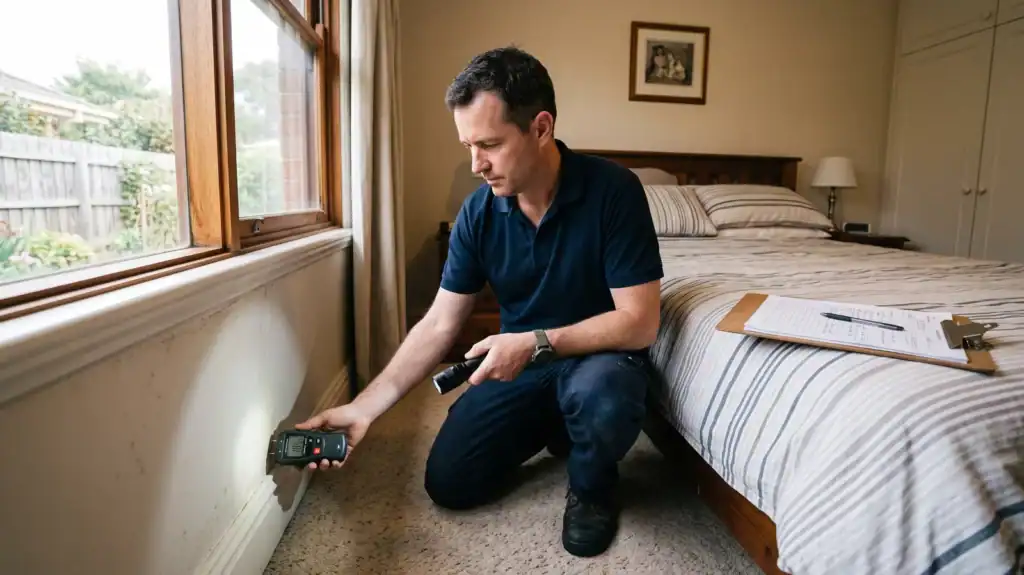
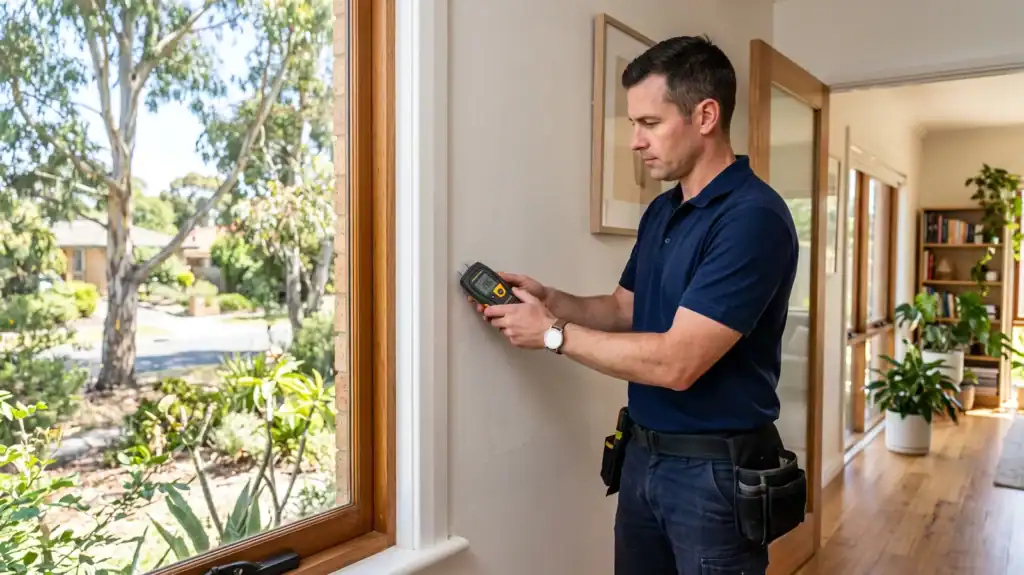
Effective mould cleaning requires removing both visible growth and invisible spores to prevent regrowth within weeks.
DIY methods only address surface mould, leaving the root system intact beneath porous materials where colonies continue to thrive.
Mould thrives in damp environments and spreads quickly through microscopic spores that settle on surfaces throughout your property. Surface cleaning alone often leaves the root system intact, allowing colonies to return stronger than before.
This guide covers how to clean mould safely, when DIY methods fall short, and why professional treatment is the only approach that protects your property long term.
Understanding What Mould Is and Why It Grows
Mould is a type of fungus that reproduces through airborne spores, requiring only moisture, organic material, and moderate temperatures to establish colonies. Once spores land on a damp surface like drywall, timber, or fabric, they germinate and send root-like filaments called hyphae deep into the material.
These hyphae are invisible to the naked eye and penetrate well below the surface of porous substrates like plasterboard, grout, and timber framing. The visible mould you see on the surface is only the fruiting body of a much larger colony growing within the substrate beneath.
Common causes of mould growth include:
- Water leaks from roofs, pipes, or windows
- Poor ventilation in bathrooms, kitchens, and laundries
- High humidity levels above 60 percent
- Condensation on cold surfaces
- Flood or storm damage not dried within 48 hours
The NSW Health Department notes that controlling moisture is the primary strategy for preventing mould, as no amount of cleaning will stop regrowth if the underlying dampness persists.
This is why diagnosing the moisture source before cleaning is critical. Without identifying whether the cause is a plumbing leak, rising damp, poor waterproofing, or inadequate exhaust ventilation, any cleaning effort will fail.
How to Clean Mould From Hard Surfaces
Hard, non-porous surfaces like tiles, glass, and sealed benchtops can often be cleaned if the mould contamination is minor and caught early. The key is removing all visible growth and residual spores without spreading them to other areas.
Step by Step Cleaning Process
- Ventilate the area by opening windows and using exhaust fans
- Wear gloves, safety glasses, and a P2 or N95 mask to avoid spore inhalation
- Mix a cleaning solution of water and detergent (avoid bleach, which only lightens stains without killing roots)
- Apply the solution and allow it to dwell for 10 to 15 minutes before scrubbing
- Scrub affected areas gently with a damp cloth or soft brush to minimise spore dispersal
- Wipe down with clean water and dry completely with towels or fans
- Seal contaminated cleaning materials in plastic bags before disposal
Spore dispersal warning: Aggressive scrubbing or dry brushing launches mould spores into the air and across the room. Always dampen the surface before scrubbing and work gently. Without proper containment, DIY cleaning can spread contamination to areas that were previously unaffected.
This method works for small patches of surface mould on tiles, sinks, or shower screens. If mould reappears within days or weeks, the problem extends deeper than surface level and requires professional antimicrobial treatment to eliminate the underlying fungal network.
Why Common Household Products Fail Against Mould
Many homeowners reach for bleach when they first discover mould, assuming it will solve the problem. These products are temporary measures that fail because they only remove visible stains without addressing the underlying fungal network.
DIY cleaning fails for three critical reasons:
- Household products cannot penetrate porous materials like drywall, timber, and fabric where mould hyphae establish deep below the surface
- Surface cleaning leaves invisible spores intact, allowing colonies to regrow within two to six weeks
- DIY methods provide no protective barrier against future contamination, meaning moisture will trigger immediate regrowth
| Product | Effect on Surface | Long-Term Outcome |
|---|---|---|
| Bleach | Lightens colour | Kills surface spores on non-porous materials only; roots survive in porous surfaces |
| Vinegar | Mild cleaning | Limited penetration; ineffective on established colonies |
| Baking soda | Mild abrasive cleaning | Removes surface stains but does not reach hyphae in porous substrates |
| Tea tree oil | Minimal impact | Insufficient concentration for anything beyond very light surface growth |
| Methylated spirits | Temporary removal | Evaporates quickly without lasting protection |
Bleach in particular is water-based and cannot penetrate porous materials like drywall or timber, where mould hyphae thrive below the surface.
Professional treatment eliminates both surface growth and root systems using an Australian-made, non-hazardous, non-corrosive and environmentally friendly antimicrobial solution that penetrates deep into porous materials and creates a protective barrier against regrowth. Mould and Hygiene Solutions backs this approach with an unconditional 12-month mould-free guarantee, delivering protection that household cleaners cannot replicate.
How to Clean Mould From Porous Materials
Porous materials like drywall, carpet, fabric, insulation, and unsealed timber absorb moisture and allow mould to establish deep root systems. Surface cleaning does little to address the contamination within these materials, as DIY products lack the penetration required to reach embedded fungal networks.
Important: If mould covers more than one square metre on porous surfaces, or if it has been growing for an extended period, the material may need replacement rather than cleaning. Attempting to clean extensively contaminated porous materials often spreads spores and worsens indoor air quality.
When dealing with porous materials:
- Isolate the area to prevent spore spread during handling
- Remove and dispose of heavily contaminated materials like carpet that has developed mould or insulation
- Clean salvageable items with appropriate detergent solutions
- Dry thoroughly using dehumidifiers or industrial fans
- Apply a professional antimicrobial treatment to prevent regrowth
Soft furnishings like leather furniture, canvas items, and clothing each require specific treatment approaches. In every case, the limitation remains the same: DIY methods cannot reach the hyphae embedded within the material.
For homeowners in Newcastle, Central Coast, and the Hunter Valley, booking a professional mould inspection helps determine whether cleaning or replacement is the most effective approach for porous materials.
How to Clean Mould in Different Areas of Your Home
Mould behaves differently depending on the surface and location. Each area of your home presents unique challenges that influence whether DIY cleaning can work or professional treatment is needed.
Bathroom
Bathrooms are the most common location for mould due to constant moisture from showers and baths. Tile grout, shower recesses, and bathroom ceilings are frequent problem areas.
- Wipe down shower walls and screens after each use to remove moisture
- Run the exhaust fan for at least 20 minutes after every shower
- Check silicone seals and grout lines regularly for early signs of growth
Surface cleaning with detergent may temporarily remove visible growth from tiles. Grout is porous, however, and mould roots penetrate deep into it, meaning regrowth after DIY cleaning is almost guaranteed.
Walls and Ceilings
Mould on interior walls and ceilings often signals a hidden moisture source such as a roof leak, rising damp, or condensation within the wall cavity. Painting over mould without treating it traps the colony beneath the paint, where it continues to grow unseen.
Wiping visible mould off a painted wall removes only the fruiting body. The hyphae remain embedded in the plasterboard beneath, and regrowth typically appears within weeks.
Wardrobes and Bedrooms
Poor airflow in bedrooms and wardrobes creates ideal conditions for mould, especially when furniture is placed tight against exterior walls.
- Leave wardrobe doors open regularly to improve airflow
- Keep a gap of at least 50 mm between furniture and exterior walls
- Use moisture absorbers in enclosed spaces as a temporary measure
- Check for condensation on cold walls behind wardrobes
If mould is recurring in wardrobes or bedrooms, the underlying moisture source must be identified and resolved by a professional before any cleaning will have lasting effect.
When DIY Cleaning Is Not Enough
DIY methods can manage very small, surface-level patches of mould on non-porous materials. They become inadequate when contamination spreads, recurs frequently, or affects hidden areas like wall cavities or subfloors.
The fundamental limitation of DIY cleaning is that it only removes surface mould while leaving the root system intact. Without professional antimicrobial treatment that penetrates porous materials, colonies regrow within weeks regardless of how thoroughly you scrub visible growth.
Signs You Need Professional Help
- Mould returns within weeks of cleaning
- Visible growth covers more than one square metre
- Musty odours persist even after cleaning
- Mould appears in multiple rooms or hidden spaces
- Property occupants experience respiratory discomfort or allergy symptoms
- The source of moisture is unclear or unresolved
Professional mould removal services address both visible colonies and invisible spores using specialised equipment and treatment methods. This includes thermal imaging to locate hidden moisture, HEPA filtration to capture airborne spores, and an antimicrobial solution that eliminates root systems and creates a protective barrier against regrowth.
Mould and Hygiene Solutions backs their work with an unconditional 12-month mould-free guarantee, ensuring that treated areas remain protected against regrowth when moisture issues are resolved. This level of protection is impossible to achieve with bleach, vinegar, or other household products that only address surface contamination.
Preventing Mould After Cleaning
Cleaning removes existing mould, but prevention stops it from returning. Without addressing the root causes of moisture and poor ventilation, new colonies will establish within weeks.
Control Indoor Humidity
Keep indoor humidity below 60 percent using dehumidifiers, air conditioning, or natural ventilation. Monitor levels with a hygrometer, especially in bathrooms, laundries, and kitchens.
Properties in coastal areas like Newcastle, the Central Coast, and Lake Macquarie face persistent humidity throughout the warmer months. In these regions, relying on a dehumidifier alone is often insufficient without also improving ventilation and addressing structural moisture sources.
Improve Air Circulation
- Run exhaust fans during and after showers or cooking
- Open windows regularly to allow fresh air flow
- Avoid blocking vents with furniture or curtains
- Use ceiling fans to reduce condensation on cold surfaces
Fix Water Leaks Promptly
Repair leaking taps, pipes, roofs, and windows as soon as they are discovered. Even minor drips create enough moisture to support mould growth over time.
Professional mould prevention services can apply protective coatings to vulnerable areas and provide tailored advice based on your property’s specific conditions. Unlike temporary DIY measures, professional antimicrobial treatments create lasting protection that prevents colonies from establishing even when moisture levels fluctuate.
The Role of Professional Mould Treatment
Professional mould treatment goes beyond surface cleaning to eliminate root systems, treat affected materials, and protect against future contamination. Trained technicians assess the full extent of mould growth, including areas hidden from view where DIY methods cannot reach.
The process typically includes:
- Detailed inspection using thermal imaging and moisture meters
- Containment of affected areas to prevent spore spread
- HEPA-filtered air scrubbing to remove airborne spores
- Application of antimicrobial treatment to kill existing mould and prevent regrowth
- Removal or cleaning of contaminated materials
- Post-treatment verification and moisture management advice
The antimicrobial solution used by Mould and Hygiene Solutions penetrates porous surfaces where household cleaners cannot reach, addressing the root cause of persistent mould problems that DIY treatments consistently fail to resolve.
For property managers and business owners dealing with recurring mould issues, professional mould remediation protects both the property’s structural integrity and the wellbeing of occupants. The unconditional 12-month mould-free guarantee ensures treated areas remain protected, delivering results that temporary DIY measures cannot match.
Health and Safety Considerations
Mould exposure can cause respiratory discomfort, allergic reactions, and irritation in sensitive individuals. Australian health authorities including Better Health Victoria recommend minimising exposure by addressing mould growth promptly and using appropriate protective equipment during cleaning.
Safety reminder: Always wear gloves, eye protection, and a properly fitted P2 or N95 mask when cleaning mould. Work in well-ventilated areas and avoid disturbing large colonies, which release high concentrations of spores into the air.
People with asthma, allergies, or compromised immune systems should avoid direct contact with mould. In these situations, professional cleaning is the safest option, as DIY attempts risk spreading spores throughout the property and worsening health symptoms.
If you or someone in your household is experiencing unexplained respiratory symptoms or persistent allergic reactions, mould contamination may be a contributing factor. A professional mould assessment can identify hidden contamination that visual inspection alone cannot detect.
Frequently Asked Questions About Cleaning Mould
Why does mould keep coming back after I clean it?
DIY cleaning only removes the visible surface growth. The mould root system (hyphae) remains embedded in porous materials like plasterboard, timber, and grout beneath the surface. Without professional treatment that penetrates the substrate, regrowth typically occurs within two to six weeks.
Can I use bleach to remove mould?
Bleach lightens mould stains on non-porous surfaces like tiles and glass but is water-based, so it cannot penetrate porous materials where hyphae grow. Colonies survive beneath the surface and regrow. Bleach also releases harsh fumes and is not an effective long-term mould treatment.
Does vinegar kill mould?
Vinegar has mild antifungal properties and can remove light surface growth. It does not penetrate deeply enough to reach established colonies in porous substrates, and mould treated with vinegar alone typically returns within weeks.
What is the difference between mould and mildew?
Mildew is a surface-level fungus that grows flat and powdery on damp surfaces. Mould penetrates deeper into materials and forms thicker colonies with visible root structures. Both indicate a moisture problem, but mould causes more structural damage and requires professional treatment to fully eliminate.
How do I know if mould has gone deeper than the surface?
If mould returns within weeks of thorough cleaning, it has established hyphae below the surface. Musty odours without visible growth, staining that bleeds through paint, and mould appearing on the reverse side of a wall are all signs of deep contamination.
Is mould dangerous for people with asthma?
Mould spores can trigger asthma attacks, allergic rhinitis, and respiratory irritation. People with asthma, allergies, or compromised immune systems are more susceptible. If mould is present in a home with vulnerable occupants, professional removal with proper containment is the safest approach.
Should I paint over mould on my walls?
Painting over mould traps the colony beneath the surface, where it continues to grow and eventually breaks through the new paint. All mould must be properly treated and the moisture source resolved before any repainting.
What is the best product for cleaning mould?
No household product eliminates mould permanently from porous surfaces. Detergent and water removes surface growth from tiles and glass, but for porous materials like plasterboard and timber, professional antimicrobial treatment is the only approach that reaches the root system.
How quickly does mould grow back after cleaning?
On porous surfaces where the root system survives DIY cleaning, visible regrowth typically appears within two to six weeks if the moisture source remains. On non-porous surfaces cleaned thoroughly and kept dry, regrowth takes longer but will re-establish wherever moisture persists.
The professional difference: Mould and Hygiene Solutions uses an antimicrobial solution that penetrates porous substrates and creates a protective barrier, backed by an unconditional 12-month mould-free guarantee. No household product offers this level of protection.
Taking the Next Step Towards a Mould-Free Property
While small surface patches on non-porous materials can be managed with careful DIY methods, widespread or recurring mould requires professional intervention to achieve lasting results.
Mould and Hygiene Solutions provides professional mould inspections for properties across Newcastle, the Central Coast, Lake Macquarie, the Hunter Valley, and Port Stephens.
Their team identifies the source of moisture, assesses the extent of contamination, and provides tailored recommendations backed by an unconditional 12-month mould-free guarantee using an antimicrobial solution that eliminates root systems and prevents regrowth.
If mould keeps returning despite your best efforts, or if you want to prevent problems before they start, professional treatment delivers the long-term protection that household methods cannot match. Contact Mould and Hygiene Solutions today to book your inspection and take control of your indoor environment.