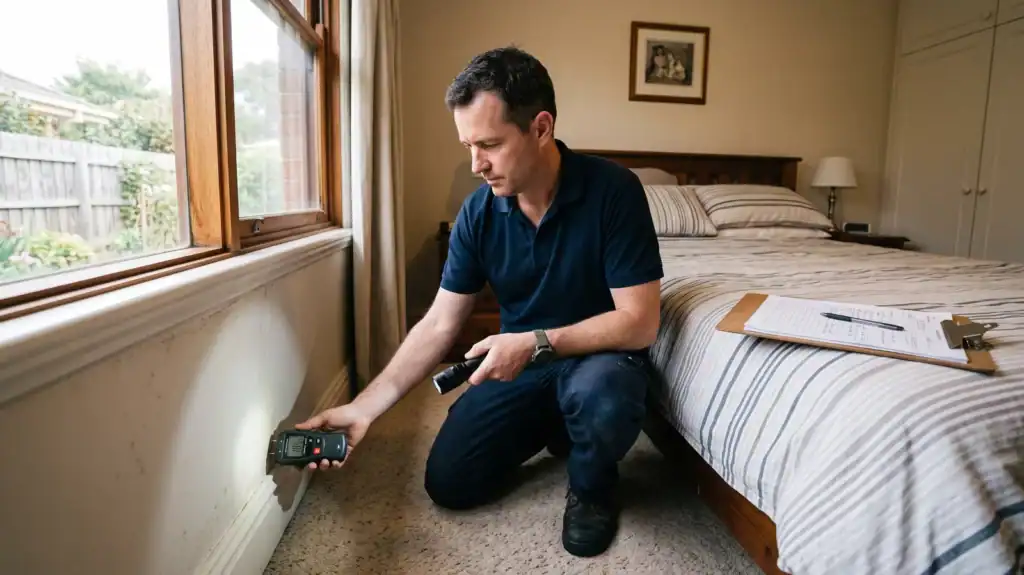
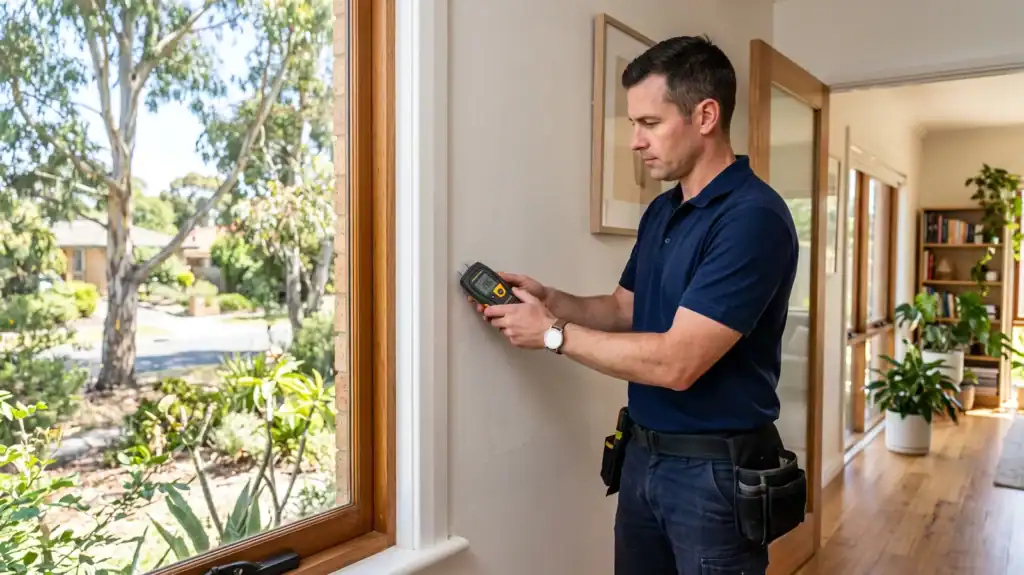
Mould symptoms often mimic a common cold that never goes away.
You have had a blocked nose for weeks, your eyes are itchy every morning, and that cough will not shift. You reach for antihistamines or blame seasonal allergies, but nothing works.
This article explains which health symptoms are linked to mould poisoning, why they get worse over time, and what actually needs to happen to stop them at the source.
If you suspect mould is causing health problems in your home, book a free mould inspection with Mould and Hygiene Solutions across Newcastle, the Central Coast, Lake Macquarie, Hunter Valley and Port Stephens.
Common Mould Symptoms in Adults
Mould produces microscopic spores that become airborne and are inhaled every time you breathe in an affected room. These spores trigger immune responses, and the symptoms often overlap with hay fever, dust allergies, or a lingering cold.
The difference is that these symptoms do not resolve with standard allergy treatments because the source is still present inside the building.
The most reported mould symptoms include the following.
- Respiratory issues including persistent coughing, wheezing, and shortness of breath
- Nasal congestion and postnasal drip that does not respond to decongestants or nasal sprays
- Itchy, watery or red eyes that worsen when you are indoors
- Skin irritation such as rashes or dermatitis on exposed areas
- Sore throat that keeps coming back, particularly in the morning
- Headaches and fatigue that improve when you leave the building
- Joint pain and muscle aches with no obvious physical cause
If your symptoms ease when you are away from home for a few days and return when you get back, the warning signs of mould toxicity are worth reviewing.
Neurological and Cognitive Symptoms
Mould exposure does not only affect the respiratory system. Prolonged exposure to indoor mould has been associated with neurological symptoms including the following.
- Brain fog and difficulty concentrating
- Memory problems and difficulty recalling words
- Light sensitivity and blurred vision
- Dizziness and balance issues
These symptoms are often associated with mycotoxins, toxic compounds produced by certain mould species such as Stachybotrys chartarum. Cognitive symptoms often accompany the more obvious respiratory ones, particularly in homes with long-standing mould problems.
Mood and Mental Health Effects
Living in a mould-affected home has been linked to mental health changes. A study published in the American Journal of Public Health found that residents of visibly damp or mouldy homes had significantly higher rates of depression.
Reported mood-related effects include the following.
- Depression and persistent low mood
- Anxiety and irritability
- Sleep disturbances and insomnia
- Difficulty coping with stress
Whether these effects are caused directly by mould compounds or by the chronic stress of ongoing illness and poor indoor air quality, the practical outcome is the same. Removing the mould removes a contributing factor.
Why Mould Symptoms Get Worse Over Time
Mould colonies do not stay the same size. If the moisture source feeding them is not addressed, they grow. More mould means more spores in the air, which means a heavier load on your respiratory system each day.
Homeowners in Newcastle and the Central Coast often report that symptoms start mild and worsen over months. What begins as a morning sniffle turns into chronic sinus issues.
| Exposure Duration | Typical Symptom Progression |
|---|---|
| First 1-2 weeks | Mild sneezing, slight nasal congestion |
| 1-3 months | Persistent cough, eye irritation, headaches |
| 3-6 months | Chronic sinus infections, fatigue, skin rashes, brain fog |
| 6+ months | Worsening respiratory conditions, mood changes, potential for sensitisation |
Sensitisation is particularly concerning. Once your immune system reacts to mould spores, even small concentrations trigger strong responses.
This means symptoms can persist even after the worst of the mould is addressed if spore levels are not fully eliminated.
Who Is Most at Risk From Mould Exposure?
Everyone breathes in mould spores daily, and most people experience no symptoms at all. But certain groups are significantly more affected by indoor mould exposure.
According to NSW Health, people with existing respiratory conditions, weakened immune systems, and young children are most vulnerable.
- People with asthma may experience more frequent and severe attacks
- People with allergies can develop stronger reactions over time
- Young children and infants whose immune and respiratory systems are still developing, making them more susceptible to airborne mould spores from air conditioning
- Elderly people with reduced respiratory function
- Anyone with a weakened immune system due to illness or medication
If someone in your household falls into one of these groups and has unexplained respiratory symptoms, a professional mould test is worth doing before anything else.
The Problem With Treating Symptoms Instead of the Source
Homeowners across the Hunter Valley and Lake Macquarie often deal with mould symptoms by taking allergy medication and scrubbing mould off walls with bleach. This treats two surfaces: your sinuses and your plasterboard. Neither addresses the actual problem.
Bleach removes surface mould discolouration but does not reach the mould root structure called hyphae that grows into the material underneath. Regrowth typically occurs within two to six weeks.
Visible mould on a wall is the tip of the colony. The root system can extend centimetres into plasterboard, timber, or grout. Wiping the surface clean does not kill what is growing beneath it.
Here is what DIY cleaning actually achieves versus what it leaves behind.
| What DIY Removes | What DIY Leaves Behind |
|---|---|
| Surface discolouration | Root structure (hyphae) in the substrate |
| Visible spores on the wall | Airborne spores throughout the room |
| The appearance of mould | The moisture source feeding it |
| A temporary sense of progress | A colony that regrows in weeks |
If your mould symptoms keep returning after cleaning, that is a clear sign the colony is surviving beneath the surface.
Why Professional Mould Treatment Stops the Symptoms
Professional mould treatment differs from DIY in three ways: it addresses the root structure, it kills airborne spores, and it identifies the moisture source that caused the growth in the first place. Without all three, the mould comes back.
Mould and Hygiene Solutions uses an Australian-made, non-hazardous, non-corrosive and environmentally friendly antimicrobial solution that penetrates the substrate to destroy the root colony, not just the surface.
- Industrial-grade mould removal that reaches below the surface
- Antimicrobial treatment that prevents spore regrowth
- Moisture source identification and advice to stop the conditions that caused the mould
- A 12-month unconditional mould-free guarantee on treated areas
That guarantee matters. It means if mould returns to any treated area within 12 months, the treatment is redone at no charge. No DIY product can offer that because no retail product treats the root structure. Read more about how commercial mould removal actually works to understand the full process.
How to Tell If Your Symptoms Are Mould-Related
You do not need a blood test to start narrowing it down. There are practical patterns that separate mould symptoms from standard allergies or colds.
Ask yourself these questions.
- Do your symptoms improve when you leave the house for more than a day?
- Are your symptoms worse in specific rooms, particularly bathrooms, bedrooms, or laundries?
- Have you noticed a musty smell even after cleaning?
- Is there visible mould on walls, ceilings, grout, or window frames?
- Has your home had a leak, flood, or persistent condensation issue?
If you answered yes to two or more, mould exposure is a strong possibility. A free mould inspection will confirm whether there is a problem and how extensive it is.
Mould can grow behind walls, under carpet, and inside ceiling cavities where you cannot see it. A professional inspection checks areas that a visual scan from the hallway will miss. Better Health Victoria recommends addressing mould promptly to reduce health risks.
When to See a Doctor About Mould Symptoms
If you are experiencing persistent respiratory symptoms, skin reactions, or unexplained fatigue, see your GP. Mention that you suspect mould exposure so they can consider it in their assessment.
- Symptoms lasting more than two weeks without improvement
- Difficulty breathing or wheezing that is new or worsening
- Recurring sinus infections (three or more per year)
- Any symptoms in young children, elderly people, or immunocompromised household members
Peer-reviewed Australian research has confirmed that mould-affected housing is linked to a range of respiratory and allergic conditions. Medical treatment manages the symptoms, but removing the mould source is what prevents them from returning. You need both.
Frequently Asked Questions
Can mould cause headaches and brain fog?
Yes. Prolonged exposure to mould spores and mycotoxins has been linked to headaches, difficulty concentrating, and memory problems. These symptoms often improve once the mould source is removed and indoor air quality is restored.
How long does it take for mould symptoms to appear?
Some people notice symptoms within hours of entering a mould-affected room, while others develop them gradually over weeks. The timeline depends on the type of mould, the concentration of spores, and your individual sensitivity.
Is black mould more dangerous than other types?
Black mould (Stachybotrys chartarum) produces mycotoxins that can cause more severe symptoms than common allergenic moulds. However, all indoor mould growth should be treated seriously. Colour alone does not determine how dangerous a mould species is.
Can mould affect your mental health?
Research has linked living in damp, mouldy homes to higher rates of depression, anxiety, and sleep disturbances. Whether the cause is biological or stress-related, removing the mould improves the living environment and reduces these effects.
Can mould symptoms go away on their own?
No. As long as the mould colony is active and releasing spores, your immune system will continue reacting to them. Antihistamines and nasal sprays manage the reaction but do not address the cause. Symptoms typically improve within weeks of professional mould removal.
How do I know if mould is making me sick?
The clearest indicator is whether your symptoms improve when you leave home for a few days and return when you come back. A professional inspection from Mould and Hygiene Solutions confirms whether mould is present, and your GP can assess whether your symptoms are consistent with mould exposure.
Stop the Symptoms by Stopping the Mould
Mould symptoms will not resolve while the colony is still growing inside your home. Antihistamines manage the reaction. Bleach removes the stain. Neither fixes the problem.
If you have been dealing with a blocked nose, itchy eyes, or a cough that will not go away, and standard treatments are not working, mould exposure is worth investigating.
Mould and Hygiene Solutions offers free inspections across Newcastle, the Central Coast, Lake Macquarie, Hunter Valley and Port Stephens. James inspects the property himself, identifies the moisture source, and explains exactly what is needed.
If treatment is required, it is backed by an unconditional 12-month mould-free guarantee. Book your free inspection today.