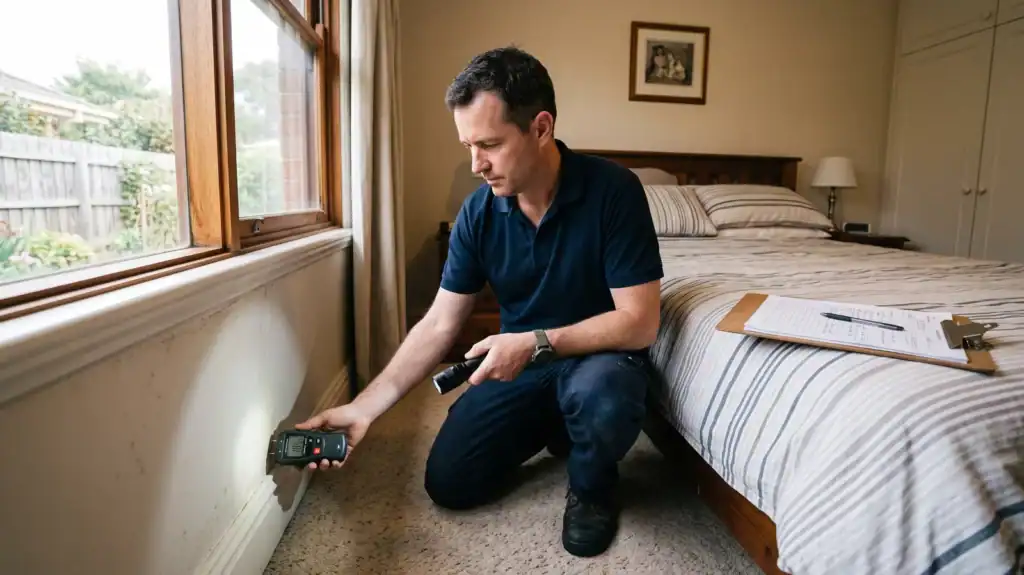
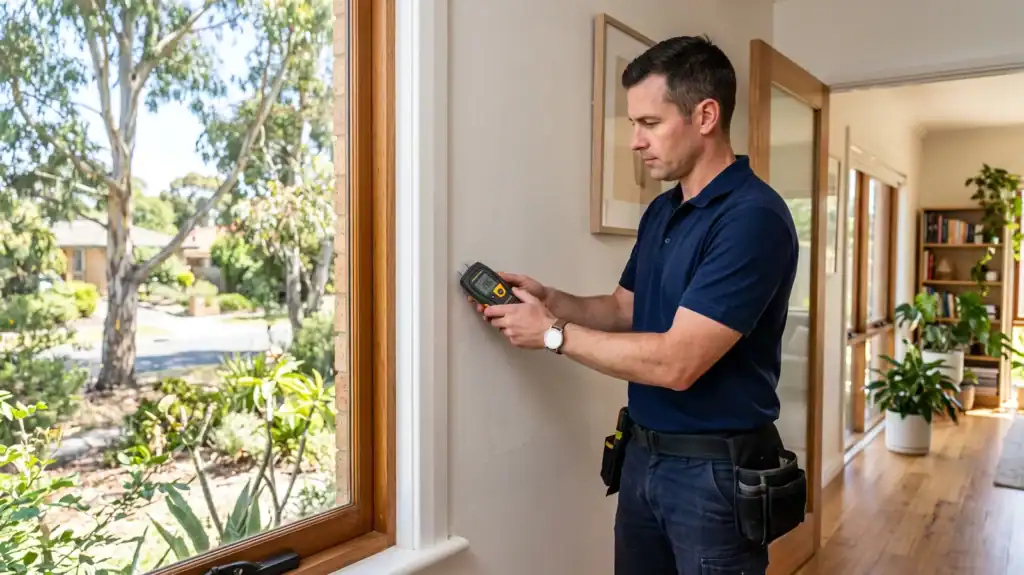
Mould in carpet grows beneath the surface where you cannot see it, and surface cleaning will not fix it.
Most homeowners across Newcastle and the Central Coast spot a dark patch on their carpet and reach for the bleach. That reaction makes sense, but the visible stain is only a fraction of the problem.
Already dealing with mould in your carpet? A free mould inspection identifies exactly what is going on beneath the surface. Mould and Hygiene Solutions also offers full mould removal across Newcastle, the Central Coast, Lake Macquarie, Hunter Valley and Port Stephens.
This article covers how mould gets into carpet fibres, what happens when you try to clean it yourself, and why getting rid of mould professionally is the only approach that works long-term.
What Does Mould in Carpet Actually Look Like?
Mould in carpet does not always look like the black patches you see on bathroom tiles. It often starts as a musty smell, with visible signs appearing weeks after the colony has already spread through the backing and underlay.
Here are the common signs that mould has taken hold in your carpet.
- Persistent musty or damp odour that returns after cleaning
- Dark or discoloured patches, especially along edges and under furniture
- Carpet feels damp or spongy underfoot even when the surface looks dry
- Allergic reactions that worsen indoors, including sneezing, itchy eyes, and coughing
- Visible fuzzy growth (white, green, or black) on the carpet surface
By the time you see mould on the surface, the colony has already established itself in the carpet fibres, backing, and underlay beneath. What you see is the tip of the iceberg.
This is why wiping the surface clean gives you a false sense of progress. The roots (called hyphae) are embedded in materials you cannot reach with a cloth or spray bottle.
How Mould Gets Into Your Carpet
Carpet mould needs two things to grow: moisture and an organic food source. Your carpet provides both.
Synthetic fibres trap dust and skin cells that feed mould colonies. Natural fibres like wool and jute backing are food sources themselves.
| Moisture Source | How It Leads to Carpet Mould |
|---|---|
| Flooding or water damage | Saturates carpet, underlay and subfloor. Mould starts within 24 to 48 hours. |
| High indoor humidity (above 60%) | Moisture condenses in carpet fibres, especially in poorly ventilated rooms. |
| Concrete slab moisture | Moisture wicks up through the slab into the underlay with no visible signs. |
| Spills left unattended | Liquid soaks into the underlay and stays damp for days beneath a dry-looking surface. |
| Leaking pipes or roof | Slow leaks behind walls or above ceilings drip onto carpet edges unnoticed. |
According to NSW Health, mould can begin colonising damp materials within 24 to 48 hours of water exposure, making fast drying critical after any water event.
Properties across Newcastle, the Hunter Valley and the Central Coast are particularly vulnerable due to coastal humidity. Homes built on concrete slabs without a moisture barrier see this problem regularly.
Carpet underlay is the worst offender. It acts like a sponge, trapping moisture between the carpet and the subfloor where airflow is zero.
Health Risks of Mouldy Carpet
Walking on mouldy carpet releases spores into the air with every step. These airborne spores are too small to see and are easily inhaled by anyone in the room.
The health effects range from mild irritation to serious respiratory problems.
- Nasal congestion, sneezing, and runny nose
- Itchy, watery eyes
- Coughing and throat irritation
- Worsening of asthma symptoms. According to the Better Health Channel, indoor mould exposure is linked to significant increases in respiratory symptoms.
- Skin irritation and rashes from direct contact
- Headaches and fatigue from prolonged exposure
Children, elderly people, and anyone with existing respiratory conditions are at higher risk. If mould is visible on your carpet, the spore count in your home is already elevated. Professional mould testing can measure the actual spore levels in your indoor air.
What makes carpet mould particularly dangerous is that people walk, sit, and play on it. Every footstep compresses the carpet and pushes spores upward into the breathing zone. Disturbing mould during cleaning without protection can make you sick, so always wear a P2 mask and gloves if you must handle mouldy carpet before professional treatment.
Retail air fresheners and carpet deodorisers mask the smell but do nothing about the spore count. The mould is still there, still releasing spores, still affecting your air quality.
Why DIY Carpet Mould Removal Fails
Spraying bleach or vinegar on carpet mould will remove the visible discolouration within minutes. The root structure in the carpet fibres, backing, and underlay is completely unaffected, which is why mould cleaning keeps failing for most homeowners.
Regrowth typically begins within a few weeks once the moisture returns. Here is why every common DIY method falls short.
- Bleach only bleaches the surface stain. It does not kill mould roots in the substrate.
- Vinegar and bicarb soda cannot penetrate carpet backing or underlay.
- Scrubbing without containment spreads spores to other areas of the home.
- Steam cleaners add moisture to an already damp environment, which can make the problem worse.
- Retail “mould killer” sprays are formulated for hard surfaces like tiles, not porous materials like carpet.
The core problem is access. Carpet has multiple layers: the fibre surface, the primary backing, the secondary backing (often jute), and the underlay bonded to the subfloor.
DIY products only reach the first layer. Everything beneath it stays colonised.
Disturbing mould without proper containment is another risk most homeowners do not consider. Scrubbing or vacuuming without HEPA filtration launches millions of spores into the air, spreading the problem to other rooms.
The Problem With Surface Cleaning
Surface cleaning creates the illusion that the mould is gone. The carpet looks clean, the stain disappears, and the smell fades for a few days.
Then it comes back, because killing mould requires reaching the root colony beneath the surface, not just wiping what you can see.
A clean-looking carpet is not a mould-free carpet. If the mould came back after you cleaned it, the roots were never eliminated. The only way to confirm a carpet is mould-free is professional mould testing.
This cycle of clean-and-regrow is the most common pattern seen across Newcastle and Lake Macquarie. Homeowners spend months battling the same patch of mould, replacing cleaning products, and never getting ahead of it.
The moisture source driving the growth is the other factor DIY never addresses. Even if you could kill every mould cell in the carpet, it will return within weeks if the moisture source is still active.
When Should You Replace Mouldy Carpet?
Not every mouldy carpet needs to be ripped out. Whether it can be saved depends on how deep the mould has gone and how long the moisture has been present.
| Scenario | Can the Carpet Be Saved? |
|---|---|
| Small surface patch, caught within days | Usually yes, with professional treatment that reaches the backing. |
| Mould in carpet and underlay | The carpet may be salvageable, but the underlay almost always needs replacing. Underlay acts like a sponge and holds moisture long after the carpet surface dries. |
| Flood-damaged carpet left wet for more than 48 hours | Replacement is usually the safest option. The mould colony will have penetrated every layer. |
| Recurring mould in the same area | The carpet and underlay should be replaced, and the moisture source must be fixed before new carpet goes down. |
A professional inspection is the only reliable way to know whether your carpet can be treated in place or needs to go. The visible patch rarely tells the full story, because mould spreads through the underlay and backing where you cannot see it.
If replacement is needed, find out how much mould removal costs in Australia before making a decision. Professional remediation before re-carpeting ensures the new carpet does not develop the same problem.
What Professional Mould Treatment Does Differently
Professional mould remediation works because it addresses all three layers of the problem: the visible mould, the root structure in the substrate, and the conditions that allow mould to grow in the first place.
Here is what a professional treatment includes that DIY cannot replicate.
- Full inspection to identify the moisture source and the full extent of the colony, which is often larger than the visible patch
- Containment barriers to prevent spore spread during treatment
- Industrial-grade treatment that penetrates carpet fibres, backing, and underlay to kill the root structure
- Application of an Australian-made, non-hazardous, non-corrosive and environmentally friendly antimicrobial solution that prevents regrowth
- Moisture source identification and recommendations to stop the problem from recurring
Mould and Hygiene Solutions backs every treatment with an unconditional 12-month mould-free guarantee. If the mould returns within 12 months, the retreatment is free.
That guarantee exists because the treatment reaches the root structure, not just the surface. A free inspection identifies exactly what you are dealing with before any money changes hands.
How to Prevent Mould in Carpet
Prevention comes down to controlling moisture. Mould cannot grow without it, regardless of how much dust or organic material your carpet collects.
Follow these steps to reduce the risk of carpet mould in your home.
- Keep indoor humidity below 60% using exhaust fans and dehumidifiers
- Fix leaks immediately, even small ones behind walls or under sinks
- Dry any spills or wet patches within 24 hours, including the underlay if possible
- Ensure good airflow under and around furniture, especially in bedrooms
- Use a moisture barrier on concrete slabs before laying carpet
- Have carpets professionally cleaned at least once a year
For homes in Port Stephens, the Hunter Valley, and along the Central Coast, coastal humidity makes this harder. Running bathroom exhaust fans for at least 20 minutes after every shower and maintaining good ventilation throughout the home helps significantly.
According to NSW Health, keeping indoor humidity between 30% and 60% is the single most effective way to prevent mould growth indoors.
If you have already found mould in your carpet, prevention advice alone will not help. The existing colony needs professional treatment through proper mould prevention and remediation before any prevention strategy will work.
Frequently Asked Questions
Is it safe to sleep in a room with mouldy carpet?
No. Sleeping in a room with mouldy carpet exposes you to airborne spores for hours, which can trigger congestion, headaches, and worsening asthma. Move to a mould-free room until the carpet has been professionally treated.
Can mouldy carpet be saved?
It depends on how deep the mould has gone. Small surface patches caught early can often be treated professionally, but if the mould has reached the underlay or the carpet was wet for more than 48 hours, replacement is usually the better option. A professional inspection is the only reliable way to know.
What kills mould in carpet?
Industrial-grade antimicrobial solutions applied by professionals are the only products that penetrate deep enough to kill mould in carpet fibres, backing, and underlay. Household products like bleach, vinegar, and retail sprays only affect the surface layer.
Does steam cleaning kill mould in carpet?
No. Steam cleaning adds moisture to the carpet, which can accelerate mould growth rather than stop it. The heat may kill some surface spores, but the root structure in the backing and underlay survives, and the added moisture feeds the colony.
How long does it take for mould to grow in wet carpet?
Mould can begin growing within 24 to 48 hours of carpet becoming wet. In humid conditions common across Newcastle and the Central Coast, it can establish a visible colony within one to two weeks. Drying carpet within the first 24 hours is critical.
Does carpet underlay need to be replaced if there is mould?
In most cases, yes. Underlay absorbs and holds moisture far longer than carpet fibres, making it the primary site of mould growth beneath the surface. Even if the carpet itself is treated, contaminated underlay will reinfect it.
Can you smell mould in carpet before you see it?
Yes, a persistent musty or damp odour is often the first sign of mould you might be ignoring. The smell comes from volatile organic compounds released by the mould colony as it feeds. Visible signs usually appear weeks after the smell starts.
Why does mould keep coming back on my carpet?
The two most common reasons are an untreated moisture source (leaking pipe, rising damp, or poor ventilation) and incomplete mould removal that left the root structure intact. Both problems need to be solved at the same time for the mould to stop returning.
Is mould on carpet dangerous?
Yes. Carpet mould releases spores into the air every time someone walks on it, and prolonged exposure can cause respiratory issues, allergic reactions, signs of mould toxicity, and skin irritation. Children and people with asthma or immune conditions are at higher risk.
Should I replace carpet after flooding?
If the carpet was submerged or stayed wet for more than 48 hours, replacement is usually recommended. Flood water carries contaminants that soak into the underlay and subfloor, creating conditions where mould thrives. Professional remediation of the subfloor should happen before new carpet is laid.
Mould in carpet is not a cleaning problem. It is a structural problem that lives beneath the surface, spreads through the underlay, and releases spores into your home every day.
If you have found mould in your carpet or you can smell that persistent musty odour, the most effective first step is a professional inspection. Mould and Hygiene Solutions offers free mould inspections across Newcastle, the Central Coast, Lake Macquarie, Hunter Valley and Port Stephens, so book yours today.