DIY ceiling mould removal only addresses surface growth and fails to eliminate hidden spores or prevent regrowth. Professional treatment is essential for lasting results and genuine protection.
Discovering how to remove mould from ceiling surfaces is a common concern for homeowners across Newcastle, the Central Coast and Hunter Valley. Left untreated, ceiling mould spreads rapidly and can cause structural damage and serious health problems.
Understanding the root causes and why DIY methods fail will help you recognise when professional intervention is necessary. This guide covers everything you need to know about tackling ceiling mould effectively.
Why Is Mould Growing on My Ceiling?
Mould growth on ceilings rarely happens by chance. Specific environmental conditions create the perfect breeding ground for spores to settle and multiply.
The most common causes of ceiling mould include:
- Poor ventilation in bathrooms, kitchens and laundries
- Roof leaks allowing water to penetrate ceiling cavities
- Condensation from temperature differences between indoor and outdoor air
- Plumbing leaks in walls or above ceiling spaces
- Inadequate insulation creating cold spots where moisture condenses
- Blocked or damaged gutters causing water to seep into roof spaces
Ceilings in most Australian homes are lined with plasterboard (gyprock), a material with a porous gypsum core. Once mould spores settle on the painted surface, the root structure (hyphae) grows down into that core where it cannot be seen or reached with a cloth. By the time dark patches appear on the ceiling, the colony underneath is typically far more extensive than what is visible, which is the main reason mould keeps returning to ceilings after surface cleaning.
Roof leak or condensation? If staining appears after rain and sits directly below roof valleys, penetrations or gutters, a roof leak is the likely cause. If mould appears in bathrooms or kitchens during winter when condensation peaks, trapped moisture from daily activities is more probable. Knowing which one you are dealing with determines the fix, and getting it wrong means the mould comes back regardless of how thoroughly you clean the surface.
According to NSW Health, mould needs moisture, warmth and organic material to grow. Ceilings in bathrooms and kitchens are particularly vulnerable due to steam and humidity. Identifying the moisture source is the first step in effective mould removal.
How to Remove Mould from Ceiling Surfaces: Step-by-Step
Before attempting removal, understand that DIY methods only clean surface mould temporarily. Small patches under 1 square metre may appear to respond to home treatment, but this is merely cosmetic.
If you choose to attempt temporary DIY treatment:
- Protect yourself with gloves, safety goggles and a P2 or N95 mask
- Cover furniture and flooring with plastic sheeting
- Open windows to ensure adequate ventilation
- Gently wipe the affected area with a damp microfibre cloth
- Dispose of the cloth in a sealed plastic bag immediately
- Allow the ceiling to dry completely
- Monitor the area for regrowth over the following weeks
DIY Methods vs Professional Treatment for Ceiling Mould
DIY approaches create a false sense of security by removing only visible surface mould. The underlying root system and embedded spores remain untouched, guaranteeing regrowth within weeks or months.
DIY ceiling mould removal fails for three critical reasons:
- Household products like bleach, vinegar and tea tree oil cannot penetrate porous materials to reach root systems and embedded spores
- DIY methods never identify or address the moisture source causing the growth, ensuring mould returns
- Surface cleaning releases spores into the air without proper containment, spreading contamination throughout your home
| Factor | DIY Methods | Professional Treatment |
|---|---|---|
| Coverage | Surface level only | Penetrates porous materials and root systems |
| Effectiveness | Temporary cosmetic improvement only | Complete removal with long-term prevention |
| Health Safety | Risk of spore exposure and inadequate protection | Proper containment and safety protocols |
| Moisture Source | Rarely identified or addressed | Full inspection with moisture detection equipment |
| Regrowth | Guaranteed within weeks or months | Protected by 12-month guarantee |
| Structural Issues | May go undetected | Identified and documented |
Vinegar, tea tree oil and other common household products are frequently suggested for mould removal. These temporary measures fail because they cannot eliminate spores embedded in porous ceiling materials or prevent recurrence without addressing moisture problems.
There is also a straightforward financial case. A homeowner who buys retail mould spray every few weeks and spends a Saturday scrubbing is paying in product, time and repeat effort for a result that never lasts. A single professional mould treatment addresses the root system and the moisture source, avoiding that cycle entirely. When the treatment comes with a 12-month guarantee, the comparison is clear. We cover this in more detail in our guide to whether professional mould removal is worth the cost.
Professional treatment uses an Australian-made, non-hazardous, non-corrosive and environmentally friendly antimicrobial solution that penetrates deep into porous materials to eliminate mould at the source. This comprehensive approach is backed by our 12-month mould-free guarantee, providing genuine long-term protection that DIY methods cannot offer.
When Professional Mould Removal Becomes Necessary
Whilst certain situations absolutely require professional intervention, the reality is that all ceiling mould needs proper treatment for safe and effective resolution. DIY attempts in any circumstance may worsen the problem or create health risks.
Contact a professional when:
- Mould covers an area larger than 1 square metre
- The mould returns repeatedly after cleaning
- You cannot identify the moisture source
- The ceiling material is damaged or sagging
- Anyone in your household has respiratory conditions or allergies
- You suspect mould in ceiling cavities or roof spaces
- The property has experienced flooding or significant water damage
Mould and Hygiene Solutions uses an Australian-made, non-hazardous, non-corrosive and environmentally friendly antimicrobial solution that penetrates deep into porous materials. This professional treatment eliminates mould at the source rather than simply masking the problem with temporary surface cleaning.
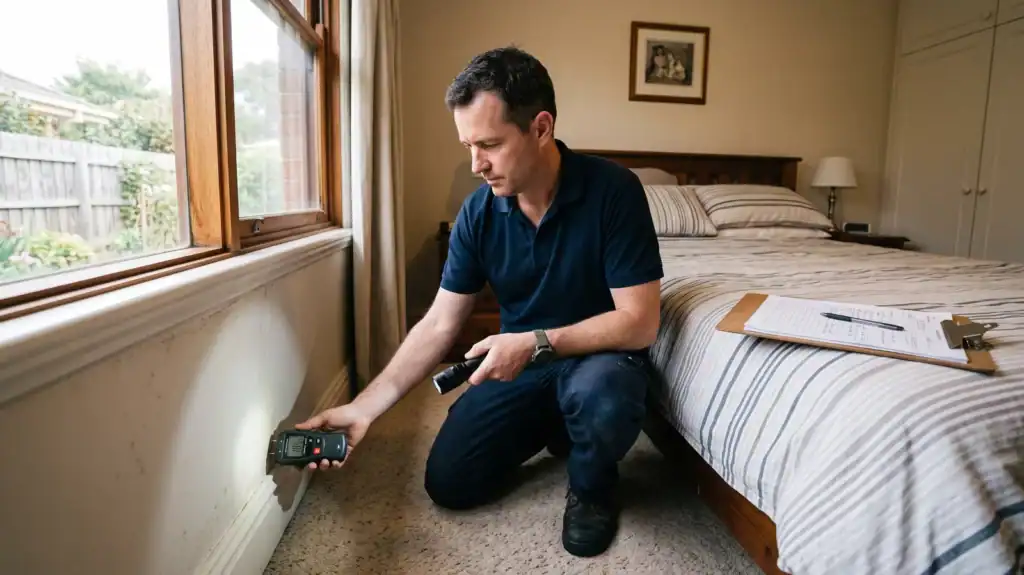
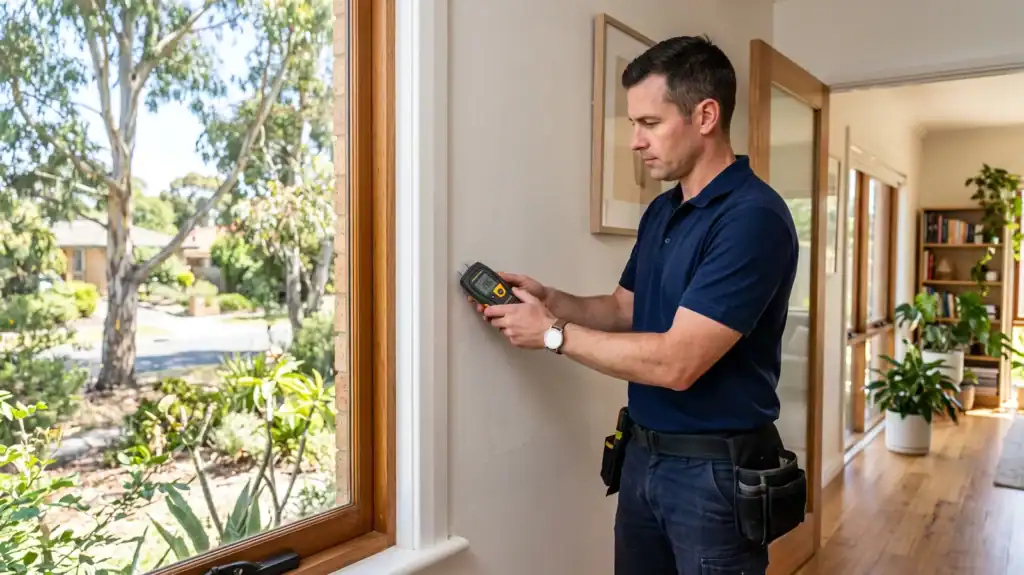
Our team conducts thorough mould inspections to identify all affected areas and moisture sources. This comprehensive approach ensures complete mould remediation with lasting results.
Preventing Mould Growth on Ceilings
Prevention is always more effective and economical than repeated removal. Addressing environmental factors that promote mould growth protects your ceiling and your health.
Ventilation Improvements
- Install exhaust fans in bathrooms and kitchens, vented to the outside
- Run exhaust fans during and for 15-20 minutes after showering or cooking
- Open windows regularly to promote air circulation
- Ensure roof vents are clear and functioning properly
Moisture Control Measures
- Repair roof leaks immediately when identified
- Clean gutters regularly to prevent water overflow
- Fix plumbing leaks promptly
- Use dehumidifiers in particularly humid areas
- Insulate ceiling spaces properly to reduce condensation
Professional Mould Prevention treatments provide an additional layer of protection. These applications create an inhospitable environment for mould spores, reducing the likelihood of future growth even in moisture-prone areas.
Frequently Asked Questions
Is mould on the ceiling dangerous?
Ceiling mould can affect indoor air quality and trigger respiratory irritation, allergies and asthma, particularly for children, older people and anyone with existing conditions. Government health guidance, including the ABC Emergency mould cleanup guide, recommends treating mould promptly and seeking help for large or recurring areas.
Why does mould keep coming back on my ceiling?
If mould returns after cleaning, the underlying moisture source has not been fixed. Poor ventilation, roof or plumbing leaks, and condensation in bathrooms and kitchens let spores re-establish. Removing the visible mould without addressing the cause only delays its return.
Can I just paint over ceiling mould?
No. Painting over mould traps it beneath the new coat and regrowth pushes through within weeks. The mould must be killed and the surface fully dried first, and the moisture cause corrected, before any repainting.
When should I call a professional for ceiling mould?
Call a professional when the affected area is larger than about one square metre, keeps returning, follows water damage, or anyone in the home has respiratory symptoms. Widespread or hidden ceiling mould usually points to a moisture problem that needs proper assessment.
Does bleach actually kill ceiling mould?
On non-porous surfaces bleach can remove surface staining, but on porous plasterboard ceilings it often leaves the root structure behind. A dedicated mould treatment and fixing the moisture source is more reliable than bleach alone.
What kills mould permanently on a ceiling?
No product sold at retail permanently kills ceiling mould, because sprays and wipes cannot reach the root system embedded in porous plasterboard. Permanent removal requires an industrial-grade antimicrobial that penetrates the substrate, combined with fixing the moisture source that allowed the colony to establish. Without both steps, regrowth is typically a matter of weeks.
Does ceiling mould go away on its own?
No. Mould does not die off or disappear without intervention. As long as moisture remains available, the colony continues to expand beneath the surface even when the visible patch appears to dry out. Early treatment limits the area affected and reduces the risk of structural damage to the ceiling material.
What do professionals use to get rid of mould?
Mould and Hygiene Solutions uses an Australian-made, non-hazardous, non-corrosive and environmentally friendly antimicrobial solution that penetrates porous materials to eliminate the root system. Treatment includes full containment to prevent spore spread, moisture source identification with thermal imaging, and application of a protective barrier. All treated areas are covered by a 12-month mould-free guarantee.
The Mould and Hygiene Solutions Difference
Professional treatment offers benefits that DIY methods simply cannot match. Mould and Hygiene Solutions serves homeowners throughout Lake Macquarie, Maitland and surrounding regions with comprehensive mould solutions.
Our process includes:
- Detailed inspection with thermal imaging and moisture detection
- Identification of all moisture sources contributing to growth
- Complete containment to prevent spore spread during treatment
- Application of an Australian-made, non-hazardous, non-corrosive and environmentally friendly antimicrobial solution that penetrates deep into porous materials
- Optional Mould Testing for species identification
- Recommendations for preventing future growth
- 12-month mould-free guarantee on all treated areas
This unconditional guarantee means if mould returns to treated areas within 12 months, we return to retreat the affected areas at no additional charge. This level of assurance is impossible with DIY approaches that only address surface growth.
Book Your Free Mould Inspection Today
If you’re dealing with ceiling mould or noticing warning signs of mould exposure in your home, don’t waste time and money on DIY methods that only provide temporary cosmetic improvements. Early professional intervention prevents structural damage, protects your family’s health and saves money in the long run.
Mould and Hygiene Solutions offers free inspections for homes and businesses across Newcastle, the Central Coast and Hunter Valley. Our experienced technicians will assess your ceiling mould, identify moisture sources and provide straightforward recommendations.
Contact us today at mouldandhygienesolutions.com.au/contact/ to schedule your free inspection. Take the first step towards a healthier, mould-free home with professional treatment backed by our 12-month guarantee.