Mould in a rental property is one of the most common disputes in NSW tenancy. The good news is that the law is clear on responsibilities, and a professional inspection with a written report can resolve the issue quickly for everyone involved.
This guide covers what NSW law says about mould responsibilities, what to do when you discover black mould in a rental property, and why surface cleaning never fixes the actual problem.
Quick answer: Under the Residential Tenancies Act 2010 (NSW), the property owner is responsible for mould caused by building faults (leaks, rising damp, poor ventilation). Tenants are responsible if they caused the issue through misuse. In practice, a professional mould inspection report is the fastest way to identify the cause and determine the right course of action.
How NSW Law Divides Mould Responsibility
The Residential Tenancies Act 2010 (NSW) requires property owners to keep the premises in a reasonable state of repair and fit for habitation. Mould caused by structural or maintenance issues falls within that duty. Tenants have a responsibility to ventilate, report issues promptly, and avoid actions that create excess moisture.
| Cause of mould | Usually responsible | Why |
|---|---|---|
| Rising damp or rainwater ingress | Property owner | Structural repair duty under RTA s.63 |
| Leaking plumbing or roof | Property owner | Repair obligation throughout the tenancy |
| Inadequate ventilation design (no exhaust fan, poor airflow) | Property owner | Premises must be fit for habitation |
| Tenant not reporting a known leak | Tenant (partial) | Failure to notify of an issue that worsened |
| Tenant blocking vents or creating excess indoor moisture | Tenant | Misuse contributing to moisture buildup |
| Tenant-caused water damage (overflow, appliance failure) | Tenant | Damage caused by tenant actions |
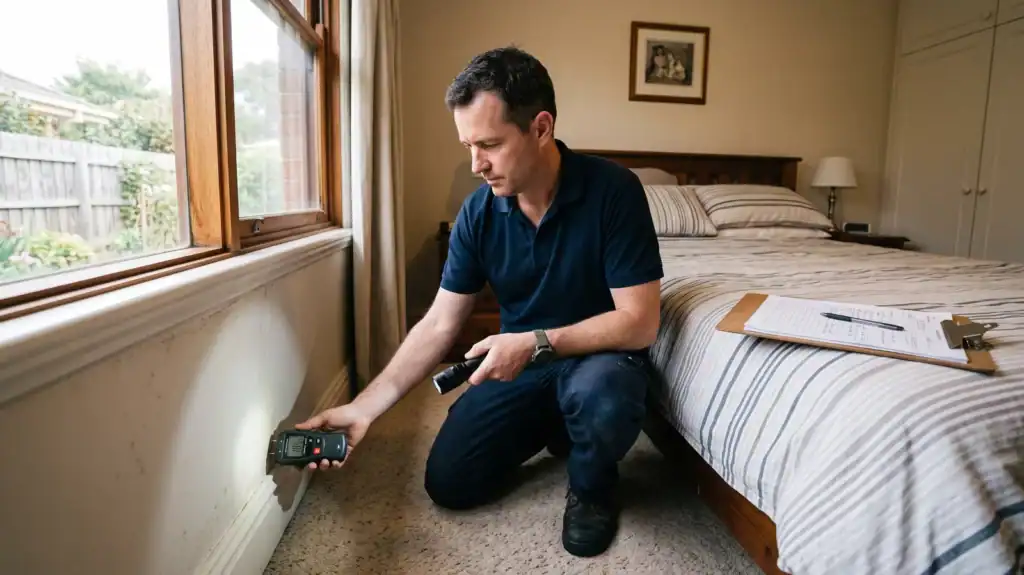
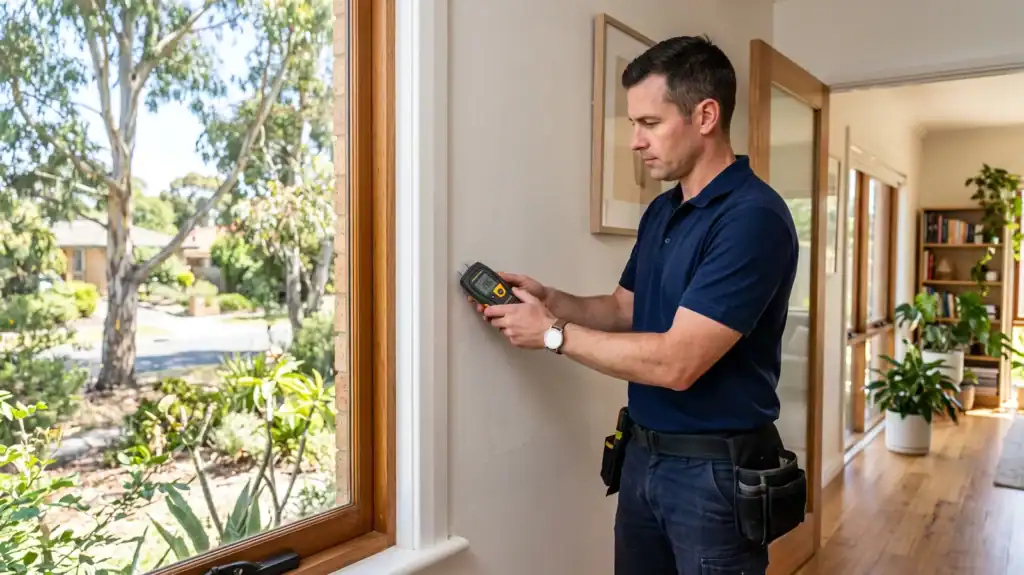
In most cases, the cause is a building issue rather than tenant behaviour. A professional inspection, including the process used in commercial mould removal, can identify the moisture source within minutes. This avoids weeks of back-and-forth between the tenant and property manager about who is at fault.
What Property Owners and Managers Should Do
When a tenant reports mould, the most effective response is a professional inspection and treatment rather than sending someone with bleach and a bucket. Surface cleaning does not meet the repair obligation when mould is actively growing from a moisture source that has not been addressed. The mould will return within weeks.
- Arrange a professional mould inspection to identify the moisture source and document the extent of the problem
- Get a written report that records the cause, the areas affected, and the recommended treatment
- Address the moisture source (repair the leak, improve ventilation, fix drainage)
- Engage professional treatment that addresses the root structure, not just the surface
- Keep the inspection report and treatment records on file for compliance and future reference
A professional inspection report protects the property owner by documenting exactly what caused the mould and what was done to fix it. If the cause turns out to be tenant behaviour, the report provides clear evidence of that too.
For property managers: A mould inspection report from a qualified professional gives you a clear document to share with the owner, the tenant, and your files. It takes the guesswork out of who is responsible and what needs to happen next.
How to Report Mould in a Rental Property
If mould appears in a rental, tenants should notify the property manager or landlord in writing as soon as possible. A written request creates a formal record, which matters if the issue needs to be escalated later.
- Put it in writing. Email is ideal. Include the date, the location of the mould, when you first noticed it, and any related issues (leaks, condensation, musty smell)
- Take photos. Photograph the mould, any visible water damage, and the surrounding area. Date-stamp them if your phone does not do so automatically
- Request a specific response. Ask the landlord or property manager to arrange a professional inspection within a reasonable timeframe
- Keep a copy. Save the email and any responses. If you need to escalate, this paper trail is your evidence
Under the NSW Fair Trading repairs and maintenance guidelines, landlords are required to respond to repair requests within a reasonable time. Mould caused by a leak, rising damp, or faulty ventilation is a repair issue, not a cleaning issue.
What Tenants Should Know
Reporting mould promptly and cooperating with the inspection process is the fastest way to get the issue resolved. Most property managers want to fix mould quickly because leaving it unresolved creates bigger problems down the track.
- Report mould and any visible moisture sources (leaks, condensation, damp patches) in writing as soon as you notice them
- Keep the property ventilated. Use exhaust fans, open windows where practical, and avoid excessive indoor drying. Ventilation is more effective than cleaning when it comes to preventing mould from returning
- Allow access for inspection and treatment when arranged
- Do not attempt to clean extensive mould yourself. It disturbs spores, spreads the problem, and makes professional treatment harder
If you are concerned about health effects from ongoing mould exposure, keep a record of any mould-related symptoms and mention them to your GP. This documentation can support your case if you need to escalate the issue.
You also have specific legal protections. Understanding your tenant rights when a landlord ignores mould in NSW can help you take the right next steps if your reports are not acted on.
What Happens If Your Landlord Does Not Act
If a landlord or property manager ignores a written mould complaint, tenants in NSW have clear escalation options.
- Follow up in writing. Send a second written request referencing the original report and ask for a response within 14 days
- Contact NSW Fair Trading. Fair Trading can provide guidance and, in some cases, mediate between the tenant and landlord
- Apply to NCAT. The NSW Civil and Administrative Tribunal (NCAT) can order the landlord to carry out repairs, reduce rent for the period the property was affected, and award compensation for damage to belongings or health-related costs
NCAT has ordered rent reductions and compensation in cases where landlords failed to address mould caused by building defects. The tribunal treats mould from structural issues as a breach of the landlord’s repair obligations under section 63 of the Residential Tenancies Act 2010.
In serious cases, tenants may also have grounds to break a lease because of mould in NSW without penalty, particularly when the property is deemed unfit for habitation.
For landlords and property managers: Responding to a mould complaint quickly and professionally is significantly less costly than an NCAT order. A professional inspection and treatment, backed by a written report, demonstrates that you took the issue seriously and acted within your obligations.
Why Surface Cleaning Never Fixes Rental Mould
Retail mould sprays, bleach, and vinegar remove the visible discolouration within minutes. The mould root (hyphae) embedded in plaster, timber, or grout is completely unaffected. Regrowth typically occurs within two to six weeks, and the cycle starts again.
- Surface only: Bleach lifts the colour but cannot penetrate porous building materials where the root structure lives
- Spore spread: Spraying mould without containment releases spores into the air, which settle elsewhere and start new colonies
- Moisture source untouched: No retail product can find or fix the leak, damp, or ventilation failure feeding the mould
- Creates repeat callouts: For property managers, a surface clean that fails in three weeks means another tenant complaint, another tradesperson visit, and more cost. Professional treatment done once saves time and money
NSW Fair Trading treats mould as a building repair issue, not a cleaning issue. A surface clean that fails within weeks does not satisfy the repair obligation under the Residential Tenancies Act. If you have tried retail products and the mould keeps returning, find out whether DIY mould removal actually works before spending more on products that only treat the surface.
What Professional Mould Treatment Involves
Professional mould treatment starts with identifying the moisture source, uses industrial-grade products that penetrate below the surface, applies containment so spores do not spread, and backs the work with a guarantee. Understanding how much professional mould removal costs in Australia helps property owners and managers budget for the work and compare it against the cost of repeated surface cleans.
Mould and Hygiene Solutions uses an Australian-made, non-hazardous, non-corrosive and environmentally friendly antimicrobial solution that kills 99.99% of bacteria and treats the root structure in the substrate, not just the visible surface.
- Professional inspection to identify the moisture source and document the extent of the problem
- Written report suitable for property managers, owners, and compliance records
- Full treatment of the substrate (plaster, timber, grout) using the antimicrobial solution
- Containment during treatment so spores do not spread to other rooms
- Advice on ventilation or repairs needed to prevent recurrence
- 12-month unconditional mould-free guarantee on the treated area
For rental properties, the written inspection report is particularly valuable. It gives the property manager a clear record of what caused the mould, what was done, and what ongoing maintenance is needed. That documentation protects the owner and satisfies the duty of care under NSW tenancy law.
Frequently Asked Questions
Who is responsible for mould in a rental property in NSW?
The landlord is responsible when mould is caused by building faults such as leaks, rising damp, or inadequate ventilation. The tenant is responsible if the mould resulted from their actions, such as blocking vents or creating excess moisture. A professional inspection report is the quickest way to determine the cause.
Is mould considered an urgent repair in NSW?
Mould itself is not listed as an urgent repair under the Residential Tenancies Act 2010. However, the underlying cause often qualifies. A burst pipe, a serious leak, or a fault that makes the property unsafe or insecure are all classified as urgent repairs requiring a response within 24 to 48 hours.
Can a tenant get a rent reduction for mould?
Yes. If the mould reduces the livability of the property and the landlord has not addressed it within a reasonable time, the tenant can apply to NCAT for a rent reduction for the affected period. The tribunal considers how much of the property was affected and for how long.
What if the landlord says the mould is the tenant’s fault?
A professional mould inspection report identifies the actual moisture source. If the cause is a building defect (leak, poor ventilation, rising damp), the report provides documented evidence that overrides a verbal claim. If the cause is tenant behaviour, the report documents that instead.
Can I break my lease because of mould in NSW?
In some cases, yes. If the mould makes the property unfit for habitation and the landlord has not acted on repair requests, a tenant may have grounds to terminate the lease without penalty.
Does bleach kill mould in a rental?
Bleach removes the visible discolouration but does not kill the root structure embedded in porous materials like plaster and grout. The mould typically returns within two to six weeks. Professional treatment with an antimicrobial solution that penetrates the substrate is required for a lasting result.
How do I prove mould is the landlord’s responsibility?
Document the mould with dated photographs, report it in writing, and request a professional inspection. The inspection report identifies the moisture source and whether it is a building fault or tenant-caused. This document is accepted as evidence by NCAT and NSW Fair Trading.
What does a professional mould inspection include?
A professional inspection identifies the moisture source, documents the extent of the mould, assesses the affected materials, and provides a written report with treatment recommendations. The report is suitable for property managers, owners, tenants, and tribunal proceedings.
How long does a landlord have to fix mould in NSW?
The Residential Tenancies Act does not specify an exact timeframe for non-urgent repairs, but landlords must act within a reasonable time. For mould caused by an ongoing leak or damp issue, 14 days is a commonly referenced benchmark. If the underlying cause is an urgent repair (burst pipe, serious leak), the landlord must respond within 24 to 48 hours.
Book a Professional Mould Inspection
Whether you are a property owner, property manager, or tenant dealing with mould in a rental, the fastest path to resolution is a professional inspection. It identifies the cause, documents the problem, and provides a clear plan for treatment.
Mould and Hygiene Solutions provides professional mould inspections and treatment across Newcastle, the Central Coast, Lake Macquarie, Hunter Valley and Port Stephens. Every treatment is backed by an unconditional 12-month mould-free guarantee. Visit mould inspections or mould removal to book.