A mould inspector finds where mould is growing, identifies the moisture source feeding it, and recommends treatment, repairs or further investigation.
Most people first notice mould as a dark patch on a wall or a musty smell that will not go away. It is understandable to try cleaning it first, but removing a mark does not explain why that surface became damp.
Mould can grow within porous materials or in concealed spaces, while a leak or condensation continues to feed it. A mould inspector investigates both the visible growth and the conditions that let it return.
Already know you need help? Book a professional mould inspection with Mould and Hygiene Solutions across Newcastle, the Central Coast, Lake Macquarie, Hunter Valley and Port Stephens.
What a mould inspector checks during a visit
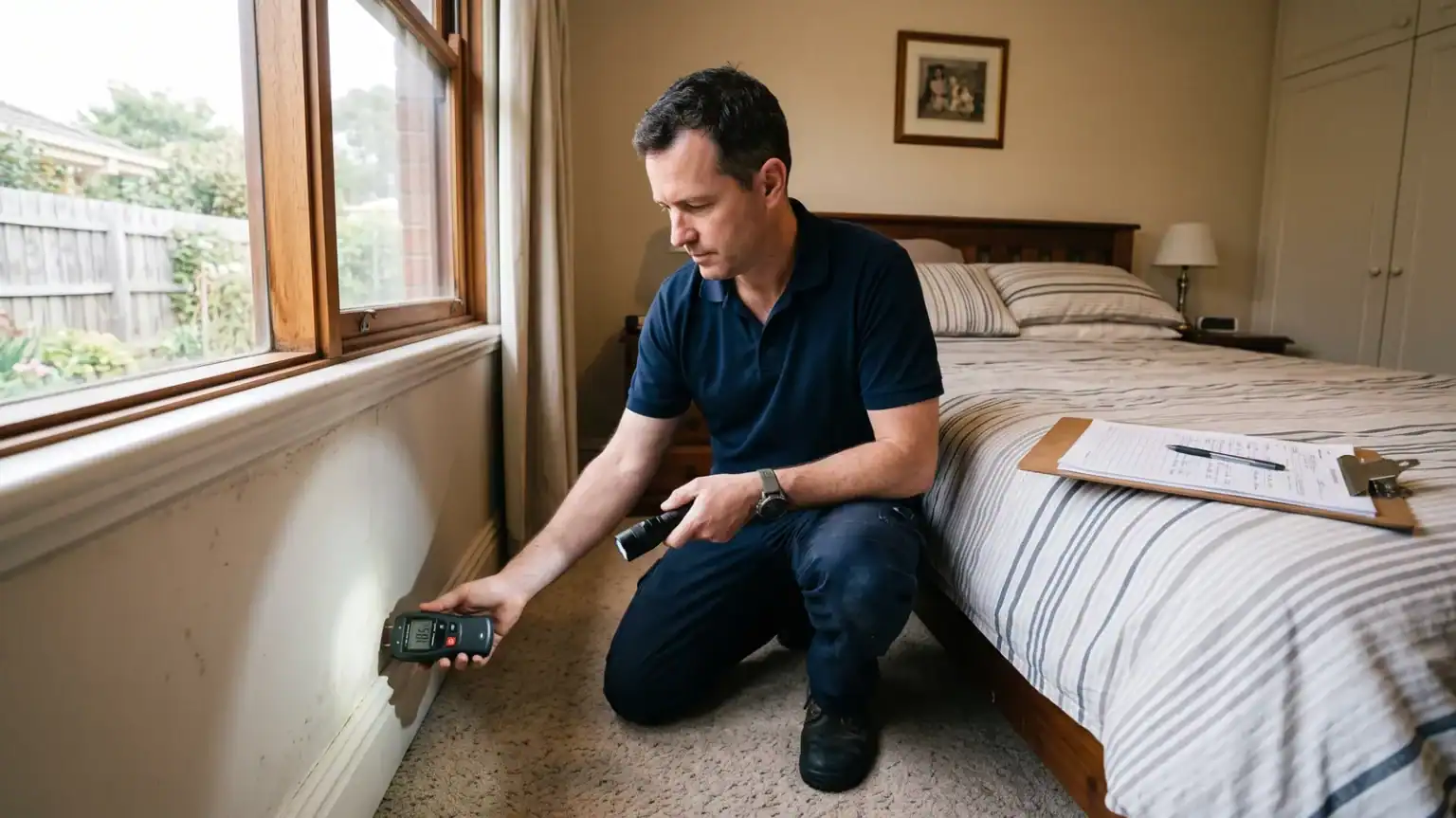
A mould inspection checks accessible areas of the property, starting with the affected rooms and nearby moisture sources. Inspection of roof cavities, subfloors and concealed spaces depends on safe access and the agreed inspection scope.
- Wet areas including bathrooms, laundries, kitchens and any room with plumbing
- Ceilings and roof cavities where condensation and roof leaks create ideal conditions for hidden mould
- Subfloor spaces where rising damp and poor ventilation underneath the house are common triggers in older homes in Newcastle and the Hunter Valley
- Window frames and tracks where condensation pools overnight, especially in winter
- Wardrobes and storage areas where poor airflow behind furniture traps moisture against walls
- External walls checked for drainage issues, gutter faults or cladding gaps that let water in
Without finding and addressing that source, cleaning can leave the conditions for regrowth in place. An inspection helps you decide which treatment and repairs are needed before spending more time on surface cleaning.
Tools mould inspectors use to find hidden growth
Visible mould is straightforward to identify. The harder problem is mould growing inside wall cavities, under flooring or behind cabinetry where you cannot see it.
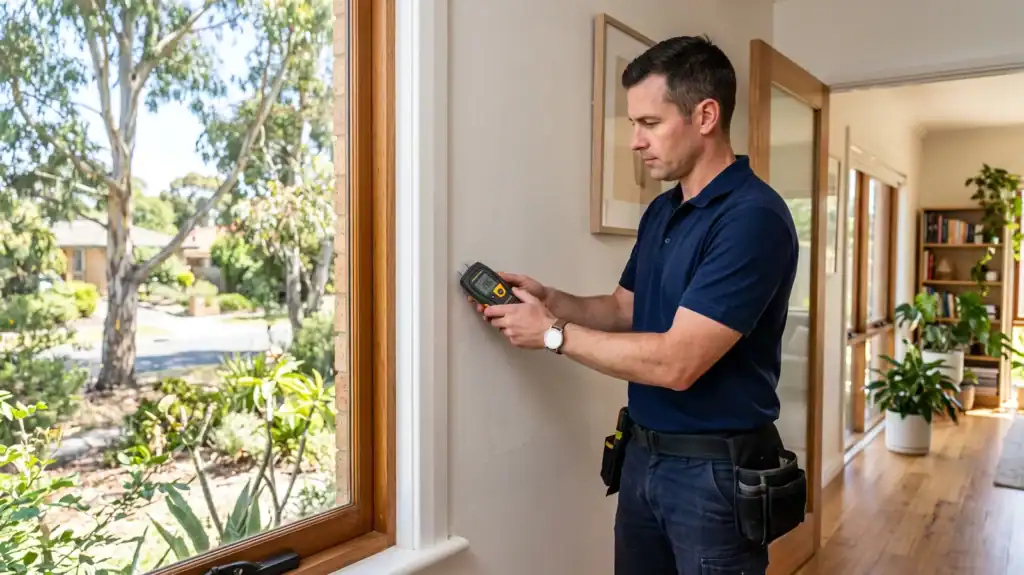
Professional inspectors use moisture readings and, where appropriate, thermal imaging to investigate damp areas. These tools indicate conditions associated with mould; they do not identify mould species or prove what is behind a sealed wall.
| Tool | What it does | Why it matters |
|---|---|---|
| Pin moisture meter | Measures moisture content inside building materials by inserting small probes | Helps assess dampness in a wall, floor or ceiling; readings need interpretation for the material being checked |
| Pinless moisture meter | Scans materials without penetrating the surface using electromagnetic signals | Maps moisture across large areas quickly without damaging surfaces |
| Thermal imaging camera | Displays surface temperature differences as a colour map | Temperature patterns guide further investigation; insulation gaps and other conditions can produce similar patterns |
| Hygrometer | Measures relative humidity in each room | Shows indoor humidity at the time of the visit; a single reading cannot rule out earlier condensation or a concealed leak |
Moisture meters are available to homeowners, but a single reading can be misleading without knowing the material, instrument settings and surrounding conditions. The value of professional inspection is interpreting the readings alongside the building history and visible evidence.
Mould inspection vs mould testing
Mould inspections and mould testing answer different questions. An inspection assesses visible growth, dampness and likely causes; laboratory testing analyses collected samples.
- Mould inspection is where a trained inspector surveys the property, uses moisture detection tools, identifies the source and scope of the problem, and provides a written report with recommendations. This is what most homeowners need.
- Mould testing (laboratory) involves air or surface sampling by a suitably qualified provider, with laboratory analysis and interpretation. Ask an insurer or other report recipient what evidence they require before commissioning a specialist report.
Which do you need? A visual assessment is often the starting point when mould is visible, but concealed contamination may need further investigation. Mould and Hygiene Solutions provides inspections and removal, not laboratory mould testing; ask a qualified occupational hygienist if specialist sampling is required.
Signs you need a professional mould inspection
A dark mark alone does not tell you the extent or cause of a mould problem. Recurring growth, dampness or a persistent smell are reasons to arrange an assessment rather than keep applying surface sprays.
- Mould keeps returning after you clean it. This suggests the conditions supporting growth remain. Surface wiping cannot establish how far growth extends into porous plasterboard or timber, or resolve the moisture source.
- You can smell mould but cannot see it. A persistent musty or earthy smell can indicate concealed dampness or mould, so the source needs investigation.
- Water damage after a leak or flood. Trapped moisture can remain after a surface looks dry. The US EPA recommends drying water-damaged areas within 24 to 48 hours to help prevent mould growth; this is a drying target, not a guaranteed growth timetable.
- You are buying or renting a property. A pre-purchase or pre-lease mould inspection catches problems before they become yours. This is particularly relevant for properties across the Central Coast and Lake Macquarie where older housing stock and coastal humidity create ideal conditions.
- Occupants have symptoms alongside a mould or dampness problem. NSW Health lists eye and skin irritation, nasal symptoms and wheezing among possible effects, and notes that spores can trigger attacks in people with asthma. Symptoms alone do not confirm mould exposure, so seek medical advice about symptoms and use the inspection to assess the building. NSW Health explains these health effects and inspection limits.
What the inspection report should tell you
A useful report separates confirmed observations from suspected causes and records any areas that could not be inspected. This gives property owners and managers a basis for arranging work rather than relying on photographs of a cleaned wall.
- Locations and extent of visible growth, with photographs where included.
- Moisture readings, the materials checked and the likely source of dampness.
- Access limitations and any further investigation needed.
- Recommended treatment, repairs and the order in which work should happen.
For dealing with mould in a rental property, a written assessment helps the property manager, owner and occupant discuss the same findings. It should document the building condition without assuming who caused it.
Before booking: Ask who will inspect, what experience they have with your building type and whether the report suits its intended use. Mould and Hygiene Solutions also provides removal; if independent advice or clearance is required, discuss a separate assessor before agreeing to treatment.
Why surface cleaning does not resolve recurring mould
Recurring mould needs an assessment of the dampness and affected material before treatment is chosen.
- Wiping away visible growth does not establish whether porous material is contaminated beneath the surface.
- Scrubbing or opening contaminated materials can release spores; professional work plans account for containment.
- A cleaning product cannot repair plumbing leaks, failed waterproofing or persistent condensation.
Understanding why sugar soap does not solve a recurring mould problem helps explain the limit of household surface cleaners. The inspection comes first so treatment addresses the actual problem.
What happens after the inspection
- Minor surface mould in a single area. The report may include advice on improving ventilation or fixing a specific leak, with a small targeted treatment.
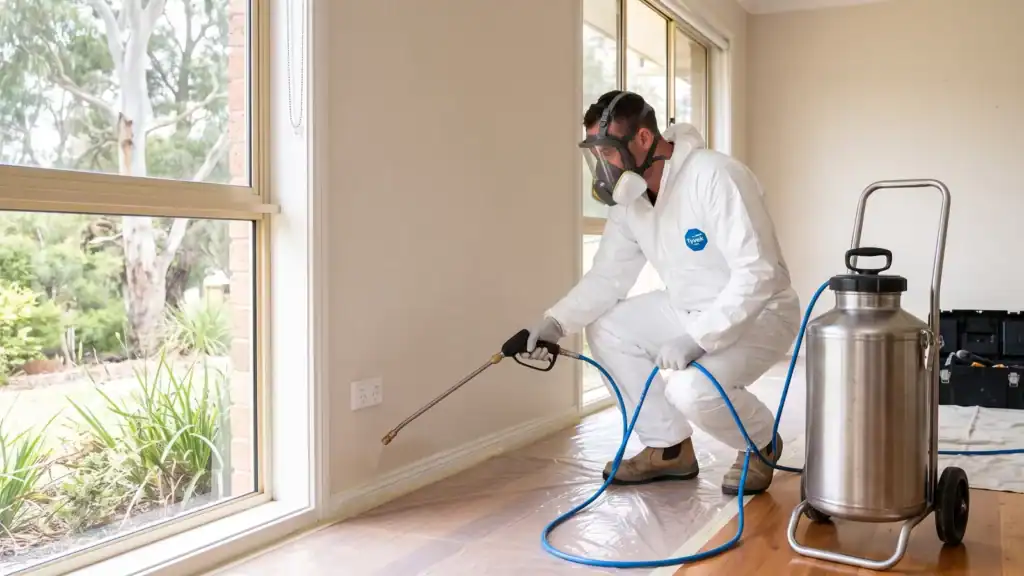
- Established mould across multiple areas. Professional mould removal addresses affected materials using the agreed treatment plan and an Australian-made, non-hazardous, non-corrosive and environmentally friendly antimicrobial solution. Heavily contaminated porous materials may need removal or replacement rather than repeated spraying.
- Structural moisture issues. The report flags building defects (leaking pipes, failed waterproofing, inadequate ventilation) that need a builder or plumber before mould treatment can be effective.
Mould and Hygiene Solutions plans containment around the affected materials and backs treatment with a 12-month mould-free guarantee. Ask the team to explain its terms and any repairs required; treatment cannot repair a leaking roof or failed waterproofing.
Where contamination extends into building materials, a mould remediation plan for affected materials helps define what can be treated and what needs removal. The inspector should explain that scope before work starts.
Once the moisture source is understood, mould prevention measures suited to your property can support the treatment. These may involve ventilation improvements or repairs, rather than relying on repeated surface cleaning.
Frequently asked questions
The FAQs cover inspection limits, testing and treatment.
How does a mould inspector find mould inside walls?
Thermal imaging shows surface temperature patterns that can guide investigation. A moisture meter helps check dampness, but neither tool sees mould through a wall or identifies its species.
If evidence points to concealed growth, the inspector may recommend further investigation or controlled opening by an appropriate professional. Ask which areas were inaccessible and what those limits mean for the findings.
What is the difference between a mould inspection and mould testing?
A mould inspection is a visual and instrument-based assessment of your property. Mould testing involves collecting samples and sending them to a laboratory to identify species and spore counts.
Visible mould often does not need laboratory testing, according to the US EPA guidance on mould sampling. Specialist testing may be useful for a defined question, but samples do not replace moisture investigation or removal of contamination.
How quickly can mould grow after a leak or flood?
Growth depends on the material and how long it stays damp, so there is no single timetable for every property. The EPA drying guidance above recommends acting within 24 to 48 hours after water damage; arrange prompt assessment if materials remain damp or mould appears.
What are the signs I need a mould inspection?
Recurring growth, persistent musty odours, water damage and visible dampness are reasons to book an inspection. Understanding respiratory or allergy symptoms associated with mould can help you discuss concerns with a doctor, but symptoms cannot diagnose a building problem.
Do you also do the mould removal or just the inspection?
Mould and Hygiene Solutions handles both. The inspection identifies the problem and its source.
If treatment is needed, the team explains the proposed removal work and the 12-month mould-free guarantee. Any repairs needed to control moisture should be clear before treatment proceeds.
How much does a mould inspection cost?
Mould and Hygiene Solutions provides a paid inspection service. Ask what is included in the quote, including access to roof cavities or subfloors and any written report you need.
Contact Mould and Hygiene Solutions with the property location and affected areas so the team can confirm the inspection scope.
The next step is getting a professional to look
- Tell the team where mould or dampness appears and whether it follows rain.
- Have photographs and any leak or repair history ready.
- Confirm safe access and the written report you need when booking.
Mould and Hygiene Solutions inspects properties across Newcastle, the Central Coast, Lake Macquarie, Hunter Valley and Port Stephens. Book a professional mould inspection to assess the affected areas and plan the next steps.