Mould remediation cost depends on what is actually wrong with your property, not just how much mould you can see.
Most homeowners across Newcastle and the Central Coast spot mould on a wall or ceiling and reach for bleach. The visible patch gets scrubbed away, but the colony rooted in the material underneath stays put, and the mould returns within weeks.
Below: what pushes the price up or down, what professional remediation actually involves, and why addressing the root cause is the only way to avoid paying for the same problem twice.
Already dealing with mould? Learn what a professional mould inspection covers or see how mould remediation works for a full overview of the process.
What mould remediation actually means
Mould remediation is a term used in insurance claims and property management. Remediation means returning mould levels to a normal, safe baseline, not just wiping visible growth off a surface.
A mould removal job that only scrubs the wall does not count as remediation. Remediation covers the full chain from inspection through to prevention.
A full job covers:
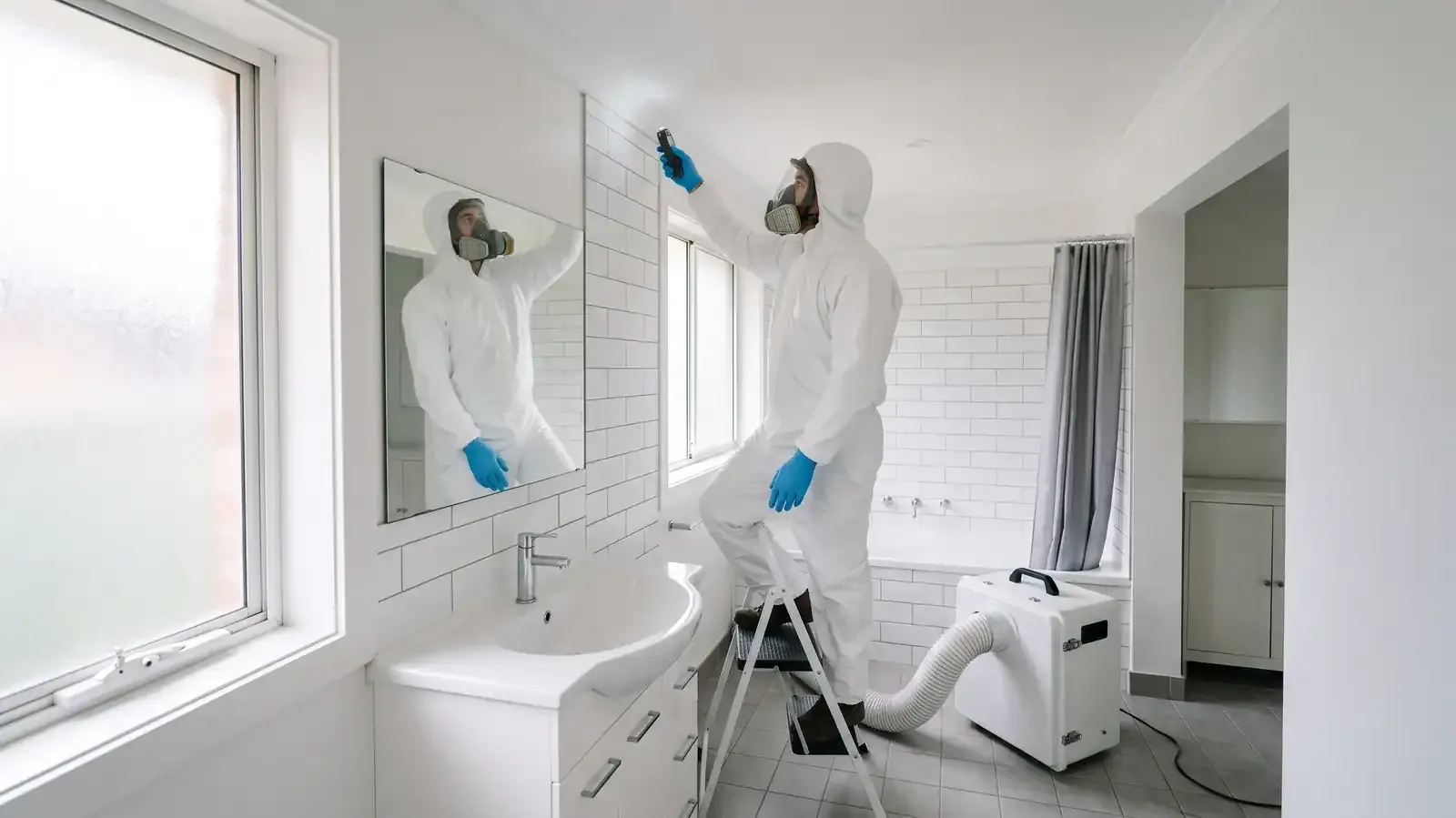
- Inspection and identification of the mould species and affected areas
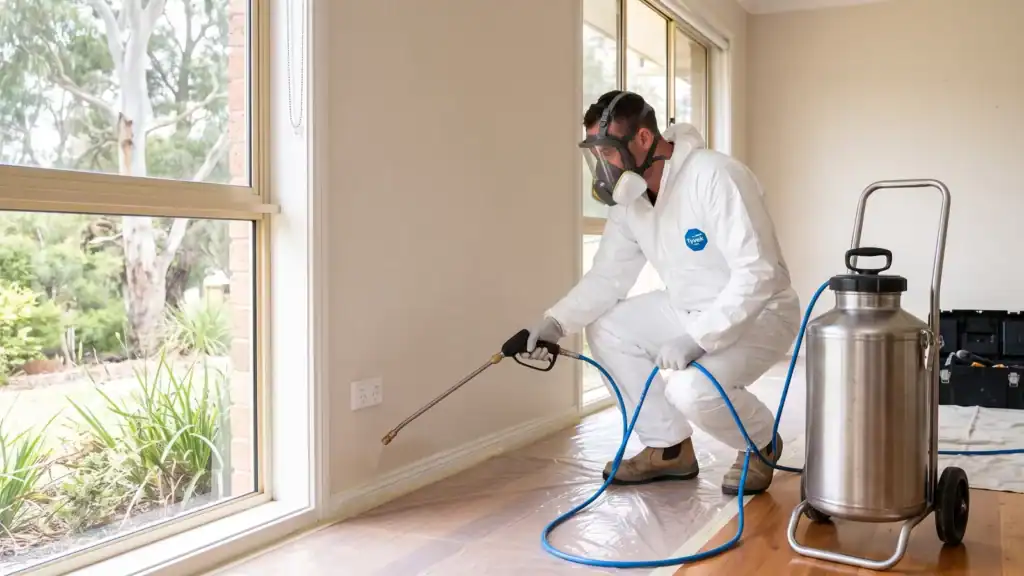
- Containment to prevent spore spread during treatment
- Removal of mould from surfaces and substrates
- Treatment with antimicrobial solutions that kill the root structure
- Identification and resolution of the moisture source driving growth
- Post-treatment verification and ongoing protection
A property with mould on one bathroom ceiling is a different job to a home where growth has spread through wall cavities across multiple rooms. More steps, more time, more product.
What drives mould remediation cost
Mould remediation cost is not a fixed number. It shifts based on a handful of factors that an inspector assesses on site, which is why two properties in the same street can need completely different levels of work.
| Cost Factor | Lower End | Higher End |
|---|---|---|
| Affected area | Single surface (one wall or ceiling) | Multiple rooms, wall cavities, subfloor |
| Mould severity | Surface growth only, newly formed | Deep substrate penetration, long-standing colony |
| Material type | Non-porous (tile, glass, metal) | Porous (plasterboard, timber framing, carpet) |
| Accessibility | Open, visible surfaces | Behind walls, inside ceiling cavities, subfloor |
| Moisture source | Simple condensation fix | Plumbing leak, rising damp, structural waterproofing |
The biggest variable is material type. Non-porous surfaces like tiles can be cleaned and treated on the surface. Porous materials like plasterboard and timber absorb mould deep into their structure, and the treatment required to reach those root systems takes longer and uses more product.
Accessibility adds time. Treating mould on an exposed bathroom wall is straightforward. Treating mould inside a wall cavity behind plasterboard, or in a subfloor space that requires crawl access, takes significantly more labour.
The moisture source no one budgets for
Size, severity, and material dominate the conversation when people research mould remediation cost. What rarely comes up until after the quote is done: the moisture source.
Mould needs moisture to grow. The WHO Guidelines for indoor air quality identify sustained indoor humidity above 60% as the threshold where mould colonisation becomes likely. If the source of that moisture is not found and fixed, treated surfaces will re-colonise.
Treating the mould without fixing the moisture source is just buying time. A leaking pipe behind a wall, poor subfloor ventilation, or failed waterproofing on an external wall will keep feeding new mould colonies no matter how many times the surface is cleaned.
Properties across the Hunter Valley and Lake Macquarie deal with high coastal humidity year-round. Older homes with limited ventilation and no vapour barriers are particularly prone, especially during winter when condensation builds on cold surfaces. A professional inspection identifies the moisture source before quoting, so the remediation addresses the cause and not just the symptom.
Once the moisture source is resolved and the mould treated, a mould prevention plan helps keep the property clear long term.
Why surface cleaning costs you more long term
DIY mould products do not eliminate mould. Spraying bleach on a mould patch removes the surface discolouration, but the mould root structure (hyphae) embedded in the material underneath is unaffected. Regrowth occurs within two to six weeks.
The US EPA mould remediation guide recommends professional treatment for any affected area larger than roughly 1 m². Below that threshold, minor surface mould on non-porous materials may respond to cleaning. Above it, the colony has typically established root systems that retail sprays cannot reach.
Repeat surface cleaning creates a cycle that costs more over time than a single professional remediation. Each round of DIY treatment buys a few weeks of clean-looking surfaces while the colony continues spreading through the substrate beneath.
- Retail sprays sit on the surface. The mould root system lives inside the material, unreached.
- Disturbing mould without containment spreads spores to other rooms, potentially starting new colonies elsewhere in the property.
- No retail product addresses why the mould grew in the first place. The conditions that caused the original colony remain unchanged.
- Every regrowth cycle degrades the host material further. Plasterboard that could have been treated in the first round may need full replacement after months of repeated colonisation.
The cumulative spend on retail products, repainting, and replacement materials over a year regularly exceeds the cost of professional remediation done once and backed by a guarantee. For a full breakdown of whether professional mould removal is worth the investment, that comparison covers the numbers in detail.
DIY vs professional mould remediation
The table below compares what DIY cleaning and professional remediation actually deliver. Professional remediation treats the root system, contains spore spread, and addresses the moisture source driving the growth.
| DIY Surface Cleaning | Professional Remediation | |
|---|---|---|
| Kills surface mould | Yes | Yes |
| Kills root structure (hyphae) | No | Yes |
| Prevents spore spread | No (scrubbing releases spores) | Yes (containment procedures) |
| Identifies moisture source | No | Yes (inspection included) |
| Treats porous materials | Surface only | Penetrates substrates |
| Lasts | 2-6 weeks before regrowth | 12+ months (guaranteed) |
| Guarantee | None | Unconditional 12-month mould-free guarantee |
Mould and Hygiene Solutions uses an Australian-made, non-hazardous, non-corrosive and environmentally friendly antimicrobial solution that penetrates porous materials and destroys the mould colony at the root. That treatment is backed by an unconditional 12-month mould-free guarantee, meaning the remediation either works or it gets redone at no additional cost.
Does insurance cover mould remediation
Home insurance policies in Australia generally do not cover mould remediation on its own. The Insurance Council of Australia classifies mould as a maintenance issue, and most standard home and contents policies exclude maintenance-related claims.
The exception is when mould results from a covered event. If a burst pipe or storm damage caused water intrusion that led to mould, the remediation may fall under the water damage claim. The mould itself is not the covered event; the water damage is.
- Covered: mould caused by a sudden, insured event (burst pipe, storm, flood if covered)
- Not covered: mould from condensation, poor ventilation, slow leaks, or general neglect
- Grey area: mould discovered during renovation or sale, where cause and policy wording determines the outcome
Tip for property owners: A professional mould testing report documents the species, extent, and likely cause. That report gives your insurer the evidence they need to assess whether the claim falls under a covered event.
How to get an accurate mould remediation quote
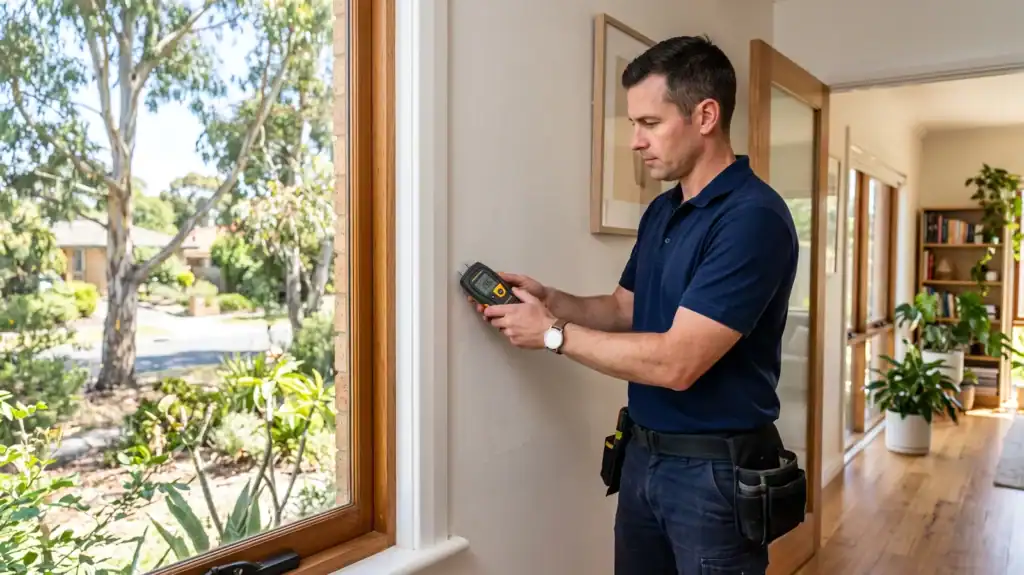
Online price guides cannot tell you what your property needs. Mould remediation cost depends on variables that can only be assessed in person: the extent of hidden mould, the materials affected, the moisture source, and how far the colony has spread behind surfaces.
A professional inspection is the only reliable way to get an accurate quote. The inspector covers the following before providing a scope of work and price:
- Every affected area identified, including hidden mould behind walls and in cavities
- Material testing where needed to determine depth of colonisation
- Moisture source traced and documented
- Full scope of work with a clear breakdown of what the remediation involves
Mould and Hygiene Solutions provides inspections across Newcastle, the Central Coast, Lake Macquarie, Maitland, Hunter Valley and Port Stephens. Book a professional mould inspection to get a clear scope and quote based on what your property actually needs.
Frequently asked questions
What is mould remediation and how is it different from mould removal?
Mould removal refers to cleaning visible mould off a surface. Mould remediation is the full process: inspection, containment, removal, antimicrobial treatment of root structures, moisture source identification, and post-treatment verification. Remediation returns mould levels to a safe baseline rather than just clearing what you can see.
What factors affect the cost of mould remediation?
The main cost drivers are the size of the affected area, the severity and depth of the mould colony, the type of material affected (porous materials like plasterboard cost more to treat than tile), accessibility of the affected area, and the complexity of the moisture source causing the growth.
Is professional mould remediation worth it compared to DIY?
DIY cleaning removes surface mould but does not kill the root structure. Mould regrows within weeks, and the cumulative cost of repeated cleaning, repainting, and material replacement adds up. Professional remediation treats the root system, addresses the moisture source, and comes with a 12-month mould-free guarantee.
Can mould grow back after professional remediation?
When the moisture source is properly identified and fixed, treated areas should stay mould-free. Mould and Hygiene Solutions backs every job with an unconditional 12-month mould-free guarantee. If mould returns in a treated area within that period, the remediation is redone at no extra cost.
Does home insurance cover mould remediation in Australia?
Most standard home insurance policies exclude mould as a maintenance issue. The exception is when mould results from a covered event like a burst pipe or storm damage. Check your policy wording and ask your insurer whether the cause of the mould falls under an insured event.
How long does mould remediation take?
A single-room treatment on exposed surfaces can be completed in a few hours. Larger jobs involving wall cavities, subfloor spaces, or multiple rooms may take one to two days. For a detailed look at how long professional mould removal takes, that guide covers timelines by job size. The inspector provides a time estimate as part of the initial assessment and quote.