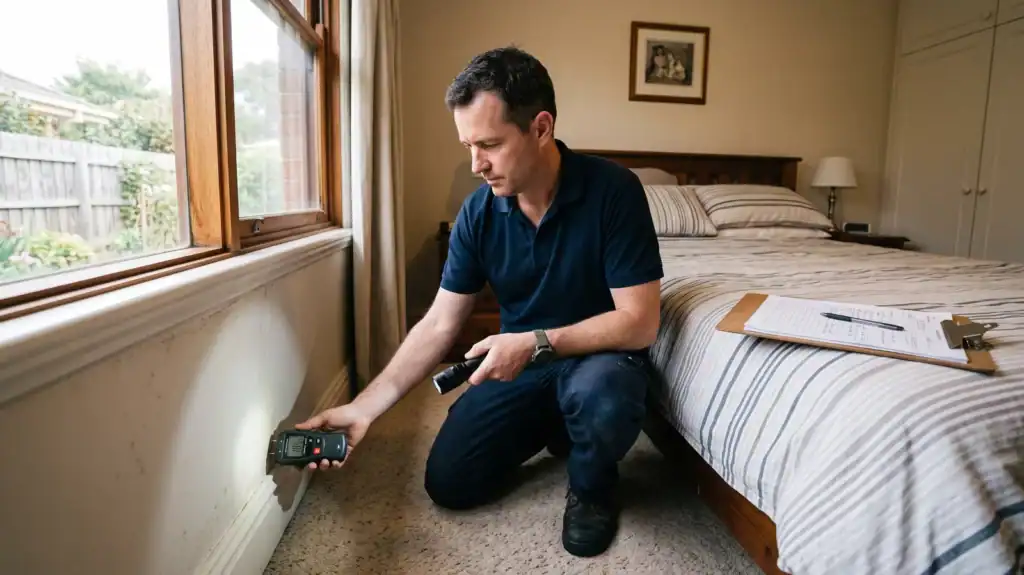
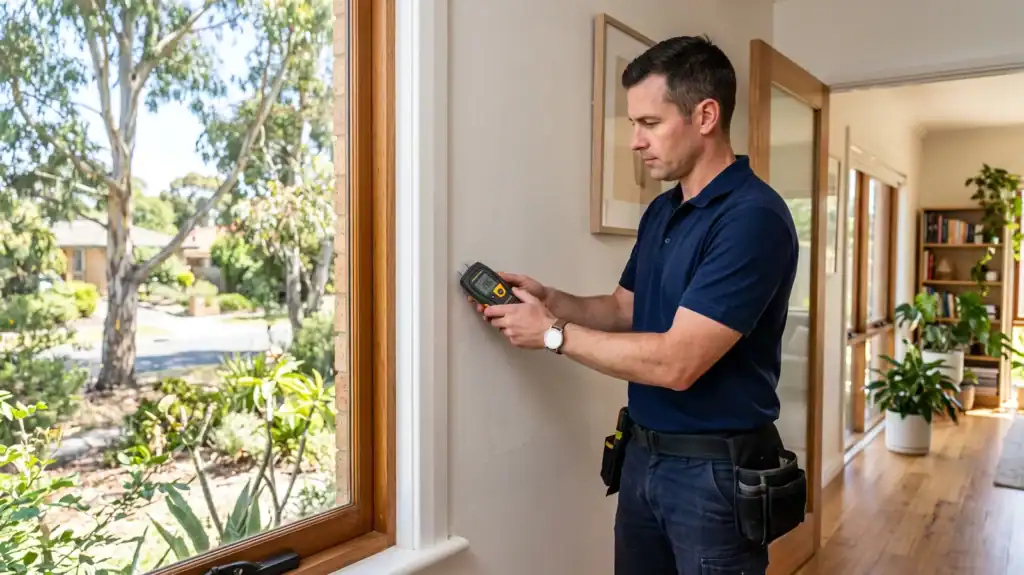
Yes, disturbing black mould during cleaning can make you sick by releasing thousands of spores directly into the air you breathe.
Most people don’t realise that scrubbing or wiping mould actually increases exposure risk. The physical action breaks apart mould colonies and sends spores airborne, turning a surface problem into a respiratory hazard within seconds.
Black mould (Stachybotrys chartarum) is particularly concerning because it produces mycotoxins that can affect your health when disturbed. This article explains the health risks of cleaning black mould yourself, what symptoms to watch for, and when professional intervention becomes necessary.
What Happens If You Breathe in Black Mould While Cleaning
When you disturb black mould during cleaning, you trigger a spore release event. A single square centimetre of active mould growth can contain millions of microscopic spores, and scrubbing or wiping releases a significant percentage into your immediate breathing zone.
Your body responds to inhaled mould spores as foreign invaders. The respiratory system attempts to filter and expel them, but concentrated exposure during cleaning often overwhelms these natural defences.
- Spores land on nasal passages, throat lining, and bronchial tubes, triggering immediate inflammation
- Your immune system releases histamines and other chemicals to fight the perceived threat
- Mycotoxins released during disturbance can cause additional toxic reactions beyond standard allergy responses
- People with existing respiratory conditions experience amplified reactions, sometimes requiring medical attention
- Healthy individuals may develop temporary symptoms that resolve within 24 to 48 hours
- Repeated exposure increases sensitisation, making future reactions more severe
Having treated hundreds of mould-affected properties across Newcastle, the Central Coast, and the Hunter Valley, Mould and Hygiene Solutions has seen countless cases where homeowners developed respiratory symptoms immediately after attempting DIY cleaning. The visible mould disappears temporarily, but the health impact lingers because surface treatment doesn’t address the root structure.
Can Cleaning Black Mould Without a Mask Make You Sick
Absolutely. Cleaning mould without respiratory protection guarantees direct inhalation of disturbed spores at their highest concentration.
The NSW Health Department recommends P2 or N95 respirators for any mould remediation work, even small areas. Standard dust masks or cloth coverings provide virtually no protection against particles as small as mould spores (typically 2 to 10 microns).
- Without proper filtration, spores pass directly through fabric masks and into your respiratory system
- Peak spore concentration occurs within the first 30 seconds of disturbance and remains elevated for 15 to 30 minutes
- Enclosed spaces like bathrooms or laundries trap airborne spores, creating continuous re-exposure even after you stop cleaning
- Eye protection matters equally because spores can irritate mucous membranes and cause conjunctivitis
Why Bleach Makes It Worse: Spraying bleach on mould creates aerosols that combine toxic chlorine fumes with airborne spores. You are now breathing both chemical irritants and biological particles simultaneously, multiplying the health risk without addressing the underlying mould roots that survive bleach treatment.
What Are the Symptoms of Black Mould Exposure During Cleaning
Symptoms typically appear within minutes to hours of disturbance. The question of can black mould when cleaning make you sick becomes obvious when you understand how quickly your body reacts.
Immediate Symptoms (Within Hours)
- Sneezing, runny nose, and sinus congestion
- Itchy, watery, or red eyes
- Scratchy throat and persistent coughing
- Wheezing or difficulty breathing, particularly for asthma sufferers
- Skin irritation or rash on exposed areas
- Headaches and general fatigue
Delayed Symptoms (24 to 72 Hours)
- Persistent respiratory issues that don’t resolve with over-the-counter medication
- Chest tightness or pain when breathing deeply
- Worsening asthma symptoms requiring increased medication use
- Fever or flu-like symptoms (less common but possible)
- Brain fog, difficulty concentrating, or memory issues
The severity depends on exposure duration, mould species, individual sensitivity, and underlying health conditions. Children, elderly individuals, and those with compromised immune systems experience more severe reactions to the same exposure levels.
If symptoms persist beyond 48 hours or worsen over time, you may be experiencing mould-related health symptoms that need medical attention.
How Long Does It Take to Get Sick from Black Mould Exposure
Most people experience symptoms within two to nine hours of significant exposure. Highly sensitive individuals may react within minutes, while others might not notice effects for up to 24 hours.
The timing depends on several factors that determine how your body processes the exposure.
| Factor | Fast Reaction (Minutes to Hours) | Delayed Reaction (Days) |
|---|---|---|
| Exposure Level | Heavy disturbance in enclosed space | Light exposure with good ventilation |
| Individual Sensitivity | Pre-existing allergies or asthma | Previously healthy with no sensitivities |
| Immune Status | Compromised immunity or chronic illness | Strong immune system |
| Spore Count | Large colony disturbance | Small isolated patch |
Chronic exposure from repeated cleaning attempts creates a different pattern. Symptoms may appear mild initially but worsen with each subsequent exposure as your body becomes increasingly sensitised to mould proteins.
This sensitisation explains why many homeowners report feeling worse the second or third time they attempt to clean the same mould problem. What appears to be regrowth after surface cleaning with bleach is actually the root structure that survived, continuously releasing new spores into your living environment.
Can Black Mould Spores Become Airborne During Cleaning
Not only can they become airborne, they absolutely will. Physical disturbance is the primary mechanism that transforms a localised mould colony into an airborne health hazard.
Mould reproduces through spores specifically designed for air dispersal. When undisturbed, colonies release spores gradually at manageable levels. Cleaning triggers mass release.
- Scrubbing actions break apart fruiting bodies that contain concentrated spore masses
- Wiping movements create air currents that lift spores from surfaces
- Spray bottles produce aerosols that carry spores throughout the room
- Vacuum cleaners without HEPA filtration exhaust spores back into the air at higher concentrations
- Removing contaminated materials like curtains or carpets shakes loose millions of dormant spores
Once airborne, mould spores remain suspended for extended periods and can settle on surfaces throughout your home, potentially creating new colonies wherever moisture exists. According to the Victorian Department of Health, disturbing mould without proper containment spreads contamination to previously unaffected areas of a property.
This is why professional help with proper containment becomes necessary. Without negative air pressure, HEPA filtration, and proper containment barriers, cleaning mould in one room often spreads contamination throughout the property.
What Should You Do If You Feel Sick After Cleaning Mould
Immediate action reduces symptom severity and prevents complications. Stop cleaning immediately and remove yourself from the contaminated area.
Immediate Steps
- Exit the affected area and move to fresh air outdoors if possible
- Remove contaminated clothing and shower to eliminate spores from your skin and hair
- Wash clothing separately in hot water to prevent cross-contamination
- Rinse eyes with clean water if experiencing irritation
- Monitor symptoms for the next 24 hours
When to Seek Medical Attention
- Difficulty breathing or chest tightness that worsens
- Severe asthma attack requiring emergency inhaler use
- High fever above 38.5°C
- Symptoms that don’t improve after 48 hours
- Worsening symptoms despite leaving the contaminated area
Tell your doctor you were exposed to mould so they can provide appropriate treatment. Some respiratory infections following mould exposure require antifungal medications rather than standard antibiotics.
Don’t Return to the Area: Avoid the contaminated space until proper remediation is complete. Returning too soon re-exposes you and can worsen your condition. A professional mould inspection determines the full extent of contamination before any treatment begins.
Is It Safe to Clean Black Mould Yourself
The honest answer is no, not if you want lasting results without health risks. Surface cleaning provides temporary cosmetic improvement while leaving the root structure intact to regrow within weeks.
Most homeowners underestimate both the health risks during cleaning and the inevitability of regrowth. Across hundreds of properties in Newcastle, Lake Macquarie, and Port Stephens, Mould and Hygiene Solutions consistently finds active root structures beneath surfaces that appear “cleaned” with household products.
- Visible mould represents only 10 to 20 percent of the actual colony mass
- Root structures (hyphae) penetrate porous materials like drywall, grout, and timber
- Surface treatments cannot reach these embedded structures
- Regrowth typically occurs within two to six weeks after DIY cleaning
- Each cleaning attempt increases personal exposure without solving the underlying problem
Professional remediation using Australian-made, non-hazardous, non-corrosive and environmentally friendly antimicrobial solution treats the complete colony structure, not just surface staining. This explains why Mould and Hygiene Solutions offers Australia’s only unconditional 12-month guarantee on treated areas.
That guarantee exists because proper treatment kills 99.99% of bacteria and fungi at the root level. No homeowner can replicate these results with supermarket products because those products are not designed for root penetration.
How Professionals Protect Your Health During Mould Treatment
Professional remediation eliminates the question of can black mould when cleaning make you sick by removing your exposure entirely. Proper containment and equipment prevent spore dispersal beyond the treatment area.
Owner James from Mould and Hygiene Solutions personally handles every job using commercial-grade protective equipment and containment protocols. This hands-on approach ensures consistent results across every property in the Hunter Valley region.
Professional Safety Measures
- Physical containment barriers prevent spore migration to unaffected areas
- Negative air pressure machines create directional airflow that captures airborne particles
- HEPA filtration removes 99.97% of particles down to 0.3 microns
- Non-hazardous antimicrobial solutions eliminate health risks from toxic chemical exposure
- Post-treatment mould testing confirms successful spore reduction
- Moisture source identification prevents regrowth at the cause, not just the symptom
Residents remain safely away from the property during treatment. You return to a genuinely mould-free environment rather than a temporarily cleaned surface with active roots waiting to regrow.
This approach addresses both immediate health concerns and long-term prevention. A comprehensive inspection and treatment ensures nothing gets missed behind walls, under flooring, or in ceiling cavities where mould commonly hides.
Frequently Asked Questions
Can you get sick from cleaning a small amount of black mould?
Yes. Even a small patch of black mould releases thousands of spores when disturbed. The concentration in an enclosed space like a bathroom can be enough to trigger respiratory symptoms, particularly in people with asthma or allergies.
What are mycotoxins and why do they matter during mould cleaning?
Mycotoxins are toxic compounds produced by certain mould species, including Stachybotrys chartarum (black mould). When you scrub or disturb a mould colony, these mycotoxins become airborne along with the spores. Inhaling mycotoxins can cause symptoms beyond typical allergic reactions, including fatigue, headaches, and respiratory inflammation.
Does wearing a P2 mask fully protect you when cleaning mould?
A P2 or N95 respirator filters most airborne spores, but it does not eliminate all risk. Spores can settle on exposed skin, hair, and clothing, spreading contamination through your property after cleaning. Professional remediators use full protective equipment and containment barriers that a household mask cannot replicate.
Can mould spores from cleaning travel to other rooms?
Absolutely. Airborne spores follow air currents through doorways, hallways, and ventilation systems. Without professional containment barriers and negative air pressure, cleaning mould in one room can spread viable spores throughout the entire property.
How long do symptoms last after breathing in mould while cleaning?
Most symptoms resolve within 24 to 72 hours for healthy individuals once exposure stops. People with asthma, allergies, or compromised immune systems may experience symptoms for a week or longer. Seek medical attention if symptoms persist beyond 48 hours or worsen over time.
Is it safe to sleep in a room where you cleaned black mould?
Not immediately. Disturbed mould spores can remain airborne for hours and settle on bedding, carpet, and soft furnishings. Ventilate the room thoroughly and avoid sleeping in it until the mould has been professionally treated at the root level.
Can mould grow inside your lungs?
In rare cases, inhaling large concentrations of certain mould spores can lead to a condition called aspergillosis, where Aspergillus mould colonises lung tissue. This primarily affects people with weakened immune systems or pre-existing lung conditions. It is another reason why disturbing mould without proper containment carries serious health risks.
What should I do if mould keeps coming back after cleaning?
Recurring mould confirms that DIY cleaning only addressed the surface. The root structure (hyphae) survives beneath the material, and the moisture source driving growth remains unresolved. Professional treatment eliminates the colony at root level and identifies the moisture cause to prevent regrowth, which is why it comes with a 12-month guarantee.
Protect Your Family with Professional Mould Treatment
The health risks of disturbing black mould during cleaning are real and preventable. Surface treatments with household products expose you repeatedly without delivering lasting results because they cannot reach the root structures driving regrowth.
Professional remediation eliminates both the immediate exposure risk and the long-term problem. Mould and Hygiene Solutions serves Newcastle, the Central Coast, Lake Macquarie, the Hunter Valley, and Port Stephens with Australia’s only unconditional 12-month guarantee on treated areas.
Owner James personally assesses your property, explains exactly what is needed, and provides transparent pricing before any work begins. The Australian-made, non-hazardous antimicrobial solution treats root structures that DIY products cannot reach.
Stop risking your health with another round of ineffective surface cleaning. Book a professional mould inspection today and discover why a 12-month guarantee proves the difference between temporary fixes and permanent solutions.