Painting over mould hides the stain for a few weeks, and then it bleeds back through the fresh paint looking worse than before.
It is one of the most common mistakes we see when we inspect homes across Newcastle, the Central Coast and the Hunter Valley. Many homeowners attempt to deal with a mould stain first with a bit of bleach, then a coat of paint, and the stain is usually back within the month.
This guide explains why painting over mould never works as a long-term fix, what happens inside the wall when you do it, and what actually resolves the underlying problem properly.
Already seeing the stain come back? Book a free mould inspection and a qualified technician will identify why mould in your walls keeps returning before any treatment begins.
What Happens When You Paint Over Mould
On the surface, a coat of paint looks like it has done the job. The wall is white again, the dark patch is gone, and for the first few weeks the room looks fine.
Mould is not a stain. It is a living colony of fungus that has taken hold in your home, sending roots called hyphae into the substrate beneath the paint.
Plasterboard, timber, render and even concrete all hold enough moisture and organic material for mould to embed itself beyond the surface. Paint sits on top of the colony and seals it in briefly, not permanently.
- The mould colony continues to feed on the cellulose in the plasterboard and timber behind the paint
- Moisture from the original source keeps feeding the colony whether you can see it or not
- Mould spores release pigments (mycotoxins and melanin-like compounds) that bleed through standard paint within weeks
- The fresh paint surface itself becomes a food source once it is damp enough
Rule of thumb: if a mould stain returns after you have painted over it, the colony was always still there. The paint simply bought you a few weeks before the pigments bled through.
Signs Mould Has Been Painted Over
If you are moving into a new property or inspecting a rental, knowing what painted-over mould looks like can save you months of dealing with recurring stains and musty air.
- Dark patches bleeding through fresh paint. Usually appearing within two to eight weeks as mould pigments push through the new coating.
- Bubbling or flaking paint on an otherwise sound wall. Moisture trapped between the mould colony and the paint film causes the topcoat to lose adhesion.
- A persistent musty smell near a recently painted wall. The colony underneath continues to produce volatile organic compounds even when sealed under paint.
- Soft or spongy plasterboard behind the paint. Press the wall gently near the stained area. If it gives, the substrate is compromised.
- Circular or blotchy discolouration that does not match a water stain. Water stains tend to run in streaks along gravity, while mould colonies grow in irregular patches.
If you spot any of these signs, the wall needs a proper inspection before any further painting. A free mould inspection will confirm whether the colony is still active and what needs to happen before the wall can be safely repainted.
Health Risks of Leaving Mould Behind Paint
Painting over mould does not just hide a cosmetic problem. The colony behind the wall continues producing airborne spores and volatile organic compounds that affect the air quality inside your home.
Because the mould is out of sight, many homeowners do not connect their ongoing respiratory symptoms to a colony growing behind a freshly painted wall. The paint film does not contain the spores. They pass through micro-cracks, around skirting boards, and through gaps at power points and light fittings.
- Respiratory irritation. Coughing, wheezing and throat irritation from inhaling spores that pass through or around the paint film.
- Allergic reactions. Sneezing, runny nose and itchy eyes in people sensitive to mould allergens, often worse at night when the bedroom wall is the source.
- Asthma aggravation. Elevated spore counts indoors are a documented trigger for asthma episodes, particularly in children and older adults.
- Persistent headaches and fatigue. Prolonged exposure to the volatile organic compounds that mould colonies produce can cause ongoing low-grade symptoms that are easy to attribute to other causes.
The hidden risk: because the mould is behind paint, occupants often live with elevated spore levels for months without realising the source. A professional mould test can confirm whether airborne spore counts are elevated, and a qualified inspector will trace the source even when it is not visible.
Why Bleach and Paint Do Not Fix the Underlying Problem
The standard homeowner approach runs in two steps: spray bleach on the mould, wait a day, then paint over it. Both steps address what is visible. Neither addresses what is happening underneath.
What bleach actually does
Bleach removes the dark pigment from the mould on the surface within minutes, which is why it looks like it has worked. The chlorine molecule is too large to penetrate porous building materials like plasterboard or timber, so the roots (hyphae) embedded below stay intact.
Regrowth typically occurs within two to six weeks, and often returns in a slightly different spot as the colony adjusts. This is the same reason bleach does not actually kill mould on any porous surface.
What paint actually does
Paint is a decorative coating, not a sealant. Standard acrylic and water-based paints are porous enough that moisture continues moving through them.
Even mould-resistant paints only slow surface regrowth; they do nothing to kill the mould colony beneath the surface. The colony behind the wall continues to produce spores and pigments, and those pigments bleed through the paint as soon as the wall surface warms or dampens.
What the reader usually tries next
When the stain returns, the typical response is a thicker coat of paint, or a coat of stain-blocker followed by paint. Stain-blockers slow the bleed-through but do not kill the colony.
The mould continues to grow behind the wall, the plasterboard softens, and what started as a surface stain becomes a structural problem within six to twelve months.
DIY Approaches Compared to Professional Treatment
It helps to see the options side by side. Every DIY approach addresses the surface. Only professional remediation addresses the root, the moisture source, and the substrate, which is exactly why surface cleaning keeps failing.
| Approach | What it treats | Typical result | Timeframe until regrowth |
|---|---|---|---|
| Bleach and wipe | Surface pigment only | Stain returns | 2 to 6 weeks |
| Paint over existing mould | Visual cover only | Bleeds through | 3 to 8 weeks |
| Stain-blocker plus paint | Visual cover + partial seal | Bleeds through eventually | 2 to 6 months |
| Mould-resistant paint on untreated mould | Slows surface regrowth | Colony continues behind paint | 3 to 9 months |
| Professional remediation plus moisture source fix | Colony, substrate, moisture source | Lasting resolution | 12 months guaranteed |
Every DIY option in the table is a short-term cosmetic fix. Professional remediation is the only option that addresses the cause, the substrate and the surface together.
Why DIY Mould Removal Fails at the Root Level
The reason DIY approaches keep failing comes down to three things. None of them can be fixed with a product off a supermarket shelf.
- Retail products only treat the surface. Bleach, vinegar, tea tree oil and store-bought antifungal sprays sit on top of the substrate. The mould root system embedded in the plasterboard or timber below stays alive and continues to regrow.
- Disturbing mould without proper containment spreads spores. Scrubbing a mouldy wall without negative-pressure containment and HEPA filtration releases spores into the rest of the home. The visible patch shrinks while new colonies establish in rooms where there was no mould before.
- The moisture source is never addressed. Mould grows because something in the building is wet: a leaking shower recess, a roof flashing, a blocked weep hole, condensation on a cold wall. Until that source is found and fixed, any treatment is temporary.
The consistent pattern: homeowners across Newcastle and the Central Coast spend months and often hundreds of dollars on paint, bleach and sealers before calling a professional. By the time we arrive, the plasterboard is usually compromised and the job costs more than if they had called at the first sign of staining.
What Professional Mould Treatment Does Differently
Professional mould remediation takes a different approach to every step. The goal is not to cover the stain.
The goal is to kill the colony, remove the roots, fix the moisture source, and verify the job worked. Understanding how much professional mould removal costs in Australia starts with knowing what is involved.
Inspection and moisture source identification
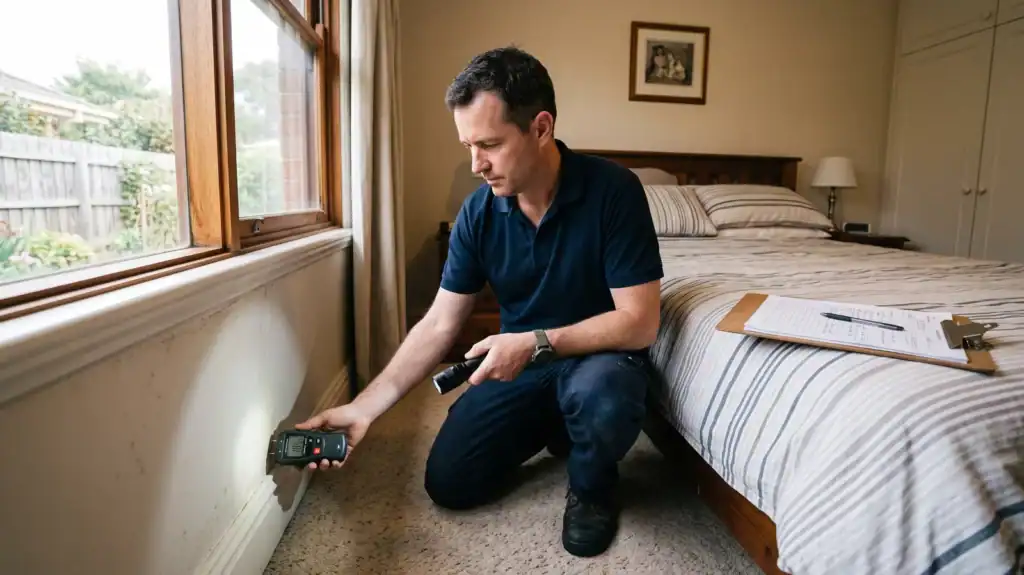
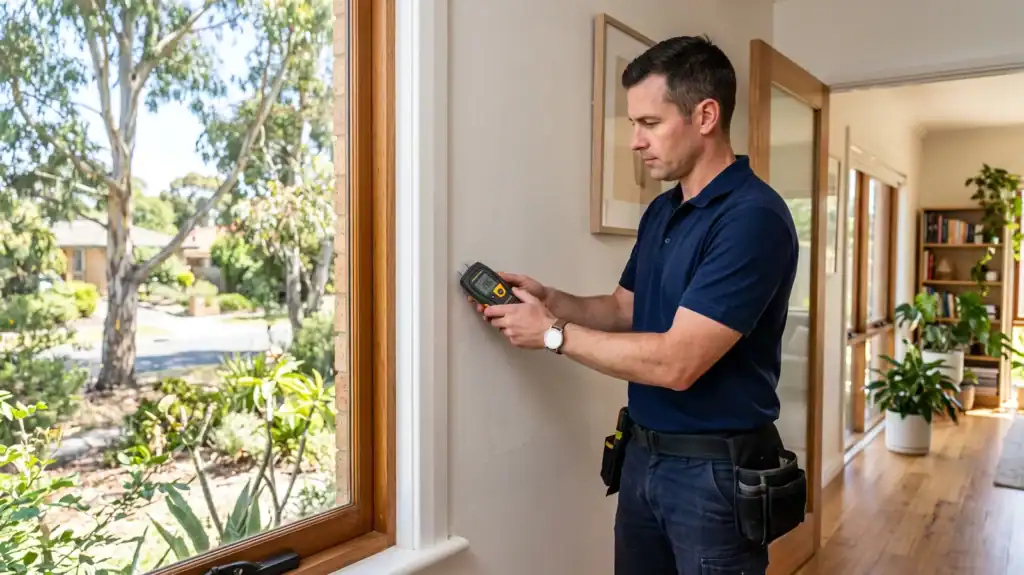
The first step on site is finding what is making the wall wet. Thermal imaging, moisture meters and visual inspection identify whether the source is a leaking pipe, a roof defect, a bathroom waterproofing failure, rising damp or condensation.
Treatment without finding the source is a guaranteed rework.
Containment and spore control
Before any mould is disturbed, the work area is isolated with plastic sheeting and negative-pressure containment, and HEPA-filtered air scrubbers run throughout the job. This stops spores spreading to clean rooms, which is the biggest risk of DIY scrubbing.
Substrate-penetrating treatment
The affected materials are treated with an Australian-made, non-hazardous, non-corrosive and environmentally friendly antimicrobial solution that penetrates into plasterboard, timber and render to kill the mould at the root. Unlike bleach, it works at the substrate level, not just the surface.
Verification and the 12-month guarantee
Post-treatment testing confirms the colony has been eliminated before the work is signed off. Every treatment is backed by an unconditional 12-month mould-free guarantee, which is the only guarantee of its kind in Australia.
If mould returns in that window, the treatment is redone at no cost.
Rental properties and landlord obligations
If you are renting and your landlord has painted over mould instead of treating it, NSW legislation requires landlords to maintain rental properties in a condition that is fit for habitation. Painting over mould does not meet that standard.
The Tenants’ Union of NSW outlines your rights, and you may be able to pursue a remedy or break your lease if the mould is not properly addressed.
Does Anti-Mould Paint Actually Work?
Anti-mould paints contain biocide additives that resist mould growth on the paint surface. Products like Dulux Wash and Wear +PLUS are formulated to slow mould colonising the topcoat in damp areas like bathrooms and laundries.
There is an important distinction between preventing mould on a clean surface and treating mould that already exists underneath.
- On a clean, treated, dry wall: anti-mould paint adds a useful extra layer of protection against future surface growth
- On top of an existing mould colony: the biocide in the paint cannot reach the roots embedded in the substrate, so the colony continues to grow and eventually bleeds through
- Without fixing the moisture source: no paint formulation can resist indefinite exposure to damp conditions
Anti-mould paint is the right finishing step after a proper remediation, not a substitute for one. If you are repainting a bathroom or laundry that has a history of mould, a professional treatment first ensures the surface is genuinely clean before the topcoat goes on.
When Painting Is Appropriate and When It Is Not
Paint has a role in a mould remediation. It is the final step, not the first.
Painting a wall that has been properly treated, dried, and verified is perfectly fine. Painting a wall where mould is still present is what causes the bleed-through and the repeat call out.
- Do paint after treatment: once remediation is complete and the substrate is verified dry, a quality acrylic finish is entirely appropriate
- Do not paint over active mould: any visible mould or staining means the colony is still present
- Do not rely on anti-mould paints as a solution: they slow surface regrowth on already-clean walls, they do not kill existing colonies
- Do use a stain-blocker after treatment: helps ensure no residual pigment bleeds through the topcoat
If painting is happening as part of a room refresh and you are unsure whether what you are seeing is active mould or an old stain from a previous event, a pre-paint inspection costs nothing and saves a repaint later. The same rule applies whether you are preparing a home in Lake Macquarie, the Hunter Valley or Port Stephens.
What Repeated Repainting Actually Costs You
Every time you ask “can you paint over mould” and reach for the roller again, you are not resetting the problem. You are giving the colony behind the wall more time to expand into the substrate.
- First repaint. The colony is small and the stain returns in a few weeks. Most homeowners assume they used the wrong paint and try a different product next time.
- Second repaint. The plasterboard behind the paint is softening as the colony feeds on the cellulose in the substrate. The stain is larger, and a stain-blocker is added to the routine.
- Third repaint and beyond. The substrate is compromised. The mould has spread laterally along the wall cavity. Professional remediation now includes plasterboard replacement that would not have been needed six months earlier.
The real comparison: one professional treatment backed by an unconditional 12-month mould-free guarantee, versus months of repainting while the underlying damage escalates. The longer the colony grows unchecked, the more extensive the eventual remediation.
Proper mould prevention starts with eliminating the existing colony and fixing the moisture source, so the wall stays clean without repeated repainting.
Frequently Asked Questions
Does painting over mould kill it?
No. Paint covers the visible stain but does not reach the mould roots (hyphae) embedded in the plasterboard, timber or render beneath.
The colony continues to feed, grow and produce spores under the paint film. Within weeks, the pigments bleed through and the stain reappears.
How do you know if mould has been painted over?
Look for dark patches bleeding through a fresh coat, bubbling or flaking paint on an otherwise sound wall, and a musty smell that persists after painting. If the plasterboard behind the painted area feels soft or spongy, the substrate is compromised and the colony is still active.
Does anti-mould paint stop mould from growing?
Anti-mould paint slows surface mould growth on clean, dry walls. It does not kill an existing colony or fix the moisture source that caused the mould in the first place. Applied on top of untreated mould, it performs no better than regular paint.
Can a landlord just paint over mould in a rental property?
No. Under NSW tenancy legislation, landlords must maintain rental properties in a condition fit for habitation. Painting over mould without treating the underlying cause does not meet this standard.
If you are renting and your landlord has painted over mould, you have rights as a tenant to request proper remediation.
What should you do if mould keeps coming back after painting?
Stop repainting. The recurring stain means there is a live mould colony behind the wall and an unresolved moisture source feeding it.
A professional inspection will find the moisture entry point, and a full remediation will eliminate the colony at the root rather than covering it again.
How long does mould take to grow back through paint?
On standard acrylic paint, mould pigments typically bleed through within two to eight weeks. Stain-blockers can delay visible breakthrough to two to six months, and mould-resistant paints may hold for three to nine months.
None of these timeframes represent a fix. They represent how long it takes for the colony underneath to visibly reassert itself.
How long should walls dry after mould treatment before painting?
After professional remediation, treated surfaces need to dry completely before any paint goes on. Most treated plasterboard in a well-ventilated room is ready within one to two weeks.
Walls in high-moisture rooms like bathrooms and laundries, or walls affected by rising damp, may need four to six weeks. Your technician will confirm when the substrate is dry enough to accept paint.
Can a dehumidifier stop mould growing behind painted walls?
A dehumidifier lowers ambient humidity, which slows mould growth on exposed surfaces. It cannot reach moisture trapped behind painted walls or inside the substrate itself.
If the moisture source is a leaking pipe, poor waterproofing, or condensation within the wall cavity, a dehumidifier addresses the symptom in the room without fixing the cause behind the wall. The colony continues to grow regardless.
Stop Painting Over Mould, Get It Treated Properly
Every time a homeowner paints over mould, the underlying problem gets a little worse. The plasterboard softens, the colony expands behind the wall, and the eventual fix becomes bigger than it needed to be.
The right time to call a professional is the first time you see staining, not the third repaint.
Mould and Hygiene Solutions offers free mould inspections across Newcastle, the Central Coast, Lake Macquarie, Hunter Valley and Port Stephens. A qualified technician will identify the moisture source, assess the extent of any colony, and explain exactly what a proper fix involves before any treatment begins.
The unconditional 12-month guarantee means the fix lasts.
Seeing a stain come back through fresh paint? Book a free mould inspection and we will identify the source before it becomes a structural problem. Servicing Newcastle, the Central Coast, Lake Macquarie, Hunter Valley and Port Stephens.