Sunlight can help dry damp materials, but it is not a reliable way to remove mould from your home. A sunny afternoon does not establish that mould in a wall, cushion or carpet has been eliminated.
Opening curtains or putting furniture outside may help it dry when mould appears. The difficulty is that surface improvement tells you little about contamination within a porous material or the moisture that caused it.
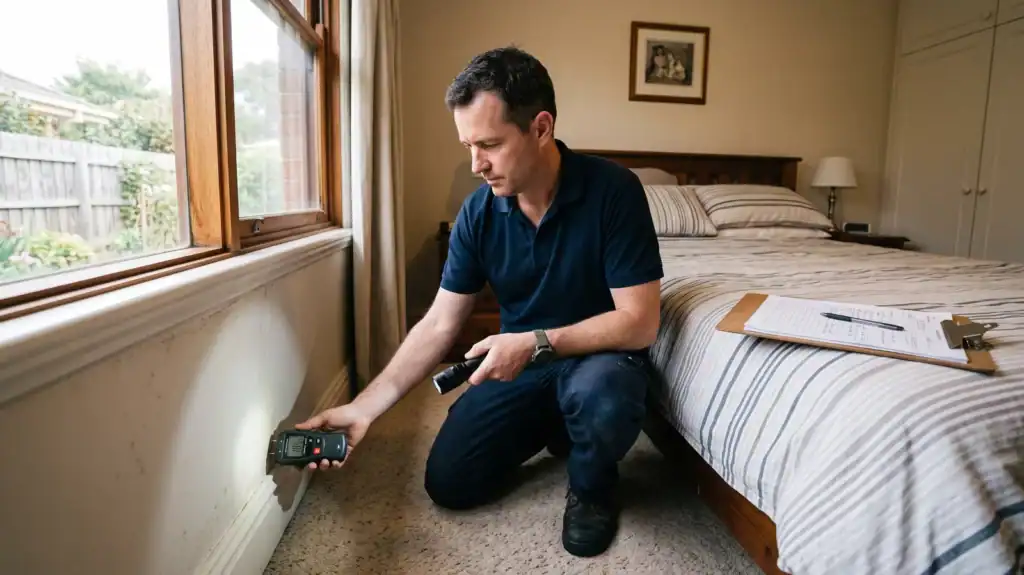
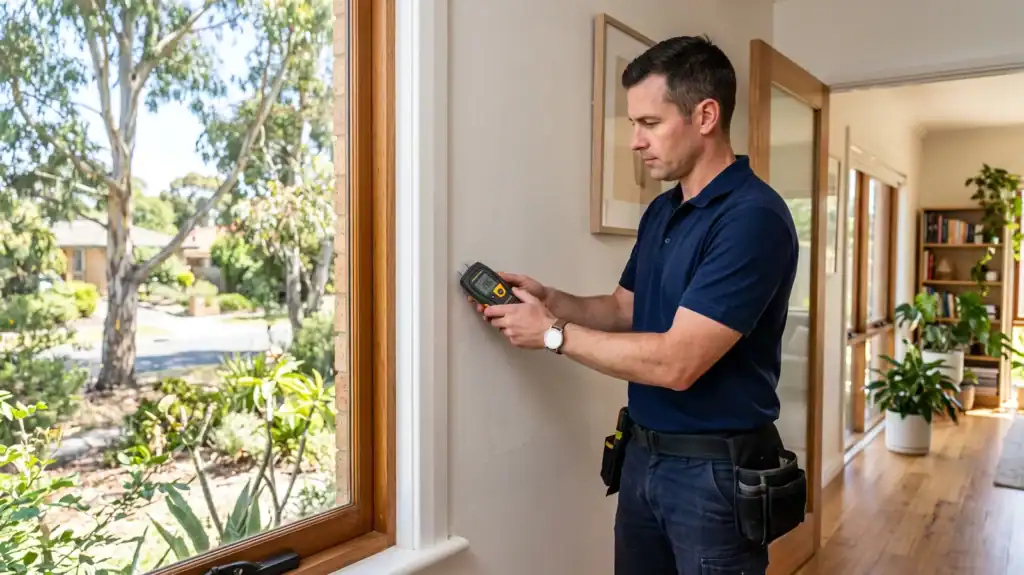
If mould returns after airing or cleaning, arrange an assessment of the affected materials and the source of dampness. Mould and Hygiene Solutions provides professional inspections across Newcastle, the Central Coast and Lake Macquarie.
Does sunlight actually kill mould?
Sunlight is not a dependable household mould treatment. Its drying effect can make conditions less favourable for growth, but drying an item and removing contamination are separate jobs.
The Western Australian Museum’s conservation guidance lists sunlight among possible treatments for mould-affected objects, while warning that treatments can damage materials. The same guidance separates deactivating mould through drying from subsequent cleaning; it does not establish a universal sunlight exposure time.
There is also an important distinction between sunlight and a germicidal lamp. The World Health Organization’s explanation of UV radiation confirms that the atmosphere absorbs solar UV-C before it reaches the ground.
- Daylight reaching your home contains UVA and some UVB, not solar UV-C.
- Light cannot treat growth hidden behind an opaque wall or beneath a carpet.
- A dry-looking surface does not demonstrate that an entire item is dry or clean.
- Neither sunlight nor a lamp repairs the leak or condensation problem supporting growth.
Opening curtains can help a room feel warmer and brighter, but a brighter room can still have a mould problem. Recurring patches need assessment even when the room gets plenty of afternoon sun.
Why sunlight cannot stop mould from coming back
Mould can return when contaminated material remains or when moisture allows remaining or newly deposited spores to grow. A sunny spell does not resolve moisture trapped inside walls or floors.
Mould’s fine filaments, called hyphae, can extend into porous materials. The EPA’s guidance on cleaning mould at home explains that growth within porous materials can be difficult or impossible to remove completely, so some affected materials need replacement.
| Affected material | Limit of sunlight | What needs assessment |
|---|---|---|
| Glass or metal | Drying leaves contamination on the surface | Physical cleaning and the source of condensation |
| Painted plasterboard | Light does not reach the reverse face or cavity | Water damage and whether the board can be retained |
| Timber | Shaded joints and hidden faces remain unexposed | Moisture, finish and extent of contamination |
| Grout or silicone | Sunlight rarely reaches every affected joint | Persistent dampness and deteriorated seals |
| Carpet, underlay or mattresses | The surface can dry while deeper layers remain damp | Whether cleaning and complete drying are feasible |
| Leather or fabric | Sun and heat can affect sensitive materials | Care instructions and suitable specialist cleaning |
There is no useful fixed regrowth timetable for all these materials. The moisture conditions and what remains after treatment matter more than how long an item spent outside.
If a portable item improves outdoors but becomes mouldy again in the same room, inspect its storage conditions as well as the item itself. Moving it back beside a damp wall can recreate the original problem.
What about UV lamps and UV-C lights for mould?
A germicidal UV-C lamp produces radiation that ordinary ground-level sunlight does not supply. Buying one does not make a mouldy room or item ready to use again.
- Effectiveness depends on the equipment, exposure and whether light reaches the contamination.
- Shadows, folds and opaque materials obstruct treatment.
- UV treatment does not physically remove mould residue.
- The source of dampness still needs investigation and repair.
The FDA warns that UV-C exposure can injure skin and eyes, and some lamps produce ozone. Do not use an unshielded UV-C lamp as a DIY room treatment.
A more powerful lamp does not solve hidden contamination or a leaking pipe. Professional assessment should determine the treatment needed before equipment is selected.
Why DIY surface cleaning fails to solve recurring mould
Trying sunlight or a shop-bought spray before calling someone is understandable. The problem with repeated surface treatment is that a cleaner-looking patch does not explain why mould developed there.
Retail products do not repair leaks or diagnose dampness inside walls. They also cannot establish whether an affected porous material can be successfully cleaned or needs removal.
- Embedded or concealed contamination can remain after visible growth is cleaned away.
- Disturbing mould without suitable controls can disperse spores and fragments.
- Persistent moisture allows further growth even after an apparently successful clean.
Dry brushing a mouldy item or carrying it through the house to find sunshine can disturb growth. Professional mould removal with appropriate containment plans how affected areas and materials will be handled.
Do not use a change in colour or smell as the only test of success. An inspection can investigate recurring dampness and help avoid another round of cleaning the same patch.
What professional mould treatment does differently
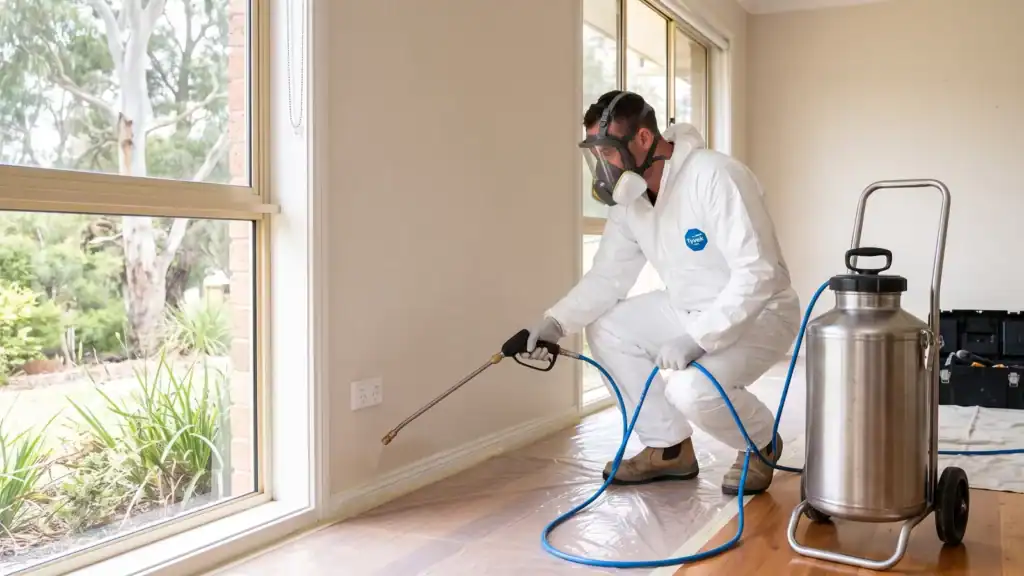
Professional treatment starts with the affected material and the moisture source, rather than an assumption that every patch needs the same product. Mould remediation for affected building materials may involve cleaning, treatment or removal where material cannot be recovered.
Mould and Hygiene Solutions uses an Australian-made, non-hazardous, non-corrosive and environmentally friendly antimicrobial solution as part of its treatment process. Product application needs to suit the substrate; applying the solution does not by itself remove hidden contamination.
- Assess the extent of visible growth and signs that further investigation is needed.
- Choose treatment for the substrate and identify materials that cannot be retained.
- Use containment procedures appropriate to the work to limit contamination spreading.
- Identify moisture sources and explain repairs or ventilation changes needed.
Mould and Hygiene Solutions offers a 12-month mould-free guarantee with its treatment. Ask the team to explain the applicable terms and any moisture repairs or maintenance required for your property.
When sampling could help investigate a suspected problem, professional mould testing as part of an assessment can be discussed. Testing is not automatically needed for every visible patch and cannot replace fixing dampness.
When sunlight is useful for mould prevention
Sunlight can support drying after suitable cleaning, provided the material’s care instructions allow it. It belongs within a moisture-control plan and does not replace treatment of existing contamination.
- Dry suitable cleaned, washable items fully before putting them away.
- Use bathroom and kitchen exhaust ventilation to remove moisture at its source.
- Investigate leaks and persistent condensation rather than relying on warmer weather.
- Check enclosed storage and shaded corners where dampness can remain unnoticed.
NSW Health’s mould advice focuses on reducing dampness, improving ventilation and addressing water damage. Opening curtains alone does not remove water vapour from a room.
For homes with recurring problems, a mould prevention plan for persistent dampness should address the conditions found during inspection. Sunlight cannot compensate for a roof leak or an exhaust fan that is not removing moisture effectively.
Frequently asked questions about sunlight and mould
A dry or faded patch is not proof of removal.
How long does it take sunlight to kill mould?
There is no reliable household exposure time that proves mould has been eliminated from an item. Shade and hidden contamination make a fixed exposure time unreliable.
Allowing more time in the sun does not replace suitable cleaning and assessment of the underlying dampness.
Does sunlight through a window kill mould?
A sunny window is not a dependable mould treatment. Glazing changes UV transmission; the atmosphere has already removed solar UV-C.
Light falling on one face of a wall does not reach concealed growth behind it.
Does sunlight kill black mould?
Dark colour does not tell you how mould will respond to sunlight or identify its species. A dark patch that dries or becomes less noticeable still needs appropriate removal and investigation of its moisture source.
Sunlight on household items and recurring mould
Can I put mouldy clothes or cushions in the sun?
Sunshine can help dry suitable items after appropriate cleaning, but airing alone leaves contamination behind. The options for removing mould from affected fabric depend on the care label and whether inner padding is contaminated.
Will sunlight remove mould from a mattress?
Sunlight on the cover cannot establish that the filling is dry or free of contamination. A mouldy mattress needs assessment of whether it can be cleaned and dried adequately or should be discarded.
Is dead mould harmless after drying in the sun?
No. The EPA explains that dead mould can still cause allergic reactions, so killing or deactivating growth does not replace physical removal.
Can sunlight replace professional mould treatment?
Sunlight does not reach concealed growth or remove mould residue. Recurring, extensive or hidden mould needs professional assessment rather than repeated sun exposure.
Is a UV-C lamp better than sunlight for a mouldy wall?
UV-C equipment has different properties from sunlight, but neither reaches through an opaque wall to concealed growth. A lamp also introduces exposure hazards and does not remove residue or repair dampness.
Why does mould return after a sunny week?
The affected material may still be damp, or moisture may have returned through condensation or a leak. Drying the surface does not establish that the source has been resolved, so repeated growth warrants investigation.
The best first step if you have mould
If mould keeps returning, affects a large area or may extend behind surfaces, arrange a professional inspection. Explain where the growth appears, whether it returns after cleaning and any leaks or condensation you have noticed.
- Point out affected rooms and items without disturbing the growth.
- Describe previous cleaning or sunlight exposure and what happened afterwards.
- Ask about the treatment scope, moisture recommendations and guarantee terms.
Mould and Hygiene Solutions serves Newcastle, the Central Coast, Lake Macquarie, Hunter Valley and Port Stephens. Book a professional mould inspection to get a treatment plan for your property.