Surface cleaning removes visible mould from leather, but the roots survive in the grain underneath.
Most people who find mould on leather reach for vinegar or a damp cloth. That makes sense as a first reaction, but it only addresses what you can see on the surface.
This article covers how to clean mould off leather, explains exactly why DIY mould removal fails long-term, and shows what professional mould removal does differently.
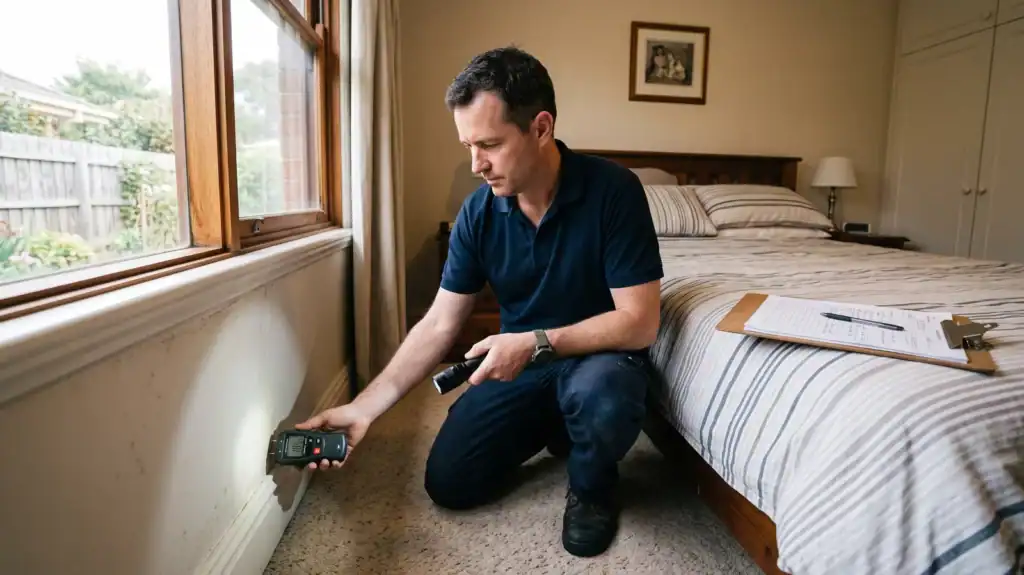
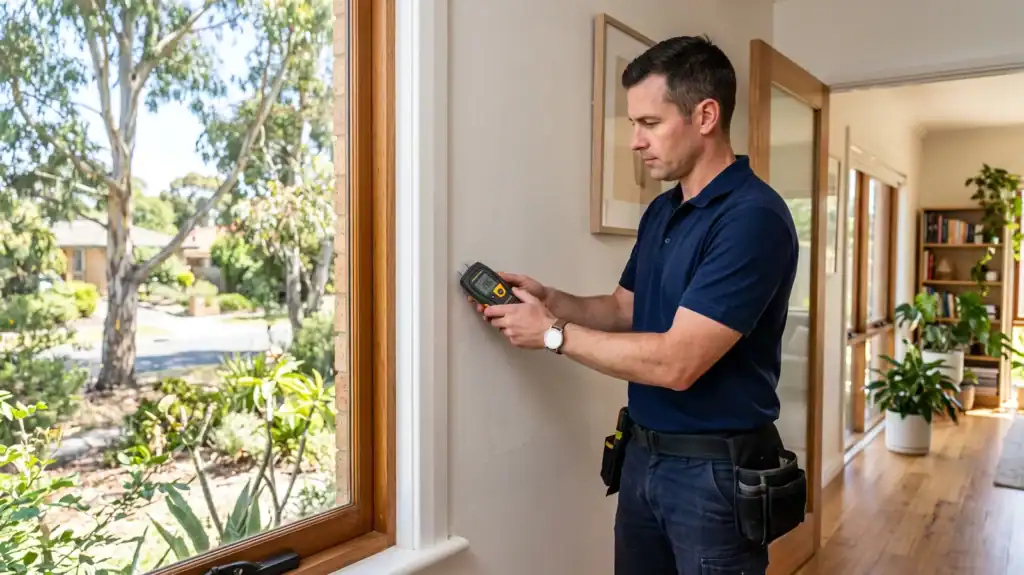
If you have found mould on leather furniture or belongings in your home, mould is likely growing elsewhere too. Mould and Hygiene Solutions offers free mould inspections across Newcastle, the Central Coast and Lake Macquarie.
Why Leather Grows Mould So Easily
Leather is an organic material made from animal hide. Mould feeds on organic matter, which makes leather one of the most vulnerable materials in your home.
The problem gets worse in warm, humid environments with poor airflow. Wardrobes, garages, under-stairs cupboards and storage units are classic culprits across coastal NSW.
Leather items most prone to mould growth include:
- Leather couches and armchairs, especially the back panels and undersides
- Handbags stored inside dustbags or plastic wrapping
- Shoes left in closed wardrobes or laundry cupboards
- Car seats in vehicles parked in enclosed garages
- Leather jackets folded and stored away during warmer months
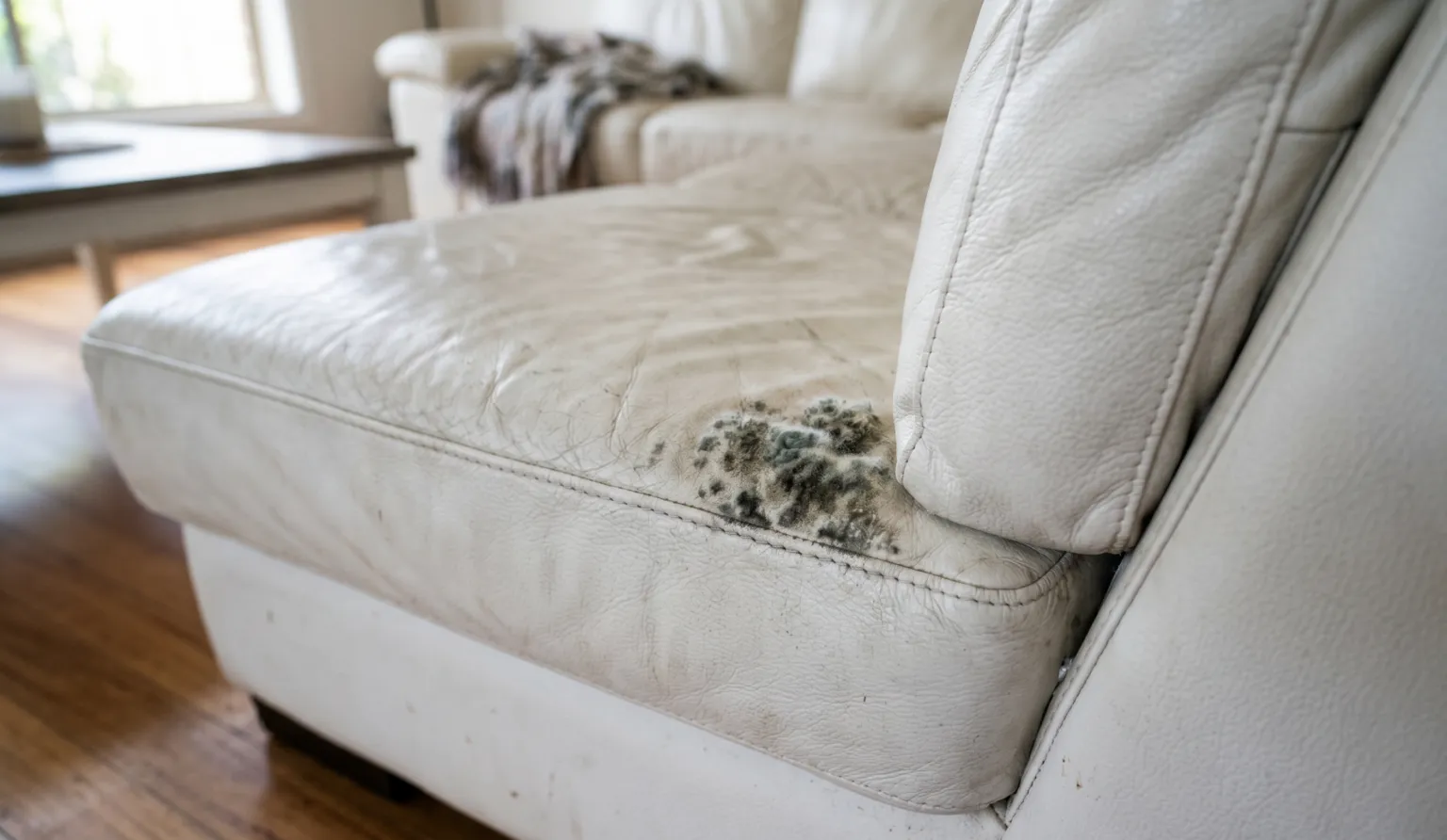
Mould on leather typically appears as white, green or black fuzzy patches on the surface. It often smells musty before it becomes visible. If your leather item feels damp or has a stale odour, inspect it closely under good light.
Once mould takes hold in leather’s porous grain, it is harder to remove than mould on hard surfaces like tiles or glass. The grain acts like a sponge, trapping mould roots (hyphae) below the surface where cleaning products cannot reach.
Common DIY Methods for Cleaning Mould Off Leather
Most Australians reach for one of a few standard methods when they first spot mould on leather. White vinegar, methylated spirits, hydrogen peroxide, soap and water, or a commercial leather cleaner from the hardware store.
| Method | How it works | Typical result |
|---|---|---|
| White vinegar (diluted) | Mild antifungal applied with a soft cloth | Removes surface mould but dries leather out over time |
| Methylated spirits | Alcohol kills surface mould on contact | Risk of discolouration and finish damage |
| Soap and warm water | Lifts surface mould mechanically | Does not kill mould spores or roots |
| Commercial leather cleaner | Surfactants remove visible mould | Does not penetrate the grain structure |
| Baking soda paste | Absorbs moisture and lifts surface stains | Leaves residue and does not address root growth |
If you are cleaning mould off leather yourself, wear rubber gloves and a P2 mask. Work outdoors or in a well-ventilated area to avoid inhaling spores released when you disturb the colony.
After any cleaning attempt, allow the leather to air dry completely away from direct heat or sunlight. Once dry, apply a quality leather conditioner to restore the oils stripped during cleaning.
Each of these methods will remove what you can see. None of them reach the hyphae embedded in the leather’s structure, which is why mould reappears within weeks.
Why DIY Mould Removal Fails on Leather
The reason DIY mould treatment fails on leather is straightforward. Retail cleaning products work on the surface, and mould roots grow below it.
When you wipe mould off leather with vinegar or soap, you are removing the visible fruiting body of the colony. The root network remains embedded in the grain beneath and regrowth typically begins within weeks.
DIY leather mould cleaning fails for three specific reasons:
- Surface products cannot penetrate leather’s porous grain to reach the root structure underneath
- Scrubbing and wiping physically disturbs the mould colony, releasing spores into the surrounding air
- No retail product identifies or addresses the moisture source that caused the mould in the first place
Disturbing mould without proper containment can spread spores to other rooms in your home. If you can see mould on leather furniture, there is a strong chance mould is present in the surrounding environment too. A professional mould test identifies the species involved and how far it has spread.
There is also a real risk of permanent damage with some DIY methods. Methylated spirits and alcohol-based cleaners strip leather’s natural oils and cause cracking.
Vinegar is safer but still dries out leather if used repeatedly. You trade a mould problem for a damaged leather problem.
Suede, nubuck and aniline leather are especially vulnerable. Their unfinished surfaces absorb moisture and cleaning products deeper into the material, making DIY treatment more likely to cause permanent damage than on finished leather.
What Happens If You Leave Mould on Leather
Ignoring mould on leather does not make it go away. Mould does not stop growing once it has established itself in organic material.
Left untreated, mould on leather causes:
- Permanent staining that cannot be reversed, even by professional leather restorers
- Breakdown of the leather’s structural fibres, leading to cracking and brittleness
- A persistent musty odour that absorbs deep into the material
- Ongoing spore release into your living space, affecting indoor air quality
Leather furniture is particularly concerning because a mouldy couch releases spores every time someone sits on it. The health effects of mould exposure include respiratory irritation, allergic reactions and worsening of asthma symptoms.
If you have been smelling something musty in your lounge room, the source may be mould growing inside the leather where you cannot see it. By the time leather starts to crack or feel brittle, the damage is often irreversible.
How Professional Mould Treatment Works Differently
Professional mould remediation takes a fundamentally different approach to surface cleaning. Instead of treating only what is visible, professional treatment penetrates the substrate and kills the root structure.
At Mould and Hygiene Solutions, we use an Australian-made, non-hazardous, non-corrosive and environmentally friendly antimicrobial solution that reaches below the leather’s surface layer. This kills the entire mould colony, not just the visible portion.
Professional treatment includes:
- Application of antimicrobial solution that penetrates the leather grain to kill hyphae at the root
- Containment procedures to prevent spore spread during treatment
- Identification and treatment of the moisture source driving mould growth
- Treatment of surrounding areas where airborne spores have likely settled
- A 12-month mould-free guarantee on all treated surfaces
The 12-month guarantee is the difference that matters. No DIY product offers one because no retail product can reliably prevent regrowth.
Our guarantee exists because the treatment works at the root level, backed by follow-up if mould returns within 12 months. According to NSW Health, removing the moisture source is essential to preventing mould from returning, and that is something no spray bottle addresses.
How to Prevent Mould on Leather Long-Term
Prevention comes down to controlling the environment around your leather items. Mould needs moisture, warmth and still air to grow.
Steps that actually reduce mould risk on leather:
- Keep indoor humidity below 60% in rooms where leather furniture sits
- Run a dehumidifier during humid months (October through March in coastal NSW)
- Allow airflow around leather furniture and do not push couches flat against walls
- Store leather bags and shoes in breathable cotton covers, never sealed plastic
- Wipe leather items with a dry cloth monthly and condition with a quality leather balm every three to six months
If you live on the Central Coast, in the Hunter Valley or around Lake Macquarie, your local climate puts leather at higher risk. Coastal humidity combined with enclosed rooms creates conditions where mould establishes itself quickly. A mould prevention plan tailored to your property is the most reliable way to protect your belongings long-term.
These steps reduce the risk of new mould growth. They do not treat mould that already exists.
Frequently Asked Questions
Can mould be permanently removed from leather?
Surface mould can be wiped away, but permanent removal requires killing the root structure (hyphae) embedded in the grain. Professional antimicrobial treatment is the only method that reaches below the surface and prevents regrowth.
Does vinegar damage leather?
Diluted white vinegar is one of the safer DIY options for surface mould, but repeated use dries out leather by stripping its natural oils. Always condition leather after using vinegar and avoid using it on suede or unfinished leather.
Is mould on leather dangerous?
Mould on leather releases spores into your living space every time the item is touched or sat on. According to Healthdirect Australia, mould exposure can cause respiratory irritation, allergic reactions and worsen asthma symptoms.
Can mould spread from leather to other items?
Mould spores are airborne and can settle on any organic surface nearby, including fabric, wood, carpet and paper. If you can see mould on leather furniture, there is a strong chance it is already growing in other parts of the room.
When to Book a Free Mould Inspection
Mould on leather items is a strong indicator of a broader moisture problem in your home. It is rarely an isolated event.
Book a free inspection if:
- You have visible mould on leather furniture, shoes, bags or clothing
- Mould keeps returning after you have cleaned it yourself
- You can smell a musty odour but cannot locate the source
- Your property has experienced flooding, water damage or prolonged high humidity
Mould and Hygiene Solutions offers free inspections across Newcastle, the Central Coast, Lake Macquarie, Hunter Valley and Port Stephens. Owner James inspects every property personally and provides a clear assessment of the problem, the source and what treatment is required.
Contact Mould and Hygiene Solutions today to book your free inspection and stop mould from damaging your leather for good.