Scrubbing with bleach removes visible mould stains from your shower, but it cannot reach the roots embedded in porous surfaces, so the mould returns within weeks.
Shower mould is one of the most persistent household problems in Newcastle, the Central Coast, and the Hunter Valley, where humidity and coastal moisture create ideal conditions for mould growth. Most homeowners try DIY approaches only to watch the same dark patches reappear on tiles and grout within a month.
This article explains why surface treatments fail, what actually works to eliminate mould permanently, and when professional intervention becomes necessary. You’ll also learn the root causes of shower mould and proven prevention strategies that address the problem at its source.
What Causes Mould to Grow in Showers?
Mould thrives in environments with three key elements: moisture, warmth, and organic material. Your shower provides all three in abundance, making it a breeding ground for mould spores that exist naturally in the air.
Understanding these conditions helps you target the real problem rather than just treating symptoms. According to the NSW Health guidelines on mould, controlling moisture is the single most important factor in mould prevention.
- Poor ventilation: Bathrooms without exhaust fans or windows trap humid air, creating constant moisture on surfaces
- Water leaks: Hidden leaks behind tiles or under shower screens provide persistent moisture sources that feed mould growth
- Inadequate drying: Shower curtains left closed, wet towels, and standing water in corners keep humidity levels elevated
- Grout deterioration: Old, porous grout absorbs water and provides the perfect medium for mould roots to establish
- Soap scum buildup: Residue from soap and shampoo provides organic material that mould consumes
In coastal regions like Newcastle and the Central Coast, ambient humidity exacerbates these conditions year-round. Even well-maintained showers can develop mould problems without proper moisture control strategies.
Why Does Mould Keep Coming Back in My Shower?
The cycle of cleaning and regrowth happens because most treatments only address surface mould while leaving the root structure intact. This is the fundamental problem with DIY approaches, from bleach solutions to vinegar sprays.
Having treated hundreds of shower mould cases across the Hunter Valley and Lake Macquarie, Mould and Hygiene Solutions has observed that homeowners typically go through multiple rounds of scrubbing before recognising that surface cleaning cannot solve a subsurface problem. The mould you see on tiles is just the visible growth, while the actual organism extends roots deep into grout, silicone, and even behind wall cavities.
The Root Structure Problem: Mould penetrates porous materials like grout and unsealed tile within 24-48 hours of initial colonisation. Surface treatments kill only the visible growth, leaving the subsurface mycelium network alive and ready to regenerate within 2-4 weeks.
- Bleach oxidises surface stains but cannot penetrate deep into porous materials
- Vinegar lacks the strength to kill mould roots embedded in grout lines
- Scrubbing damages surface sealants, creating more opportunities for water infiltration
- Humidity returns immediately after cleaning, providing ideal regrowth conditions
This cycle explains why DIY methods require constant repetition. Without treating the root structure and addressing moisture sources, you’re fighting a losing battle against an organism designed to survive harsh conditions.
Is Bleach Good for Removing Shower Mould?
Bleach removes the visible appearance of mould but fails as a long-term solution. It whitens stains through oxidation rather than killing the organism at its roots, which is why mould reappears in the same locations within weeks.
The US Environmental Protection Agency explicitly advises against bleach for porous surfaces because it cannot penetrate deep enough to eliminate subsurface growth. Australian conditions make this problem worse, with higher humidity levels that support faster regrowth.
Limitations of Bleach Treatment
- Surface action only: Bleach molecules are too large to penetrate grout and other porous materials where mould roots establish
- Moisture addition: Bleach solutions are 90% water, which actually feeds the subsurface mould you’re trying to eliminate
- Temporary cosmetic fix: Stain removal creates the illusion of success while the living organism continues growing beneath
- Health hazards: Chlorine vapours in enclosed bathrooms cause respiratory irritation and can react dangerously with other cleaning products
- Material damage: Repeated bleach application degrades sealants, damages coloured grout, and corrodes metal fixtures
Professional antimicrobial treatments use non-bleach formulations specifically designed to penetrate porous surfaces and eliminate root structures. This explains why Mould and Hygiene Solutions can offer an unconditional 12-month guarantee on shower treatments, something no bleach-based approach can match.
Can Vinegar Remove Mould from Shower?
Vinegar kills some mould species through its acidity, but it lacks the strength to eliminate established shower mould completely. It works marginally better than bleach on porous surfaces because it can penetrate slightly deeper, yet still falls short of reaching embedded root structures.
The mild acetic acid in household vinegar (typically 5% concentration) can kill surface mould within hours of application. However, testing across hundreds of Newcastle and Central Coast properties has shown that vinegar-treated showers develop visible regrowth within 3-6 weeks, only slightly longer than bleach-treated surfaces.
When Vinegar Might Be Appropriate
- Fresh mould growth (less than 48 hours old) on non-porous surfaces like glass or ceramic tile faces
- Maintenance cleaning between professional treatments to slow surface colonisation
- Situations where chemical sensitivity makes stronger products problematic for temporary surface management
For established mould in grout lines, silicone seals, or behind tiles, vinegar simply cannot deliver the penetration depth needed. These areas require specialised antimicrobial solutions that can reach root structures and prevent regrowth at the cellular level.
How Do You Get Rid of Mould in Shower Permanently?
Permanent elimination requires treating the root structure, addressing moisture sources, and applying protective treatments that prevent recolonisation. No surface cleaning method can achieve this, which is why professional intervention becomes necessary for lasting results.
The approach used by specialists like Mould and Hygiene Solutions focuses on three components that DIY methods cannot replicate. Each component addresses a different aspect of the mould life cycle to break the regrowth pattern permanently.
- Root structure elimination: Professional antimicrobial solutions penetrate porous materials to kill subsurface mycelium networks that standard cleaners cannot reach
- Moisture source identification: A thorough inspection identifies hidden leaks, ventilation failures, and structural issues that create persistent dampness
- Protective barrier application: Australian-made antimicrobial coatings create hostile surfaces that prevent spore attachment and new colony formation
- Environmental controls: Ventilation improvements and moisture management strategies that maintain conditions unfavourable to mould growth
This comprehensive approach is why professional removal services can guarantee results for 12 months while DIY methods require weekly or monthly repetition. The initial investment in proper treatment eliminates the ongoing time and product costs of surface cleaning.
The 12-Month Guarantee Difference: Mould and Hygiene Solutions offers Australia’s only unconditional 12-month mould-free guarantee because their antimicrobial treatment kills 99.99% of bacteria and eliminates root structures, not just surface stains. Owner James personally performs every treatment to ensure consistent results.
How Do You Remove Black Mould from Shower Grout?
Black mould in grout presents a particularly stubborn problem because grout is highly porous and provides deep anchor points for root structures. The dark staining you see indicates extensive colonisation beneath the surface.
Standard cleaning approaches focus on scrubbing away the visible black stains, but this method actually worsens the problem by creating microscopic grooves that provide more surface area for future colonisation. Professional treatment addresses both the organism and the compromised grout structure.
Why Grout Harbours Persistent Mould
- Porous structure: Unsealed grout absorbs water and provides deep channels for root penetration up to 5-8mm below the surface
- Alkaline composition: Cement-based grout creates pH conditions that many mould species actually prefer
- Organic content: Grout contains materials that mould consumes as it establishes colonies
- Moisture retention: Grout lines stay damp longer than tile surfaces, extending the period when mould can grow
When grout becomes heavily compromised by mould infiltration, proper remediation work may include grout removal and replacement in affected areas. This eliminates the colonised material entirely before applying antimicrobial treatments to fresh, sealed grout.
Professional Grout Treatment Process
- Assessment to determine if grout is salvageable or requires replacement
- Deep-penetrating antimicrobial application that reaches root structures
- Extraction of dead mould material from grout pores
- High-grade grout sealer application to prevent future water infiltration
- Protective antimicrobial coating that continues preventing colonisation
How Do Professionals Remove Mould from Showers?
Professional mould treatment uses specialised equipment, commercial-grade antimicrobial solutions, and systematic processes that achieve results impossible with consumer products. The difference lies in both the products used and the methodology applied.
Mould and Hygiene Solutions uses Australian-made non-hazardous antimicrobial formulations that kill 99.99% of bacteria while being safe for household use. These solutions work at the cellular level to destroy mould organisms completely rather than just removing visible growth.
| Treatment Aspect | DIY Approach | Professional Treatment |
|---|---|---|
| Penetration depth | Surface only (0-2mm) | Deep penetration (8-12mm into porous materials) |
| Kill rate | 60-80% of surface mould | 99.99% including root structures |
| Regrowth timeline | 2-4 weeks | 12+ months with guarantee |
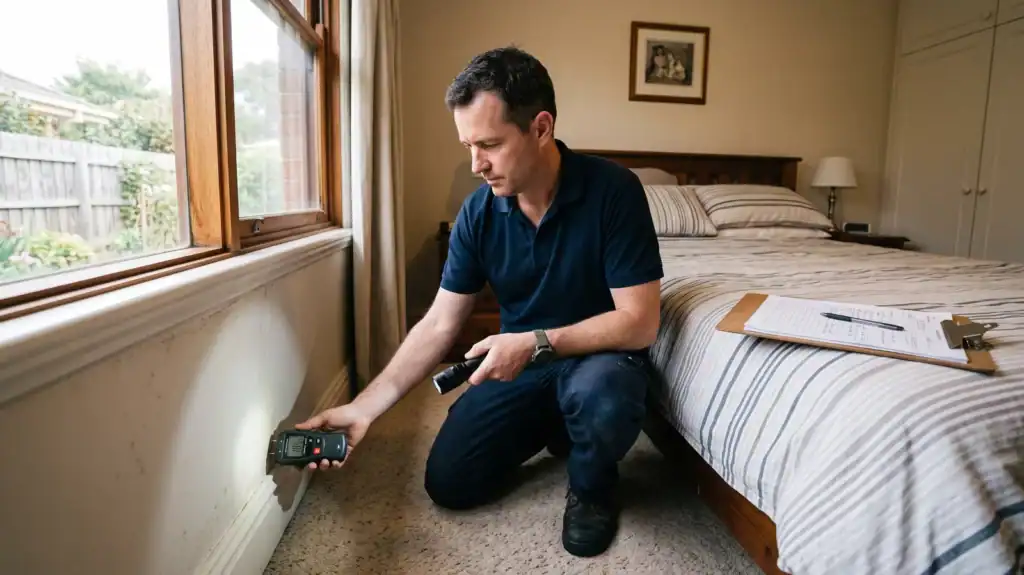
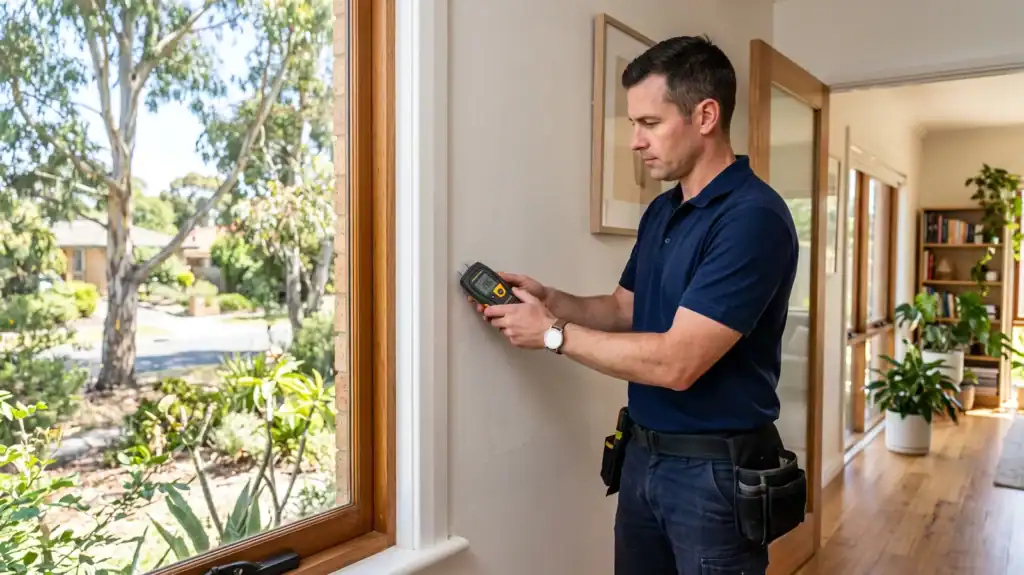
| Moisture source identification | Visible issues only | Thermal imaging and moisture meters detect hidden problems |
| Protective barrier | None | Antimicrobial coating prevents recolonisation |
| Safety concerns | Harsh chemicals, poor ventilation | Non-hazardous solutions, proper containment |
The professional process also includes detailed inspection procedures that identify underlying causes most homeowners miss. Hidden leaks behind tiles, ventilation inadequacies, and structural moisture problems require detection equipment and expertise to diagnose correctly.
What Professional Treatment Includes
- Comprehensive moisture assessment using thermal imaging cameras and hygrometers
- Identification of mould species and extent of colonisation
- Proper containment to prevent spore spread during treatment
- Deep-penetrating antimicrobial application to all affected and adjacent areas
- HEPA filtration to capture airborne spores released during treatment
- Protective coating application that continues working after initial treatment
- Verification testing to confirm complete elimination
How Do You Prevent Mould Growing in Shower?
Prevention requires controlling the three conditions mould needs to thrive. While complete elimination of moisture in a shower is impossible, strategic management keeps levels below the threshold where mould can establish colonies.
After professional treatment eliminates existing mould, implementing these prevention strategies maintains the mould-free environment long-term. These practices complement professional antimicrobial coatings rather than replacing the need for proper treatment.
Daily Habits That Reduce Mould Risk
- Squeegee after every shower: Removing standing water from tiles and glass reduces surface moisture by 70-80%
- Run exhaust fan for 20 minutes post-shower: Removes humid air before moisture condenses on surfaces
- Leave shower door or curtain open: Allows air circulation to dry surfaces naturally
- Wipe down shower walls weekly: Removes soap scum that provides organic material for mould
- Fix leaks immediately: Even minor drips create persistent moisture sources that sustain mould growth
Structural Improvements for Long-Term Prevention
- Install or upgrade exhaust fan to meet ventilation requirements for bathroom size
- Apply high-quality grout sealer annually to prevent water infiltration
- Replace deteriorated silicone seals that allow water behind tiles
- Consider dehumidifier in bathrooms without windows in humid climates
- Ensure proper slope in shower floor to prevent water pooling
These prevention measures work best after professional treatment has eliminated existing mould. Implementing them over active mould growth simply slows progression rather than solving the underlying problem.
When to Call a Professional for Shower Mould
Certain situations indicate that DIY approaches have failed or that the mould problem extends beyond surface treatment capabilities. Recognising these signs early prevents more extensive damage and higher remediation costs.
If you’re experiencing mould in the Newcastle, Central Coast, Lake Macquarie, Hunter Valley, or Port Stephens areas, professional assessment identifies the full extent of the problem. James from Mould and Hygiene Solutions personally conducts every inspection to ensure nothing gets missed.
- Recurring growth: Mould returns within 2-4 weeks despite repeated cleaning
- Musty odours: Persistent smell indicates hidden mould behind tiles or in wall cavities
- Extensive coverage: Mould affects multiple surfaces or covers more than one square metre
- Health symptoms: Respiratory issues, allergies, or other reactions when using the shower
- Structural concerns: Grout deterioration, tile loosening, or soft spots in walls near shower
- Black mould: Particularly concerning species that may require specialised treatment
Professional testing services can identify mould species and determine the best treatment approach. This assessment also reveals moisture sources that need addressing to prevent future growth.
Free Mould Inspection: Mould and Hygiene Solutions provides complimentary inspections throughout Newcastle, Central Coast, Lake Macquarie, Hunter Valley, and Port Stephens. This no-obligation assessment identifies the extent of your mould problem and provides clear options for permanent elimination backed by Australia’s only unconditional 12-month guarantee.
Get Lasting Results with Professional Treatment
Understanding how to get rid of mould in shower environments reveals why surface treatments consistently fail. Bleach, vinegar, and scrubbing address symptoms while leaving root structures intact, creating an endless cycle of cleaning and regrowth.
Professional antimicrobial treatment eliminates mould at the cellular level, treating root structures embedded deep in porous materials. This approach, combined with moisture source identification and protective coatings, delivers results that last 12 months or longer with proper maintenance.
If your shower mould keeps returning despite repeated cleaning efforts, it’s time to address the root cause rather than continuing the surface treatment cycle. The team at Mould and Hygiene Solutions offers free inspections across Newcastle, the Central Coast, and surrounding areas to assess your specific situation.
Contact Mould and Hygiene Solutions today to schedule your complimentary mould inspection and learn how Australia’s only unconditional 12-month mould-free guarantee can finally solve your shower mould problem permanently.