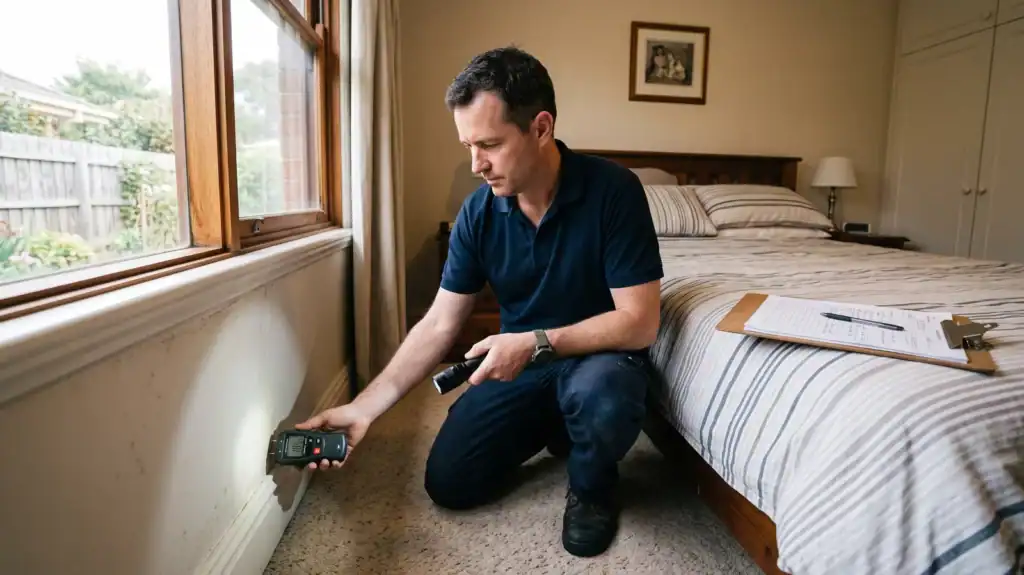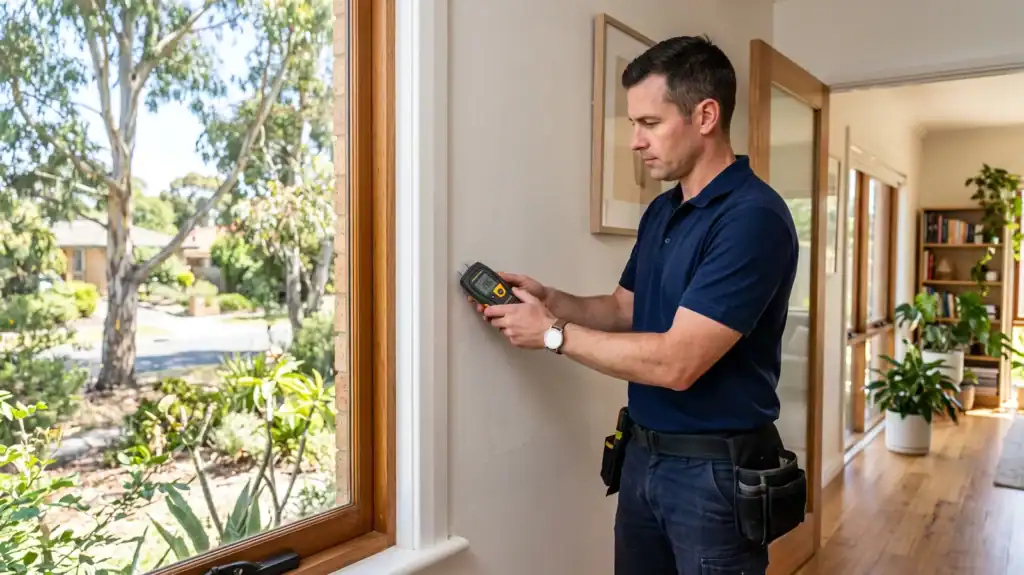
If you have cleaned the same patch of mould and watched it return, check how mould removal specialists investigate moisture before booking treatment. Homeowners across Newcastle and the Central Coast often try surface cleaning first, but a clean-looking wall does not tell you whether the material is dry or whether mould remains behind it.
Finding a professional mould removal service you can trust starts with checking how the company investigates the problem. This guide covers qualifications, questions to ask, quote comparisons and the warning signs to watch for before agreeing to treatment.
Whether you are dealing with a bathroom ceiling, a musty smell you cannot track down or a property you manage, ask for a written explanation of the proposed work. You should understand what will be treated and who will address the moisture source.
Why choosing the right mould removal specialists matters
Mould is more than a cosmetic problem. The World Health Organisation guidelines on dampness and mould identify increased respiratory symptoms, allergies and asthma among the effects associated with damp indoor environments.
A company that only wipes visible mould without investigating the moisture source leaves an important part of the problem unresolved. Proper assessment should lead to treatment of affected areas and a clear plan for preventing recurrence.
- Surface cleaning does not reach hidden growth inside wall cavities or under flooring.
- Disturbing contaminated materials can spread mould into otherwise clean areas.
- Porous materials may need removal if they cannot be adequately cleaned.
- Leaks and persistent condensation need attention alongside treatment.
Health concerns: Speak with a health professional about respiratory symptoms or other health concerns. A building assessment helps investigate moisture and mould; it cannot diagnose the cause of someone’s symptoms.
What to look for in mould removal specialists
Not all mould removal companies offer the same scope of work. Ask about the technician attending your property, the inspection process and the evidence behind any advertised qualifications.
- Relevant training. Ask for the qualification name, issuing organisation and a way to verify it. The IICRC Applied Microbial Remediation Technician certification covers mould and sewage remediation techniques; an unrelated cleaning certificate is not evidence of the same training.
- A thorough inspection. The technician should assess affected materials, moisture readings and likely causes. Ask which roof, subfloor or concealed areas can be inspected safely and which will remain inaccessible.
- Written findings. Request photographs, the proposed treatment areas and the limits of the assessment. A report should distinguish observations from suspected causes that need further investigation.
- Appropriate insurance. Request current evidence of insurance and ask whether it covers the proposed mould remediation work. Check that the business named on the evidence matches the business quoting.
- Clear product information. Ask for product names, safety data sheets and instructions for occupants and pets. A reassuring description does not replace application and re-entry instructions.
- Follow-up arrangements. Ask who to contact if mould reappears and get any warranty or guarantee in writing before booking.
The company should also explain whether ventilation improvements, waterproofing or leak repairs require another trade. Treatment cannot compensate for a building that continues to let water in.
Red flags when hiring a mould removal company
Be cautious when a sales pitch moves faster than the assessment. You need an explanation you can check, with time to read the quote and ask questions.
- Health promises or scare tactics. Mould colour or a photograph cannot establish why someone is unwell, and removal companies should not promise to cure health conditions.
- A firm scope from photos alone. Photos can support an initial estimate, but cannot reveal moisture inside materials or every hidden area.
- Surface spraying presented as a complete fix. Ask how contamination will be removed and how unsuitable materials will be identified. Retail sprays do not repair leaks or resolve hidden growth.
- No moisture assessment. If the cause is uncertain, the company should say what further investigation is needed.
- Pressure to sign immediately. Urgency should relate to the condition of the property, with reasons explained clearly.
- Vague guarantees. Ask which areas are covered, what you must do afterwards and how a return visit is arranged.
Check the evidence: Ask for references or examples of similar completed jobs. Before-and-after photos show appearance; ask what was done about moisture and whether there was follow-up.
Questions to ask before hiring mould removal specialists
Use these questions when speaking to each provider. Written answers make it easier to spot differences between proposals that initially sound alike.
| Question | What a useful answer includes |
|---|---|
| Who will inspect and treat the property? | The technician’s relevant training and experience with similar work. |
| What can you inspect? | Accessible areas, moisture measurements and any access limitations. |
| What products will you use? | Product details, safety information and preparation or re-entry instructions. |
| Why would testing be needed? | The question sampling would answer and how the result would change the plan. |
| What is included in the quote? | Treatment areas, removal work, protection measures, reporting and exclusions. |
| Who deals with the moisture source? | Work the company will do and repairs that need a separate contractor. |
| How will you check completion? | Agreed inspection criteria, documentation and any justified sampling. |
If an answer is unclear, ask the provider to explain it in ordinary language. You should not have to guess what you are authorising.
The problem with surface cleaning
Wiping off a patch can improve its appearance while leaving damp materials or hidden growth untouched. The US EPA’s mould cleanup guidance explains that mould can occupy spaces within porous materials and may be difficult or impossible to remove completely.
That does not mean every marked surface needs replacement. It means the condition of the material and the moisture source should determine the treatment, rather than a promise that one spray fixes everything.
- Bleach, vinegar and other household products do not repair moisture damage or provide a lasting answer to recurring mould.
- Scrubbing or pulling out affected materials without suitable controls can spread contamination.
- Recurring patches, concealed growth and mould after substantial water damage warrant professional assessment.
- For managed properties, a written report helps the property owner or manager organise treatment and any separate repairs.
Choosing specialists means checking that their proposal addresses these limitations. A professional plan should explain what can be cleaned, what may need removal and how the moisture problem will be investigated.
What a professional mould removal process looks like
A professional mould remediation process should connect the inspection findings to a treatment plan. The equipment and controls should match the extent of contamination and the methods used.
- Initial inspection. Record affected areas, moisture readings, likely causes and any inaccessible spaces.
- Testing if justified. Explain the purpose of sampling before arranging it, including who will interpret the results.
- Protection and containment. Plan how to prevent contamination spreading during work. Ask whether barriers, HEPA filtration or negative pressure are needed for this particular job.
- Removal and treatment. Clean suitable materials and remove those that cannot be adequately remediated. Treatment must suit the material and extent of growth.
- Moisture control. Identify required drying, ventilation improvements or repairs, with clear responsibility for each.
- Completion checks. Assess the treated areas against the agreed scope and record remaining problems. Sampling may be appropriate for some jobs, but is not automatically required for every one.
- Handover. Provide treatment records, practical recommendations and the terms of any guarantee.
Mould and Hygiene Solutions uses an Australian-made, non-hazardous, non-corrosive and environmentally friendly antimicrobial solution. Ask how it will be applied to the affected materials and what removal or containment work your property requires alongside treatment.
The company’s 12-month mould-free guarantee is a useful point to discuss when comparing providers. Request the written terms, including covered areas, exclusions and any moisture-control recommendations you need to follow.
A plan for mould prevention after treatment should address the conditions that allowed growth. A guarantee cannot replace repairing an ongoing leak.
How to compare quotes from different companies
Compare the proposed work before comparing the total. Cleaning one ceiling and treating several damp rooms are different jobs.
| Quote element | What to confirm in writing |
|---|---|
| Inspection and reporting | Whether the inspection fee and written findings are separate from treatment. |
| Areas and materials | Rooms, surfaces, contents and inaccessible spaces included or excluded. |
| Containment and filtration | The controls proposed for this job and why they are appropriate. |
| Removal and reinstatement | Who removes unsuitable material, handles waste and arranges replacement. |
| Testing and completion checks | What is included, what is optional and who assesses the result. |
| Moisture repairs | Which repairs require another trade and how they affect treatment timing. |
| Guarantee and variations | Written terms and how extra work must be approved. |
If disinfection and sanitisation services appear as an additional item, ask what separate hygiene issue they address. They should not be presented as a substitute for removing mould contamination and managing moisture.
The extent of the problem and what the quote includes help you judge whether professional mould removal is worth it. Ask each company to explain any differences in scope before deciding.
Frequently asked questions about choosing mould removal specialists
- Before booking, confirm the assessment scope and fee.
- Before treatment, confirm access arrangements, completion checks and written terms.
Do all mould jobs need laboratory testing?
No. The US EPA’s guidance on mould sampling says sampling is usually unnecessary when mould growth is visible.
Ask how professional mould testing would inform your treatment plan before agreeing to it. Results need interpretation in the context of the building assessment and do not diagnose health conditions.
Which qualifications should I check?
Request evidence of relevant microbial remediation training for the technician doing the work, together with experience on similar properties. Ask how to verify the credential with its issuer rather than relying on a logo.
Can I get a reliable quote from photographs?
Photos can help explain the visible problem and support an initial estimate. Ask what needs on-site assessment before the provider commits to a treatment scope.
Will I need to leave the property during treatment?
That depends on the work area, treatment method and product instructions. Get written advice about occupants, pets, restricted rooms and re-entry before the visit.
How long should professional mould removal take?
The affected area, access, drying and any material removal influence the schedule. Ask for an estimated timeline after inspection, including separate repairs and completion checks.
What should a mould-free guarantee cover?
Ask which treated areas are covered, how recurrence is assessed and what exclusions apply. Mould and Hygiene Solutions offers a 12-month mould-free guarantee; request the terms with your treatment proposal.
How will I know the work is complete?
Agree on completion criteria before treatment, including inspection of treated areas and documentation of unresolved moisture issues. Ask whether independent assessment is appropriate for the extent or complexity of your job.
What should I send before the inspection?
Provide photos, the affected rooms and any history of leaks, flooding or recurring patches. Mention previous DIY cleaning so the technician knows the appearance may have changed.
How much does a mould specialist charge?
The scope, access, materials and need for testing or drying affect the quote. Book an assessment and request an itemised proposal without assuming every provider includes the same work.
Book a professional mould inspection to get started
Mould and Hygiene Solutions provides professional inspections across Newcastle, the Central Coast, Lake Macquarie, Hunter Valley and Port Stephens. Inspections are a paid service; confirm the scope and fee when booking.
- Explain where you have seen mould and whether it has returned after cleaning.
- Ask for findings and treatment recommendations in writing.
- Discuss the 12-month mould-free guarantee and any repairs needed alongside treatment.
For properties in Newcastle, book a local mould inspection. A professional assessment helps you compare actual treatment needs before committing to removal work.
Book your professional mould inspection to get a clear plan for your home or workplace.