A dehumidifier lowers humidity, but it will not kill mould that already exists in your home.
Plenty of homeowners across Newcastle and the Central Coast buy a dehumidifier after spotting mould on a wall or ceiling. The logic makes sense: mould needs moisture, so removing moisture should fix it.
The reality is more complicated. This article explains exactly what a dehumidifier can and cannot do for mould, and when you need professional mould removal instead.
Already seeing mould growth in your home? A dehumidifier won’t remove it. Book a free mould inspection with Mould and Hygiene Solutions to find out what’s actually going on.
How Dehumidifiers Actually Work Against Mould
A dehumidifier draws in damp air, passes it over cold coils to condense the water out, and pushes drier air back into the room. This reduces relative humidity, which is the single biggest factor in whether mould spores become active.
Mould spores are always present in indoor air. They only germinate and grow when relative humidity stays above 60% for extended periods.
A dehumidifier that keeps your home between 40% and 50% relative humidity creates conditions where spores cannot colonise surfaces.
- Mould spores need sustained humidity above 60% to germinate
- A dehumidifier targets the moisture in the air, not the moisture trapped in walls or substrates
- The unit must run consistently to maintain low humidity, including overnight and on weekdays
- A single portable unit covers roughly one room, not an entire house
So a dehumidifier is genuinely useful for mould prevention in small, enclosed spaces. But prevention and treatment are two different things.
Why a Dehumidifier Won’t Fix Existing Mould
Once mould has colonised a surface, reducing air humidity does not reverse the growth. Mould hyphae (the root structure) penetrate into drywall, timber, grout, and other porous materials.
Lowering humidity to 40% will slow the colony, but it won’t kill what’s already embedded.
This is the same reason bleach fails as a long-term solution. Bleach strips the visible surface layer, but the roots survive.
Regrowth appears within two to six weeks.
A dehumidifier treats the air. Mould lives in the material. Dropping humidity from 70% to 45% makes the air drier, but the moisture already absorbed into your plasterboard or timber frame stays put.
- Mould roots (hyphae) grow into porous materials beneath the surface
- Reducing air humidity does not extract moisture already trapped in walls, ceilings, or subfloors
- Dormant mould reactivates as soon as humidity rises again, which it will during any wet season
- Spores from existing colonies continue circulating through the home even at lower humidity levels
If you can see mould, the colony is established. A dehumidifier at that stage is managing a symptom while the source grows underneath.
Meanwhile, spore exposure continues. If anyone in the household is experiencing respiratory symptoms, read about the warning signs of mould toxicity.
When a Dehumidifier Actually Helps With Mould
Dehumidifiers work best as a preventive tool, not a reactive one. They are worth the investment in specific situations where you are controlling humidity before mould takes hold.
- After professional mould removal to keep humidity low and prevent recolonisation
- In bathrooms without exhaust fans where steam builds up daily
- In enclosed laundries where a clothes dryer vents indoors or clothes dry on a rack
- In subfloor areas that trap ground moisture, though this often requires a commercial-grade unit
- During extended wet weather when homes across the Hunter Valley and Central Coast see weeks of rain
In each of these cases, the dehumidifier is stopping mould from starting, not treating an existing problem. That distinction matters.
| Situation | Will a Dehumidifier Help? |
|---|---|
| No visible mould, high humidity readings | Yes, good preventive step |
| Small patch of surface mould on tiles | Not enough on its own, needs cleaning first |
| Recurring mould on walls or ceilings | No, the substrate is contaminated |
| Mould smell but nothing visible | No, hidden mould needs professional inspection |
| Post-flood or water damage | Not without professional remediation first |
If your situation falls into the bottom three rows, a dehumidifier purchase delays the real fix. A free inspection identifies what’s actually going on.
Dehumidifiers Don’t Address the Moisture Source
Every mould problem has a moisture source. It might be a leaking pipe behind the wall, condensation from poor ventilation, rising damp through the slab, or water ingress around window frames.
A dehumidifier treats the air in the room without touching the source.
Homeowners in Lake Macquarie and Port Stephens deal with this constantly. Coastal humidity is high year-round, and older homes often have ventilation gaps that let moist air into wall cavities.
- A leaking pipe behind plasterboard keeps feeding moisture regardless of room humidity
- Rising damp wicks moisture up through concrete slabs and into wall framing
- Condensation forms on cold surfaces (windows, external walls) even when air humidity is moderate
- Subfloor moisture rises into timber floors and creates conditions the dehumidifier cannot reach
Professional mould treatment starts with identifying where the moisture comes from. Without solving the source, any solution is temporary. That includes dehumidifiers, DIY cleaning, and retail anti-mould sprays.
What Professional Mould Treatment Does Differently
Professional mould removal addresses the colony at substrate level, where the roots actually live. At Mould and Hygiene Solutions, we use an Australian-made, non-hazardous, non-corrosive and environmentally friendly antimicrobial solution that penetrates into the material where mould roots grow.
This is fundamentally different from wiping a surface or running a dehumidifier. The antimicrobial solution reaches the hyphae embedded in plasterboard, timber, and grout, killing the colony at its base.
- Moisture source identification before any treatment begins
- Containment to prevent spore spread during removal
- Substrate-level treatment with antimicrobial solutions that kill roots inside the material
- Air quality testing to confirm spore levels after treatment
- 12-month mould-free guarantee because the treatment actually lasts
The 12-month guarantee exists because professional treatment solves the actual problem. A dehumidifier manufacturer cannot offer the same promise, because the product was never designed to eliminate mould.
Choosing a Dehumidifier for Mould Prevention
If you have had mould professionally removed and want to reduce the chance of it returning, a dehumidifier is a reasonable investment. But not all units are equal.
- Choose a unit rated for your room size, not the cheapest option at the hardware store
- Look for a built-in hygrometer that shows current humidity, and set it to maintain 40-50%
- Empty the water tank regularly or connect a drainage hose for continuous operation
- Clean the filter monthly, because a dirty dehumidifier circulates contaminants
- Place it in the most humid room, not in a hallway where air barely moves
A neglected dehumidifier becomes a mould source itself. Standing water in the tank grows bacteria and mould within days. If you cannot commit to regular maintenance, the unit will make your air quality worse, not better.
CHOICE Australia recommends checking the energy rating and extraction rate before purchasing. A unit that extracts 10 litres per day suits a bedroom.
A 200-square-metre home with persistent humidity needs something industrial. The US CDC confirms that keeping humidity below 50% is a baseline for preventing mould-related health effects.
When to Skip the Dehumidifier and Call a Professional
If mould is already visible in your home, a dehumidifier purchase delays the fix. If mould keeps returning after cleaning, the colony is established in the substrate.
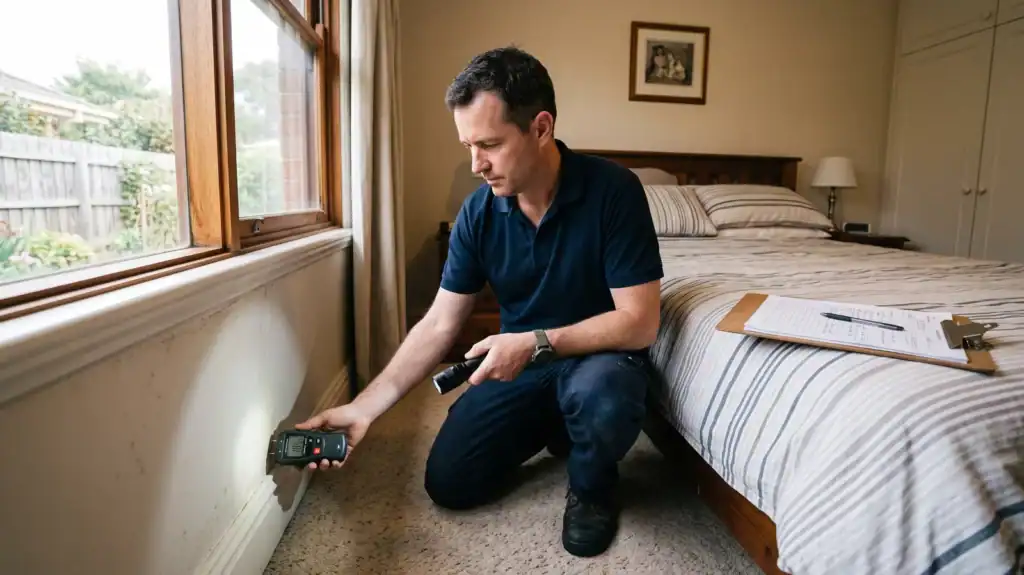
If you smell mould but cannot see it, the growth is inside a wall cavity, subfloor, or ceiling space that no dehumidifier can reach.
- Visible mould on walls, ceilings, or window frames
- Mould that returns within weeks of cleaning
- A persistent musty smell with no visible source
- Recent flooding or water damage
Any of these situations needs professional assessment, not a hardware store purchase.
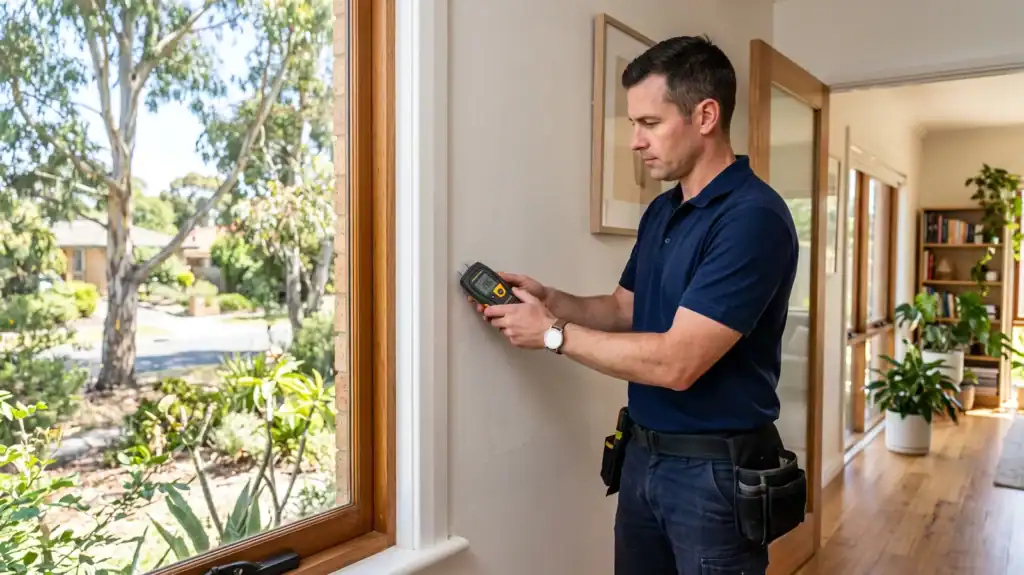
Mould and Hygiene Solutions offers free inspections across Newcastle, the Central Coast, Lake Macquarie, Hunter Valley and Port Stephens. We identify the moisture source, treat the mould at substrate level with our antimicrobial solution, and back it with a 12-month mould-free guarantee.
Book your free mould inspection today and find out whether a dehumidifier is enough, or whether you need treatment that actually solves the problem.