Does bleach kill mould? The short answer is that bleach only removes surface stains on non-porous materials but fails to eliminate mould roots, allowing regrowth within weeks.
While it might look clean initially, bleach cannot penetrate porous surfaces like drywall, timber or grout where mould colonies actually live. Even a thorough guide on how to clean mould safely will tell you that no household product reaches the roots.
This article explains why bleach falls short as a mould treatment, the science behind mould growth, and when to call professionals for long-term solutions that actually work.
Does Bleach Kill Mould on Different Surfaces
Bleach’s effectiveness depends entirely on the surface type. On glass, tiles and other non-porous materials, bleach can kill surface growth temporarily, but understanding what actually kills mould spores shows why household bleach never addresses the underlying colony.
On porous materials like wood, plasterboard and concrete, it only bleaches the visible stain while the roots remain completely untouched. This is why DIY attempts with bleach create a dangerous illusion of cleanliness that masks growing contamination.
- Non-porous surfaces (glass, ceramic tiles, metal): Bleach kills surface mould but doesn’t prevent regrowth
- Porous surfaces (drywall, timber, grout, concrete): Bleach cannot penetrate deep enough to reach mould roots
- Fabrics and upholstery: Bleach damages fibres and only treats surface contamination
- Painted walls: Chlorine breaks down paint and forces moisture deeper into the substrate
If you do use bleach on non-porous surfaces like ceramic tiles, the standard ratio is one cup of household bleach to 3.8 litres of water with a minimum contact time of 10 minutes. This provides temporary results only and does nothing to prevent regrowth.
Household bleach contains only 3 to 8 percent sodium hypochlorite, with the remainder being water. The US EPA does not recommend bleach for routine mould cleanup, and this water content actually feeds mould growth below the surface. Within days or weeks, dark patches reappear because the underlying colony was never eliminated.
Why DIY Mould Treatment Fails: Household products like bleach, vinegar and commercial sprays only remove what you can see on the surface. The actual mould colony lives deep within porous materials where these solutions cannot reach, meaning regrowth is inevitable.
Why Bleach Fails as a Mould Treatment
Understanding the science helps explain why bleach creates only a cosmetic fix that wastes time and money. Mould sends thread-like structures called hyphae deep into porous materials, forming a network that supports the visible growth.
No amount of surface application with household products can reach these root systems. This fundamental limitation makes DIY treatment futile regardless of how much bleach you use or how often you apply it.
Chemical Limitations of Sodium Hypochlorite
Bleach molecules are too large to penetrate porous materials effectively. The chlorine ions remain on the surface while water soaks inward, creating ideal conditions for mould regrowth.
- Chlorine evaporates quickly, losing antimicrobial properties within minutes
- High pH damages building materials and corrodes metal surfaces
- Water content increases substrate moisture, encouraging faster mould return
- Organic materials neutralise chlorine before it reaches deep colonies
The Regrowth Cycle
Property owners who rely on bleach or other DIY solutions find themselves in a frustrating cycle. Because mould is a living fungus with deep root structures, it appears gone after bleaching but returns within weeks, gets bleached again, and the pattern repeats while the underlying problem worsens.
Each application temporarily masks the contamination without addressing the colony, meaning you’re spending money and time on a solution that cannot possibly work. This is the core problem with all consumer mould products available at hardware stores.
Important: According to the NSW Health Department, bleach is not recommended for mould remediation as it can release harmful fumes and fails to address the moisture source causing growth.
Health and Safety Concerns with Bleach
Beyond its complete ineffectiveness at eliminating mould colonies, bleach poses serious risks during application. The fumes alone can cause respiratory irritation, particularly in enclosed spaces like bathrooms and basements where mould commonly grows.
- Chlorine gas release when mixed with ammonia or acids (common in many cleaning products)
- Skin and eye irritation from direct contact or splashing
- Respiratory problems from inhaling fumes in poorly ventilated areas
- Corrosive damage to fixtures, fittings and building materials
- Environmental harm when washed into waterways
Never mix bleach with other cleaning products. Combining bleach with ammonia produces toxic chloramine gas. Mixing bleach with vinegar or acidic cleaners creates chlorine gas.
Both combinations can cause severe respiratory distress, loss of consciousness, and in extreme cases, death. If you have already used another cleaning product on mould, wait at least 24 hours and ventilate the area thoroughly before applying bleach.
People with asthma, allergies or chemical sensitivities face greater risks. Children and pets are especially vulnerable to accidental exposure during or after application, making DIY treatment with harsh chemicals a genuine health hazard.
Even after mould appears dead, the spores remain allergenic. Dead mould can still trigger respiratory reactions, sinus irritation, and allergic responses, which is why physical removal through professional remediation is essential rather than just killing the surface growth.
The Three Reasons DIY Mould Treatment Always Fails
Whether you try bleach, vinegar as a mould treatment, tea tree oil or commercial mould sprays from the hardware store, DIY approaches fail for the same fundamental reasons. Understanding these limitations explains why professional treatment is the only effective solution.
- No Root Penetration: Consumer products cannot penetrate porous materials to reach the mould colony’s root system (hyphae), meaning the organism remains alive and will regrow within days or weeks regardless of surface appearance.
- No Moisture Control: DIY cleaning does nothing to address the underlying moisture problem causing mould growth, ensuring conditions remain perfect for continued contamination even after repeated applications.
- No Preventative Barrier: Household products provide no ongoing protection after application, leaving surfaces vulnerable to immediate recolonisation from airborne spores present in every property.
These limitations explain why DIY mould removal does not work regardless of concentration, frequency, or product choice. The chemical and physical properties of consumer solutions simply cannot achieve what professional antimicrobial treatments accomplish.
What Actually Works for Mould Removal
Effective mould treatment requires three elements: killing existing colonies including roots, addressing moisture sources, and preventing regrowth. Professional solutions achieve all three while household bleach, vinegar and commercial sprays accomplish none.
| Treatment Method | Surface Kill | Root Penetration | Prevention | Safety |
|---|---|---|---|---|
| Household Bleach | Temporary | No | No | Hazardous fumes |
| Vinegar | Limited | Minimal | No | Safe but ineffective |
| Tea Tree Oil | Moderate | Limited | No | Safe but incomplete |
| Professional Treatment | Complete | Yes | Long term | Non-hazardous |
Mould and Hygiene Solutions uses an Australian-made antimicrobial solution that penetrates porous materials to eliminate colonies at their source. The non-hazardous, non-corrosive formula creates a protective barrier that prevents regrowth, backed by an unconditional 12-month guarantee.
This professional approach addresses all three requirements for permanent mould elimination. Unlike temporary DIY measures that only mask the problem, proper treatment actually resolves contamination and protects your property long term.
When Surface Cleaning Is Not Enough
Small spots of mould on shower tiles might seem manageable with household cleaners, but even cleaning mould off walls and tiles with care only addresses surface contamination. Any visible mould growth indicates a larger colony beneath the surface that DIY products cannot eliminate.
Larger infestations, recurring growth, or mould on building materials always require professional intervention to prevent structural damage and health impacts. Attempting DIY treatment in these situations wastes money and allows contamination to worsen.
Signs You Need Professional Help
- Mould covering areas larger than one square metre
- Growth returns within weeks after cleaning
- Musty odours persist even after visible mould is removed
- Mould appears on drywall, ceiling cavities or structural timber
- Previous water damage or leaks in the affected area
- Soft furnishings affected, including mould found in carpet beneath furniture
- Multiple rooms or building sections show growth
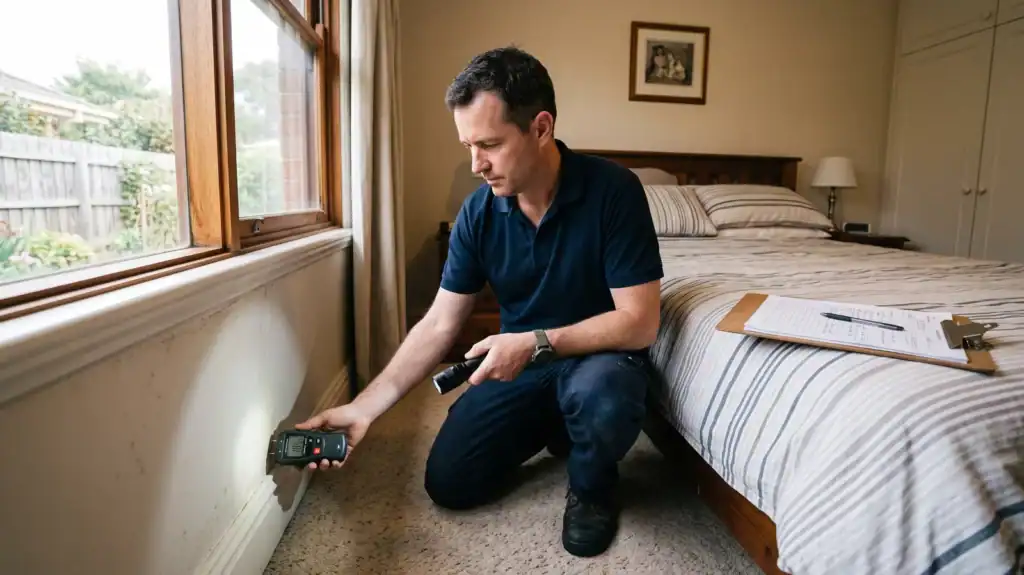
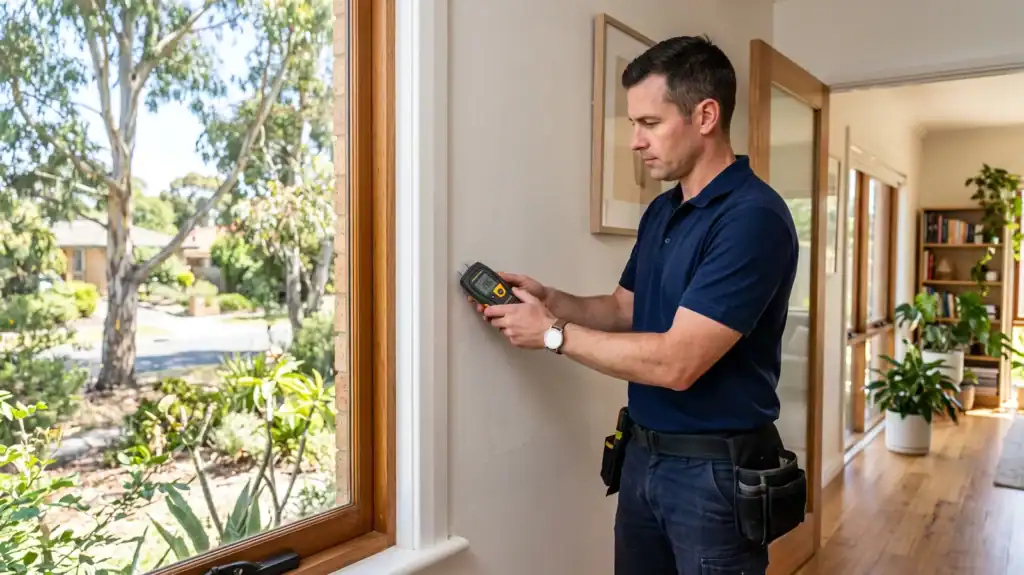
Professional mould inspection services identify the full extent of contamination, including hidden growth behind walls or under flooring. Thermal imaging and moisture meters reveal problems invisible to the naked eye that DIY approaches cannot detect or address.
The Cost of Delayed Treatment
Attempting to save money with repeated bleach or vinegar applications often costs more in the long run. Unchecked mould degrades building materials, reduces property value, and can trigger expensive emergency repairs when structural damage becomes severe.
Every week spent on ineffective DIY treatment allows the colony to expand deeper into substrates. What might have been a straightforward remediation job becomes extensive structural repair because surface cleaning masked the true contamination extent.
Reality Check: The Australian Building Codes Board recognises mould as a serious building defect that requires proper remediation, not cosmetic cleaning, to maintain building integrity and occupant safety.
How Professional Mould Treatment Works
Professional services follow a systematic approach that addresses causes, not just symptoms. This ensures mould doesn’t return and building materials remain protected without the need for ongoing DIY maintenance.
- Inspection and Assessment: Identifying all affected areas, moisture sources and contamination levels
- Moisture Control: Fixing leaks, improving ventilation and reducing humidity
- Safe Removal: Containing spores during cleaning to prevent spread throughout the property
- Deep Treatment: Applying antimicrobial solutions that penetrate substrates and kill root systems
- Prevention: Creating protective barriers and providing maintenance recommendations
- Verification: Testing to confirm complete elimination and safe air quality
Comprehensive mould remediation services in Newcastle, Central Coast and Hunter Valley include all these steps as standard. The process typically completes within one to three days depending on the contamination extent, delivering results that DIY methods cannot achieve in any timeframe.
Preventing Mould Without Harsh Chemicals
Long-term mould control focuses on environmental management rather than repeated chemical applications that don’t work. Controlling moisture and improving airflow eliminates the conditions mould needs to establish.
However, prevention strategies only work after existing colonies are completely eliminated through professional treatment. Attempting moisture control while mould remains in building materials simply slows growth rather than stopping it.
Moisture Management Strategies
- Fix plumbing leaks and roof damage promptly
- Install and use exhaust fans in bathrooms, kitchens and laundries
- Keep indoor humidity at the level that actually prevents mould growth, generally below 60%, using dehumidifiers if needed
- Ensure adequate drainage away from building foundations
- Dry water spills and condensation within 24 hours
Ventilation and Airflow
Stagnant air allows moisture to accumulate in corners, closets and other poorly circulated spaces. Understanding why ventilation beats cleaning for mould prevention explains why opening windows regularly, using ceiling fans, and ensuring furniture sits away from walls all matter more than repeated scrubbing.
Professional mould prevention treatments create a protective coating on vulnerable surfaces that DIY products cannot replicate. This barrier repels moisture and inhibits spore germination, providing ongoing protection that eliminates the need for repeated cleaning with ineffective household solutions.
Frequently Asked Questions About Bleach and Mould
Does bleach kill black mould?
Bleach can remove the visible staining from black mould (Stachybotrys) on non-porous surfaces like tiles and glass, but it cannot kill the colony itself on porous materials where black mould typically grows. Black mould embeds deeply into drywall, timber, and plasterboard, making professional treatment with penetrating antimicrobial solutions the only effective approach.
What ratio of bleach to water should I use on mould?
The standard dilution is one cup of household bleach to 3.8 litres (one gallon) of water, with a minimum 10-minute contact time. This only works on hard, non-porous surfaces like ceramic tiles and glass. On porous materials like wood, grout, or drywall, no ratio of bleach will reach the mould roots, and the water in the solution feeds regrowth.
Can I mix bleach with vinegar to kill mould?
Never mix bleach with vinegar or any acidic cleaner. The combination produces chlorine gas, which causes severe respiratory distress, chemical burns to airways, and can be fatal in enclosed spaces like bathrooms. If you have already used vinegar or another acidic product, wait at least 24 hours and ventilate thoroughly before applying bleach.
Does dead mould still cause health problems?
Yes. Dead mould spores remain allergenic and can trigger respiratory reactions, sinus irritation, and allergic responses even after the colony is no longer active. This is why the mould must be physically removed through professional remediation, not simply killed in place with bleach or chemical treatments.
Why does mould come back after I clean it with bleach?
Bleach only removes surface growth while the root system (hyphae) survives deep within porous materials. The water in the bleach solution feeds these surviving roots, accelerating regrowth. Without addressing the underlying moisture source and eliminating the embedded colony with professional-grade antimicrobial treatment, regrowth is inevitable within days or weeks.
Is it safe to use bleach on bathroom mould?
Bathrooms are among the worst places to use bleach due to poor ventilation and enclosed spaces that concentrate toxic fumes. The chlorine gas released during application causes respiratory irritation, and the moisture-rich environment means mould regrows rapidly after treatment. Professional mould treatment in bathrooms uses non-hazardous solutions that are safe for enclosed areas.
What kills mould better than bleach?
Professional antimicrobial solutions penetrate porous materials to eliminate the root system that bleach cannot reach. Unlike household products, these treatments create a protective barrier that prevents recolonisation. For surface-only spots on non-porous materials, hydrogen peroxide is a safer temporary alternative, though it still cannot match professional remediation for lasting results.
How much mould is too much to clean myself?
Any mould covering an area larger than one square metre, growing on structural materials, or returning after cleaning requires professional remediation. Recurring growth indicates an established colony with deep root penetration that household products cannot address. A professional mould inspection identifies the full extent of contamination, including hidden growth behind walls and under flooring.
Does bleach kill mould on grout?
Bleach whitens grout by bleaching the mould stain, creating the appearance of clean grout, but the mould roots survive within the porous material. Grout is highly absorbent, meaning the water in bleach solutions soaks in and feeds regrowth while the chlorine evaporates from the surface. Professional treatment penetrates the grout to eliminate the colony and applies a protective barrier against recolonisation.
Making the Right Choice for Your Property
Does bleach kill mould effectively? The evidence shows it creates temporary cosmetic improvement while allowing colonies to thrive beneath surfaces, making it a complete waste of time and money.
For homeowners, renters, property managers and business owners in Newcastle, Central Coast and Hunter Valley, this means choosing between ongoing frustration with DIY failure and permanent solutions that actually work. Every day spent on ineffective treatment allows contamination to worsen while exposing occupants to health risks.
Mould and Hygiene Solutions offers free property inspections to assess contamination levels and recommend appropriate treatment. Their Australian-made antimicrobial solution provides non-hazardous, environmentally responsible treatment that penetrates porous materials to eliminate root systems, backed by an unconditional 12-month guarantee.
Professional mould removal services eliminate existing growth and prevent recurrence without exposing your family, employees or tenants to harsh chemical fumes. The investment protects both property value and occupant wellbeing while eliminating the cycle of repeated cleaning with products that cannot possibly solve the problem.
Book a free mould inspection today to discover the extent of contamination in your property and receive a detailed treatment plan. Contact Mould and Hygiene Solutions to speak with experienced technicians who understand local conditions across Newcastle, Central Coast and Hunter Valley, and can provide lasting solutions that keep your property mould-free for years to come.