Mould removal cleans the surface. Mould remediation fixes what caused the mould, and stops it coming back.
Homeowners across Newcastle and the Central Coast often use "mould removal" and "mould remediation" as though they mean the same thing. The difference between remediation vs removal determines whether mould disappears for good or returns within weeks.
Below is what each method actually involves, when surface cleaning is enough, and what a professional remediation process looks like.
If mould keeps returning despite regular cleaning, read why Newcastle homes get mould and what professional mould removal actually involves.
What is mould removal
Mould removal means cleaning visible mould off a surface using retail products like bleach, vinegar or sugar soap. The surface looks clean afterwards because removal only addresses what you can see.
Mould grows roots called hyphae that penetrate porous materials like plaster, timber and grout. Surface cleaning removes the discolouration but leaves this root structure intact.
The mould is still there. It is just not visible yet.
Homeowners typically reach for one of these products.
- Bleach or chlorine-based sprays
- Vinegar and bicarb paste
- Sugar soap
- Methylated spirits
Each works on surface staining. None reach deep enough to kill the root structure underneath, which is why regrowth typically starts within weeks.
Surface removal has a role for minor, isolated patches on non-porous materials like glass, glazed tiles or metal. For anything on plaster, wood or fabric, professional mould removal or full remediation is the right next step.
What is mould remediation
Mould remediation is a structured process that goes beyond surface cleaning to treat the root cause of mould growth. That means finding the moisture source, treating contaminated materials at the substrate level, and making sure conditions do not allow mould to come back.
A proper mould remediation job works through these stages.
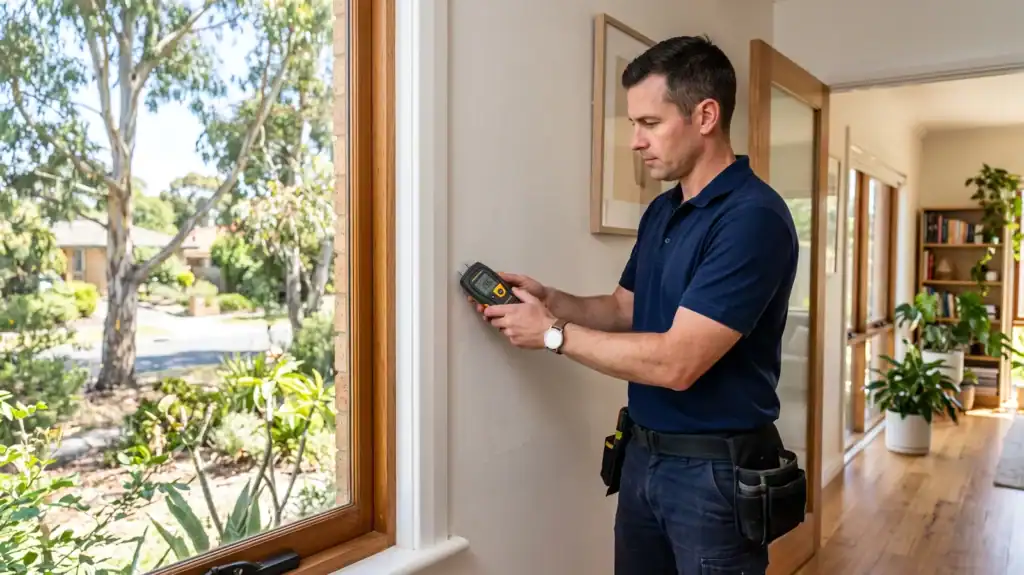
- Inspection to assess the extent of contamination and locate the moisture source
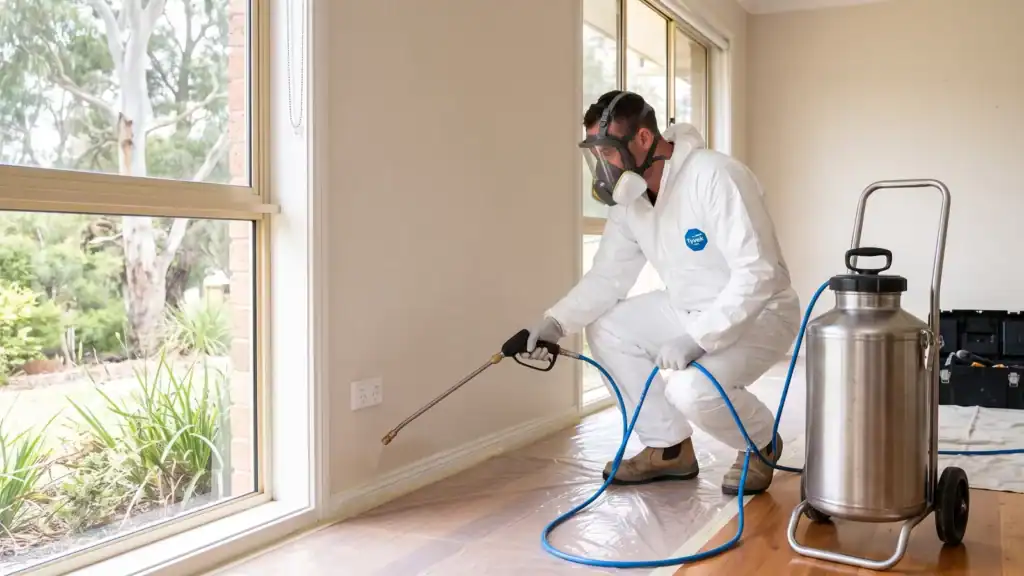
- Containment of the affected area to prevent spore spread during treatment
- Removal of contaminated materials that cannot be saved, such as water-damaged plaster or saturated insulation
- Application of an Australian-made, non-hazardous, non-corrosive and environmentally friendly antimicrobial solution that penetrates the substrate and kills the root structure
- Dehumidification to confirm moisture levels are below the threshold for regrowth
- Fixing the moisture source, whether that is a leaking pipe, poor ventilation or inadequate drainage
That last step is the one most DIY jobs skip entirely. Without fixing what introduced the moisture in the first place, even a thorough clean is just a delay.
Mould removal vs remediation at a glance
The table below summarises the practical differences between the two approaches.
| Mould Removal | Mould Remediation | |
|---|---|---|
| What it targets | Visible surface mould | Root structure, moisture source and surface |
| Method | Retail cleaning products | Professional inspection, containment and antimicrobial treatment |
| Addresses moisture source | No | Yes |
| Recurrence risk | High | Low (with moisture source fixed) |
| Suitable for | Small patches on non-porous surfaces | Widespread, recurring or hidden mould |
| Post-treatment guarantee | None | 12-month mould-free guarantee |
Removal is a clean. Remediation breaks the cycle.
When do you need full remediation
Not every mould patch requires professional remediation. A small spot on bathroom tiles after a steamy shower can often be wiped away and managed with better ventilation.
The question is whether you are dealing with a one-off patch on a hard surface or mould that returns to the same plasterboard wall every winter. Scale, material and recurrence are what separate the two.
Full remediation is the right call when any of these apply.
- Mould covers more than one square metre of surface area
- It keeps returning to the same spot after cleaning
- Visible mould on porous materials like plasterboard, carpet or timber framing
- A persistent musty smell even when no mould is visible
- Mould appeared after flooding, a roof leak or a burst pipe
- Occupants report ongoing respiratory irritation in the property
The IICRC S520 standard classifies contamination by area: under 1 m² (Level 1), 1 to 3 m² (Level 2), 3 to 10 m² (Level 3) and over 10 m² (Level 4). Contamination at Level 2 and above typically requires professional remediation with containment.
If you are not sure where your situation falls, a professional mould inspection gives you a clear picture of the contamination before any treatment starts.
Why DIY mould removal fails
Retail cleaning products work on surface staining. The problem is that surface staining is not where the mould actually lives.
Bleach removes visible discolouration but does not reach mould hyphae embedded in porous materials, so regrowth starts within weeks. Scrubbing or spraying without sealing the area sends spores airborne, and they settle elsewhere in the property to start new colonies.
None of those products do anything about the leaking pipe, poor subfloor ventilation or condensation problem that caused the mould in the first place. Until the moisture source is fixed, cleaning is just maintenance.
Properties across the Central Coast and Hunter Valley face this problem regularly because of high coastal humidity and older housing stock with limited ventilation. For homeowners in these areas, DIY cleaning often becomes a monthly routine rather than a solution.
What professional mould remediation includes
Professional mould remediation from Mould and Hygiene Solutions follows the process outlined above. Two things set the treatment apart from standard cleaning services.
The treatment uses an Australian-made antimicrobial solution that is non-hazardous to people, pets and indoor surfaces. Unlike bleach, it penetrates porous materials and eliminates the root structure that retail products leave behind.
Every job includes:
- A thorough inspection to map contamination and identify the moisture source
- Containment of the treatment area to prevent spore spread
- Application of the antimicrobial solution to all affected surfaces and substrates
- Written recommendations for fixing the moisture source
- A 12-month mould-free guarantee
The guarantee exists because the process works. Treating the root structure and fixing the moisture source removes the two conditions mould needs to grow.
A property treated once and guaranteed for 12 months costs less in time and money than monthly DIY cleaning that never fixes the underlying problem.
The most common clients for this service are homeowners across Newcastle, the Central Coast and Lake Macquarie who have cleaned the same patch three or four times. The pattern is always the same: clean, wait, regrow, repeat.
Frequently asked questions
Is mould remediation the same as mould removal?
No. Mould removal cleans visible mould from a surface, while mould remediation is a complete process that includes identifying the moisture source, treating the root structure with antimicrobial solutions, and preventing regrowth.
The surface result looks similar. Only one of them actually fixes the problem.
Why does mould come back after I clean it myself?
DIY cleaning products only affect surface mould. The root structure stays embedded in porous materials like plaster and timber.
Without killing the roots and fixing the underlying moisture source, mould regrows within weeks.
Will mould return after professional remediation?
When remediation includes treating the root structure and resolving the moisture source, recurrence is unlikely. Mould and Hygiene Solutions backs every job with a 12-month mould-free guarantee.
If mould returns to a treated area within that period, the team returns at no additional cost.
How do I know if I need removal or full remediation?
A small patch of surface mould on non-porous material like glass or glazed tiles can usually be wiped away. If mould covers more than one square metre, appears on porous surfaces, keeps coming back, or comes with a persistent musty smell, full remediation is the right call.
How urgent is mould remediation?
Mould can begin growing within 24 to 48 hours on damp material and spread quickly in humid conditions. The longer mould is left untreated, the deeper the root structure penetrates into building materials, increasing both the scope and the cost of remediation.
NSW Health recommends addressing damp and mould promptly.
Mould removal and mould remediation solve different problems. If you are dealing with a small, one-off patch on a hard surface, surface removal may be enough.
For anything recurring, widespread or hidden, remediation is the process that stops the cycle for good. Surface cleaning may buy a few more weeks, but the mould will return until the root cause is addressed.
Mould and Hygiene Solutions covers Newcastle, the Central Coast, Lake Macquarie, Hunter Valley and Port Stephens. Every job includes a full inspection, antimicrobial treatment and a 12-month guarantee.
Book a professional mould inspection to get a clear picture of what you are actually dealing with.