Mildew is surface-level fungal growth, and it is telling you something about the moisture conditions inside your property.
Most homeowners across Newcastle and the Central Coast spot white or grey patches on bathroom tiles, window sills or laundry walls and assume it is just mildew. They grab a cloth, wipe it off, and move on with their day.
This article explains what mildew actually is, how it connects to mould, and why cleaning it yourself only delays the real problem. If mildew keeps appearing in your home, the moisture source driving it has not been addressed.
Already seeing mildew return after cleaning? Book a free mould inspection with Mould and Hygiene Solutions to find out what is happening beneath the surface. Learn more about our mould prevention services.
What Is Mildew Exactly?
Mildew is a type of fungal growth that forms on damp surfaces. It typically appears as flat, white or grey patches with a powdery or downy texture, and it is most common in areas with poor airflow and persistent moisture.
Unlike established mould colonies that penetrate deep into materials, mildew sits on the surface layer. That is why it wipes off so easily, and why people assume it is harmless.
The most common locations where mildew appears in Australian homes include:
- Bathroom tiles, grout lines and shower screens
- Window sills and frames where condensation collects overnight
- Laundry walls near dryers that vent indoors instead of outside
- Wardrobe interiors with limited air circulation
- Ceiling corners in rooms without exhaust fans
Every one of those spots has a moisture problem. The mildew is the symptom, not the disease, and wiping it away does not change the conditions that created it.
Mildew vs Mould, What Is the Difference?
People treat mildew and mould as separate problems with separate solutions. In reality, mildew is the early warning sign that conditions in your home support fungal growth, and mould is what develops when those conditions persist.
The visible differences help you identify what you are looking at. But the underlying cause is identical: sustained moisture on a surface that is not drying out.
| Factor | Mildew | Mould |
|---|---|---|
| Appearance | White, grey, powdery or flat | Green, black, fuzzy or slimy |
| Growth depth | Surface only | Penetrates into substrate material |
| Removal difficulty | Wipes off easily with a cloth | Requires treatment below the surface |
| Health risk | Mild respiratory irritation | Allergic reactions, asthma flare-ups, mycotoxins |
| What it signals | Active moisture problem exists | Moisture problem has persisted unchecked |
| DIY cleaning effective? | Temporarily removes visible growth | No, root structure survives in substrate |
The fact that mildew wipes off easily is the most misleading thing about it. Homeowners clean it, see a clean surface, and believe the problem is solved.
The moisture remains. The next stage is established mould growth with root structures that no household product can reach.
Here is the part most people miss. Mildew and mould are not different organisms with different causes.
They are stages of the same process. Mildew is what you see first. Mould is what happens when the moisture source stays active and the colony has time to establish root structures in the material underneath.
Why Wiping Away Mildew Does Not Fix the Problem
Cleaning mildew from a tile or window frame takes about thirty seconds. The surface looks spotless, the smell fades, and the problem appears handled.
Two weeks later, the same patches reappear in the same locations. This cycle repeats because wiping mildew addresses the symptom, not the cause.
DIY mildew cleaning fails for four specific reasons:
- Moisture source untouched: The condensation, humidity or leak feeding the growth continues after cleaning. Nothing has changed except what you can see.
- Spores remain on surrounding surfaces: Mildew spores survive on adjacent walls, grout and fabrics. They recolonise the cleaned area within days.
- No protective barrier applied: Household cleaners leave the surface completely unprotected against new fungal growth.
- Hidden growth missed entirely: Visible mildew on tiles often means fungal growth has already started in the grout, silicone and substrate behind the surface.
Vinegar, bleach and store-bought mildew sprays all produce the same temporary result. The growth returns because the conditions underneath have not changed.
Mildew that keeps returning to the same spot confirms the moisture source has not been resolved. A professional mould test identifies the species and confirms whether growth has progressed beyond the surface.
What Causes Mildew in Australian Homes?
Australia’s coastal regions are particularly prone to mildew problems. Properties across Newcastle, Lake Macquarie, the Central Coast and the Hunter Valley deal with high humidity for large parts of the year.
According to the NSW Health mould factsheet, mould and mildew grow indoors in wet or moist areas that lack adequate ventilation. Building designs that trap moisture make the problem worse.
The most common moisture drivers in local properties:
- Poor bathroom ventilation: Exhaust fans that vent into the roof cavity instead of outside trap warm, moist air inside the building structure
- Condensation on cold surfaces: Single-glazed windows and uninsulated exterior walls collect moisture when indoor and outdoor temperatures differ
- Indoor clothes drying: Running a dryer without an external vent or hanging clothes indoors adds litres of moisture to the air with every load
- Subfloor moisture: Properties without adequate subfloor ventilation draw ground moisture up through the slab or bearers
- Blocked gutters and downpipes: Water overflow saturates external walls and creates damp patches that feed mildew on the interior side
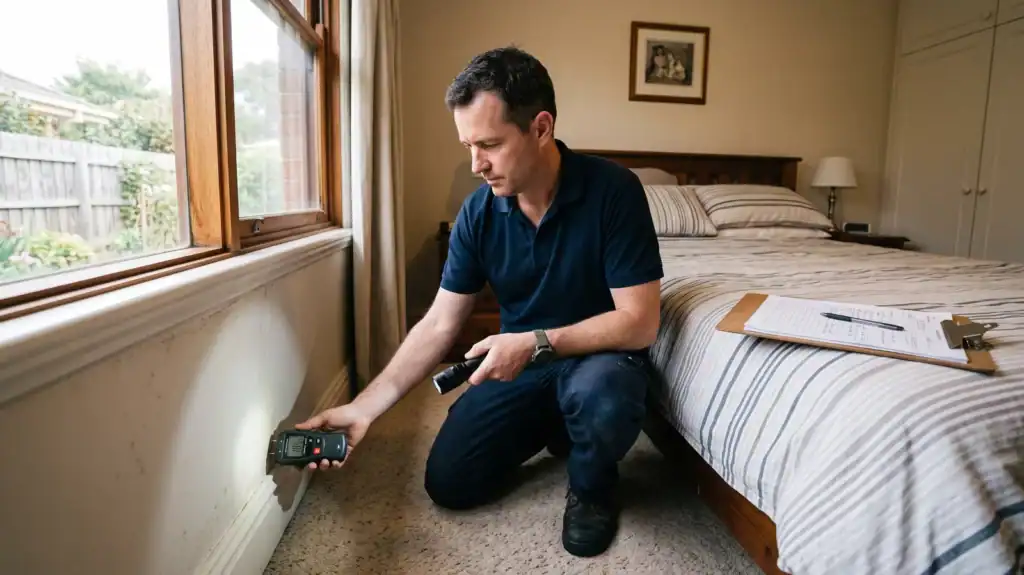
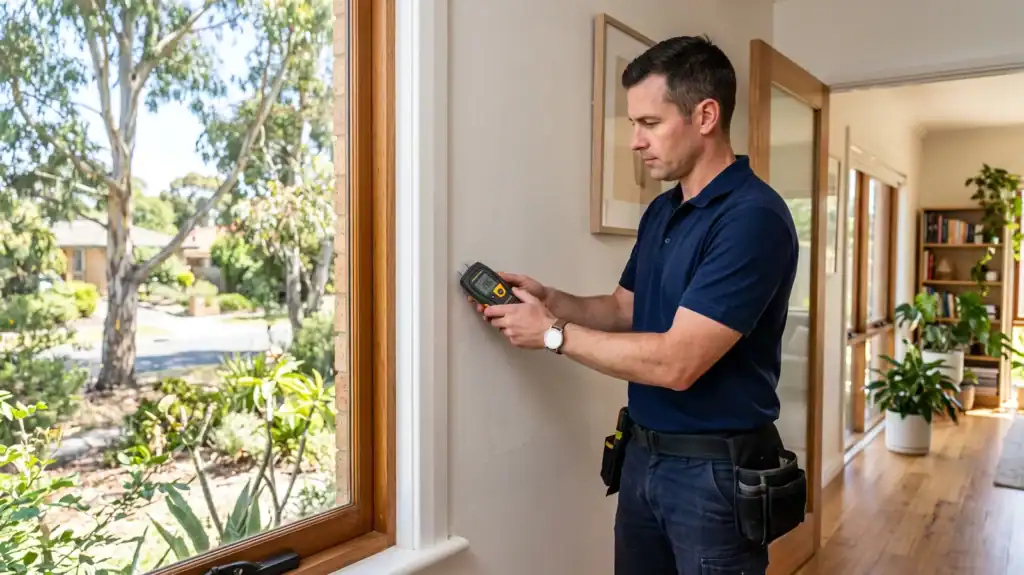
Identifying the specific moisture source in your property requires more than a visual inspection. Professionals use moisture meters and thermal imaging to find damp areas that are not visible to the eye.
Port Stephens and Hunter Valley properties built in the 1970s and 1980s are particularly vulnerable. Many were built without adequate subfloor ventilation or wall cavity barriers, and decades of coastal humidity have compounded the problem.
How Professional Treatment Addresses Mildew at the Source
When Mould and Hygiene Solutions inspects a property with recurring mildew, the focus is on what is happening behind the visible growth. Surface cleaning is the last step in the process, not the first.
The inspection starts with moisture mapping across every affected room. Readings from walls, ceilings and subfloors tell a story that the visible mildew alone does not.
Every job is carried out by the owner, James, using an Australian-made, non-hazardous, non-corrosive and environmentally friendly antimicrobial solution. This is not a retail spray. It penetrates substrates where fungal growth begins and creates a barrier that resists recolonisation.
What the Treatment Includes
- Full property inspection with moisture readings to identify every affected area and its moisture source
- Documentation of humidity levels, ventilation issues and structural factors contributing to the problem
- Application of the antimicrobial solution to all affected surfaces and substrates
- Recommendations for resolving the underlying moisture source, including ventilation upgrades, sealing or drainage
- An unconditional 12-month mould-free guarantee on all treated areas
The 12-month guarantee exists because the treatment eliminates the root cause, not the surface alone. If mildew or mould returns to any treated area within that period, Mould and Hygiene Solutions retreats it at no charge.
No retail mildew product comes with a guarantee. That difference tells you everything about the gap between surface cleaning and proper treatment.
When Mildew Means You Need an Inspection
A single patch of mildew on a shower tile after poor ventilation is one thing. But if mildew keeps appearing, shows up in multiple locations, or has progressed to darker, textured growth, the problem has moved beyond what a spray bottle can handle.
The Victorian Department of Health advises that people with asthma, allergies or weakened immune systems should avoid exposure to mould spores. If anyone in your household falls into those categories, waiting is not a neutral decision.
Book a professional inspection if any of these apply:
- Mildew returns within weeks of cleaning, every single time
- White or grey patches are appearing in multiple rooms
- You can smell a musty, damp odour even when surfaces look clean
- Growth has changed from flat and powdery to raised, dark or fuzzy
- Anyone in the household has developed unexplained respiratory symptoms
- The property has experienced water damage, flooding or persistent condensation
Homeowners across Newcastle, the Central Coast, Lake Macquarie, Hunter Valley and Port Stephens can book a free inspection with Mould and Hygiene Solutions. The inspection identifies the species, the extent of growth and the moisture source, with no obligation.
Mildew Is a Warning, Not a Cleaning Job
Mildew appears because your property has a moisture problem. Cleaning it treats the visible growth but leaves the conditions that created it completely intact.
Every wipe resets the clock. It does not stop it.
When mildew keeps coming back, it means the moisture source is active, the spores are present, and the conditions are right for established mould growth to develop. The longer that cycle continues, the more likely it is that fungal growth has already started in materials you cannot see.
Mould and Hygiene Solutions offers free inspections across Newcastle, the Central Coast, Lake Macquarie, Hunter Valley and Port Stephens. Contact us today to book yours and find out what is really happening behind the mildew.