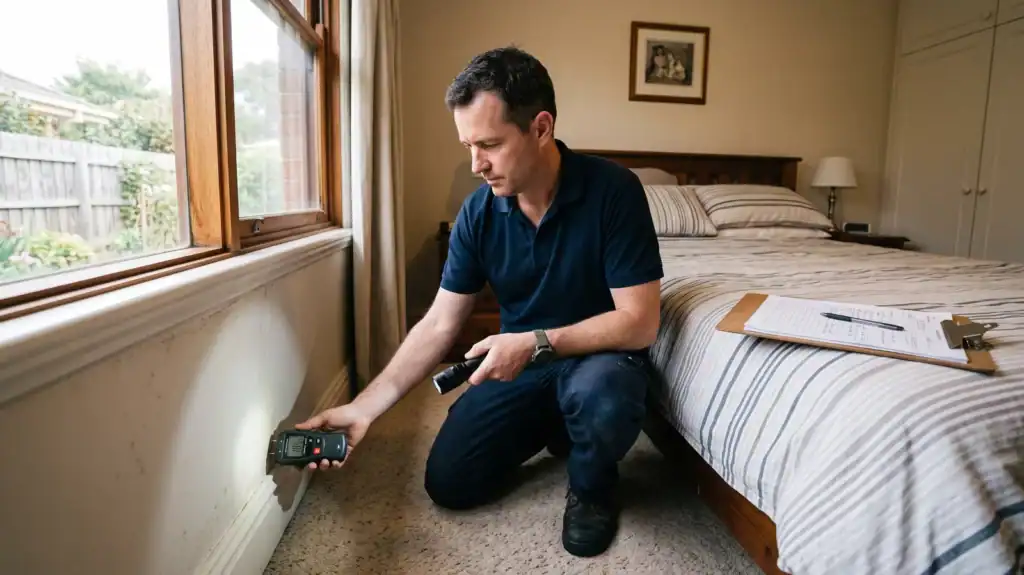
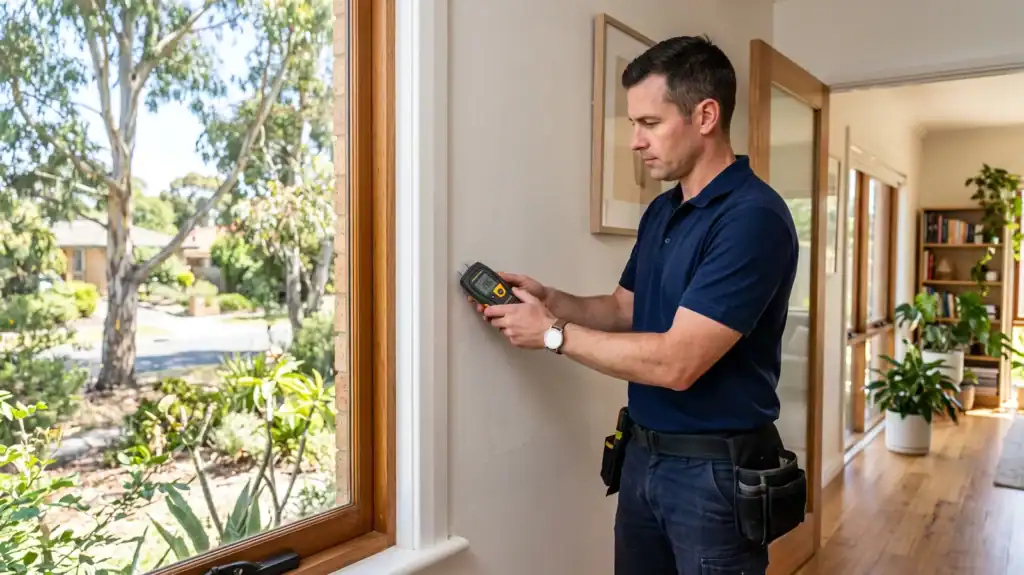
Mould on your bathroom ceiling points to a moisture problem. Cleaning the visible patches does not fix the conditions that let them grow.
Homeowners across Newcastle and the Central Coast notice dark patches on their bathroom ceiling and reach for bleach. The instinct makes sense, but surface cleaning only addresses what you can see.
Mould can extend into porous ceiling materials, so a clean-looking surface does not tell you whether the problem is resolved. This article explains the causes, the limits of DIY removal and professional treatment.
If you are wondering why mould keeps returning after cleaning, the moisture source needs attention alongside the affected material. Understanding why your mould cleaning keeps failing helps explain that cycle, while dealing with mould throughout a bathroom also involves checking walls, grout and silicone.
What Causes Mould on Your Bathroom Ceiling
Hot showers add moisture to the air. When that humid air meets a cooler ceiling, condensation can leave the surface damp enough for mould to grow.
- Repeated moisture from showers leaves the ceiling damp when ventilation cannot clear the steam.
- An undersized, broken or blocked exhaust fan allows humidity to linger after you finish showering.
- Dust, paint films and porous ceiling materials provide surfaces where mould can establish when moisture is available.
Older homes in the Hunter Valley and Lake Macquarie can have cold ceiling areas where insulation is missing. An inspection can check whether condensation, a leak or both are contributing, rather than assuming another surface clean will solve it.
Bathrooms without windows depend heavily on mechanical ventilation. How exhaust ventilation helps prevent mould matters especially when a fan releases moist air into the roof cavity rather than outdoors.
Bathroom roof mould or ceiling condensation?
If by “bathroom roof mould” you mean patches on the indoor ceiling, shower condensation is one possible cause, but a roof or plumbing leak also needs consideration. NSW Health’s mould guidance recommends controlling dampness and repairing roof and plumbing leaks.
| What you notice | What an inspection should investigate |
|---|---|
| Condensation across the ceiling after showers | Fan performance, airflow and cold ceiling surfaces |
| A localised stain that worsens after rain | Roof leaks, flashing and water entry above the bathroom |
| Peeling paint, soft plaster or a persistent damp patch | Water damage and whether affected material needs replacement |
These clues guide an assessment; they do not prove a cause. Ceiling mould that appears after rain deserves a leak investigation, because cleaning underneath leaves water entry untouched.
Is Mould on Your Bathroom Ceiling Dangerous
Bathroom black mould on the ceiling deserves attention, but colour alone cannot identify the species or tell you the health risk. Visible growth is enough reason to investigate moisture and arrange suitable removal.
NSW Health explains that exposure can cause irritation and allergic symptoms, and can trigger asthma attacks in susceptible people. Most people do not experience health problems from contact with mould, so symptoms should be assessed by a doctor rather than attributed to the ceiling alone.
If someone has breathing symptoms, seek medical advice. Information about possible health effects associated with mould exposure cannot diagnose their cause, and mould treatment does not replace healthcare.
Disturbing mould during cleaning can release spores and fragments. A professional inspection assesses the extent of contamination and appropriate precautions before work begins; species identification requires suitable testing rather than a visual guess.
Why Bathroom Ceiling Mould Returns After Scrubbing
When you scrub mould off your bathroom ceiling with a supermarket spray, the patches can disappear while the ceiling remains damp. On porous material, growth can also extend beneath the visible surface.
This is why removing mould from a ceiling needs more than repeated stain removal:
- Surface discolouration fades, making the ceiling look clean.
- The leak or condensation that supplied moisture remains.
- Contamination within porous material can be difficult to remove completely.
- Dry brushing or sanding can spread mould particles.
- Growth returns if suitable moisture conditions persist.
The US EPA’s guidance on porous materials and mould cleanup explains that mould can grow within pores and crevices, and affected ceiling tiles may need replacement. There is no reliable universal timetable for regrowth.
Repeated cleaning is frustrating when nobody has checked why the same patches return. Why bleach is not a lasting fix for recurring mould comes down to what the product leaves unresolved: moisture, material damage and any hidden contamination.
DIY Methods vs Professional Treatment
None of the retail products below repairs a leak or corrects inadequate ventilation.
| Approach | What it leaves unresolved | Professional alternative |
|---|---|---|
| Vinegar, bleach or retail sprays | Moisture source and contamination inside damaged porous materials | Assess the material, treat appropriately and identify moisture repairs |
| Repeated scrubbing | Hidden growth and particle spread during disturbance | Plan containment and controlled removal for the affected area |
| Painting over patches | Existing contamination and dampness beneath the coating | Treat or replace affected material and dry it before repainting |
| Professional treatment | Building repairs still need to be completed where recommended | Combine treatment with a moisture-control plan and follow-up advice |
A cleaner-looking ceiling is not evidence that the cause has been fixed. Moisture also needs investigation when dealing with mould in a bedroom.
Mould and Hygiene Solutions uses an Australian-made, non-hazardous, non-corrosive and environmentally friendly antimicrobial solution as part of professional treatment. Treatment includes a 12-month mould-free guarantee; ask the team how it applies to your property and any recommended moisture repairs.
How Professional Bathroom Ceiling Mould Treatment Works
Professional mould removal for affected ceiling surfaces starts with assessing the contamination and the material underneath. Cleaning alone cannot decide whether water-damaged plaster is suitable to retain.
- Inspection assesses visible growth, ceiling condition and possible moisture sources.
- Containment and working precautions are planned for the extent of contamination.
- The antimicrobial solution is applied using a method suitable for the ceiling and affected substrate.
- Material that cannot be adequately cleaned and dried needs assessment for removal and replacement.
- A prevention plan identifies ventilation improvements, leak repairs or other work needed to reduce recurrence.
Bathroom ceiling mould removal when growth keeps returning
Bathroom ceiling mould removal needs to address the growth and what keeps the ceiling damp. Professional mould remediation for damaged ceiling materials is relevant when the problem extends beyond the painted surface.
Testing is not automatically necessary for visible mould, as NSW Health notes. Where the assessment identifies a specific question that sampling can answer, targeted mould testing during an assessment can help inform the scope of work.
The 12-month mould-free guarantee accompanies treatment; recommended leak repairs and ventilation work still need attention.
How to Prevent Mould on Your Bathroom Ceiling
Treating existing mould is only half the job. Preventing mould from returning in your home requires addressing the moisture conditions that caused it.
- Run the exhaust fan during showers and afterwards until steam has cleared and surfaces can dry.
- Have a suitable tradesperson check that the fan is effective and ducts moisture outdoors.
- Open windows when weather permits and allow replacement air into the bathroom.
- Ask an assessor whether cold ceiling areas or insulation gaps are contributing to condensation.
- Arrange repairs for roof or plumbing leaks instead of repeatedly wiping the stain below.
Mould prevention after bathroom ceiling treatment works best when contamination and dampness are both addressed. Ventilation improvements support treatment; they do not remove an established colony by themselves.
What effective mould treatment involves depends on the affected material. the limitations of vinegar for mould treatment explain why another spray is not a substitute for moisture control.
How to paint a bathroom ceiling after mould treatment
Repaint only after the mould has been addressed, the moisture cause corrected and the ceiling dried. Dulux’s advice on painting mould-affected surfaces explains that painting over active mould can lead to growth beneath the coating and bubbling or flaking paint.
- Have damaged or contaminated material assessed before any sanding or surface preparation.
- Once treatment and drying are complete, use preparation, primer and bathroom ceiling paint suitable for the substrate, following the manufacturer’s instructions.
- Keep the ventilation and repair plan in place after decorating.
Mould-resistant paint supports a suitable finish; it cannot repair a leak or remove hidden growth. If patches remain or return, arrange professional assessment before another coat.
Bathroom Ceiling Mould FAQs
Repeated cleaning or painting is a reason to investigate the cause. These answers help you decide what to raise at an inspection.
Why does mould return after I clean the bathroom ceiling?
Moisture can remain even when the stains disappear. An inspection checks condensation, leaks and affected ceiling material so treatment addresses more than appearance.
Can I paint over mould on a bathroom ceiling?
No, painting over active mould conceals the problem and can damage the new finish. Have the mould addressed and the ceiling dried before repainting.
Will mould-resistant ceiling paint stop it coming back?
A suitable coating can support prevention after treatment, but it cannot resolve dampness or contamination beneath it. Moisture control remains part of the professional plan.
Can a roof leak cause bathroom ceiling mould?
Yes, water entering above the bathroom can keep ceiling materials damp. A patch that worsens after rain needs assessment for water entry rather than another surface clean.
Is black bathroom ceiling mould always toxic?
Colour does not establish species or toxicity. Arrange an assessment of the growth and moisture source, and speak with a doctor about health symptoms.
Will an air purifier remove mould from my bathroom ceiling?
An air purifier does not remove a colony from ceiling materials or stop a leak. It cannot replace assessment, removal and moisture control.
Do I need mould testing before treatment?
Not automatically: visible mould often provides enough reason to act. The assessor can explain whether testing would answer a specific question about your bathroom.
What if my bathroom has no window?
Effective mechanical extraction and replacement airflow are especially important. Have the fan assessed alongside the existing mould, because improving airflow does not remove established contamination.
When should I book a professional inspection?
Book when ceiling mould persists, returns after cleaning or accompanies water damage. Avoid disturbing a sagging or deteriorating ceiling, and arrange an assessment before treating or repainting it.
Book a Professional Mould Inspection Today
If mould keeps returning on your bathroom ceiling after cleaning, the cause needs investigation. Scrubbing the same patches again does not fix a leak or poor extraction.
Mould and Hygiene Solutions provides professional mould inspections across Newcastle, the Central Coast, Lake Macquarie, Hunter Valley and Port Stephens. Professional treatment includes a 12-month mould-free guarantee.
The inspection assesses the extent of visible contamination and possible moisture sources, then informs the treatment plan. Understanding what mould needs to grow explains why that assessment matters more than another stain-removal product.
Book a professional mould inspection for your bathroom and ask the team about the appropriate treatment and moisture-control work for your property.