A free mould inspection covers far more than checking what you can already see on the wall.
Most homeowners who spot mould assume the visible patch is the entire problem. By the time mould shows on a painted surface, the root structure has already spread through the plaster, timber, or grout underneath.
This article walks through what a professional inspector actually does during a free mould inspection, what tools they bring, and what the report covers. It also explains why walking around your house with a torch is not an inspection.
Already dealing with a mould problem? Read about professional mould removal or find out whether professional treatment is worth the cost.
Why Looking at Mould Is Not the Same as Inspecting It
Most people “inspect” mould by looking at dark patches on a wall, maybe smelling something musty in a cupboard, and deciding how bad it looks. That approach misses everything that matters.
Mould grows in two parts. The surface growth you can see is the fruiting body that produces spores, while the root network (hyphae) grows into the material underneath.
- Mould growing inside wall cavities behind intact plasterboard
- Colonies spreading through subfloor timbers where airflow is poor
- Growth inside roof voids caused by condensation on the underside of metal roofing
- Mould behind kitchen cabinetry and bathroom vanities where steam collects
- Spores circulating through ducted air conditioning systems
A DIY check finds the symptom. A professional inspection finds the moisture source feeding the colony, which is the only way to stop it coming back.
What Happens During a Free Mould Inspection
A professional inspection follows a structured process, not a casual walkaround. Here is what Mould and Hygiene Solutions covers when inspecting properties across Newcastle, the Central Coast, and Lake Macquarie.
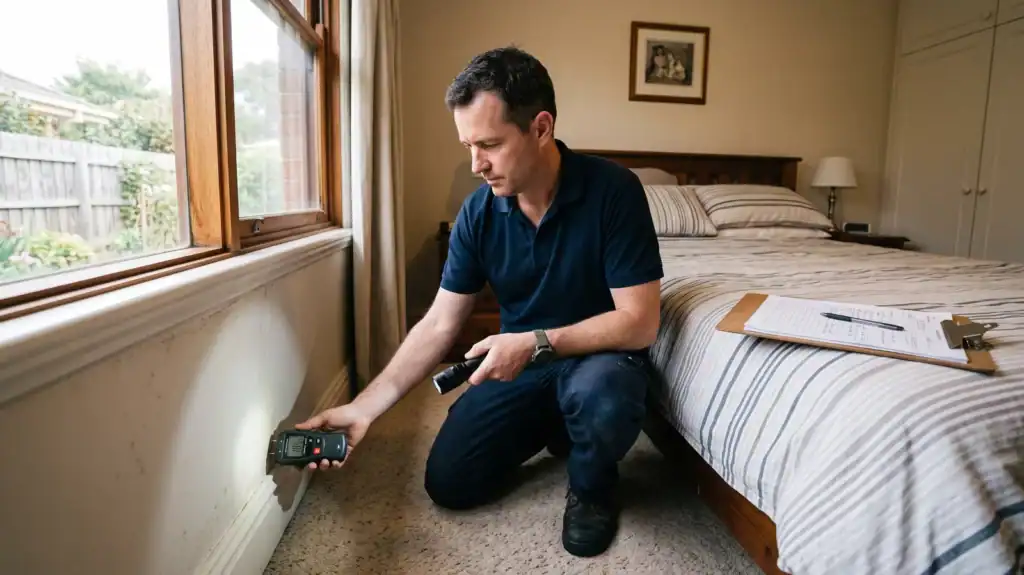
The inspector starts with a room-by-room visual assessment. Every wall, ceiling, floor, window frame, and wet area is checked, with bathrooms, laundries, and kitchens getting the most attention because they carry the highest moisture loads.
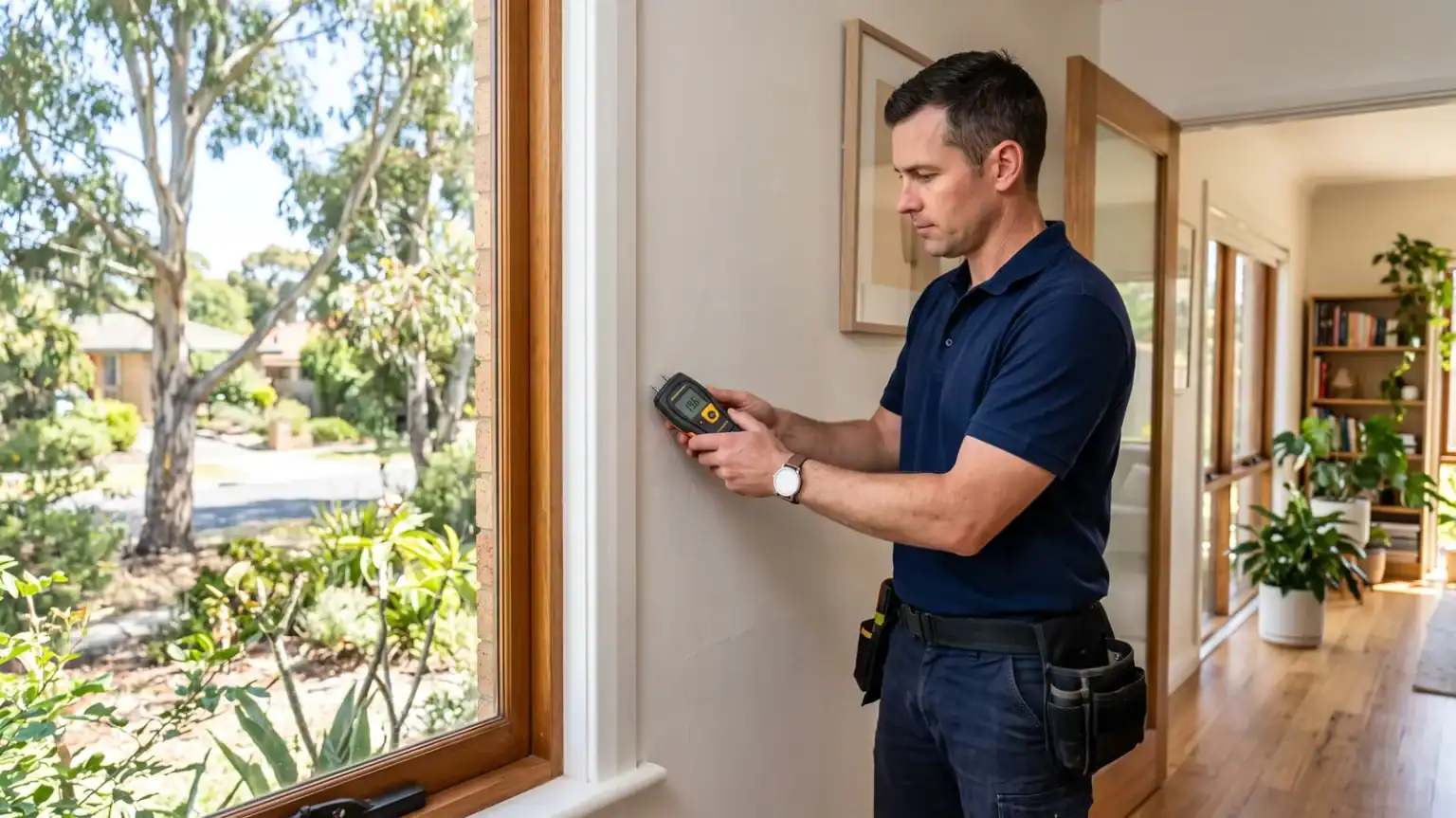
Next comes moisture mapping. Using a calibrated moisture meter, the inspector reads moisture levels in walls, flooring, and timber at multiple points throughout the property.
High readings in areas with no visible mould are often the most important findings. These readings reveal where mould will grow next if the moisture source is not addressed.
The most valuable part of a free mould inspection is identifying the moisture source that feeds the colony. Whether that is a leaking pipe, poor ventilation, rising damp, or condensation from inadequate insulation, fixing the source is the only way to stop mould returning.
The inspector also checks the roof void and subfloor space where accessible. These are the two areas homeowners almost never look, but where mould commonly grows undetected for months.
Tools a Professional Mould Inspector Uses
Three tools do the heavy lifting during a professional mould inspection. Each one picks up something your eyes cannot.
| Tool | What It Does | What DIY Misses Without It |
|---|---|---|
| Thermal imaging camera | Detects temperature differences behind walls that indicate hidden moisture | Damp patches inside wall cavities, behind tiles, and under flooring |
| Moisture meter | Measures moisture content in materials at specific tested points | Whether a dry-looking wall holds enough moisture to support mould growth |
| Hygrometer | Reads ambient humidity and temperature in each room | Rooms sitting above 60% relative humidity, the threshold where mould actively grows |
A consumer moisture meter from a hardware store reads surface moisture only. A professional-grade pin meter and thermal camera read what is happening inside the material, and the difference is the gap between guessing and knowing.
No retail product or hardware store tool can map moisture behind a wall or detect a colony growing inside a cavity. Without that data, any treatment you apply is aimed at the surface while the source keeps feeding regrowth underneath.
What the Inspection Report Tells You
After the inspection, you receive a written report documenting every finding. This is a formal document that property owners, property managers, and insurers can all reference.
- Moisture readings for every area tested, mapped to show where levels are elevated
- Location and extent of visible mould growth
- The identified moisture source driving the problem
- Photographs of affected areas
- A recommended treatment plan with clear next steps
The treatment plan is the part that matters most. Mould and Hygiene Solutions uses an Australian-made, non-hazardous, non-corrosive and environmentally friendly antimicrobial solution that penetrates the substrate where mould roots live.
Surface scrubbing and retail sprays do not reach this layer. The antimicrobial treatment does, and every treated area is backed by a 12-month mould-free guarantee.
That written report also matters if you are comparing mould removal companies. A company that does not provide a documented inspection with moisture readings and photographs before quoting is skipping the step that determines whether the treatment will actually work.
Free Mould Inspection vs Mould Testing
A free mould inspection and mould testing are different services, and most properties do not need both.
The free inspection covers visual assessment, moisture mapping, thermal imaging, and the written report at no cost. For the majority of residential mould problems, this is enough to identify the issue, locate the source, and build a treatment plan.
Mould testing adds laboratory analysis. Air samples are collected and sent to a lab to identify the exact species and spore concentration in each room. Testing is a paid add-on because it involves third-party lab fees.
- A property owner needs formal documentation for an insurance claim
- Occupants report symptoms consistent with mould exposure but no visible mould is present
- A pre-purchase building inspection requires certified results
- There is a dispute about mould severity between tenants and property owners
If you can see or smell mould, a free inspection is the right first step. Testing is available as an add-on when certified lab results are required.
When to Book a Free Mould Inspection
Waiting until mould covers half a wall is waiting too long. Book an inspection when you notice any of these signs.
- A persistent musty or damp smell, even without visible mould
- Dark spots on walls, ceilings, window frames, or grout
- Condensation regularly forming on windows or cold surfaces
- Peeling or bubbling paint, which often indicates moisture trapped behind the surface
- Recent water damage from flooding, a burst pipe, or a roof leak
- Respiratory or allergy symptoms that worsen when you are indoors
Properties across the Hunter Valley and Port Stephens are particularly prone during winter and early spring, when reduced airflow and temperature drops create condensation that leads to mould growth. If your home feels damp during these months, an inspection catches problems before they spread through the structure.
Even without visible mould, book an inspection if your property has poor ventilation, sits in a low-lying area, or has a history of water ingress. Preventing mould before it takes hold costs a fraction of treating an established colony.
What Happens After the Inspection
Once you have the report, you know exactly what is growing, where the moisture comes from, and what needs to happen next.
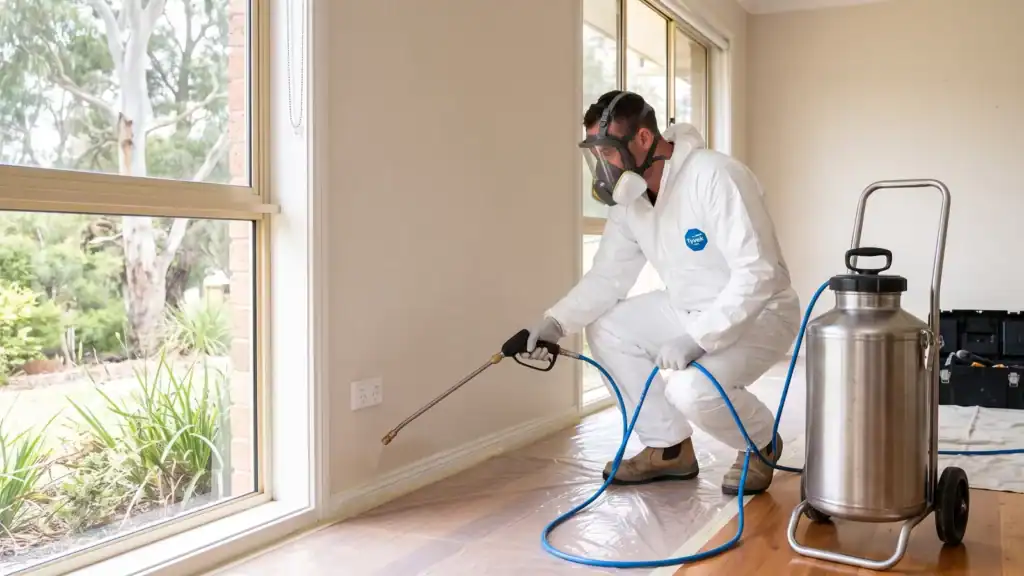
If the report confirms mould, Mould and Hygiene Solutions provides a treatment plan and quote during the same visit. Treatment covers several stages that retail products cannot replicate.
- Containment of affected areas to prevent spore spread during removal
- Removal of affected materials where the mould has compromised the substrate
- Application of the antimicrobial solution that kills mould at the root level
- Moisture source recommendations so the problem does not return
For larger properties or commercial buildings, the process may include full mould remediation with air scrubbing and environmental monitoring.
The 12-month mould-free guarantee backs every treatment. If mould returns in a treated area within 12 months, the company retreats it at no charge.
Bleach and retail sprays cannot match that assurance because they never reach the substrate. The guarantee works because the treatment does.
Book a free mould inspection with Mould and Hygiene Solutions. The team inspects properties across Newcastle, the Central Coast, Lake Macquarie, Hunter Valley and Port Stephens.
Frequently Asked Questions
How long does a free mould inspection take?
Most residential inspections take between one and two hours, depending on property size and the number of areas that need moisture testing. Larger homes or properties with accessible roof voids and subfloor spaces take longer.
Do I need to prepare anything before the inspector arrives?
Move furniture away from walls where you have noticed mould or dampness, and make sure the roof void hatch and any subfloor entry points are accessible. Leave windows and doors in their normal positions so humidity readings reflect typical conditions.
Can mould grow behind walls where I cannot see it?
Yes. Mould commonly grows inside wall cavities, behind cabinetry, and under flooring where moisture is present but ventilation is poor. Thermal imaging and moisture meters detect these hidden colonies during a professional inspection.
What is the difference between a mould inspection and mould testing?
An inspection uses visual assessment, moisture meters, and thermal imaging to find mould and identify the moisture source. Mould testing involves collecting air or surface samples and sending them to a laboratory for species identification and spore counts.
Will the inspector provide a treatment quote on the same visit?
Yes. After the inspection, you receive a written report with findings and a treatment quote during the same visit. There is no second appointment needed to get a plan and price.
How quickly can mould return after surface cleaning?
Surface cleaning with bleach or retail products allows regrowth within two to six weeks because the root structure survives underneath. Professional treatment using an antimicrobial solution that penetrates the substrate is backed by a 12-month mould-free guarantee.
Are mould inspections covered by insurance?
Home insurance policies in Australia generally do not cover mould damage caused by maintenance issues, condensation, or gradual deterioration. Some policies cover mould that results from a sudden insured event such as a burst pipe or storm damage. Check with your insurer and keep the written inspection report as supporting documentation for any claim.
Can I get a mould inspection before buying a house?
Yes. A pre-purchase mould inspection checks for hidden moisture and mould growth that a standard building inspection may miss. It is particularly worth doing for older homes, properties that have been closed up, or any home in a high-humidity area such as the Central Coast or Hunter Valley.