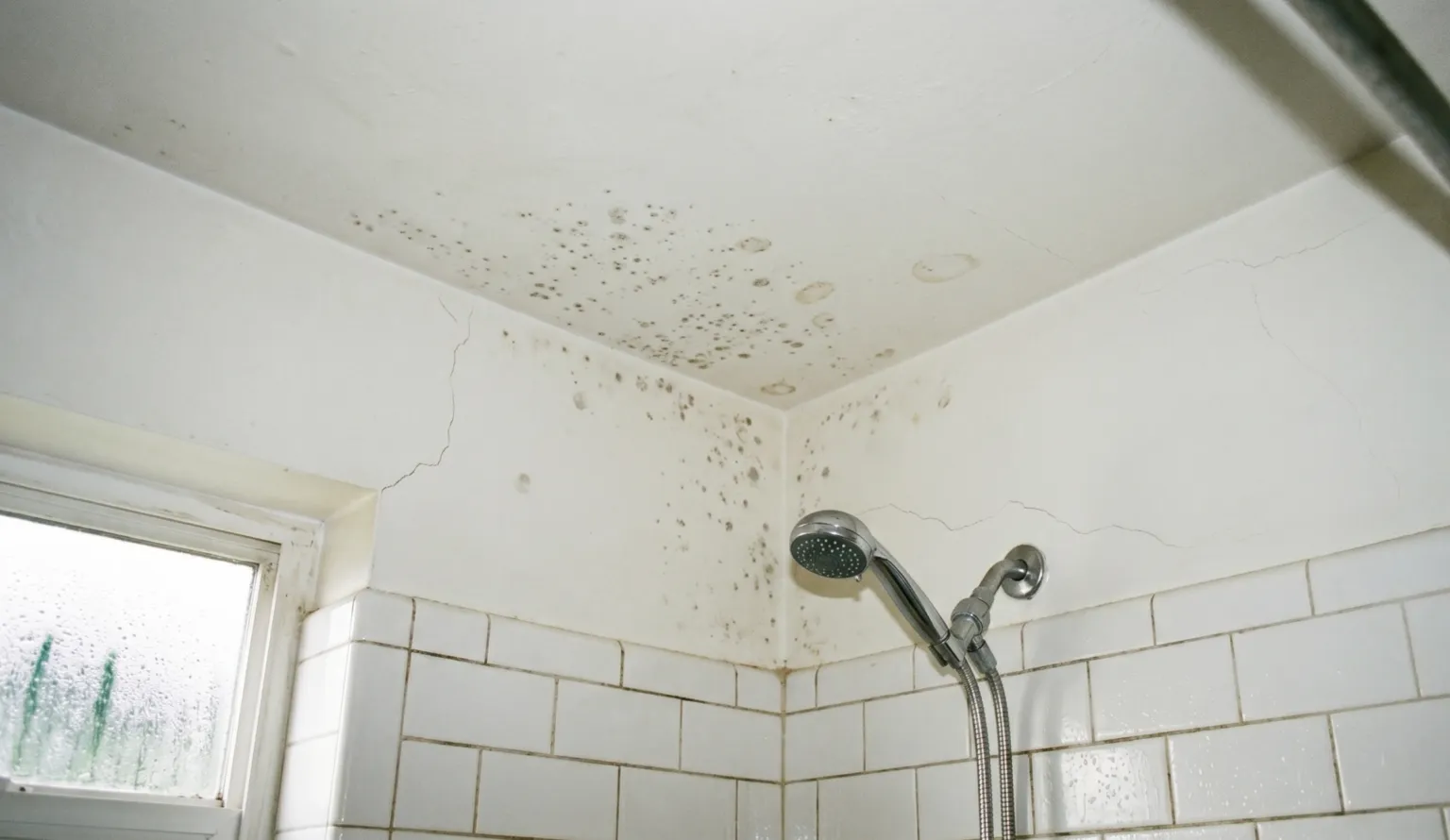
Black mould on your ceiling means moisture has been feeding a colony you cannot see.
Most homeowners spot dark patches above the shower or in a bedroom corner and grab a cloth and some bleach. The stain disappears within minutes, so the problem feels solved.
It is not solved. What you scrubbed off was the surface layer.
The mould’s root structure, called hyphae, has already threaded itself into the plasterboard or paint beneath. That hidden growth is why your mould cleaning keeps failing, and this article covers what actually works to stop ceiling mould for good.
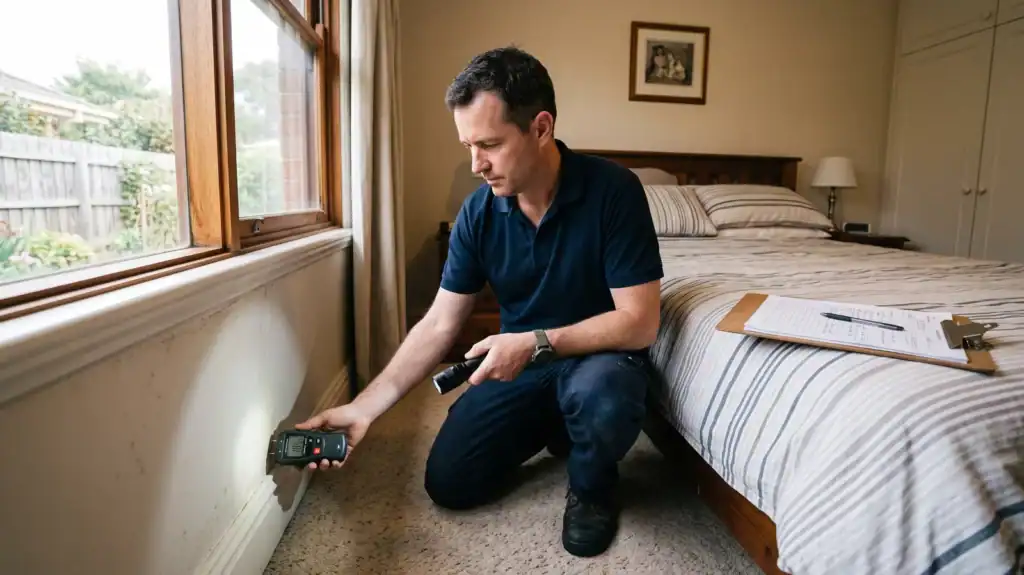
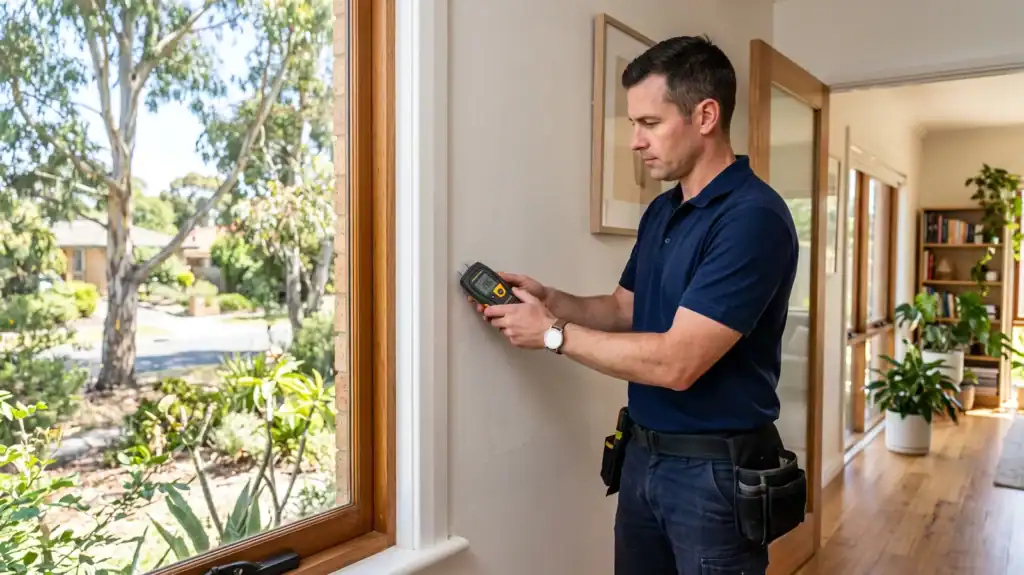
Need to remove mould from your ceiling? Book a free mould inspection with Mould and Hygiene Solutions. We service Newcastle, the Central Coast, Lake Macquarie, Hunter Valley and Port Stephens.
Why Does Black Mould Grow on Ceilings?
Mould needs three things to colonise a ceiling: moisture, warmth and an organic food source. Plasterboard, paint and timber framing supply the food, and your home supplies the rest.
Ceilings are particularly vulnerable because warm, humid air rises and hits the coolest surface in the room. That temperature difference creates condensation, and condensation is all mould needs. According to the US EPA, mould can begin growing on a damp surface within 24 to 48 hours.
If you have noticed mould keeps coming back on your ceiling, one of these moisture sources is usually to blame:
- Condensation from poor ventilation, particularly in rooms where steam is produced daily
- Roof leaks that allow rainwater to seep into ceiling cavities, sometimes undetected for months. Mould appearing on your ceiling after rain is a clear warning sign
- Plumbing leaks from bathrooms or laundries on upper floors, dripping into the ceiling space below
- Rising damp in older homes with deteriorating damp-proof courses
- Blocked gutters that overflow and push water into the roofline
By the time you see black patches on the surface, the colony has already established itself in the substrate. Wiping the surface does nothing to the root system underneath.
Which Rooms Get Ceiling Mould the Worst?
Not every room in your home carries the same risk. Bathrooms produce the most ceiling mould, but bedrooms often surprise homeowners with heavy growth they did not expect.
| Room | Primary Moisture Source | Risk Level |
|---|---|---|
| Bathroom | Shower/bath steam, poor exhaust fans | Very high |
| Ensuite | Steam in a small enclosed space | Very high |
| Bedroom | Body moisture overnight (each person can release up to a litre of moisture through breathing and perspiration) | High |
| Laundry | Dryer exhaust, damp clothes, washing machine steam | High |
| Kitchen | Cooking steam, dishwasher exhaust | Medium-high |
| Living areas | Poor airflow, closed windows | Medium |
Bedrooms catch people off guard. Two adults sleeping in a closed room with no window open release enough moisture overnight to push humidity above 70%, which is the threshold where mould thrives.
Store-bought sprays do not address any of these moisture sources. They treat the stain, not the conditions that created it.
Health Risks of Black Mould on Your Ceiling
Black mould on your ceiling is a genuine health risk, not a cosmetic issue. Mould releases microscopic spores into the air continuously, and those spores are what you breathe in every time you enter the room.
According to the Victorian Department of Health, mould exposure can cause respiratory symptoms even in otherwise healthy people. The risk increases significantly for anyone with existing conditions.
Common symptoms of prolonged mould exposure include:
- Persistent coughing, wheezing or shortness of breath
- Nasal congestion and sinus irritation that does not respond to antihistamines
- Throat irritation and a scratchy feeling that worsens at night
- Skin rashes or itchy, watering eyes
- Worsening asthma symptoms, particularly in children
Vulnerable groups: Children, the elderly, pregnant women and anyone with asthma, allergies or a compromised immune system are at higher risk from mould exposure. If you notice symptoms worsening in specific rooms, mould testing can confirm whether spore levels are elevated.
Here is the part most homeowners miss: scrubbing mould off a ceiling without proper containment disperses thousands of spores into the air. You may remove the visible patch while making the air quality problem worse.
Why Bleach and Scrubbing Do Not Fix Ceiling Mould
Bleach does not kill mould at its roots. It removes the discolouration from a surface, but the root system embedded in the plasterboard, paint layer or timber beneath is completely unaffected.
Regrowth after bleach treatment typically occurs within two to six weeks, because the roots remain alive and active in the substrate. You have cleaned a symptom while the colony continues to grow where you cannot see it.
DIY ceiling mould removal fails for three specific reasons:
- Surface-only treatment. Retail mould sprays, bleach, vinegar and bicarb soda cannot penetrate the substrate where mould roots live. They bleach the surface stain and nothing more.
- Spore dispersal. Scrubbing a mould patch on the ceiling without containment releases spores into the air. Those spores settle on other surfaces and start new colonies elsewhere in the home.
- No moisture diagnosis. Every mould problem has a moisture source driving it. Retail products do not identify whether your mould is caused by condensation, a roof leak or poor ventilation. Without fixing the source, mould will always return.
This is not a criticism of homeowners who try DIY first, because it is a reasonable instinct. The problem is that the products available at the supermarket were never designed to treat mould at the root level.
When You Can Handle a Small Patch Yourself
If the mould patch on your ceiling is smaller than roughly one square metre and sits on a hard, non-porous surface you can reach safely, a careful clean may be enough to manage it temporarily.
- Wear a P2 or N95 mask, safety goggles and rubber gloves before you start
- Open windows and run exhaust fans to ventilate the room
- Apply white vinegar or a commercial mould spray and let it sit for 10 minutes before wiping
- Bag contaminated cloths immediately and dispose of them
If the mould returns within a few weeks, the root system was not reached. Anything larger than a square metre, mould near air conditioning ducts, or mould on a ceiling you cannot safely access needs professional treatment.
What Professional Mould Treatment Does Differently
Professional mould removal works because it treats the root structure inside the substrate, not the stain on the surface. Scrubbing is trimming a weed. Killing mould effectively means pulling it out at the root.
Mould and Hygiene Solutions uses an Australian-made, non-hazardous, non-corrosive and environmentally friendly antimicrobial solution that penetrates into the material where mould roots are embedded. It kills the colony at its source and leaves a residual barrier that prevents regrowth.
A professional ceiling mould treatment includes:
- Full inspection to identify the moisture source driving the mould growth
- Containment procedures to prevent spore dispersal during treatment
- Application of the antimicrobial solution to the affected area and surrounding substrate
- Moisture source recommendations (ventilation upgrades, leak repairs, airflow improvements)
- A 12-month mould-free guarantee, because the treatment actually works at the root level
Why the 12-month guarantee matters: No DIY product offers a guarantee because manufacturers know surface treatments do not last. Mould and Hygiene Solutions backs every job with an unconditional 12-month mould-free guarantee. If it comes back, we come back. Free.
How to Stop Mould Coming Back on Your Ceiling
Prevention only works after the existing colony has been properly eliminated. Improving ventilation while mould roots are still alive in the substrate will not stop growth, only slow it.
Once professional mould prevention treatment has been completed, these steps reduce the chance of future moisture problems:
- Run exhaust fans during and for 15 minutes after every shower or bath
- Open windows daily for cross-ventilation, even for 10 minutes in cooler weather
- Keep bedroom doors open during the day to allow airflow
- Fix roof leaks, blocked gutters and plumbing issues as soon as they appear
- Use a dehumidifier for mould prevention in rooms that consistently sit above 60% humidity
- Avoid drying clothes indoors without ventilation
The SA Health guidelines recommend keeping indoor humidity below 50% where possible. A cheap hygrometer from a hardware store will tell you exactly where your rooms sit, and knowing what humidity level actually prevents mould helps you set the right target year-round.
Frequently Asked Questions
Is black mould on the ceiling dangerous?
Yes. Black mould releases spores that can trigger respiratory symptoms, allergic reactions and worsening asthma, particularly in children and anyone with a compromised immune system. The longer a colony goes untreated, the higher the spore concentration in the room.
Is it safe to sleep in a room with mould on the ceiling?
It is not recommended because you spend roughly eight hours in a closed bedroom breathing the same air. If the ceiling above you has an active mould colony, you are inhaling spores for a third of every day. Getting rid of mould in your bedroom should be a priority before anyone continues sleeping in the room.
Can you paint over mould on a ceiling?
No. Painting over mould never works because the root system remains alive beneath the paint film. The mould will grow through the new paint within weeks or months, often worse than before because the paint layer traps additional moisture against the substrate.
What does black mould on a ceiling look like?
It typically appears as dark green, brown or black patches with irregular edges, often starting in corners or along edges where walls meet the ceiling. Unlike a water stain, mould patches tend to spread outward in a circular or clustered pattern and may have a slightly fuzzy texture. A musty smell is another strong indicator, and knowing what black mould looks like helps you catch it before it spreads.
Does bleach kill black mould on ceilings?
Bleach removes the visible discolouration but does not kill the root system embedded in the plasterboard or paint. Regrowth after bleach treatment typically happens within two to six weeks.
Who is responsible for ceiling mould in a rental property?
In NSW, the landlord is generally responsible for structural issues that cause mould, such as roof leaks, poor ventilation design and rising damp. Tenants are responsible for day-to-day moisture management like running exhaust fans and ventilating rooms. Tenants dealing with black mould in a rental property can lodge formal repair requests and escalate to NSW Fair Trading if the landlord does not act.
Get Your Ceiling Checked Before It Gets Worse
Black mould on the ceiling is a warning sign, not a cleaning task. If you can see it on the surface, the colony underneath is already established and spreading.
Mould and Hygiene Solutions offers free inspections across Newcastle, the Central Coast, Lake Macquarie, Hunter Valley and Port Stephens. We will identify the moisture source, assess the extent of the mould and recommend a treatment plan backed by our unconditional 12-month mould-free guarantee.
Book your free mould inspection today and stop scrubbing the same ceiling every few weeks.