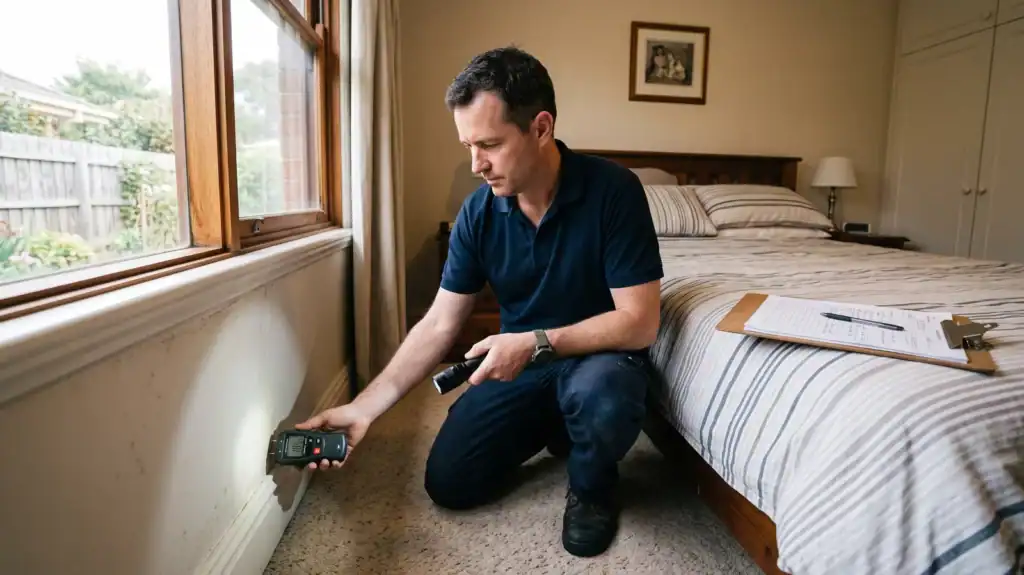
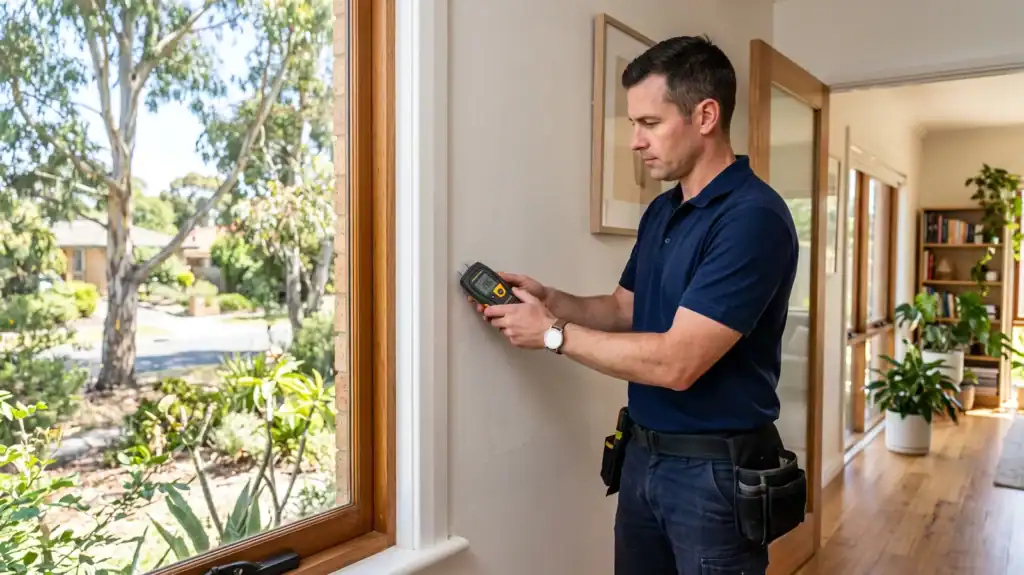
Cleaning mould off shower surfaces means nothing if the air in your home stays damp.
Most homeowners across Newcastle and the Central Coast grab bleach or a supermarket mould spray the moment they spot dark patches on a wall. The problem is that surface cleaning only removes what you can see, not what caused it.
Ventilation mould prevention works better than any cleaning product because it targets the moisture driving the growth. This article covers how moisture builds up indoors, which rooms fail first, and what professional mould treatment actually involves.
Already have mould? Improving ventilation alone will not kill an established colony. Mould and Hygiene Solutions treats the root structure and identifies the moisture source so the problem is fixed properly.
Find out why your mould cleaning keeps failing or book a professional mould inspection across Newcastle, the Central Coast, Lake Macquarie, Hunter Valley and Port Stephens.
Why Cleaning Mould Without Fixing Ventilation Fails
Cleaning mould off a surface removes the visible growth. It does not remove the root structure (called hyphae) embedded in the plasterboard, grout, or timber underneath.
The World Health Organisation’s guidelines on indoor air quality are direct on this point: the primary method for controlling indoor mould is improving ventilation, not cleaning. The Australian Government’s YourHome guide reaches the same conclusion: reducing humidity and venting moisture sources to the outside is the primary strategy for preventing mould.
Controlling mould is about controlling moisture. If you scrub mould off a bathroom ceiling but the room still has poor airflow and high humidity, the same patches reappear within weeks.
This is why homeowners who clean mould every few months end up stuck in a cycle. The cleaning treats the visible layer while the stagnant, moisture-heavy air keeps feeding new growth.
Signs you are in a clean-and-repeat cycle:
- Mould returns to the same spot within four to eight weeks of cleaning
- You can smell dampness or mustiness even after the surface looks clean
- Multiple rooms develop mould at the same time
- Patches appear on walls that never get directly wet
If any of these sound familiar, the mould is a symptom. The real problem is airflow.
How Poor Ventilation Causes Mould to Grow
When air moves through a home, it carries moisture out. When air sits still, moisture from cooking, showering, breathing, and drying clothes settles on surfaces as condensation.
Mould spores are always present in indoor air. They need just two things to germinate: a damp surface and time.
The WHO guidelines on dampness and mould identify relative humidity above 60% as the threshold where mould growth accelerates.
| Indoor Relative Humidity | Mould Risk | What Happens |
|---|---|---|
| Below 50% | Low | Surfaces stay dry, spores cannot germinate |
| 50 to 60% | Moderate | Condensation forms on cold surfaces overnight |
| 60 to 70% | High | Growth begins within 48 to 72 hours on affected surfaces |
| Above 70% | Very high | Rapid colonisation of walls, ceilings, and soft furnishings |
Homes in Newcastle, the Hunter Valley, and along the Central Coast sit in a coastal climate where outdoor humidity regularly exceeds 70%. Without active ventilation pulling that moist air out, indoor surfaces become breeding grounds for mould.
To understand what humidity level actually prevents mould, the key target is keeping indoor relative humidity below 60%.
Health Risks of Mould in Poorly Ventilated Homes
Mould is not just a cosmetic problem. Prolonged exposure to mould spores in a poorly ventilated home affects respiratory health, particularly in children, the elderly, and anyone with asthma or allergies.
The World Health Organisation links indoor mould exposure to increased rates of respiratory infections, asthma exacerbation, and allergic rhinitis. The longer the exposure, the greater the risk.
Common health effects of mould exposure:
- Persistent coughing, wheezing, and shortness of breath
- Nasal congestion and sinus irritation
- Skin rashes and eye irritation
- Worsened asthma symptoms, especially overnight in bedrooms with poor airflow
- Fatigue and headaches in homes with chronic dampness
Some mould species produce mycotoxins that pose more serious health risks with long-term exposure. If you suspect mould in your home, a professional mould test can identify the species present and the level of contamination. Learn more about the warning signs of mould toxicity in your home.
Which Rooms Lose Ventilation First
Bathrooms, kitchens, and laundries generate the most indoor moisture. According to the Australian Government’s YourHome guide, a single shower releases up to 1.5 litres of water vapour into the air.
Cooking adds moisture from boiling, steaming, and dishwashing. Laundries where clothes dry on indoor racks pump humidity directly into the living space.
The worst offenders in most homes:
- Bathrooms without an exhaust fan, or with a fan that recirculates instead of venting outside
- Kitchens without a rangehood, or with a recirculating rangehood that filters grease but does not remove moisture
- Laundries used for indoor clothes drying with the door closed
- Bedrooms, where each person exhales roughly 200 to 300 ml of moisture per night (YourHome)
- Wardrobes and cupboards built against external walls with no airflow behind them
According to the YourHome guide, a family of four generates roughly 10 to 14 litres of moisture per day through breathing, cooking, and showering alone. Without adequate ventilation, that moisture has nowhere to go except onto your walls, ceilings, and window frames.
Types of Ventilation for Mould Prevention
Not all ventilation works the same way. Understanding the difference between passive and mechanical ventilation helps you identify what your home is missing.
The three main categories:
| Ventilation Type | How It Works | Best For |
|---|---|---|
| Passive | Uses natural airflow through windows, vents, eaves, and weep holes | Mild moisture issues, well-designed homes with cross-ventilation |
| Mechanical (spot) | Exhaust fans in bathrooms, kitchens, and laundries that vent moist air directly outside | High-moisture rooms, homes without adequate natural airflow |
| Whole-home (HRV/ERV) | Heat recovery or energy recovery ventilators that exchange stale indoor air for fresh outdoor air across the entire home | Sealed modern homes, severe humidity problems, homes with chronic mould |
Passive ventilation (opening windows, ensuring eave vents are not blocked) is the simplest starting point. In many coastal homes across Newcastle and the Central Coast, it is not enough on its own because outdoor humidity is already high.
Mechanical exhaust fans are effective when they vent directly to the outside, not back into the ceiling space. A dehumidifier can reduce indoor moisture but does not replace proper ventilation because it recirculates the same stale air.
- Passive: open windows on opposite sides of the home to create cross-ventilation
- Mechanical: install ducted exhaust fans in bathrooms and kitchens that vent to the outside
- Whole-home: consider an HRV or ERV system if the home is well-sealed and humidity remains high despite spot ventilation
A professional ventilation assessment identifies which type your home needs. In most cases, the answer is a combination of improved passive airflow and properly installed exhaust fans in the rooms that generate the most moisture.
Why DIY Mould Removal Fails
DIY mould products sold at hardware stores are surface treatments. Bleach, vinegar, tea tree oil, and commercial mould sprays all work on the visible layer.
None of them reach the root structure embedded beneath the surface. Regrowth typically starts within two to six weeks because the hyphae remain alive in the substrate.
Spraying bleach on mould removes the surface discolouration within minutes. The colony underneath is unaffected.
Scrubbing or spraying mould without containment also sends spores airborne. Those spores settle on other surfaces throughout the home, seeding new growth in rooms that were previously clean.
What DIY treatment does not address:
- The root structure in the substrate (surface cleaning cannot reach it)
- The moisture source or ventilation issue that caused the growth
- Spore containment during removal
- Long-term antimicrobial protection to prevent regrowth
- Verification that the colony has been fully eliminated
No retail product addresses ventilation or moisture. You can kill surface mould every month, but if the bathroom has no exhaust fan and the bedroom window stays shut, nothing changes.
What Professional Mould Treatment Does Differently
Professional mould remediation addresses the colony at its source. Mould and Hygiene Solutions uses an Australian-made, non-hazardous, non-corrosive and environmentally friendly antimicrobial solution that penetrates the substrate to reach the root structure.
This is not a surface spray. The treatment eliminates the colony where it lives and leaves a residual antimicrobial barrier that prevents regrowth.
The process also includes identifying the moisture source driving the mould. Whether that is inadequate bathroom ventilation, blocked subfloor airflow, or condensation from poor insulation, the cause must be addressed for treatment to last.
What professional treatment includes:
- Full inspection to identify all affected areas, including hidden growth
- Identification of the moisture or ventilation problem causing the mould
- Industrial-grade antimicrobial treatment that reaches the root structure
- Spore containment during the removal process
- Post-treatment verification
- Unconditional 12-month mould-free guarantee
This is why Mould and Hygiene Solutions offers a 12-month mould-free guarantee. When the treatment reaches the roots and the moisture source is resolved, mould does not return.
Signs Your Home Has a Ventilation Problem
You do not need equipment to spot poor ventilation. There are visible warning signs in most homes.
Signs of inadequate ventilation:
- Condensation on windows in the morning, especially during winter
- A musty or stale smell in closed rooms even after cleaning
- Mould on south-facing walls where less sun exposure means less natural drying
- Paint peeling or bubbling in the bathroom or laundry
- Foggy mirrors that take more than 10 minutes to clear after a shower
- Mould in wardrobes, behind furniture against external walls, or inside cupboards
If your bathroom exhaust fan is noisy but the air still feels damp, it may be recirculating air instead of venting it outside.
Hold a tissue to the fan while it runs. If the tissue is not pulled firmly against the grille, the fan is not extracting air.
Check whether your kitchen rangehood vents outside or recirculates. For mould prevention, only ducted rangehoods that vent outside make a difference.
Stop the Clean-and-Repeat Cycle With Professional Treatment
If you have been cleaning mould off the same surfaces every few months, the answer is not a better cleaning product or a new exhaust fan alone. Improving ventilation stops future mould, but it cannot kill a colony that has already established itself in the substrate.
You need professional treatment to eliminate what is already growing, combined with better airflow to stop it coming back.
Mould and Hygiene Solutions provides professional mould inspections and treatment across Newcastle, the Central Coast, Lake Macquarie, Hunter Valley and Port Stephens. Every job starts with identifying the moisture source, treats the mould at the root with our Australian-made antimicrobial solution, and comes with an unconditional 12-month mould-free guarantee. Book a professional mould inspection or visit mould removal to learn more.
Frequently Asked Questions
Can proper ventilation alone prevent mould?
Good ventilation is the most effective way to prevent mould from forming in the first place. It keeps indoor humidity below the 60% threshold where mould spores germinate.
However, if a colony has already established itself in the substrate, ventilation alone will not kill it. You need professional treatment to reach the root structure, then improved airflow to prevent it returning.
What is the ideal indoor humidity level to prevent mould?
The ideal indoor humidity for mould prevention is below 60%, with 40 to 50% being optimal. Above 60%, condensation forms on cold surfaces and mould spores can germinate within 48 to 72 hours.
What is the difference between passive and mechanical ventilation?
Passive ventilation relies on natural airflow through open windows, vents, and eaves. Mechanical ventilation uses powered exhaust fans, ducted systems, or heat recovery ventilators (HRVs) to actively move air.
In humid coastal areas like Newcastle and the Central Coast, passive ventilation alone is often insufficient because the outdoor air is already moisture-heavy.
Does opening windows actually help prevent mould?
Opening windows helps when outdoor humidity is lower than indoor humidity, which is common in winter and on dry days. On humid summer days along the coast, opening windows can bring more moisture in.
The most effective approach is cross-ventilation: opening windows on opposite sides of the home so air flows through rather than sitting still.
Why does mould keep coming back even after I clean it?
Surface cleaning removes the visible mould but not the root structure (hyphae) embedded in the plasterboard, grout, or timber beneath. The roots survive and regrow within weeks.
More importantly, cleaning does not fix the ventilation or moisture problem that caused the mould in the first place. Until the moisture source is addressed, mould cleaning will keep failing.
How quickly does mould grow in a poorly ventilated room?
At humidity levels above 60%, mould spores can begin germinating on damp surfaces within 48 to 72 hours. In rooms with no airflow, such as a bathroom without an exhaust fan after a shower, visible mould can appear within one to two weeks.
Are certain building materials more prone to mould?
Mould feeds on organic materials. Plasterboard (gyprock), timber, carpet, wallpaper, and MDF are all vulnerable.
Non-porous surfaces like tiles and glass resist mould growth but still develop surface colonies when moisture sits on them long enough. Older homes with cavity walls and no vapour barriers are particularly susceptible.
What does a professional mould inspection involve?
A professional mould inspection identifies all affected areas, including hidden growth behind walls, under flooring, and inside ceiling cavities. The inspector assesses the moisture source, measures humidity levels, and provides a written report outlining the extent of contamination and recommended treatment.
Mould and Hygiene Solutions offers inspections across Newcastle, the Central Coast, Lake Macquarie, Hunter Valley and Port Stephens.