Black mould in a rental property needs professional attention, not a weekend with bleach and a sponge. Whether you are a tenant, property owner, or property manager, the approach is the same: identify the moisture source that feeds mould growth, treat the colony properly, and document everything.
This article covers who is responsible for mould in a rental under NSW law, why surface cleaning fails, what to do if your landlord will not act, and how a professional inspection gets the issue resolved for all parties.
Who Is Responsible for Black Mould in a Rental
Under the Residential Tenancies Act 2010 (NSW), property owners must provide a rental that is fit for habitation. If black mould has developed because of a structural fault, poor ventilation, a leaking roof, or faulty plumbing, the repair obligation sits with the property owner.
| Cause of mould | Usually responsible |
|---|---|
| Leaking roof, pipes, or gutters | Property owner |
| Poor ventilation or no exhaust fans | Property owner |
| Rising damp or subfloor moisture | Property owner |
| Mould present at move-in | Property owner |
| Tenant not ventilating (windows never opened) | May be tenant |
| Tenant-caused water damage | Tenant |
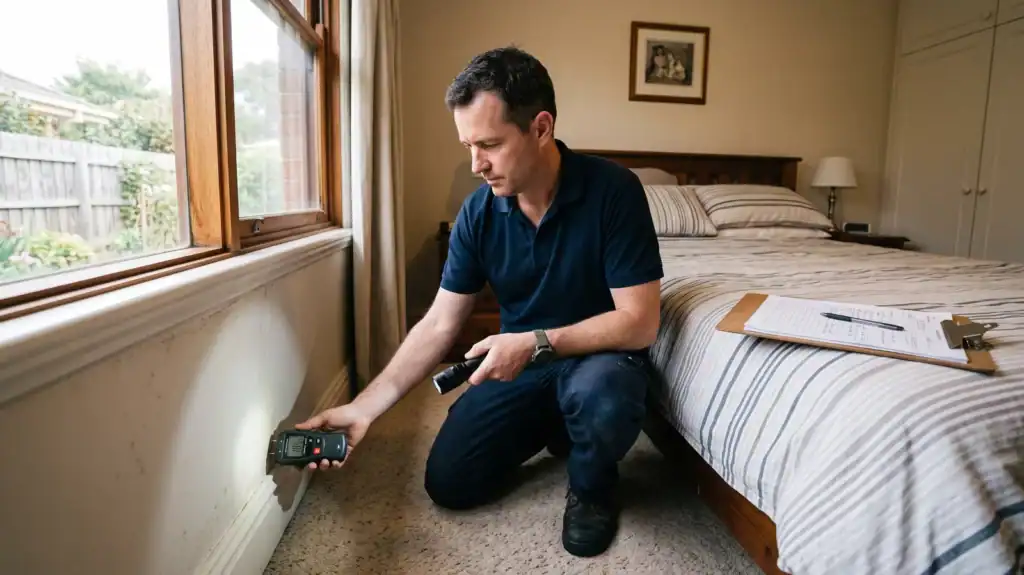
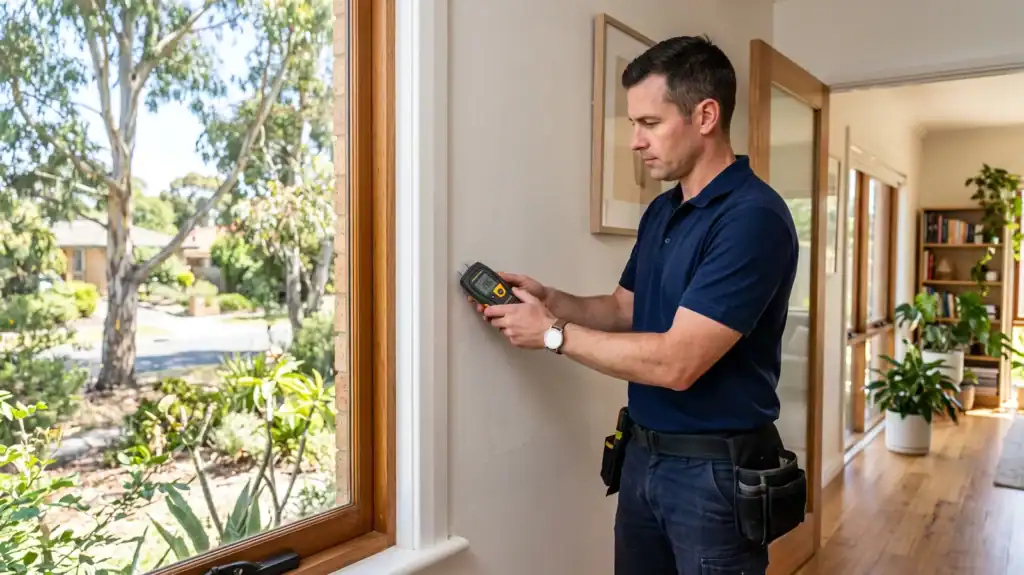
A professional mould inspection identifies the actual cause within minutes. That removes the guesswork and gives property managers a clear document to work from when deciding next steps.
How to Identify What Is Causing the Mould
Before anyone picks up a spray bottle, the first step is working out where the moisture is coming from. Mould cannot grow without a water source, and treating the visible colony without fixing that source guarantees it returns.
- Structural leaks: Water stains on ceilings or walls, peeling paint, or damp patches that worsen after rain point to a leaking roof, pipe, or gutter
- Poor ventilation: Bathrooms and laundries without exhaust fans trap steam, creating persistent humidity on surfaces
- Rising damp: Moisture wicking up from the ground through concrete slabs or subfloors, common in older homes
- Condensation: Cold surfaces in winter (single-glazed windows, uninsulated walls) attract moisture from warm indoor air
If the cause is a structural issue, the repair obligation falls on the property owner. If the mould is limited to an area the tenant controls (such as a shower that is never ventilated), responsibility may shift. A written inspection report settles this question with evidence rather than assumptions.
Why DIY Cleaning Will Not Fix Rental Mould
Surface cleaning is the most common response to mould in a rental, and it fails every time. Whether the tenant or a cleaner arranged by the property manager does it, the result is the same: the visible stain disappears, but the root structure embedded in the wall, ceiling, or grout survives. Regrowth occurs within two to six weeks.
- Surface only: Bleach and retail sprays cannot penetrate porous materials like plaster, timber, or grout where the mould roots live
- Spore spread: Spraying mould without containment releases spores into the air, which settle on other surfaces and start new colonies
- Health risk during cleaning: Disturbing a mould colony without proper protection can expose you to concentrated spores that cause illness
- Repeat callouts: For property managers, a surface clean that fails in three weeks means another complaint, another tradesperson visit, and another cost
- Moisture source untouched: No retail product can find or fix the leak, damp, or ventilation failure feeding the mould
For property managers: Arranging professional treatment once is faster and cheaper than managing repeated surface cleans that fail. A single inspection report documents the cause and the fix, which protects the owner and closes the maintenance ticket properly.
Is Black Mould Dangerous
Black mould (Stachybotrys chartarum) produces mycotoxins that can cause respiratory symptoms, especially in people with asthma, allergies, or weakened immune systems. Prolonged exposure in an enclosed space like a bedroom or bathroom increases the risk.
Common symptoms of mould exposure include persistent coughing, nasal congestion, eye irritation, and skin rashes. People with existing respiratory conditions may notice their symptoms worsen in rooms where mould is actively growing.
The colour of mould alone does not determine how dangerous it is. Not all dark-coloured mould is Stachybotrys, and lighter moulds can also produce allergens and irritants. Any mould growing indoors at scale warrants professional assessment, regardless of colour.
This is one reason NSW law treats persistent mould as a repair issue rather than a cosmetic one. A property with active black mould may not meet the “fit for habitation” standard under the Residential Tenancies Act.
How to Handle Mould in a Rental Property
The process works best when everyone communicates early. Most mould issues in rental properties are resolved quickly when the property manager arranges a professional inspection as soon as it is reported.
- Photograph the mould with a visible date stamp and note the affected rooms
- Report the mould to the property manager in writing (email or the agency’s maintenance portal), attaching the photos
- The property manager arranges a professional mould inspection
- The inspection identifies the moisture source and the extent of the colony
- A written report documents the cause, affected areas, and recommended treatment
- The property owner approves the treatment based on the report
- Professional treatment addresses the root structure and the moisture source
- The report and treatment records go on file for compliance
Keep copies of everything. Save your written request, the photos, the property manager’s responses, and any inspection reports. This paper trail protects you if the issue needs to escalate to a formal dispute.
What to Do If Your Landlord Will Not Fix the Mould
If you have reported the mould in writing and the property owner has not arranged repairs within a reasonable time, NSW tenancy law provides a clear escalation path.
- Follow up in writing: Send a second written request referencing your original report and the time elapsed
- Know your rights: NSW tenants have specific rights when a landlord ignores mould, including the right to request urgent repairs
- Contact NSW Fair Trading: NSW Fair Trading can mediate between tenant and landlord on repair disputes at no cost
- Apply to NCAT: If mediation does not resolve the issue, the NSW Civil and Administrative Tribunal (NCAT) can order the property owner to carry out repairs, reduce rent, or compensate the tenant
- Consider your lease options: In severe cases where the property is uninhabitable, tenants may be able to break a lease because of mould in NSW without penalty
An independent mould inspection report strengthens any formal complaint or tribunal application. It documents the moisture source, the extent of the contamination, and the remediation required.
How to Prevent Mould from Returning in a Rental
Once the mould has been professionally treated and the moisture source repaired, a few habits reduce the chance of it returning.
- Run exhaust fans during and for 15 minutes after every shower or bath
- Open windows for cross-ventilation when weather permits, especially in rooms prone to moisture buildup
- Use a dehumidifier in persistently damp rooms to keep indoor humidity below 60 percent
- Wipe down condensation on windows and cold surfaces
- Report any new leaks or damp patches to the property manager immediately
These steps reduce the conditions mould needs to grow, but they are not a substitute for fixing the underlying moisture source. Prevention works only after the cause has been addressed.
What Professional Mould Treatment Involves
Mould and Hygiene Solutions uses an Australian-made, non-hazardous, non-corrosive and environmentally friendly antimicrobial solution that treats the root structure in the substrate, not just the visible surface. Every job includes containment so spores do not spread during treatment.
- Professional inspection to identify the moisture source and document the problem
- Written report for property managers and owners
- Full substrate treatment (plaster, timber, grout) using the antimicrobial solution
- Containment during treatment
- Ventilation and maintenance advice to prevent recurrence
- 12-month unconditional mould-free guarantee on the treated area
Mould and Hygiene Solutions provides professional mould inspections and treatment across Newcastle, the Central Coast, Lake Macquarie, the Hunter Valley, and Port Stephens. Every treatment is backed by an unconditional 12-month mould-free guarantee. Visit mould inspections or mould removal to book.
Frequently Asked Questions
Who is responsible for black mould in a rental property in NSW?
If the mould is caused by a structural issue such as a leaking roof, poor ventilation, or rising damp, the property owner is responsible for the repair. If the mould results from tenant behaviour (such as never opening windows or causing water damage), responsibility may shift to the tenant.
Can I break my lease because of black mould?
In some cases, yes. If the property is uninhabitable due to mould and the landlord has refused to fix the problem, NSW tenants may be able to terminate their lease without penalty through NCAT.
What should I do if my landlord will not fix the mould?
Report the issue in writing with dated photos. If the landlord does not respond, contact NSW Fair Trading for free mediation. If that fails, apply to NCAT for a repair order or rent reduction.
How long does a landlord have to fix mould in NSW?
NSW law does not set a specific number of days, but landlords must carry out repairs within a “reasonable time.” For urgent repairs (which can include mould affecting health), the expectation is that work begins promptly.
Can black mould in a rental make you sick?
Yes. Mould produces spores and mycotoxins that can cause coughing, nasal congestion, eye irritation, and skin rashes. People with asthma, allergies, or weakened immune systems are more vulnerable to these effects.
Is all black-coloured mould toxic?
No. The colour of mould does not determine its toxicity. Stachybotrys chartarum (commonly called “black mould”) produces mycotoxins, but other dark moulds may not. Any indoor mould growing at scale should be professionally assessed.