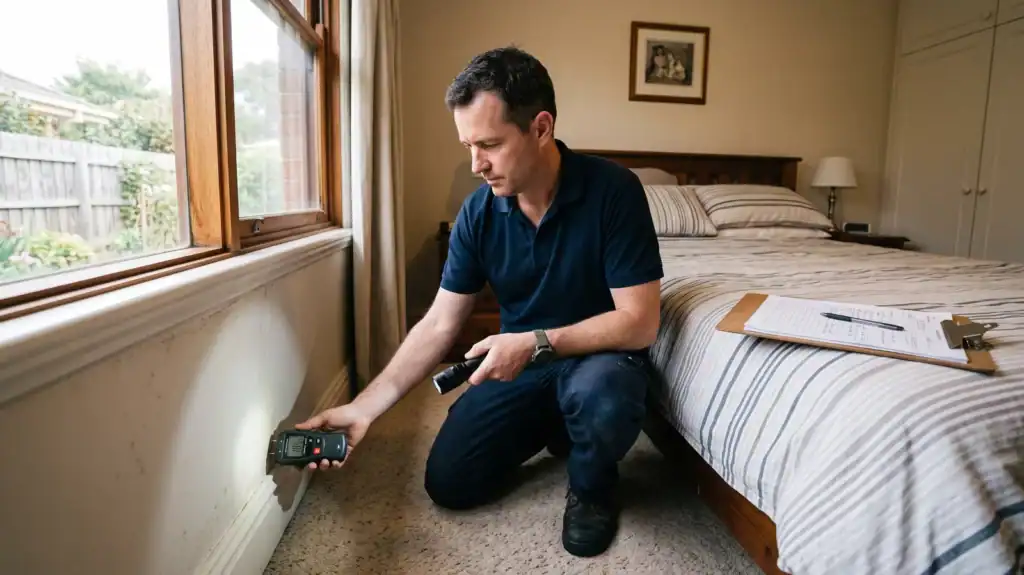
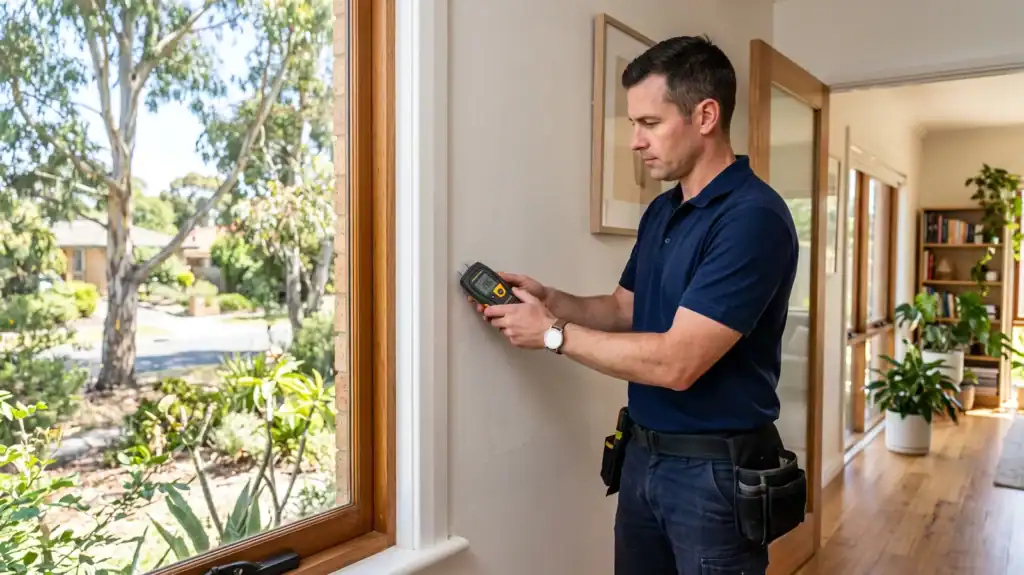
Surface mould cleaning only removes the stain, not the colony growing underneath.
Many homeowners across Newcastle and the Central Coast spend weekends scrubbing mould off bathroom walls and ceiling corners. The mould comes back within a few weeks, every single time.
This article explains why mould cleaning products only treat the surface, what is actually happening beneath the visible growth, and what it takes to stop regrowth permanently.
Need help now? Book a free mould inspection with Mould and Hygiene Solutions across Newcastle, the Central Coast, Lake Macquarie, Hunter Valley and Port Stephens.
What Happens When You Clean Mould Off a Surface
Mould cleaning with retail products removes the visible discolouration from walls, ceilings, tiles and grout. The surface looks clean, and for a week or two it stays that way.
But visible mould is only the reproductive structure of the colony. The root system, called hyphae, penetrates into the material beneath, whether that is plasterboard, timber, grout or paint.
When you wipe or spray the surface, you remove the mould you can see. The hyphae embedded in the substrate remain completely unaffected.
Here is what is actually happening beneath a mould-affected surface:
- Surface mould is the visible part of the colony (spores and growth)
- Hyphae (root structure) sit inside the material underneath
- Retail mould cleaning products cannot reach or destroy hyphae
- Regrowth from intact roots typically occurs within 2 to 6 weeks
The cycle of cleaning and regrowth is not a cleaning problem. It is a treatment problem.
Why DIY Mould Cleaning Products Fail
Every retail mould cleaning product available in Australian supermarkets works the same way. They contain either bleach, ammonia, or a surfactant that lifts surface mould and removes the stain.
None of them treat the root structure.
Bleach is the most common active ingredient. It removes mould discolouration quickly, which makes it look effective. But the Victorian Better Health Channel recommends bleach only for hard, non-porous surfaces and warns that mould may return if the moisture source is not addressed.
Here is what each common DIY product actually does:
- Bleach: Removes surface stain, cannot penetrate porous materials, does not kill root structure
- White vinegar: Mild antifungal, effective on some non-porous surfaces only
- Tea tree oil: Limited antifungal effect, does not address roots or moisture
- Baking soda: Abrasive scrubbing aid, no antifungal action on substrate
- Sugar soap: Removes surface stains on painted surfaces, no antifungal properties
- Eucalyptus oil: Mild antifungal effect on contact, does not penetrate substrates or treat root growth
- Commercial mould sprays: Surfactant-based, surface treatment only
The marketing on these products says “kills mould.” What they mean is “removes visible mould.” Those are two very different things.
Common Mould Cleaning Methods and What They Miss
This comparison shows the difference between surface mould cleaning and professional treatment across five key factors.
| Method | Surface mould removed? | Root structure treated? | Moisture source addressed? | Regrowth prevented? |
|---|---|---|---|---|
| Bleach spray | Yes | No | No | No |
| Vinegar solution | Partially | No | No | No |
| Commercial mould spray | Yes | No | No | No |
| Scrubbing with detergent | Yes | No | No | No |
| Professional antimicrobial treatment | Yes | Yes | Yes (inspection) | Yes (12-month guarantee) |
There is another problem with DIY mould cleaning that most people do not consider. Scrubbing and spraying mould without proper containment releases spores into the air.
Those spores travel through the property and can establish new colonies in other rooms. The NSW Government mould guide specifically warns against dry brushing mould, as it disperses spores where they can be inhaled.
The Health Risks of Cleaning Mould Without Protection
Scrubbing or spraying mould without proper protection releases concentrated bursts of spores into the air you are breathing. These airborne spores can trigger respiratory symptoms, allergic reactions, and asthma flare-ups.
The Victorian Better Health Channel recommends the following protective equipment for anyone handling mould:
- P1 or P2 face mask (not a cloth or surgical mask)
- Rubber gloves
- Eye protection such as safety glasses or goggles
- Good ventilation with windows open and a fan directing air outside
Some people should not attempt mould cleaning at all. This includes pregnant women, young children, anyone with a weakened immune system, and people with chronic respiratory conditions.
If household members are experiencing unexplained coughing, sinus congestion, or breathing difficulty, cleaning black mould without proper precautions can make you sick. These could be mould symptoms you are ignoring.
The Real Problem Is Underneath the Surface
Mould cleaning treats the symptom, not the cause. Every mould problem has two components that DIY cannot address.
The root structure. Hyphae grow deep into plasterboard, timber framing, carpet underlay, and grout. This is why DIY mould removal consistently fails to deliver lasting results.
The moisture source. Mould does not grow without moisture. Something is feeding it, and DIY mould cleaning never identifies or fixes that source.
Common hidden moisture sources behind mould growth include:
- Leaking pipes behind walls or under floors
- Condensation from inadequate bathroom or kitchen ventilation
- Rising damp in older properties
- Roof leaks or damaged flashing
- Blocked gutters causing water intrusion
- Poor subfloor ventilation trapping moisture
Until the moisture source is identified and resolved, mould will keep returning. A professional mould test can confirm the extent of contamination, including in areas you cannot see.
What Professional Mould Cleaning Actually Involves
Professional mould treatment is fundamentally different from surface cleaning. Mould and Hygiene Solutions uses an Australian-made, non-hazardous, non-corrosive and environmentally friendly antimicrobial solution that penetrates the substrate to eliminate the root structure.
The professional mould remediation process follows these steps:
- Full property inspection to identify all affected areas and the moisture source driving growth
- Containment to prevent spore dispersal during treatment
- Application of industrial-grade antimicrobial solution that treats the material the mould is growing in
- Surface treatment and cleaning of all visible mould
- Recommendations for addressing the underlying moisture source
- 12-month mould-free guarantee on all treated areas
Mould and Hygiene Solutions offers Australia’s only unconditional 12-month mould-free guarantee. If mould returns to a treated area within 12 months, they retreat it at no cost. That guarantee is only possible because the treatment addresses the root structure, not just the surface.
The difference between professional treatment and DIY cleaning is the difference between treating a symptom and solving the problem.
How to Stop Mould Coming Back After Treatment
Professional treatment eliminates the mould colony and its root structure. But preventing regrowth means removing the conditions that allowed mould to grow in the first place.
After treatment, these steps keep mould from returning:
- Fix the moisture source: A professional inspection identifies whether the moisture is from leaks, condensation, rising damp, or poor drainage. Fixing it is the single most important prevention step.
- Improve ventilation: Bathrooms, kitchens, and laundries need adequate airflow. Ventilation is more effective than cleaning for long-term mould prevention.
- Control indoor humidity: Keeping indoor relative humidity below 60% significantly reduces mould risk. A dehumidifier can help prevent mould in rooms that stay damp, but it works best alongside proper ventilation.
- Monitor treated areas: Check previously affected spots regularly, especially during winter and in humid months.
When to Book a Professional Mould Inspection
If you have cleaned mould from the same area more than once, surface cleaning is not going to fix it. The root structure is established and the moisture source is still active.
Book a professional inspection if any of these apply:
- Mould returns to the same spot after cleaning
- Mould is spreading to multiple rooms
- You can smell mould but cannot see it
- Mould covers an area larger than 1 square metre
- Anyone in the household has unexplained respiratory symptoms
- The property has a known moisture problem
For properties across Newcastle, the Central Coast, Lake Macquarie, Hunter Valley and Port Stephens, Mould and Hygiene Solutions offers free inspections with no obligation.
The most effective first step is a free mould inspection. Contact Mould and Hygiene Solutions today to book yours.
Frequently Asked Questions
Can mould return after cleaning?
Yes. If you clean only the visible mould without treating the root structure and moisture source, regrowth typically occurs within 2 to 6 weeks. Professional treatment with antimicrobial solutions targets the hyphae embedded in the substrate, which is why it lasts where surface cleaning does not.
Does bleach kill mould permanently?
No. Bleach removes the surface stain but cannot penetrate porous materials to reach the root system. On non-porous surfaces like tiles, bleach may kill surface growth temporarily, but the mould returns if the moisture source remains.
How can I tell if I have a mould problem?
Visible discolouration on walls, ceilings, or grout is the most obvious sign. A persistent musty smell, especially in enclosed areas, often indicates hidden mould growing behind walls or under flooring. Unexplained respiratory symptoms or allergy flare-ups can also point to mould exposure.
Is mould removal covered by insurance in Australia?
It depends on the cause. Most home insurance policies cover mould damage from a sudden, insured event like a burst pipe or storm damage.
Mould caused by ongoing maintenance issues, condensation, or gradual water damage is typically excluded. Check your policy or contact your insurer for details.
What is the best way to prevent mould in my home?
Address moisture first. Fix any leaks, improve ventilation in wet areas, and keep indoor humidity below 60%.
Use exhaust fans in bathrooms and kitchens, open windows when weather allows, and ensure good airflow throughout the property. Understanding what humidity level actually prevents mould helps you set the right targets.