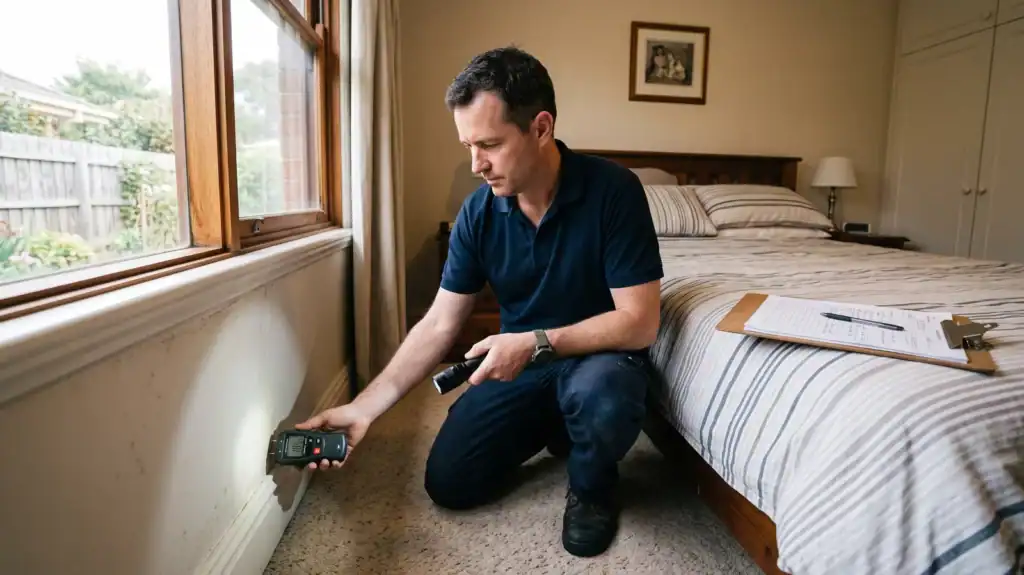
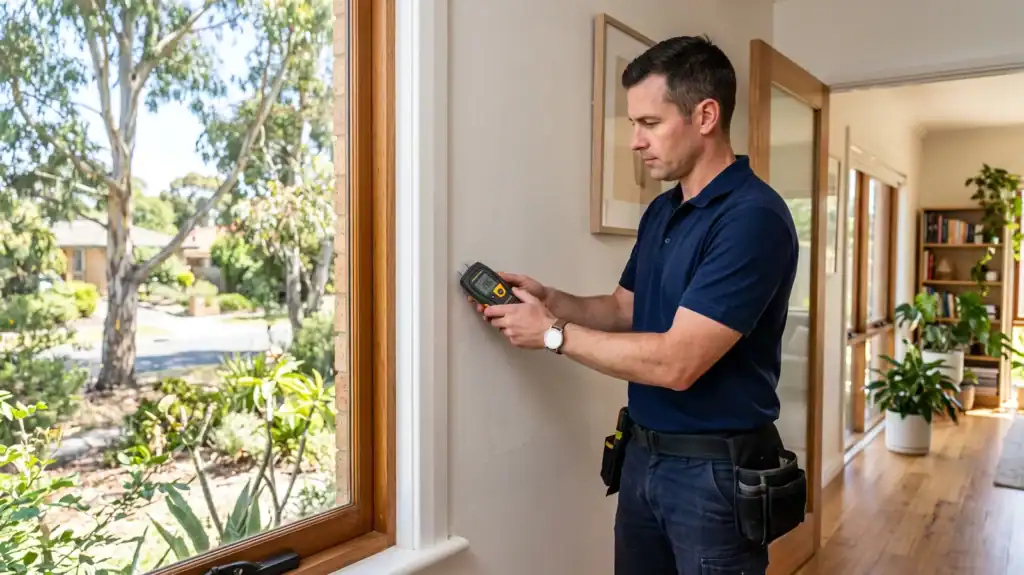
Black mould is more than a cosmetic problem. Professional removal targets the root cause, prevents regrowth, and protects your home long-term.
If you’re searching for how to get rid of black mould, you’ve likely discovered it’s not a simple wipe-and-go task. Black mould requires more than surface cleaning to eliminate properly.
This guide explains what black mould is, why it poses serious health risks, and how professional treatment delivers results that DIY methods can’t match. You’ll also learn what to avoid, how to stay safe around mould, and when it’s time to call in the experts.
What Is Black Mould and Why Is It Dangerous?
Black mould, scientifically known as Stachybotrys chartarum, is a toxigenic fungus that thrives in damp, humid environments. It appears as dark greenish-black patches on walls, ceilings, timber, and other porous surfaces.
Not every dark-coloured mould is Stachybotrys. Species like Aspergillus, Cladosporium, and Alternaria can also appear black or dark green, which is why identifying black mould by appearance alone is unreliable without professional testing.
Unlike surface mildew, black mould penetrates deep into building materials and releases mycotoxins that can cause serious health problems. According to NSW Health, exposure to airborne mould spores can trigger respiratory issues, allergic reactions, and worsen existing conditions like asthma.
Common health symptoms from mould exposure include:
- Persistent coughing and wheezing
- Nasal congestion and sinus infections
- Skin rashes and irritation
- Eye irritation and watering
- Headaches and fatigue
- Difficulty breathing in severe cases
How to Stay Safe Around Black Mould
Before you touch any mould, protect yourself. Disturbing a mould colony without precautions sends thousands of spores into the air, and breathing those in can make you sick during the cleaning process itself.
If you must handle minor surface mould before a professional arrives, follow these safety steps:
- Wear a P2-rated respirator mask (not a cloth or surgical mask)
- Use rubber gloves that extend to the mid-forearm
- Wear safety goggles without ventilation holes
- Open windows and doors to ventilate the area
- Never dry-brush mould, as this launches spores into the air
- Seal off the affected room from the rest of the house if possible
- Bag and dispose of any contaminated materials immediately
For areas larger than one square metre, or any mould you suspect is Stachybotrys, do not attempt removal yourself. Professional containment and HEPA filtration are required to prevent cross-contamination throughout your property.
How to Get Rid of Black Mould: DIY vs Professional Treatment
Understanding the difference between temporary surface cleaning and permanent mould removal is essential. DIY methods only remove surface mould while leaving the root system and embedded spores intact, which is why the same patches return within weeks.
Here are the three main reasons DIY mould removal doesn’t work long-term:
- Household products can’t penetrate porous materials like plasterboard, timber, and grout where mould roots deep below the surface
- DIY cleaning disturbs mould colonies without proper containment, spreading thousands of spores throughout your property
- Surface treatments don’t address the underlying moisture source, so mould regrows in the same location
| Method | Effectiveness | Duration | Best For |
|---|---|---|---|
| Bleach or vinegar | Surface only | Days to weeks | Not recommended for black mould |
| Store-bought sprays | Temporary cosmetic fix | 1-2 weeks | Not effective for embedded mould |
| Professional treatment | Deep penetration | 12+ months | All mould problems |
Bleach is a temporary measure that fails because it can’t kill spores embedded in porous materials. It only lightens surface discolouration while the mould colony continues growing beneath.
Store-bought mould sprays provide nothing more than cosmetic coverage that masks the problem for a few weeks. The mould returns quickly because the root cause remains completely untreated.
Professional mould removal uses an Australian-made, non-hazardous, non-corrosive and environmentally friendly antimicrobial solution that penetrates deep into affected materials. This professional-grade treatment eliminates mould at the fungal root, prevents regrowth, and comes with an unconditional 12-month guarantee.
Why Professional Mould Removal Works Better
Professional mould treatment addresses problems DIY methods can’t reach. Specialists use equipment and solutions designed specifically for permanent mould elimination, not temporary surface cleaning.
Here’s what professional treatment includes:
- Comprehensive inspection to identify all affected areas and moisture sources
- Professional-grade antimicrobial treatment that penetrates porous materials
- HEPA filtration to remove airborne spores during treatment
- Moisture source identification and repair recommendations
- Preventative coating to inhibit future mould growth
- Disinfection and sanitisation of treated surfaces to eliminate residual contamination
- Documentation and treatment records for property management
Mould and Hygiene Solutions backs every treatment with a 12-month mould-free guarantee. If treated mould returns within 12 months, they return to re-treat the area at no additional cost.
Wondering what a professional job costs? Our guide to mould removal costs in Australia breaks down the factors that affect pricing.
Common Causes of Black Mould in Australian Homes
Black mould doesn’t appear without reason. It needs three things to grow: moisture, organic material, and warmth.
Most black mould problems in homes across Newcastle, the Central Coast, and the Hunter Valley stem from these sources:
- Roof leaks and damaged flashing
- Poor bathroom and kitchen ventilation
- Condensation on windows and walls
- Plumbing leaks behind walls or under floors
- Rising damp in older homes without adequate moisture barriers
- Storm damage and flooding
- Air conditioning condensation without proper drainage
Bathrooms are the worst culprit. Steam from hot showers creates the perfect humid environment, which is why mould on the bathroom ceiling is one of the most common complaints homeowners report.
Shower cubicles suffer the same problem. Mould embeds in grout lines and silicone seals where surface cleaning cannot reach it.
Professional mould inspections identify the specific moisture source feeding your mould problem. Without addressing the underlying cause, any treatment will only provide temporary relief.
Professional mould remediation addresses both the contamination and the conditions that allowed it to take hold.
When to Call Professional Mould Removal Services
Some situations require professional intervention from the start. Attempting DIY removal in these cases spreads spores throughout your property, exposes you to higher concentrations of mycotoxins, and typically makes the problem significantly worse.
Contact professional mould specialists immediately if you notice:
- Mould covering areas larger than one square metre
- Mould returning repeatedly after cleaning
- Musty odours without visible mould (indicating hidden growth)
- Mould growth following water damage or flooding
- Health symptoms that worsen at home
- Mould in HVAC systems or ducting
- Black mould in rental properties (tenants should notify landlords immediately)
If you rent and your landlord isn’t acting, our guide on tenant rights when a landlord ignores mould in NSW explains your options.
Professional mould testing can identify the specific type of mould present and determine the extent of contamination. This information guides the treatment approach and helps identify any serious health risks.
How to Prevent Black Mould from Returning
Prevention is always more cost-effective than removal. Once you’ve eliminated existing mould through professional treatment, taking preventative steps protects your property and health.
Effective mould prevention strategies include:
- Keep indoor humidity below 60% (the World Health Organization recommends dry, well-ventilated living spaces as the primary defence against mould)
- Ensure adequate ventilation in bathrooms, kitchens, and laundries
- Fix leaks and water damage within 24-48 hours
- Use exhaust fans when cooking or showering and run them for 20 minutes afterwards
- Clean gutters regularly to prevent water overflow
- Direct downpipes away from building foundations
- Inspect roof spaces and subfloors annually for moisture problems
- Allow air circulation around furniture and in wardrobes
When renovating or repairing after mould damage, consider mould-resistant building materials. Anti-mould paints, epoxy grout, fibre cement wall linings, and closed-cell insulation all resist moisture penetration and make future mould growth far less likely.
Frequently Asked Questions
What kills black mould permanently?
Household products like bleach and vinegar kill surface mould but cannot reach the root system embedded in porous building materials. Mould treated with retail products typically regrows within weeks. Professional antimicrobial treatment penetrates the substrate to eliminate the colony at its source, which is why Mould and Hygiene Solutions backs every treatment with a 12-month mould-free guarantee.
Can you remove black mould yourself?
You can clean minor surface mould from non-porous surfaces like tiles and glass. However, black mould on porous materials like plasterboard, timber, or grout requires professional treatment because household products cannot reach the root system embedded within the material.
Is all black-coloured mould dangerous?
Not all dark-coloured mould is the toxigenic Stachybotrys chartarum. Other common species like Aspergillus, Cladosporium, and Alternaria can also appear black. However, any mould growth indoors should be treated seriously because all species can trigger allergic reactions and respiratory problems.
Does bleach kill black mould?
Bleach lightens the surface discolouration but does not kill mould embedded in porous materials. The colony continues growing beneath the surface and typically returns within days to weeks. Professional antimicrobial solutions penetrate where bleach cannot.
How quickly does black mould spread?
Mould spores can begin colonising a damp surface within 24 to 48 hours. A small patch of black mould can spread across an entire wall in a matter of weeks if the moisture source is not addressed.
What does black mould smell like?
Black mould produces a distinctive musty, earthy odour often described as damp or stale. If you notice this smell without seeing visible mould, it may be growing behind walls, under flooring, or inside ceiling cavities.
Can black mould grow behind paint?
Yes. Mould commonly grows behind paint on plasterboard and timber surfaces, especially in rooms with poor ventilation. Painting over mould does not kill it, and the colony continues growing until it pushes through the new paint layer.
How long does professional mould treatment take?
Most residential treatments are completed within a single day. Larger properties or severe contamination may require two days. The antimicrobial solution continues working after application, with full protection established within 24 hours.
Is black mould covered by home insurance?
Most Australian home insurance policies cover mould damage resulting from a sudden insured event like a burst pipe or storm. Mould caused by gradual maintenance issues such as poor ventilation or slow leaks is typically not covered. Check your policy wording or contact your insurer directly.
Should I get a mould test before removal?
Professional mould testing identifies the species present and the extent of contamination. It is particularly valuable when mould is suspected but not visible, when occupants are experiencing health symptoms, or when you need documentation for insurance or tenancy disputes.
Book Your Free Mould Inspection Today
If you’re dealing with black mould in your home or business, professional assessment is the first step toward a permanent solution. Mould and Hygiene Solutions offers free inspections to assess your mould problem, identify moisture sources, and recommend the most effective treatment approach.
Every professional treatment is backed by an unconditional 12-month guarantee. If mould returns in treated areas within 12 months, the team returns to re-treat at no charge.
Servicing homes and businesses throughout Newcastle, the Central Coast, Lake Macquarie, the Hunter Valley, Maitland, and Port Stephens, the team brings professional equipment, proven solutions, and years of experience to every job.
Don’t let black mould compromise your health or property value. Book your free inspection and take the first step toward a mould-free environment.