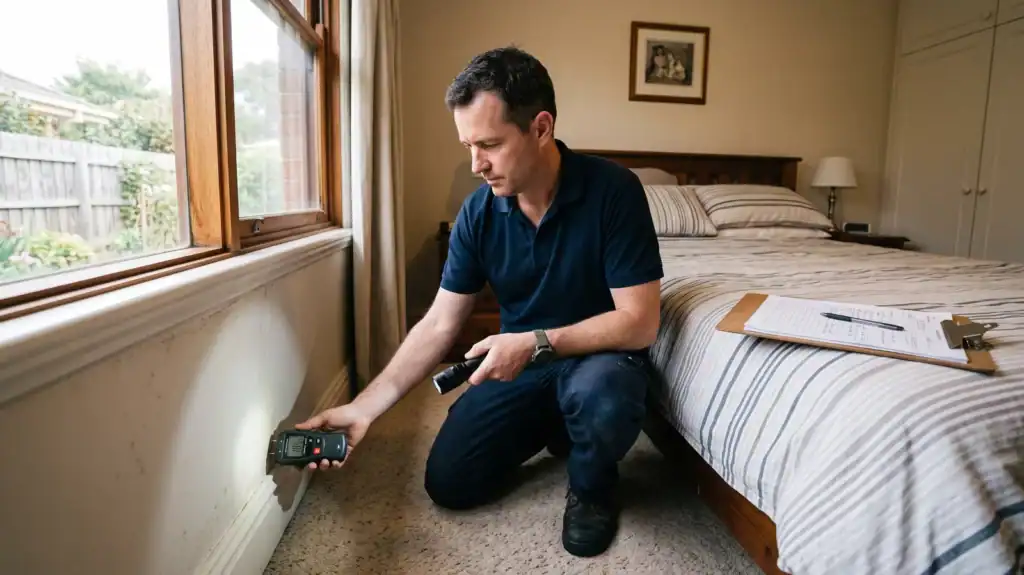
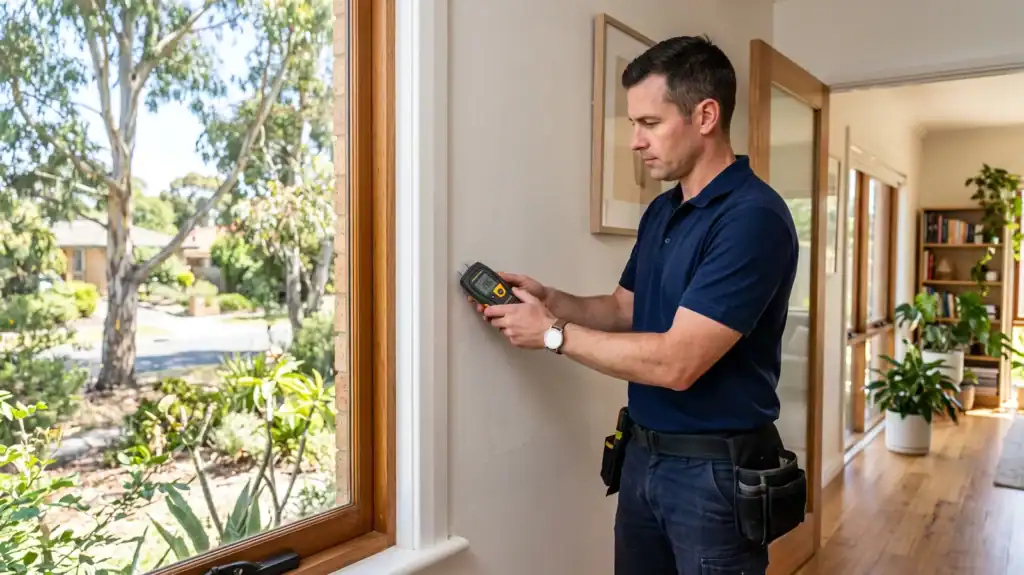
In NSW, a tenant can apply to terminate a lease early if mould makes a property genuinely unfit to live in and the property owner has not acted on a repair request. In practice, this rarely happens when the issue is addressed professionally and promptly.
This article covers when a lease can be terminated due to mould under NSW law, who is responsible, the steps involved, and why a professional inspection report is the most effective way to resolve the situation before it escalates.
What NSW Law Says About Mould and Lease Termination
The Residential Tenancies Act 2010 (NSW) requires property owners to provide and maintain rental properties that are fit for habitation (Section 52) and in a reasonable state of repair (Section 63). If mould caused by a building fault makes the property genuinely unliveable, and the property owner has not responded to repair requests within a reasonable time, NCAT can order the lease terminated.
- Section 52: Property must be fit for habitation at the start of and throughout the tenancy
- Section 63: Property owner must carry out repairs within a reasonable time of being notified
- NCAT: The NSW Civil and Administrative Tribunal can order early termination if the property is unfit and the owner has not acted
The threshold is high. A small patch of mould in a bathroom is not grounds for lease termination.
Extensive mould across multiple rooms, affecting air quality, after repeated repair requests have been ignored, is a different matter entirely.
Key distinction: Mould caused by a structural fault (leaking roof, rising damp, faulty plumbing) is the property owner’s responsibility. Mould caused by the tenant’s failure to ventilate or maintain reasonable cleanliness may not be grounds for a lease break.
Who Is Responsible for Mould in a Rental Property
Responsibility depends on the cause. The NSW Government guidance on mould in rental properties and the Residential Tenancies Act place obligations on both parties.
The property owner is responsible when mould results from:
- Structural faults such as leaking roofs, broken guttering, or cracked external walls
- Rising damp or subfloor moisture issues
- Faulty or inadequate ventilation systems
- Plumbing leaks behind walls or under floors
- Pre-existing mould documented on the condition report at the start of the tenancy
The tenant may share responsibility when mould results from:
- Failing to ventilate the property (not opening windows, not using exhaust fans)
- Not reporting moisture or early mould growth promptly
- Blocking air vents or restricting airflow
- Drying clothes indoors without ventilation
In most serious mould disputes, the cause is structural. A property that develops mould in a rental due to building defects is the property owner’s obligation to fix. A professional inspection identifies the moisture source, which determines responsibility clearly.
What Property Owners Risk If They Do Not Act
When a mould complaint goes unresolved, NCAT can make several orders against the property owner. These are outcomes to avoid, not escalation steps.
- Rent reduction: Tenants can claim a reduction of 20 to 25 percent for the period the property was affected
- Compensation: For damaged personal goods, decontamination of belongings, and loss of amenity
- Repair orders: NCAT can order specific repairs be completed within a set timeframe
- Lease termination: In severe cases, the tenant can terminate the lease without paying a break fee and claim reimbursement for moving costs
In the NSW tribunal decision Bunbury v Fletcher, the tenant was awarded a 25 percent rent reduction plus the maximum compensation of $15,000 after the property owner failed to address ongoing mould. The cost of professional treatment would have been a fraction of that outcome.
For property managers: A professional inspection report documents the cause, the treatment plan, and the outcome. That report demonstrates the owner took the complaint seriously and acted on it. It is the strongest protection against NCAT claims.
How Property Owners Can Resolve Mould Before It Escalates
The vast majority of mould disputes never reach NCAT because they are resolved before that point. The key is responding to mould reports promptly and arranging a professional inspection rather than a surface clean.
- Respond to mould reports within a reasonable time (days, not weeks)
- Arrange a professional inspection to identify the moisture source
- Obtain a written report that documents the cause and recommended treatment
- Approve professional treatment that addresses the root cause, not just the surface
- Keep the inspection report and treatment records on file for compliance purposes
The condition report completed at the start of the tenancy is also critical. If mould or dampness is noted on the ingoing report and not addressed, the property owner’s position weakens significantly in any dispute. Review condition reports carefully and resolve any mould or moisture issues before a new tenancy begins.
Why Surface Cleaning Escalates Mould Disputes
The most common mistake in rental mould situations is arranging a surface clean and considering it done. Bleach removes the visible stain within minutes, but the mould root (hyphae) embedded in the substrate survives. Regrowth within two to six weeks is almost guaranteed.
From the tenant’s perspective, the mould has “come back” and the property owner has not fixed it. From the property owner’s perspective, the repair was done. This mismatch is what creates disputes, and it is entirely avoidable with professional treatment that addresses why mould cleaning keeps failing at the root level and the underlying moisture source.
- Bleach and retail products only treat the surface discolouration
- The root structure in porous materials (plaster, timber, grout) is unaffected
- Regrowth occurs within weeks, triggering another complaint
- Repeated failed surface cleans strengthen the tenant’s NCAT case, not the owner’s
What Professional Treatment Does Differently
Mould and Hygiene Solutions uses an Australian-made, non-hazardous, non-corrosive and environmentally friendly antimicrobial solution that penetrates the substrate and kills the root structure. Every job includes moisture source identification, containment during treatment, and a written report.
- Professional inspection to identify and document the moisture source
- Written report for property managers, owners, and compliance records
- Full substrate treatment, not surface cleaning
- Containment so spores do not spread through the property during treatment
- Ventilation and maintenance recommendations to prevent recurrence
- 12-month unconditional mould-free guarantee on the treated area
The 12-month guarantee is particularly relevant for rental properties. If the mould returns within 12 months, Mould and Hygiene Solutions retreats the area at no additional cost. That gives the property owner certainty that the issue is resolved and documented proof to show the tenant or property manager.
Preventing Mould in Rental Properties
Property owners who invest in prevention avoid the disputes, tribunal claims, and repair costs that come with untreated mould. These measures reduce the risk significantly.
- Ensure all wet areas (bathrooms, laundries, kitchens) have working exhaust fans
- Repair roof leaks, broken guttering, and plumbing faults promptly
- Address rising damp or subfloor ventilation issues before they cause mould
- Include ventilation instructions in the tenancy agreement or welcome pack
- Schedule periodic property inspections that specifically check for early mould or dampness
Properties across Newcastle, the Central Coast, Lake Macquarie, Hunter Valley and Port Stephens are particularly susceptible to mould due to the coastal humidity. Preventative treatment by a professional before a new tenancy begins can save thousands in remediation and dispute costs later.
Frequently Asked Questions
Can a tenant break their lease because of mould in NSW?
Yes, but only if the mould makes the property genuinely unfit for habitation and the property owner has not responded to repair requests within a reasonable time. NCAT can order early lease termination in these cases.
Does the tenant have to pay a break fee if the lease is terminated due to mould?
If NCAT finds the property was uninhabitable due to mould and the owner failed to act, the tenant can terminate without paying a break fee. The tenant may also claim reimbursement for moving costs and compensation for damaged belongings.
What should a property owner do when a tenant reports mould?
Respond promptly, arrange a professional mould inspection, and keep a record of all communication. A written inspection report that identifies the cause and recommends treatment protects the owner in any dispute.
Is the property owner always responsible for mould?
Not always. If mould is caused by the tenant failing to ventilate or maintain the property, the tenant may share responsibility. However, mould caused by structural faults, plumbing leaks, or inadequate ventilation systems is the property owner’s obligation to fix.
How does a professional inspection report help in a mould dispute?
The report documents the moisture source, the extent of contamination, and the recommended treatment. It demonstrates the property owner took the complaint seriously and acted on expert advice, which is the strongest defence against tenant mould claims under NSW law.
Can a tenant claim rent reduction for mould?
Yes. NCAT can order a rent reduction of 20 to 25 percent for the period the property was affected by mould. This applies if the property owner was notified and did not arrange adequate repairs within a reasonable time.
What is the difference between surface cleaning and professional mould treatment?
Surface cleaning with bleach or retail products removes the visible stain but does not reach the mould root embedded in porous materials. Professional treatment penetrates the substrate, kills the root structure, and addresses the moisture source that caused the growth. Bleach does not kill mould at the root level.
Does the 12-month guarantee apply to rental properties?
Yes. Mould and Hygiene Solutions provides a 12-month unconditional mould-free guarantee on every treated area, including rental properties. If mould returns within 12 months, the area is retreated at no additional cost.
What areas does Mould and Hygiene Solutions service?
Mould and Hygiene Solutions provides inspections, treatment, and prevention services across Newcastle, the Central Coast, Lake Macquarie, Hunter Valley and Port Stephens.
How quickly should a property owner respond to a mould report?
As quickly as possible. The Residential Tenancies Act requires repairs within a “reasonable time.” If mould affects health or habitability, it may be classified as an urgent repair requiring action within days. Delayed responses strengthen the tenant’s position in any dispute.
Mould and Hygiene Solutions provides professional mould inspections and treatment across Newcastle, the Central Coast, Lake Macquarie, Hunter Valley and Port Stephens. Visit mould inspections or mould removal to book.