Property owners in NSW are legally responsible for mould caused by building defects, leaks, or poor ventilation.
Mould complaints in Australian rental properties are climbing. In Western Australia alone, mould-related complaints rose 21.2% in a single financial year, according to Consumer Protection WA.
NSW is on the same trajectory, and property owners who do not understand their legal mould responsibilities risk tribunal claims, rent reductions, and compensation payouts. This article covers what the law requires, a practical step-by-step response when mould is reported, and why professional treatment is the only approach that lasts.
If you manage rental properties across Newcastle, the Central Coast, or Lake Macquarie, booking a professional mould inspection identifies the root cause and gives you a written report for your records.
What NSW Law Says About Landlord Mould Obligations
Property owners in NSW must maintain rental properties to a minimum standard of habitability under the Residential Tenancies Act 2010. Adequate ventilation is one of seven minimum standards set by NSW Fair Trading.
When mould results from a building defect, a water leak, or inadequate ventilation, the property owner is responsible for both the repair and the mould treatment. The law draws a clear line: structural and maintenance issues sit with the owner, regardless of when the mould first appeared.
- Maintain the property in reasonable repair throughout the tenancy
- Ensure adequate ventilation in bathrooms, kitchens, and laundries
- Fix leaks, drainage problems, and waterproofing failures promptly
- Address mould caused by building defects within a reasonable timeframe
- Keep the property fit for habitation at all times
These obligations apply whether the property is managed directly or through an agent. Delegating to a property manager does not transfer the legal responsibility.
When the Property Owner Is Responsible for Mould
Not every mould problem falls on the property owner. The Residential Tenancies Act separates responsibility based on what caused the mould to grow, and understanding this distinction protects property owners from unnecessary liability.
| Cause of mould | Who is responsible | Why |
|---|---|---|
| Leaking roof or pipes | Property owner | Building defect |
| Blocked drainage or guttering | Property owner | Maintenance failure |
| No exhaust fan in bathroom | Property owner | Inadequate ventilation |
| Tenant not using existing exhaust fans | Tenant | Lifestyle factor |
| Tenant drying clothes indoors without ventilation | Tenant | Lifestyle factor |
| Rising damp or subfloor moisture | Property owner | Structural issue |
| Tenant blocking air vents with furniture | Tenant | Lifestyle factor |
| Older property with no subfloor ventilation and no clear maintenance history | Often disputed | May require inspection to determine cause |
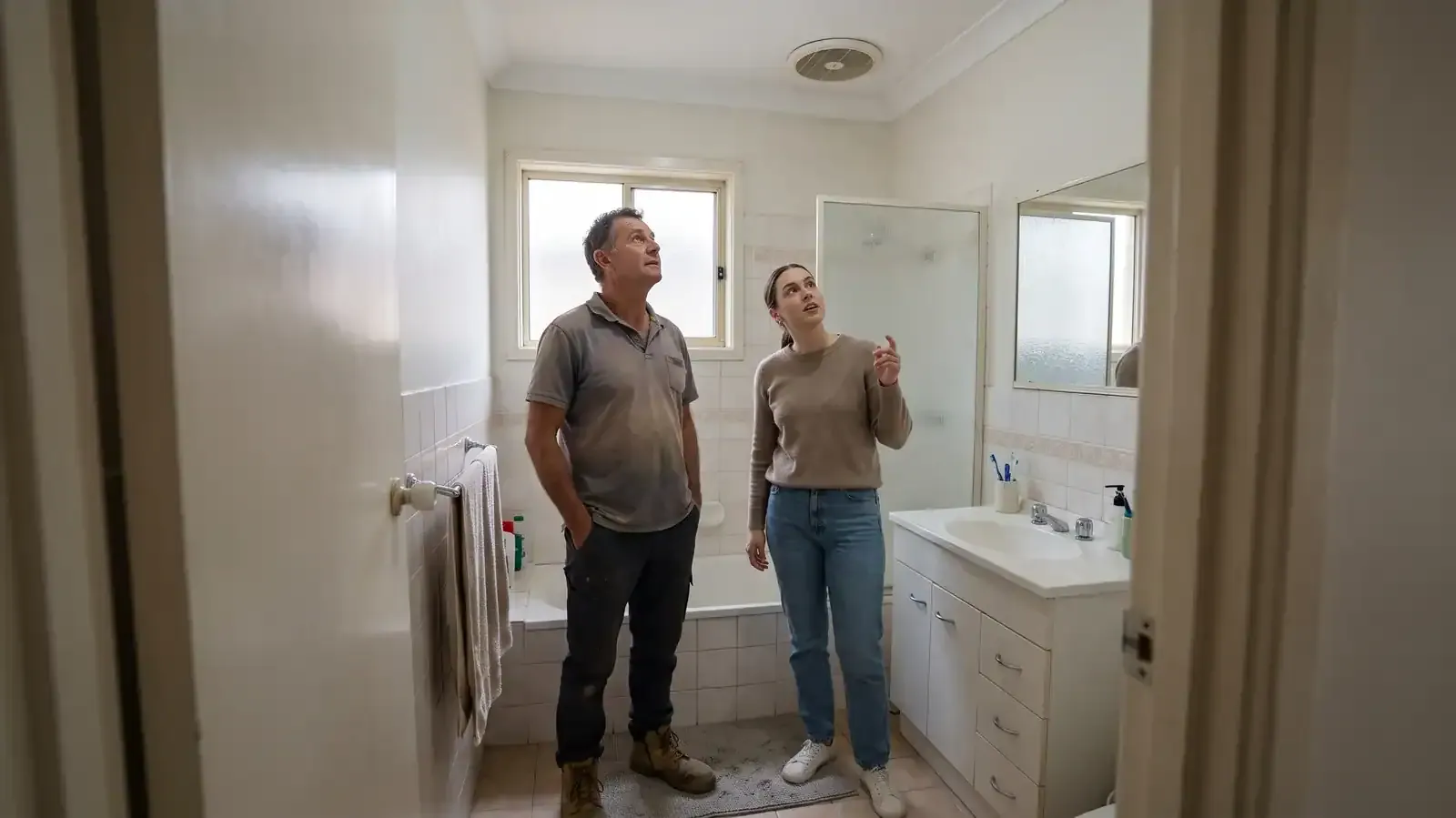
In practice, the line is not always obvious. A bathroom with an exhaust fan that technically works but runs so quietly nobody uses it sits in a grey area. When the cause is genuinely unclear, a professional inspection settles it by identifying the moisture source.
The Financial Risk of Leaving Rental Mould Untreated
Mould that goes untreated spreads. A small patch behind a bathroom vanity can move through an entire wall cavity in weeks if the moisture source stays active.
The financial exposure goes beyond repair costs. In one NSW tribunal case (Bunbury v Fletcher, 2015), a property owner was ordered to pay a 25% rent reduction plus $15,000 in compensation after mould was left unaddressed, as documented by the Tenants’ Union of NSW.
A professional inspection report from Mould and Hygiene Solutions gives property owners a dated, photographic record of the problem and the treatment. That report is the difference between “we handled it” and being able to prove it.
Repeated surface cleaning by a general cleaner adds up. Each round removes what is visible, but the colony underneath regrows and the next callout follows within weeks.
What to Do When a Tenant Reports Mould
A fast response limits the spread and builds a compliance record. Here is the practical workflow for property owners and managers when a mould report comes in.
- Respond within 24 to 48 hours. Acknowledge the report and arrange access to inspect. Mould caused by a water leak is classified as an urgent repair in NSW.
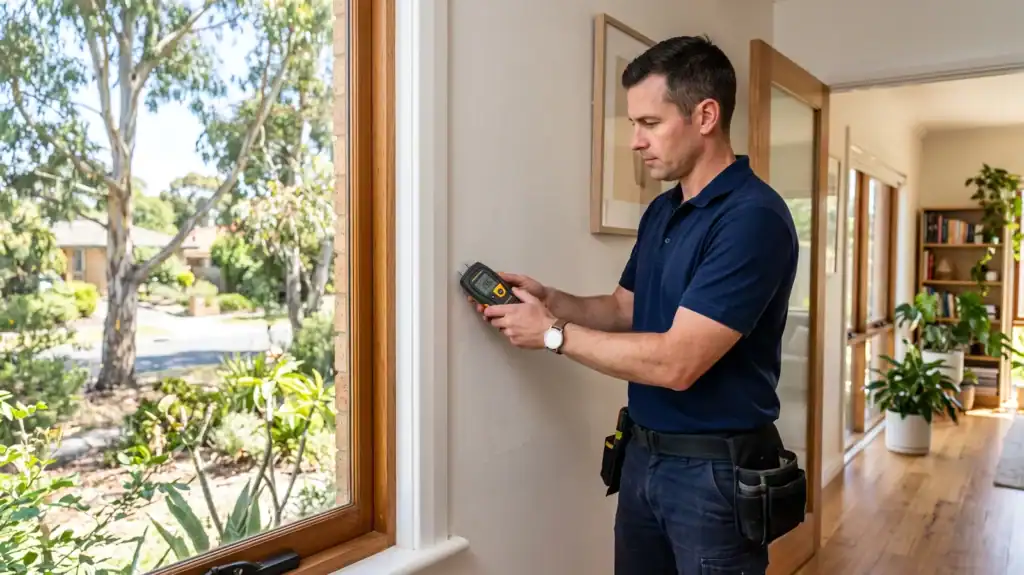
- Book a professional mould inspection. A qualified inspector identifies the moisture source, the mould type, and the extent of the problem. The written report becomes your compliance record.
- Fix the moisture source first. Repair the leak, clear the drainage, or install ventilation. Without this step, any treatment is temporary because the conditions that caused the mould are still active.
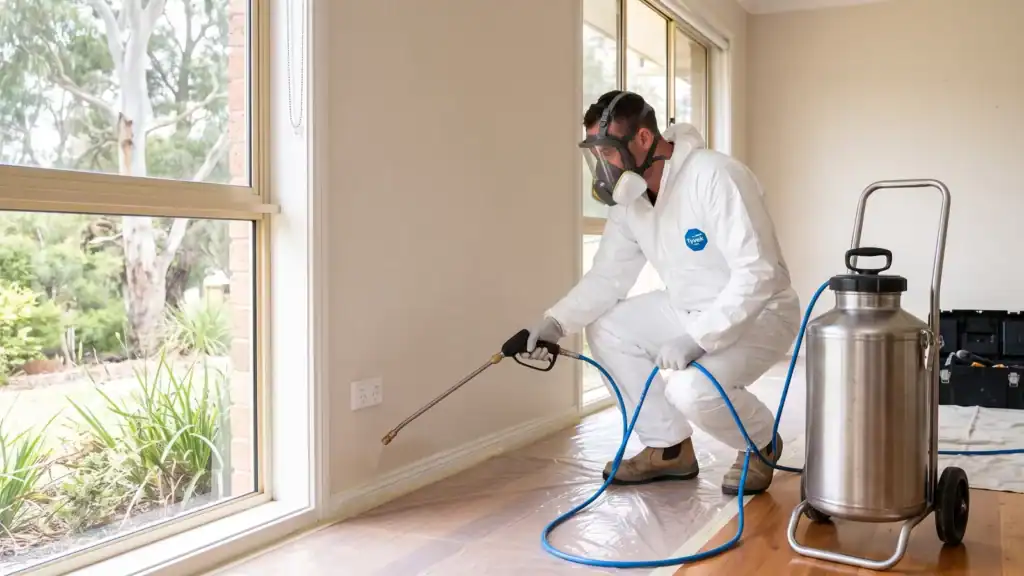
- Arrange professional mould treatment. Surface cleaning with bleach or retail sprays does not reach the mould root structure embedded in the substrate. Professional treatment with an antimicrobial solution penetrates the material and eliminates the colony at its source.
- Keep all documentation. Inspection reports, treatment invoices, and before-and-after records protect your position in any future dispute.
Step three is where most property owners lose time. Treating the mould without fixing the leak means paying for the same job twice.
Why DIY Mould Cleaning Does Not Protect Property Owners
Many property owners or their managers instruct cleaners to scrub visible mould with bleach or off-the-shelf sprays. The surface looks clean for a few weeks, then the mould reappears in the same spot.
Bleach removes surface discolouration but does not kill the mould hyphae embedded in the substrate beneath. The root structure survives and regrows within two to six weeks.
Each round of surface cleaning creates a paper trail of repeated failure rather than evidence of resolution.
- Bleach and retail sprays treat the surface only
- The mould root structure survives in plaster, timber, and grout
- Disturbing mould without containment spreads spores through the property
- Repeated surface cleaning is not evidence of reasonable repair in a tribunal
Professional mould removal uses an Australian-made, non-hazardous, non-corrosive and environmentally friendly antimicrobial solution that penetrates the affected material and eliminates the colony at its root. Mould and Hygiene Solutions backs every treatment with a 12-month mould-free guarantee, giving property owners documented proof that the problem has been resolved.
How a Professional Inspection Report Protects Your Position
For property managers and owners, a written inspection report does more than diagnose the problem. It creates a timestamped record showing the property owner responded appropriately, identified the cause, and acted on professional advice.
- The mould type, extent, and whether it has spread into the substrate
- The moisture source causing growth (leak, condensation, rising damp)
- Photographic documentation of affected areas
- Recommended treatment and prevention steps
- A dated record proving when the property owner took action
A property owner who holds a professional inspection report has documented evidence of due diligence. Without that report, there is no record to present if the matter escalates.
Preventing Mould Before It Becomes a Liability
A blocked gutter or a slow bathroom leak costs little to fix on its own. Left alone, it becomes a mould problem that costs far more in treatment, lost rent, and potential compensation.
- Schedule property inspections that specifically check for moisture and early mould signs
- Maintain exhaust fans in bathrooms, kitchens, and laundries
- Keep gutters, downpipes, and subfloor drainage clear
- Repair roof and plumbing leaks the moment they are reported
- Consider professional mould prevention treatment for properties in high-humidity areas
Property owners across Newcastle, the Central Coast, Lake Macquarie, Hunter Valley, and Port Stephens deal with coastal humidity year-round. In these areas, prevention is a maintenance cost that saves far more than reactive treatment.
Regular inspections also build a documented history of maintenance. If a tenant raises a mould complaint, a property owner with a record of quarterly inspections and proactive upkeep is in a strong position.
Frequently Asked Questions
Is a landlord responsible for mould in NSW?
Property owners in NSW are responsible for mould caused by building defects, leaks, poor drainage, or inadequate ventilation. If the mould results from tenant behaviour, such as not using exhaust fans or blocking vents, the tenant may be responsible. A professional inspection determines the cause.
Can a property owner be held liable for mould they did not know about?
Yes, potentially. Property owners have an ongoing obligation to maintain the property in reasonable repair under NSW law, and not knowing about a defect is not a defence if the defect was something a routine inspection would have caught.
Regular inspections are the practical way to identify mould early and demonstrate compliance.
How quickly does a property owner need to respond to a mould report?
It depends on the cause. Mould caused by a water leak is classified as an urgent repair in NSW, which means same-day response.
For other mould, “reasonable timeframe” is the legal standard. Arranging an inspection within one to two weeks is a practical benchmark that most tribunals would consider reasonable.
Does bleach remove mould permanently?
Bleach removes surface discolouration but does not kill the mould root structure embedded in the material beneath. Regrowth typically occurs within two to six weeks. Professional treatment with an antimicrobial solution is needed to eliminate the colony at its source.
Who pays for mould removal in a rental property?
If the mould was caused by a building defect or maintenance failure, the property owner pays. If the tenant caused the conditions through lifestyle factors such as poor ventilation habits, the tenant may be responsible. A professional mould inspection determines the cause and assigns responsibility clearly.
What documentation should a property owner keep after mould treatment?
Everything. Inspection report, treatment invoices, before-and-after photographs, and any emails or messages about the issue.
If a dispute goes to a tribunal, the property owner with a paper trail wins. The one without it is arguing from memory.
The law is straightforward: if the building caused the mould, the property owner fixes it. The practical question is whether that fix actually works or just buys a few weeks before the next complaint.
Mould and Hygiene Solutions provides professional mould inspections, treatment, and prevention across Newcastle, the Central Coast, Lake Macquarie, Hunter Valley, and Port Stephens. Every treatment is backed by a 12-month mould-free guarantee.
Contact Mould and Hygiene Solutions to book a mould inspection for your property.