Professional mould removal costs in Australia typically range from $300 to $6,000 or more, depending on the size of the affected area, the severity of contamination, and the treatment method required.
If you’ve discovered mould in your home or business, understanding how much mould removal costs helps you budget appropriately and avoid overpaying for services. The price varies significantly based on several factors that determine the scope and complexity of the work required.
This guide explains what influences professional mould removal pricing and what you can expect when you engage qualified specialists across Newcastle, the Central Coast, and the Hunter Valley.
Typical Mould Removal Costs in Australia
Pricing for professional mould removal varies widely based on the scope of work. The following ranges are general industry estimates and will differ depending on your specific situation.
| Area / Severity | Typical Cost Range | What’s Involved |
|---|---|---|
| Small patch (under 1 sqm) | $300 – $500 | Localised treatment, surface cleaning, preventative coating |
| Bathroom mould | $300 – $1,500 | Tile, grout, and ceiling treatment; silicone replacement if needed |
| Single room (ceiling or walls) | $500 – $2,000 | Containment, antimicrobial treatment, moisture assessment |
| Multiple rooms | $2,000 – $4,000 | Staged treatment, HEPA filtration, source elimination |
| Subfloor or roof cavity | $1,500 – $5,000 | Confined-space access, structural treatment, ventilation review |
| Whole-property remediation | $4,000 – $6,000+ | Full assessment, staged treatment, environmental controls, monitoring |
These figures are general industry guides only and can vary depending on access difficulty, mould species, and whether building repairs are needed. Contact Mould and Hygiene Solutions for an inspection and accurate quote based on your specific situation.
What Determines How Much Mould Removal Costs?
Several key factors influence the cost of professional mould removal services. Understanding these variables helps you anticipate the investment required for thorough treatment.
- Size of the affected area: Small patches under 1 square metre cost less than extensive contamination covering multiple rooms or entire walls
- Severity of infestation: Surface mould requires less intervention than deep penetration into porous materials like plasterboard or timber
- Location of the mould: Easily accessible areas cost less to treat than mould in ceiling cavities, under flooring, or inside wall cavities
- Type of surface: Non-porous surfaces like tiles or glass are simpler to treat than porous materials such as concrete, timber, or fabric
- Underlying moisture issues: Properties with active leaks or ventilation problems require additional diagnosis and remediation work
- Testing requirements: Some situations benefit from mould testing to identify species and contamination levels before treatment
- Access and safety factors: Properties requiring scaffolding, confined space entry, or asbestos management increase treatment complexity
How Much Does a Mould Inspection Cost?
Before any removal work begins, a professional inspection determines the full scope of contamination. Inspection pricing sits separately from removal costs, and several factors affect what you pay.
- Property size: A one-bedroom unit needs fewer sample points and less time than a four-bedroom house, so smaller properties cost less to inspect
- Type of assessment: A visual inspection with moisture mapping costs less than a full assessment that includes air quality sampling and laboratory analysis of mould species
- Number of samples: Each air or surface sample sent for laboratory identification adds to the total, and larger or multi-storey properties typically need more for accurate coverage
- Access requirements: Roof cavities, subfloors, and confined spaces take longer to assess and may need specialist equipment
- Reporting detail: A verbal summary of findings costs less than a written report with laboratory results, risk ratings, and remediation recommendations suitable for insurance claims or property transactions
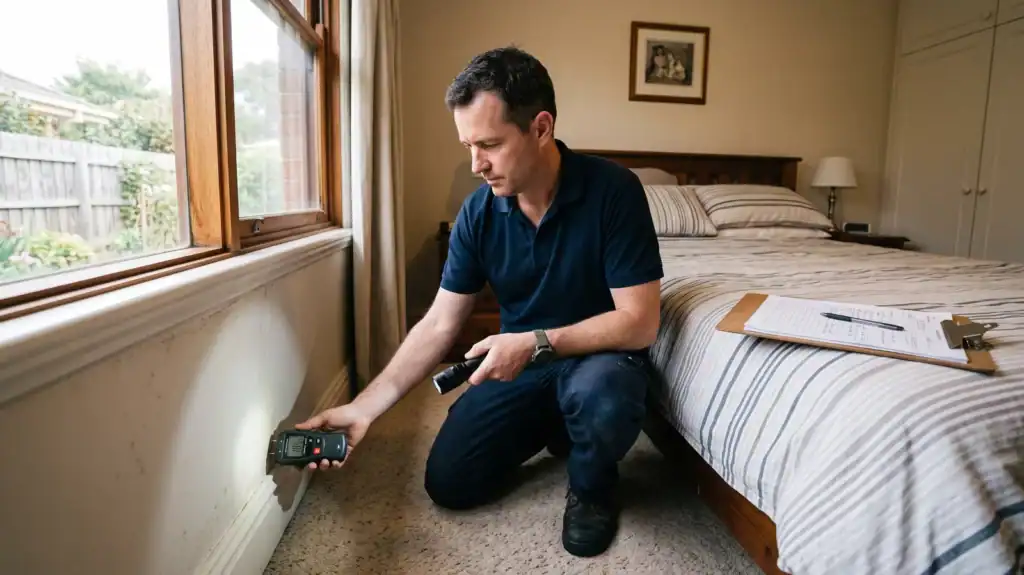
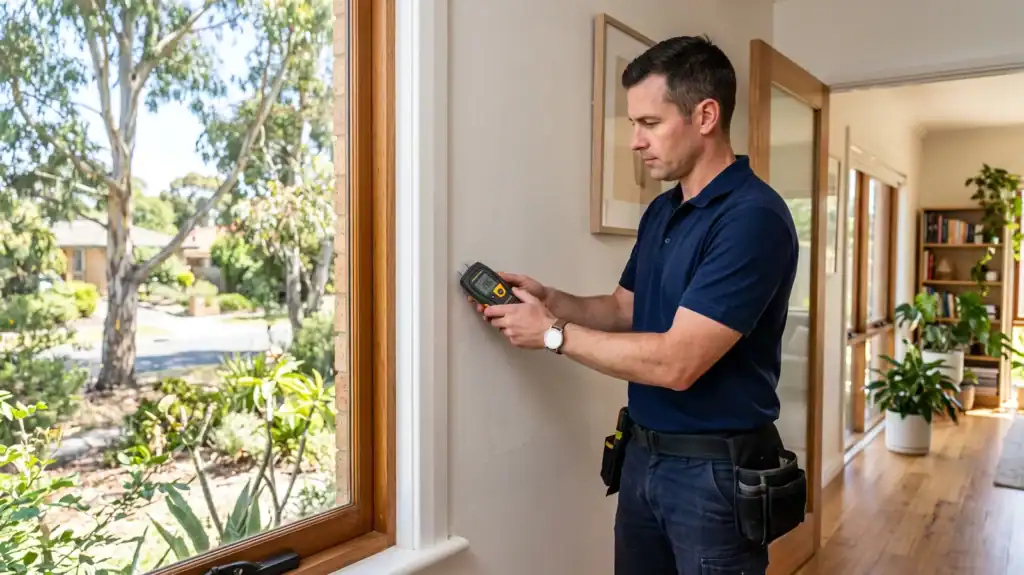
The inspection is the step most homeowners skip, and it is the one that matters most. Without a professional assessment using thermal imaging and calibrated moisture metres, you are guessing the scope of contamination based on what is visible. Hidden growth behind walls, under floors, and inside ceiling cavities often accounts for the worst of the problem. No retail test kit or DIY walk-through will find it.
To understand what a professional mould inspection covers in detail, or to book one across Newcastle, the Central Coast, Lake Macquarie, Hunter Valley or Port Stephens, contact Mould and Hygiene Solutions for pricing based on your property.
Why DIY Mould Removal Costs More in the Long Run
DIY mould removal only addresses surface-level growth without eliminating the underlying contamination or moisture source. This superficial approach means you’re treating symptoms rather than solving the actual problem.
Three fundamental reasons DIY approaches fail to deliver lasting results:
- No source elimination: DIY methods don’t identify or fix the moisture problem causing mould growth, guaranteeing it returns
- Spore spread: Improper removal techniques release spores throughout your property, contaminating previously unaffected areas
- Hidden growth remains: Surface treatments can’t reach mould inside walls, under floors, or in cavities where the majority of contamination often exists
Household products like bleach and vinegar only provide temporary cosmetic improvement by lightening surface stains. These solutions fail to penetrate porous materials where mould roots establish, meaning regrowth typically appears within weeks.
| Factor | DIY Approach | Professional Service |
|---|---|---|
| Upfront cost | Lower initial expense | Higher initial investment |
| Effectiveness | Surface cleaning only, fails within weeks | Complete removal and prevention |
| Recurrence rate | High without source elimination | Low with proper treatment and guarantee |
| Health protection | Limited containment and safety | Full PPE, containment, and safe disposal |
| Time required | Multiple failed attempts | Single comprehensive treatment |
| Products used | Bleach, vinegar (temporary cosmetic measures) | Australian-made non-hazardous antimicrobial solutions |
| Guarantee | None | 12-month mould-free guarantee |
Professional treatment eliminates mould at the source using Australian-made non-hazardous antimicrobial solutions. Mould and Hygiene Solutions backs every treatment with a 12-month mould-free guarantee, giving you certainty that the problem is truly solved.
According to NSW Health, improper mould removal can spread spores throughout a property and worsen contamination. Professional treatment ensures proper containment and thorough removal.
What Professional Mould Removal Services Include
Understanding what you receive with professional mould remediation helps explain the investment. Comprehensive treatment goes well beyond simply wiping visible growth.
- Detailed inspection and assessment: Identification of all affected areas including hidden contamination behind walls, under floors, or in cavities
- Moisture source identification: Thermal imaging and moisture metres to locate the underlying cause of mould growth
- Containment and protection: Physical barriers and negative air pressure to prevent spore spread during removal
- Safe removal procedures: HEPA filtration, proper PPE, and disposal in line with SafeWork Australia workplace health and safety guidelines
- Antimicrobial treatment: Application of professional-grade solutions that eliminate mould at the root and prevent regrowth
- Surface restoration: Cleaning, sanitising, and treating affected materials to return them to pre-contamination condition where possible
- Prevention recommendations: Guidance on mould prevention including ventilation improvements and moisture control
- Documentation and reporting: Detailed records of work completed, products used, and before-and-after condition
DIY approaches cannot replicate this comprehensive process, which explains why surface treatments with household cleaners consistently fail. Professional remediation addresses every aspect of contamination to deliver permanent results.
Regional Variations in How Much Mould Removal Costs
Geographic location influences pricing due to travel distances, local competition, and regional moisture conditions. Properties in coastal areas like the Central Coast often experience higher humidity levels that contribute to more extensive mould issues.
Urban centres typically have more service providers and competitive pricing, while regional properties may incur additional travel charges. Areas prone to flooding or high rainfall, common throughout Newcastle and the Hunter Valley, may require more comprehensive treatment approaches.
- Metropolitan areas generally offer more competitive rates due to higher service provider density
- Coastal regions face persistent humidity challenges that may increase treatment complexity
- Remote properties may include additional charges for specialist travel and accommodation
- Flood-prone areas often require more extensive moisture remediation alongside mould treatment
Does Insurance Cover Mould Removal Costs?
Whether home insurance covers mould removal depends on the cause of the mould and the terms of your policy. Most standard home insurance policies in Australia distinguish between sudden events and gradual damage.
- Covered (often): Mould resulting from a sudden insured event, such as a burst pipe or storm damage, may be covered under your building or contents policy
- Not covered (usually): Mould caused by gradual issues like poor ventilation, condensation, or deferred maintenance is typically excluded as a maintenance responsibility
- Check your PDS: Review the Product Disclosure Statement for your specific policy, or contact your insurer directly to confirm what’s included
Regardless of insurance coverage, addressing mould promptly reduces the total cost of remediation. Small problems caught early are far less expensive to treat than extensive contamination that has spread through walls or structural materials.
Additional Costs Beyond Basic Mould Removal
Some mould situations require services beyond standard removal procedures. Understanding these potential additional costs helps you budget appropriately for complete remediation.
Building Repairs and Reconstruction
Severely contaminated porous materials like plasterboard, insulation, or timber often require removal and replacement. The cost of rebuilding walls, replacing flooring, or installing new cabinetry adds to the overall investment but ensures complete contamination removal.
DIY surface cleaning cannot address this level of contamination and often conceals the problem until damage becomes more extensive and expensive. Professional assessment identifies the true extent of structural impact before costs escalate further.
Moisture Source Elimination
Plumbing repairs, waterproofing, roof restoration, or drainage improvements may be necessary to address the underlying moisture problem. Without eliminating the moisture source, mould will return regardless of how thoroughly it’s removed.
This critical step explains why bleach and vinegar treatments always fail. Wiping surface growth does nothing to fix leaking pipes, inadequate ventilation, or rising damp that feeds continuous regrowth.
Ventilation and Dehumidification
Installing exhaust fans, upgrading air conditioning systems, or adding dehumidifiers helps maintain appropriate humidity levels. These investments provide long-term protection against future mould growth.
Laboratory Testing and Analysis
Some situations benefit from professional laboratory testing to identify specific mould species or assess air quality. This information guides treatment approaches and confirms successful remediation.
Getting Accurate Quotes for Your Mould Problem
Reliable quotes require professional inspection to assess the full scope of contamination. Mould and Hygiene Solutions offers property assessments to identify all affected areas, determine treatment requirements, and provide transparent pricing.
During an inspection, qualified technicians examine visible mould growth, use moisture detection equipment to identify hidden problems, and assess the underlying causes. This comprehensive evaluation ensures you receive an accurate quote based on your specific situation rather than general estimates.
- Request detailed written quotes that itemise services, materials, and labour
- Ask about guarantees and what happens if mould returns after treatment
- Confirm what products will be used and their safety profile for occupants and pets
- Understand the timeline from initial assessment through final clearance
- Clarify what preparation you need to complete before treatment begins
- Verify insurance coverage, licensing, and workplace health and safety compliance
Professional quotes account for hidden contamination that DIY approaches cannot detect or address. The investment in proper assessment prevents the false economy of repeated failed treatments with ineffective household products.
Frequently Asked Questions
How much does mould removal cost for a single room?
A single room typically costs between $500 and $2,000 for professional mould removal, depending on the severity of contamination and the type of surfaces affected. Bathroom mould on tiles and grout sits at the lower end, while extensive wall or ceiling contamination involving porous materials like plasterboard costs more. A professional inspection gives you an accurate figure based on your specific situation.
Is professional mould removal worth the cost?
Professional removal is almost always the better investment compared to repeated DIY attempts. Household products like bleach and vinegar only lighten surface stains without killing mould roots in porous materials.
Most people who try DIY end up spending more over time on products that don’t work, while the mould continues spreading behind walls and into structural materials. Professional treatment with a 12-month mould-free guarantee provides certainty the problem is solved.
Why do mould removal quotes vary so much?
Quotes vary because every mould situation is different. The main variables are the total area affected, whether the mould has penetrated porous materials, how accessible the contaminated areas are, and whether the moisture source needs separate repair work.
A $500 bathroom treatment and a $6,000 whole-house remediation are very different jobs. Reputable providers inspect before quoting so the price reflects your actual situation.
Can I remove mould myself to save money?
Minor surface mould on non-porous surfaces like tiles or glass can be cleaned with household products as a temporary measure. However, any mould on porous materials (plasterboard, timber, carpet, fabric) or mould covering more than about 1 square metre should be treated professionally. DIY removal risks spreading spores to unaffected areas and missing hidden contamination behind walls or under floors.
Does mould removal include fixing the moisture source?
Standard mould removal typically includes identifying the moisture source and recommending repairs, but the actual plumbing, waterproofing, or ventilation work is usually quoted separately. Some providers bundle these services, so ask what’s included when comparing quotes. Fixing the moisture source is essential, otherwise the mould will return regardless of how thoroughly it’s removed.
How long does professional mould removal take?
Most residential mould removal jobs are completed within one to two days. Small areas may take just a few hours, while whole-property remediation with containment, staged treatment, and clearance testing can take three to five days. Your provider should give you a clear timeline during the quoting process.
What happens if mould comes back after professional treatment?
Reputable mould removal companies offer guarantees against recurrence. Mould and Hygiene Solutions provides a 12-month mould-free guarantee on all treatments. If mould returns within that period, the affected areas are retreated at no additional cost.
Recurrence after professional treatment usually indicates an unresolved moisture source that needs separate attention.
Is black mould more expensive to remove?
Black mould (Stachybotrys) can cost more to remediate because it typically indicates prolonged moisture exposure and deeper contamination of building materials. Treatment often involves removing and replacing affected plasterboard or timber rather than surface cleaning alone.
However, the colour of mould alone doesn’t determine cost. A professional inspection assesses the actual severity and provides pricing based on what’s required.
Should I get a mould inspection before getting removal quotes?
A professional mould inspection is the best starting point. Many removal companies, including Mould and Hygiene Solutions, offer inspections that include moisture detection and a scope assessment.
This ensures your quote reflects the full extent of contamination, not just what’s visible on the surface. Without an inspection, you risk paying for incomplete treatment that misses hidden growth.
How much does a professional mould inspection cost?
Mould inspection costs depend on property size, the type of testing involved, and how many air or surface samples need laboratory analysis. A visual assessment with moisture mapping sits at the lower end, while a comprehensive assessment with air sampling and a detailed written report costs more. Contact Mould and Hygiene Solutions for inspection pricing based on your property across Newcastle, the Central Coast, Lake Macquarie, Hunter Valley and Port Stephens.
Is a mould inspection worth the cost before removal?
A professional inspection is the only reliable way to understand the full scope of a mould problem before committing to treatment. Surface mould is often just a fraction of the actual contamination. Growth behind walls, under floors, and inside cavities can only be found with thermal imaging and calibrated moisture metres. Without an inspection, you risk paying for incomplete removal that misses hidden growth, or attempting DIY treatment on a problem far larger than what is visible. The inspection report also gives your removal provider the baseline for an accurate quote.
Book Your Mould Inspection Today
Don’t let uncertainty about costs delay essential mould treatment. Mould and Hygiene Solutions provides professional inspections throughout Newcastle, the Central Coast, Lake Macquarie, and the Hunter Valley.
During your inspection, experienced technicians will assess your property, identify all affected areas, explain treatment options using Australian-made non-hazardous antimicrobial solutions, and provide transparent pricing with a 12-month mould-free guarantee. Book your inspection and receive expert guidance on protecting your property and health.