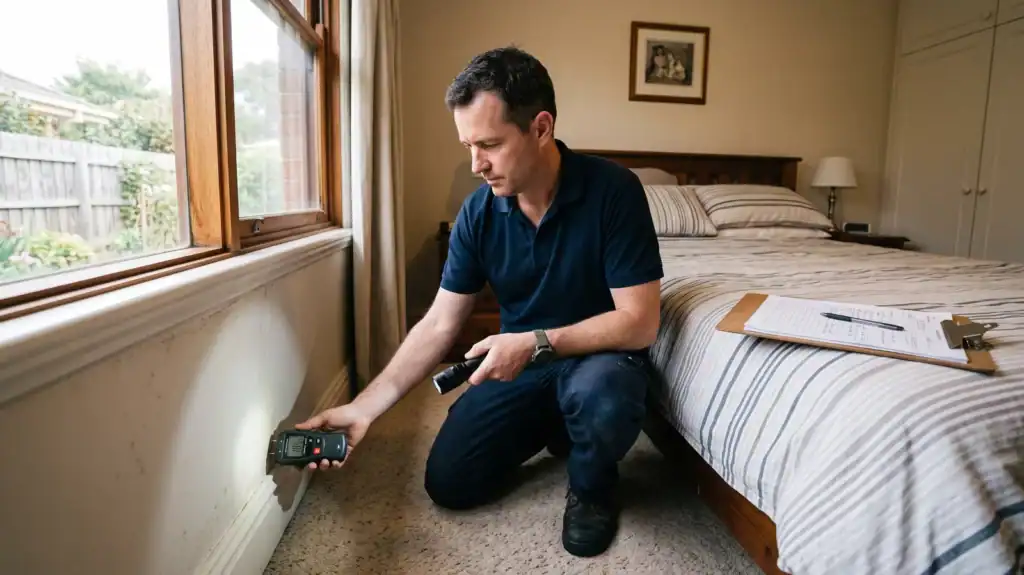
Ongoing mould exposure can cause respiratory, neurological and immune symptoms that worsen the longer you wait.
Mould releases spores and mycotoxins into the air you breathe every day. Most people walk past mould growing behind a bathroom tile or under a windowsill without thinking twice. The problems start when exposure is constant.
This article covers ten warning signs of mould toxicity, who is most at risk, and what to do if you suspect mould is affecting your health. Recognising these signs early makes the difference between a quick fix and a serious health issue.
If you suspect mould in your home, book a professional mould inspection to find out what you are dealing with before symptoms get worse.
What Is Mould Toxicity?
Mould toxicity happens when your body reacts to prolonged exposure to mould spores and the mycotoxins they produce. Not every type of mould produces mycotoxins, but the ones that do, like Stachybotrys chartarum (black mould) and Aspergillus, can cause symptoms that range from annoying to debilitating.
The tricky part is that mould toxicity symptoms overlap with dozens of other conditions. Fatigue, headaches and brain fog could be stress, poor sleep or a virus. That is why so many people live with mould-related symptoms for months before connecting the dots.
- Mycotoxins are chemicals produced by certain moulds as they grow
- You absorb them through breathing, skin contact and occasionally contaminated food
- Symptoms often develop gradually over weeks or months of exposure
- Children, the elderly and people with asthma or weakened immune systems are most vulnerable
The key difference between a mild allergic reaction and mould toxicity is duration. Allergies come and go. Mould toxicity gets worse the longer the source stays in your home.
Warning Signs of Mould Toxicity in Your Breathing
Respiratory symptoms are usually the first to appear because your lungs have the most direct contact with airborne spores. A persistent cough that does not respond to cold and flu medication is one of the strongest early indicators.
Wheezing, tightness in your chest and shortness of breath during normal activities like walking up stairs can all point to mould poisoning, especially if they improve when you leave the house.
According to NSW Health, people with asthma are particularly sensitive. Mould spores spread through your air conditioning can trigger asthma attacks and make existing conditions harder to manage with standard medication.
- Persistent dry cough that will not clear up
- Wheezing or whistling when breathing
- Shortness of breath during mild physical activity
- Frequent sinus congestion or a blocked nose that feels permanent
- Recurring sore throat, especially in the morning
If these symptoms ease when you spend time away from home and return when you come back, mould is a strong suspect. That pattern is one of the clearest signals.
Brain Fog, Memory Issues and Headaches
Mycotoxins do not just affect your lungs. They can cross the blood-brain barrier and interfere with normal brain function.
People exposed to mould over weeks or months often report difficulty concentrating, forgetting appointments and struggling to find the right word in conversation. Some describe it as feeling like their brain is running at half speed.
Persistent headaches that do not respond to paracetamol or ibuprofen are another red flag. These tend to be dull, constant headaches rather than sharp migraines. They worsen in rooms with poor ventilation.
- Brain fog and difficulty concentrating
- Short-term memory problems
- Persistent headaches that resist normal pain relief
- Dizziness or lightheadedness, especially indoors
These neurological symptoms are often the reason people finally investigate their home for mould. The respiratory symptoms get dismissed as hayfever. The brain fog is what makes people realise something is wrong.
Constant Fatigue and a Weakened Immune System
Your immune system treats mould spores as invaders and mounts a constant inflammatory response. That uses energy.
People with ongoing mould exposure describe fatigue that sleep does not fix. Eight hours in bed and you still wake up exhausted.
Your body also becomes less effective at fighting off other infections when it is busy battling mould. Catching every cold that goes around the office, recurring sinus infections that need antibiotics, or wounds that take longer to heal can all be signs that your immune system is under strain from mould exposure.
Fatigue combined with respiratory symptoms that improve away from home is one of the strongest indicators of ongoing mould exposure. Do not ignore it.
Skin Rashes and Eye Irritation from Mould
Mould spores landing on your skin can cause contact dermatitis, an itchy red rash that appears on exposed skin. Your eyes can also react, becoming red, watery and irritated without an obvious cause like dust or pollen.
These symptoms tend to flare in specific rooms, particularly bathrooms, laundries and bedrooms with poor airflow.
| Symptom | Where it shows up | Pattern to watch for |
|---|---|---|
| Itchy red rash | Arms, neck, face | Appears in specific rooms, clears elsewhere |
| Watery or bloodshot eyes | Both eyes usually | Worse in mornings, improves outdoors |
| Skin tingling or burning | Exposed areas | Linked to damp or musty rooms |
| Hives | Chest, back, arms | Flares after time in affected areas |
If antihistamines help briefly but the symptoms keep returning, the allergen source is still present. Surface cleaning will not remove mould from your ceiling or spores embedded in walls and grout.
Persistent skin reactions that keep returning often indicate a mould-related rash that will not clear until the source is professionally treated.
Digestive Symptoms You Might Not Connect to Mould
Mycotoxins do not stay in your lungs. Once absorbed into your bloodstream, they can trigger inflammation throughout your body, including your gut.
Nausea, bloating, abdominal cramps and diarrhoea that come and go without an obvious dietary cause are warning signs that most people never associate with mould. These symptoms are easy to blame on food intolerance or stress.
- Recurring nausea without a clear cause
- Bloating and abdominal discomfort that persists across different diets
- Loose stools or diarrhoea, especially in the morning
- Loss of appetite that worsens over time
The pattern to watch for is the same as respiratory symptoms. If digestive issues improve when you spend time away from home, mould exposure is worth investigating.
DIY surface cleaning does nothing to reduce airborne mycotoxin levels. The spores responsible are microscopic and continue circulating through your home even after visible mould is wiped away.
Mood Changes, Anxiety and Irritability
Ongoing mould exposure has been linked to changes in mood, including increased anxiety, irritability and low mood. These are neurological effects, not psychological ones.
Mycotoxins that cross the blood-brain barrier interfere with neurotransmitter function. The result can feel like a personality shift that creeps in over weeks or months.
If anxiety, irritability or low mood appeared gradually alongside any of the physical symptoms listed above, and you have not been able to pinpoint a cause, your home environment is worth investigating.
- New or worsening anxiety without a clear trigger
- Irritability or mood swings out of character
- Persistent low mood that does not respond to usual coping strategies
- Difficulty sleeping, including trouble falling asleep and waking frequently
Homeowners across Newcastle and the Hunter Valley often attribute these changes to work stress or seasonal factors. If these mood changes appeared alongside any of the physical symptoms listed above, a professional mould inspection is the logical next step.
Unexplained Joint and Muscle Pain
Mould toxicity triggers a systemic inflammatory response. When that inflammation reaches your joints and muscles, the result is a deep, aching pain that does not respond to rest or stretching.
People describe it as feeling like they have the flu without the fever. The pain tends to shift between different areas of the body and worsens with continued exposure.
- Aching joints, particularly in the morning
- Muscle stiffness that persists throughout the day
- Pain that moves between different body areas over days or weeks
- General body soreness not explained by physical activity
These symptoms are frequently misdiagnosed as early arthritis or fibromyalgia. If joint and muscle pain appeared around the same time as any of the other warning signs on this list, mould should be considered as a contributing factor.
Retail mould sprays and surface cleaners do not address the mycotoxins responsible for systemic inflammation. Until the mould colony is treated at its source, these symptoms are likely to persist.
Who Is Most at Risk of Mould Toxicity?
Everyone breathes in mould spores daily. Most people handle it without noticing. But certain groups are far more likely to develop symptoms from ongoing exposure, and for them, a mouldy home is a genuine health hazard rather than a cosmetic problem.
- People with asthma or chronic respiratory conditions
- Children under five, whose lungs are still developing
- Adults over 65 with declining immune function
- Anyone with a compromised immune system (chemotherapy, autoimmune conditions)
- People with existing allergies, especially to dust mites or pollen
Homes across Newcastle, the Central Coast and Lake Macquarie are particularly prone to mould because of the coastal humidity. Older homes with poor ventilation and subfloor moisture are the worst offenders. The climate does half the work for the mould.
A mould allergy responds to antihistamines and eases once you leave the area. Mould toxicity involves multiple body systems and does not resolve until the source is professionally eliminated.
Why Bleach and Scrubbing Will Not Fix It
Bleach kills surface mould on contact. That part is true.
What it does not do is reach the root structure (called hyphae) that grows inside porous materials like plasterboard, grout and timber. You scrub, the visible mould disappears, and two to four weeks later it is back.
The cycle repeats until you treat the source.
Professional mould removal from Mould and Hygiene Solutions uses an Australian-made, non-hazardous, non-corrosive and environmentally friendly antimicrobial solution that penetrates into the material and kills the root structure. It is not a surface spray. It treats the problem at the source.
| DIY bleach cleaning | Professional antimicrobial treatment | |
|---|---|---|
| Kills surface mould | Yes | Yes |
| Kills mould roots (hyphae) | No | Yes |
| Prevents regrowth | 2-4 weeks at best | 12-month guarantee |
| Safe on porous surfaces | Can damage grout and timber | Non-corrosive formula |
| Treats hidden mould | No | Yes, includes inspection |
The 12-month mould-free guarantee exists because the treatment actually works. If the mould comes back within 12 months, the team returns and re-treats at no charge. Try getting that promise from a bottle of bleach.
What to Do If You Spot These Warning Signs
If two or more of these symptoms match your situation, and they ease when you leave home, your next step is straightforward. See your GP about the symptoms, then get your home inspected for mould.
- See your doctor and mention that you suspect mould exposure
- Book a professional mould inspection to find the source
- Do not attempt to clean large areas of mould yourself, especially if you are already symptomatic
- Improve ventilation in the short term by opening windows and running exhaust fans
- Ask about professional mould prevention to stop regrowth after treatment
Mould and Hygiene Solutions offers inspections for homeowners across Newcastle, the Central Coast, Hunter Valley, Lake Macquarie and Port Stephens. James inspects every property personally and gives you a clear picture of what is going on before any work starts.
Frequently Asked Questions
How long do mould toxicity symptoms take to appear?
Symptoms usually develop gradually over weeks or months of ongoing exposure. People with asthma or existing allergies may react within days, while others may not notice anything for several weeks.
Can you smell mould before you see it?
Yes. Mould colonies produce volatile organic compounds that create a distinctive musty or earthy smell. If a room smells damp even after cleaning, hidden mould behind walls or under flooring is a common cause.
Is mould toxicity the same as a mould allergy?
They overlap but they are not the same. A mould allergy is an immune response (sneezing, itchy eyes) that eases with antihistamines and passes once you leave the area.
Mould toxicity involves prolonged mycotoxin exposure affecting multiple body systems, and symptoms persist until the mould source is removed.
Will mould toxicity symptoms go away on their own?
Not while the mould is still present. Symptoms typically improve once the source is professionally removed and the affected area is treated.
Most people report improvement within weeks of professional remediation, though recovery time depends on how long exposure lasted.
Can mould affect your pets?
Yes. Dogs and cats can develop respiratory symptoms, lethargy and skin irritation from the same mould exposure affecting you. Pets spend more time on the floor where spore counts tend to be highest.
How do I know if the mould in my home is dangerous?
You cannot determine mould type or toxicity by colour alone. A professional mould test identifies the species present and the spore levels in your air, which determines how serious the problem is and what treatment is needed.
Do not wait for mould to become visible before acting. By the time you can see it on a wall or ceiling, the colony has been growing behind the surface for weeks. A professional inspection catches what your eyes cannot.