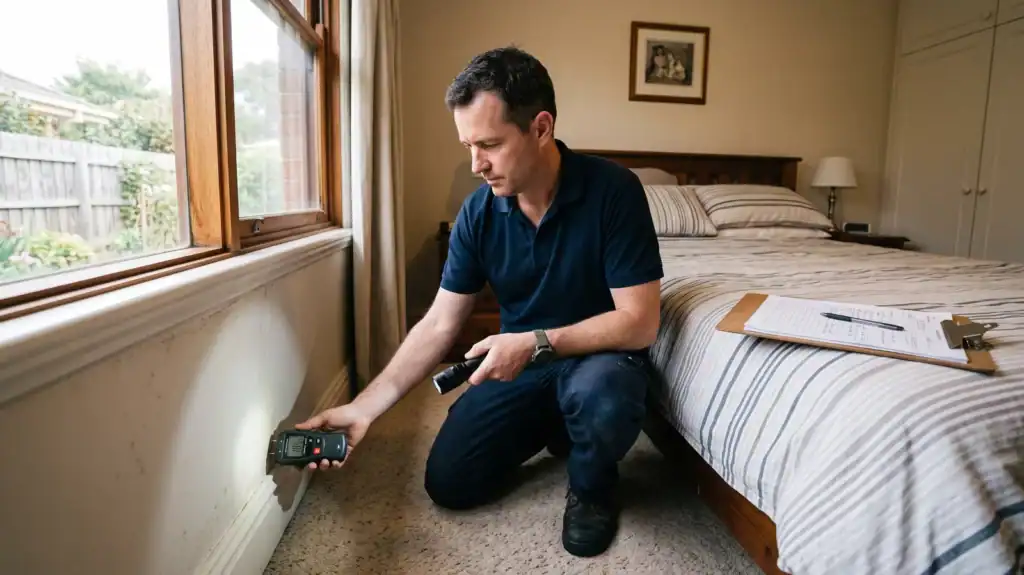
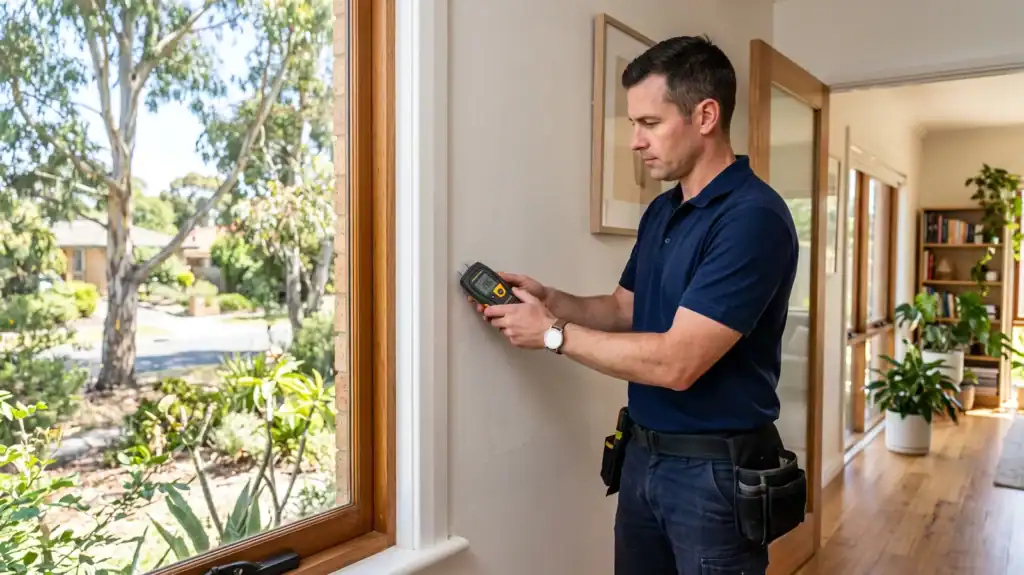
NSW tenancy law is clear on mould responsibilities. Landlords must maintain premises that are fit for habitation, and mould caused by building faults is a repair issue. When mould is reported and handled professionally, it rarely becomes a dispute.
This article covers what the law requires from both parties, how to escalate when a landlord delays, what orders NCAT can make, and why professional treatment with a written report resolves the issue fastest for everyone.
What NSW Law Requires
The Residential Tenancies Act 2010 (NSW) sets out clear obligations for both landlords and tenants when it comes to maintaining a rental property free from mould.
- Section 52: Property must be fit for habitation at the start of and throughout the tenancy
- Section 63: Landlord must carry out repairs within a reasonable time after being notified
- Minimum standards (March 2025): Bathrooms must have exhaust fans ducted to outside air or an openable window. Kitchens must also have ventilation
- Tenant obligations: Report issues promptly, ventilate the property reasonably, allow access for repairs
Mould caused by leaking pipes, roof defects, rising damp, poor drainage, or inadequate ventilation design is a landlord repair obligation. Mould caused by tenant behaviour (blocking vents, excessive indoor moisture, unreported leaks) may be the tenant’s responsibility.
How to Report Mould to Your Landlord
Proper documentation from day one protects your position if the issue escalates. The Tenants’ Union of NSW recommends a written approach with clear evidence.
- Photograph the mould, including close-ups and wide shots showing the affected area
- Submit a written repair request (email or letter) to your landlord or property manager
- Include a clear, reasonable deadline for response
- Keep copies of all correspondence and a record of phone conversations
- Note the mould on your condition report if it appeared at the start of your tenancy
Condition report tip: If mould is visible when you move in, photograph it and note it on the condition report. This establishes the problem as pre-existing and makes it harder for the landlord to claim it was caused by your living habits.
What Happens When a Landlord Ignores Your Report
When mould complaints are left unresolved, tenants have a clear escalation path under NSW law. You do not need a lawyer for any of these steps.
Issue a breach notice
If the landlord does not respond within a reasonable time (14 days is a common benchmark), you can issue a formal breach notice. This puts the landlord on notice that they are failing their obligations under Section 63 and starts the clock on formal escalation.
Contact NSW Fair Trading
NSW Fair Trading (phone 13 32 20) offers free dispute resolution. They can contact the landlord on your behalf and may issue a rectification order with a completion deadline. This step is worth trying before tribunal proceedings.
Apply to NCAT
If mediation fails, apply to the NSW Civil and Administrative Tribunal (NCAT). The application fee is $62. NCAT has the power to issue binding orders including:
- Repair orders: Legally compels the landlord to arrange professional mould remediation
- Rent reduction: Typically 20% to 50% depending on how much of the property is affected, lasting up to 12 months
- Compensation: Covers damaged belongings (economic loss) and lost enjoyment of the property (non-economic loss)
- Rent paid to tribunal: Rent held in trust until repairs are completed
Important deadline: Compensation applications must be lodged within three months of the landlord failing to meet their repair obligations. Do not delay.
In severe cases where mould makes the property uninhabitable, tenants may also have grounds to break a lease because of mould in NSW without penalty.
Urgent Repairs and the $1,000 Self-Repair Right
If mould is extensive enough to pose a health risk, it may qualify as an urgent repair. In urgent situations where the landlord fails to act promptly:
- You can arrange repairs yourself up to $1,000
- You must provide written notice and receipts to the landlord
- The landlord is legally required to reimburse you within 14 days
- If they refuse, you can recover the cost through NCAT
A professional mould inspection falls well within this threshold and provides the documented evidence needed for any further action.
Protection Against Retaliatory Eviction
Some tenants hesitate to report mould because they fear eviction. Section 115 of the Residential Tenancies Act 2010 directly addresses this.
- A landlord cannot terminate a tenancy because a tenant exercised their legal rights (including requesting repairs or applying to NCAT)
- If an eviction notice is issued shortly after you lodge a repair request, NCAT can declare the notice void
- The onus shifts to the landlord to prove the termination was not retaliatory
Exercising your rights under the Act is protected. Reporting mould is not grounds for eviction.
Why Surface Cleaning Creates Bigger Problems
Sending a cleaner with bleach is the most common response to a mould report, and it creates more problems than it solves. The visible stain disappears, but the mould root (hyphae) embedded in plaster, timber, or grout survives. Regrowth within two to six weeks triggers another complaint and another cost.
- Bleach removes surface colour but does not kill the root structure in porous materials
- Regrowth within weeks means another maintenance ticket and another expense
- Repeated failed cleans weaken the landlord’s position if the matter reaches NCAT
- Professional treatment done once is faster and more cost-effective than three rounds of surface cleaning
For tenants, this matters because each failed clean extends the period you are living with mould. For landlords, the ongoing cycle of failed surface cleaning accumulates costs that exceed the price of doing it properly once.
How Professional Treatment Resolves Disputes
The fastest path from mould complaint to resolution is a professional inspection that identifies the cause, followed by treatment that addresses both the root structure and the moisture source. This works for the tenant because the mould is gone. It works for the landlord because the repair obligation is documented and met.
- Tenant reports mould in writing with photos
- Property manager arranges a professional mould inspection
- Inspection identifies the moisture source and documents the extent
- Written report provides clear recommendations and assigns responsibility
- Landlord approves professional treatment
- Treatment addresses root structure and moisture source
- Report and records filed for compliance
Mould and Hygiene Solutions uses Australian-made, non-hazardous antimicrobial solutions that treat the root structure in the substrate. Every job includes a detailed inspection report, containment during treatment, and a 12-month unconditional mould-free guarantee.
For property managers: A professional inspection report resolves the question of who is responsible for mould in the rental immediately. It documents the cause, recommends the fix, and provides a clear record for both the owner and your files.
Gathering Evidence That Supports Your Case
Strong evidence is the difference between a quick resolution and a drawn-out dispute. Whether you are negotiating directly or preparing for NCAT, these records strengthen your position.
| Evidence type | Why it matters |
| Dated photographs | Shows extent of mould and progression over time |
| Written repair requests | Proves you notified the landlord and when |
| Condition report | Establishes whether mould was pre-existing |
| Professional inspection report | Identifies cause (structural vs lifestyle) with technical authority |
| Cleaning receipts | Demonstrates your mitigation efforts and financial loss |
| Medical records | Supports compensation claims for health impacts |
The cost of a professional mould inspection report is modest relative to the weight it carries in a dispute. It provides an independent, technical assessment that separates structural causes from lifestyle causes.
Frequently Asked Questions
Can my landlord blame me for mould caused by a building defect?
No. Under Section 52 of the Residential Tenancies Act 2010, the landlord is responsible for maintaining the property in a habitable condition. If mould is caused by leaking pipes, roof defects, rising damp, or inadequate ventilation design, it is the landlord’s obligation to fix regardless of tenant behaviour.
How long does a landlord have to fix a mould problem in NSW?
The Act requires repairs within a “reasonable time.” For mould that poses a health risk, this is generally interpreted as urgent. If the landlord does not respond within 14 days of a written request, you can issue a breach notice. If mould qualifies as an urgent repair, the timeframe is shorter.
Can I withhold rent because of mould?
No. Withholding rent is not permitted under NSW tenancy law, even if the property has serious mould. Instead, apply to NCAT for a rent reduction order. NCAT can order the landlord to reduce rent by 20% to 50% depending on how much of the property is affected.
What if mould was already present when I moved in?
Document it on your condition report immediately. Pre-existing mould is strong evidence that the issue is structural rather than caused by your living habits. If the landlord later tries to claim the bond for mould damage, a condition report showing it was already there protects you.
Can I be evicted for reporting mould?
No. Section 115 of the Residential Tenancies Act 2010 protects tenants from retaliatory eviction. A landlord cannot terminate your tenancy because you requested repairs or applied to NCAT. If they try, the tribunal can declare the eviction notice void.
Does a dehumidifier count as fixing the mould problem?
No. A dehumidifier manages moisture levels but does not treat existing mould or fix the underlying cause. If the mould is caused by a building defect, the landlord must repair the defect and remediate the mould properly.
What compensation can I claim for mould damage?
NCAT can order compensation for economic loss (damaged furniture, clothing, belongings) and non-economic loss (discomfort and lost enjoyment of your home). Applications must be lodged within three months of the landlord failing their repair obligations.
Should I get a professional mould inspection before going to NCAT?
Yes. A professional inspection report provides independent technical evidence that identifies the moisture source and confirms whether the cause is structural. This carries significantly more weight at tribunal than photographs alone and makes it difficult for the landlord to argue the mould is lifestyle-related.
Can I arrange mould removal myself and charge the landlord?
If the mould qualifies as an urgent repair and the landlord has not acted, you can arrange repairs up to $1,000 and seek reimbursement. You must give written notice, keep receipts, and the landlord has 14 days to reimburse you. If they refuse, NCAT can order payment.
What does black mould in a rental mean for my rights?
The presence of black mould in a rental property does not change your legal rights, but it may strengthen an urgent repair argument due to health concerns. The same process applies: report in writing, request professional remediation, and escalate through Fair Trading or NCAT if the landlord does not act.
Mould and Hygiene Solutions provides professional mould inspections and treatment across Newcastle, the Central Coast, Lake Macquarie, Hunter Valley, and Port Stephens. Visit our homepage or book a professional mould inspection for a free quote.