Is Mould a Fungus?

Yes, mould is a fungus. Learn why understanding mould's biological nature as a fungal organism is key to effective treatment and long-term prevention.

Yes, mould is a type of fungus that grows in multicellular filaments called hyphae, distinguishing it from bacteria, viruses and plants.

Most Australian homeowners don’t realise that understanding mould’s biological nature is the key to effective treatment. When you know mould is a fungal organism with deep root structures rather than a surface-level problem, it becomes clear why scrubbing with bleach delivers only temporary results.

This article explains the scientific classification of mould, how it differs from other microorganisms, and why professional treatment methods that target fungal structures are the only approach that prevents regrowth.

Is Mould a Fungus or Bacteria?

Mould is definitively a fungus, not a bacterium. These two organisms belong to entirely separate biological kingdoms and function in fundamentally different ways.

The distinction matters because it determines how these organisms grow, spread, and respond to treatment methods. Bacteria are single-celled prokaryotic organisms without a nucleus, while mould is a eukaryotic fungus with complex cellular structures including a defined nucleus.

  • Cell structure: Mould has a rigid cell wall made of chitin (the same material in insect exoskeletons), while bacteria have cell walls made of peptidoglycan
  • Growth pattern: Mould grows as branching filaments called hyphae that form networks (mycelium), whereas bacteria typically exist as individual cells or simple colonies
  • Reproduction: Mould reproduces through spores released into the air, while bacteria reproduce through binary fission (cell division)
  • Size: Mould colonies are visible to the naked eye within days, while individual bacterial cells require microscopy
  • Treatment response: Antibacterial products like bleach kill surface bacteria but cannot penetrate the root-like mycelium structure of fungal mould

Having treated thousands of mould infestations across Newcastle and the Hunter Valley, Mould and Hygiene Solutions sees the consequences of this confusion regularly. Homeowners who treat fungal mould with antibacterial products address only the visible growth, leaving the fungal root structure intact beneath the surface to regrow within weeks.

What Type of Organism Is Mould?

Mould belongs to the kingdom Fungi, which includes mushrooms, yeasts, and other multicellular fungal organisms. Within this kingdom, household moulds typically belong to several common genera.

According to research published by the CSIRO, Australian homes commonly harbour specific fungal species adapted to our climate conditions. The most prevalent genera include Aspergillus, Penicillium, Cladosporium, and Stachybotrys.

Mould GenusCommon LocationsAppearance
AspergillusBathrooms, kitchens, air conditioning systemsGreen, yellow, or black powdery texture
PenicilliumWater-damaged walls, carpets, insulationBlue or green velvety patches
CladosporiumWindow frames, fabrics, timber surfacesOlive-green to brown or black
Stachybotrys (black mould)Wet building materials, severe water damageDark greenish-black, slimy when wet

All these organisms share key fungal characteristics including heterotrophic nutrition (feeding on organic matter), chitin cell walls, and reproduction through microscopic spores. These biological features explain why fungal mould spreads so efficiently through buildings and why surface treatments fail to stop regrowth.

Is Mould a Plant or Fungus?

Mould is a fungus, not a plant. While both are eukaryotic organisms, they differ in fundamental ways that affect how mould grows in your home and how it must be treated.

For most of biological history, fungi were incorrectly classified as plants. Modern molecular analysis revealed that fungi are actually more closely related to animals than plants, earning their own kingdom.

  • Photosynthesis: Plants produce their own food through photosynthesis using chlorophyll, while fungi cannot photosynthesize and must consume organic matter
  • Cell walls: Plant cell walls contain cellulose, fungal cell walls contain chitin
  • Nutrient acquisition: Plants absorb minerals from soil through roots, fungi secrete enzymes that break down organic material externally then absorb the nutrients
  • Growth pattern: Plants grow from specific meristem tissues, fungi grow by extending hyphal tips throughout their substrate
  • Storage molecule: Plants store energy as starch, fungi store it as glycogen (like animals)

This distinction explains why mould thrives in dark, enclosed spaces where plants couldn’t survive. Mould doesn’t need light, just moisture and organic material to digest, which is why it flourishes behind walls, under carpets, and inside roof cavities throughout the Central Coast and Lake Macquarie regions.

What Kingdom Does Mould Belong To?

Mould belongs to the kingdom Fungi, one of the six kingdoms of life alongside Animalia, Plantae, Protista, Archaea, and Bacteria. This classification reflects mould’s unique biological characteristics and evolutionary history.

The kingdom Fungi contains an estimated 2.2 to 3.8 million species, though fewer than 150,000 have been formally described according to Science Australia. The vast majority of these are microscopic moulds rather than the familiar mushrooms most people picture when they think of fungi.

Professional Insight: Understanding mould as a fungal organism reveals why amateur treatment methods fail consistently. James from Mould and Hygiene Solutions has observed that homeowners who attempt DIY removal without addressing the fungal mycelium structure see regrowth in 4-6 weeks on average. Professional antimicrobial solutions must penetrate deeply enough to kill the entire fungal network, not just visible surface growth.

Within the fungal kingdom, household moulds typically belong to the phylum Ascomycota (sac fungi) or Zygomycota. These classifications are based on reproductive structures and genetic analysis, but the practical implication remains the same. All fungal moulds develop extensive root-like mycelium networks that conventional cleaning products cannot reach.

How Is Mould Different From Other Fungi?

Mould differs from other fungi primarily in its growth form and reproductive strategy. While all moulds are fungi, not all fungi are moulds.

The term “mould” describes fungi that grow as multicellular filaments (hyphae) and reproduce by forming masses of microscopic spores. This distinguishes moulds from other fungal forms like yeasts (single-celled fungi) and mushrooms (fungi that produce large fruiting bodies).

Growth Characteristics

  • Hyphae formation: Moulds grow as networks of branching filaments that penetrate substrates, while yeasts remain single-celled
  • Colony appearance: Mould forms fuzzy or powdery patches, mushrooms develop fleshy fruiting structures, yeasts create smooth colonies
  • Spore production: Moulds produce asexual spores continuously in massive quantities, mushrooms produce spores from gills or pores in mature fruiting bodies
  • Environmental requirements: Moulds thrive on surfaces with minimal moisture, mushrooms typically require more substantial water sources

Reproductive Strategy

Mould’s reproductive approach makes it particularly problematic in Australian homes. A single mould colony can release millions of microscopic spores into the air daily, each capable of establishing new growth wherever it lands on a suitable surface.

This aggressive reproduction strategy explains why attempting to clean a portion of mould contamination often results in spread rather than elimination. Disturbing mould colonies during amateur removal efforts releases spore clouds that settle throughout your property, establishing new growth sites within 24-48 hours when conditions are favourable.

Is Black Mould a Type of Fungus?

Yes, black mould is a fungus. The term typically refers to Stachybotrys chartarum, a greenish-black fungal species that grows on materials with high cellulose content exposed to persistent moisture.

Black mould has gained notoriety due to its association with poor indoor air quality, but the “black mould” label is actually imprecise. Many fungal species appear black or dark green, including several Aspergillus, Cladosporium, and Alternaria species commonly found in Newcastle and Port Stephens properties.

  • Stachybotrys chartarum: Slimy black-green growth on water-damaged building materials, particularly paper-faced gypsum board and ceiling tiles
  • Aspergillus niger: Black powdery growth common in bathrooms and kitchens with poor ventilation
  • Cladosporium species: Olive-brown to black colonies on painted surfaces, window sills, and textiles
  • Alternaria: Dark brown or black velvety growth often found in showers and around window frames

Professional identification through proper testing becomes necessary when black mould is suspected. What appears to be a single mould species may actually be multiple fungal colonies, each requiring specific treatment approaches for complete elimination.

Mould and Hygiene Solutions uses Australian-made antimicrobial solutions that target the complete fungal structure regardless of species, which is why the company can offer an unconditional 12-month guarantee. Generic surface treatments can’t provide this assurance because they don’t address the underlying mycelium network that all these fungal species develop.

Are Yeast and Mould Both Fungi?

Yes, both yeast and mould are fungi, but they differ in cellular structure and growth patterns. These differences affect where they grow and the problems they cause in buildings.

Yeasts are single-celled fungi that reproduce through budding or fission, while moulds are multicellular fungi that form branching filamentous structures. However, some fungi can exist in both forms depending on environmental conditions, a characteristic called dimorphism.

CharacteristicYeastMould
Cell structureSingle-celled (unicellular)Multicellular filaments (hyphae)
Colony appearanceSmooth, often shiny or creamyFuzzy, powdery, or velvety texture
ReproductionBudding or binary fissionSpores produced on specialized structures
Growth speedRapid, dividing every 1-2 hoursModerate, visible colonies in 24-48 hours
Common locationsFood products, fermentation vesselsBuilding materials, walls, ceilings, fabrics

In Australian homes, yeast contamination typically affects food storage areas and produces musty odours, while mould creates visible growth on structural materials, furnishings, and belongings. Both organisms indicate moisture problems, but mould represents a more serious building integrity issue because its hyphal networks penetrate porous materials like plaster, timber, and insulation.

What Makes Mould a Fungus and Not a Plant?

Mould’s classification as a fungus rather than a plant comes down to several biological characteristics that fundamentally define how it obtains nutrients and energy. These differences have practical implications for how fungal contamination develops and must be treated in buildings.

The defining feature is nutritional mode. Plants are autotrophs that synthesize their own organic compounds from inorganic sources using sunlight, while fungi are heterotrophs that must obtain organic compounds by consuming other organisms or organic matter.

Key Biological Distinctions

  • Digestive process: Fungi secrete enzymes into their environment to break down organic matter externally, then absorb the resulting nutrients through their cell walls
  • Structural proteins: Fungal cells contain chitin in their walls (an animal-like feature), not cellulose like plants
  • Energy storage: Fungi store excess energy as glycogen, the same molecule animals use, rather than starch
  • Evolutionary relationship: Molecular analysis shows fungi diverged from animals more recently than either diverged from plants
  • Metabolic pathways: Fungi use biochemical processes more similar to animals than plants

Practical Implications for Treatment

Understanding mould as a fungus rather than a plant clarifies why it grows in conditions where plants couldn’t survive. Mould doesn’t need light or exposure to air, allowing it to flourish in wall cavities, subfloor spaces, and other concealed areas throughout Hunter Valley properties.

This is why proper professional treatment involves checking beyond visible surfaces. When James conducts a thorough inspection, he’s looking for the conditions that support fungal digestion of building materials, not just the surface manifestations that homeowners can see.

Is Mould Harmful Because It’s a Fungus?

Mould’s fungal nature contributes to its effects on indoor environments through several mechanisms related to how fungi grow, reproduce, and interact with their surroundings. The concerns arise from the fungal organism itself, its metabolic byproducts, and its reproductive structures.

As a fungus, mould produces several types of compounds during normal growth and reproduction. These include spores, mycotoxins (metabolic byproducts), and volatile organic compounds (VOCs) that create characteristic musty odours.

Important Note: This article does not make specific health claims. If you experience symptoms you believe may be related to mould exposure, consult a qualified medical professional. Mould and Hygiene Solutions provides environmental remediation services, not medical advice or treatment.

  • Spore production: Fungal reproductive spores become airborne and can be present at high concentrations in properties with active mould growth
  • Allergenic proteins: Mould produces various proteins that may trigger allergic responses in sensitive individuals
  • Mycotoxins: Some fungal species produce secondary metabolites during growth on certain substrates
  • VOCs: Fungal metabolism releases various volatile organic compounds that create distinctive odours
  • Material degradation: Fungal enzymes break down building materials, compromising structural integrity

The Australian Government Department of Health provides guidance on managing moisture and mould in buildings. The focus remains on prompt remediation when growth occurs, regardless of species identification, because all fungal growth indicates moisture problems that require correction.

This is precisely why attempting DIY cleaning of established fungal growth is inadvisable. Disturbing mould colonies without proper containment and protective equipment releases massive quantities of spores and fragments into your indoor environment, potentially spreading contamination throughout your property.

How Do You Identify Fungal Mould in Your Home?

Identifying mould as a fungal organism requires understanding what to look for and where fungal growth typically establishes itself in Australian buildings. Professional identification goes beyond simply spotting visible growth.

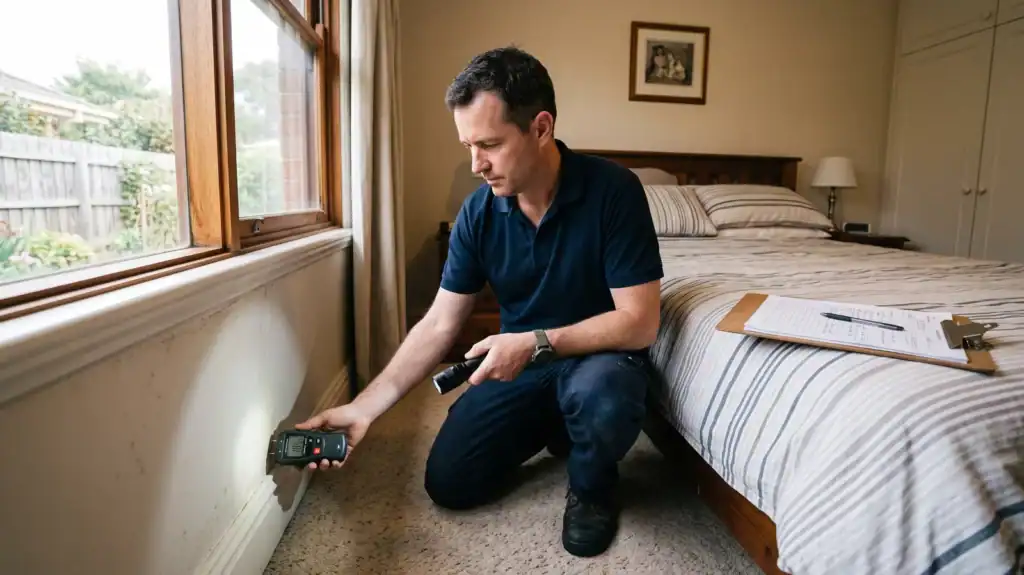
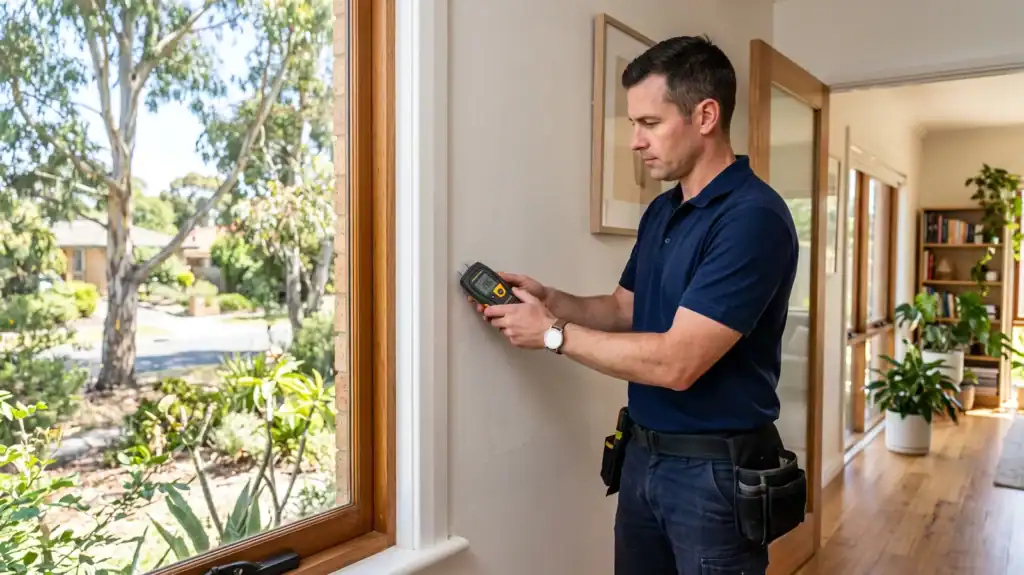
Mould and Hygiene Solutions approaches every property systematically, checking areas where fungal growth patterns typically develop based on moisture accumulation, air circulation, and substrate availability. After thousands of inspections across the Central Coast, Lake Macquarie, and Newcastle regions, certain patterns emerge consistently.

Visual Indicators

  • Discoloration: Patches of green, black, white, orange, or brown growth on walls, ceilings, or furnishings
  • Texture changes: Fuzzy, powdery, slimy, or velvety patches distinct from the underlying surface
  • Surface patterns: Circular colonies that expand outward as fungal hyphae spread radially
  • Material deterioration: Softening, staining, or degradation of painted surfaces, wallpaper, or timber

Non-Visual Indicators

  • Musty odours: Distinctive earthy or stale smell indicating fungal VOC production, often detectable before visible growth appears
  • Moisture problems: Condensation, water stains, peeling paint, or warped materials that create conditions supporting fungal growth
  • Previous water damage: History of leaks, flooding, or persistent dampness in the property
  • Poor ventilation: Inadequate airflow in bathrooms, kitchens, laundries, or storage areas

High-Risk Locations

Fungal mould establishes preferentially in specific locations where moisture and organic materials coincide. Professional inspections focus on these areas regardless of whether visible growth is already apparent.

  1. Bathrooms and ensuites, particularly around showers, baths, and poorly ventilated corners
  2. Kitchens around sinks, dishwashers, and behind cabinetry
  3. Laundries where moisture from washing machines and dryers accumulates
  4. Window frames and sills where condensation occurs regularly
  5. Air conditioning systems and ducting where condensation provides moisture
  6. Roof spaces with inadequate ventilation or roof leaks
  7. Wall cavities adjacent to bathrooms or where plumbing leaks have occurred
  8. Subfloor areas with poor ventilation or ground moisture problems

Accurate identification requires professional assessment because many fungal species appear similar to the untrained eye, and extensive growth often exists behind surfaces where homeowners cannot see it. A proper approach to identifying mould involves not just what you can see, but checking for conditions that support fungal growth throughout your property.

This is where testing services become valuable, particularly when purchasing property, dealing with insurance claims, or addressing recurring growth after previous treatment attempts. Professional sampling and laboratory analysis identifies specific fungal species present and quantifies spore concentrations to determine the extent of contamination.

Professional Treatment Targets Fungal Structures

Understanding that mould is a fungus with extensive root-like mycelium networks explains why amateur treatment methods consistently fail. Surface cleaning removes visible growth but leaves the fungal structure intact beneath and within porous materials.

Mould and Hygiene Solutions uses antimicrobial treatments specifically formulated to penetrate building materials and eliminate the entire fungal organism. The approach treats structural components, not just visible surfaces, which is the only methodology that prevents regrowth.

The 12-month guarantee offered by Mould and Hygiene Solutions proves the effectiveness of proper fungal remediation. When James treats a property, the antimicrobial solution reaches deep enough to kill the complete mycelium network, not just the surface manifestations you can see.

If you’ve discovered mould growth in your Newcastle, Central Coast, Hunter Valley, Lake Macquarie, or Port Stephens property, contact Mould and Hygiene Solutions for a free inspection. Professional assessment identifies the full extent of fungal contamination, including hidden growth, and determines the appropriate treatment approach to eliminate it completely.

Don’t waste time and money on surface treatments that only address what you can see. Professional remediation that targets the entire fungal structure is the only approach that delivers lasting results, which is why Mould and Hygiene Solutions can confidently guarantee properties will remain mould-free for 12 months after treatment.