Vinegar can kill some mould species on contact, but it is only a temporary surface fix that will not solve recurring mould problems.
Many homeowners across Newcastle and the Central Coast reach for white vinegar when they spot mould growing in their bathroom or kitchen. It is cheap, non-toxic, and recommended everywhere online as a quick DIY solution.
But does vinegar kill mould effectively enough to protect your property and health long-term? The answer is no. Understanding why this common household remedy fails can save you from ongoing problems and potentially expensive damage.
Why DIY Mould Treatment Fails: Vinegar, bleach and other household products only remove surface mould you can see. The real problem lies in the root system beneath the surface, the moisture source feeding the growth, and the invisible spores that remain behind to regrow within days or weeks.
Does Vinegar Kill Mould on Contact?
White vinegar contains acetic acid (typically 5% concentration), which can kill certain species of mould on non-porous surfaces. When sprayed directly onto visible mould, the acidic environment disrupts the mould’s cell structure.
Vinegar is effective against some common household mould species on hard surfaces. However, effectiveness drops significantly on porous materials like timber, drywall, or grout where mould roots penetrate deep beneath the surface.
- Most effective on non-porous surfaces like glass, tiles, and sealed benchtops
- Limited penetration on porous materials such as wood, plaster, and concrete
- The low pH (around 2.5) creates an inhospitable environment for some mould types
- Effectiveness varies depending on the mould species present
- Surface mould may disappear while root systems remain intact beneath
The key problem is that vinegar only addresses what you can see. Professional mould testing often reveals extensive growth hidden behind walls, under floors, or within ceiling cavities where DIY treatments cannot reach.
What Type of Vinegar Works on Mould?
Not all vinegar is equally effective against mould. The concentration of acetic acid determines how well it works.
- White distilled vinegar (5% acidity): The most commonly recommended option for surface mould on non-porous materials
- Cleaning vinegar (6% acidity): Slightly stronger than standard white vinegar, but not food-grade
- Apple cider vinegar: Lower acidity and less effective against mould
- Wine or malt vinegar: Not recommended. These contain sugars that can feed mould growth
Regardless of which type you use, vinegar only treats the surface. None of these options can reach mould roots embedded in porous building materials or address the moisture source driving the growth.
How to Apply Vinegar to Mould
If you are dealing with a small patch of surface mould (under one square metre) on a non-porous surface, vinegar can provide temporary relief. This is not a long-term solution.
- Pour undiluted white vinegar into a spray bottle
- Spray directly onto the visible mould and saturate the area
- Leave for at least 60 minutes without wiping
- Scrub with a brush or cloth, then wipe clean
- Dispose of cloths and brushes used. Do not reuse them elsewhere
Even when applied correctly, vinegar cannot kill mould roots embedded in substrates like timber or plasterboard. Regrowth typically appears within two to six weeks.
Safety Warning: Never mix vinegar with bleach or hydrogen peroxide. Combining vinegar with bleach produces toxic chlorine gas that causes serious respiratory damage. Always use vinegar on its own in a well-ventilated area, wearing gloves and a mask to avoid contact with mould spores.
Surfaces to Avoid
Vinegar’s acidity can damage certain materials:
- Natural stone (marble, granite, travertine): acid etches and dulls the surface
- Unsealed timber: vinegar can discolour and warp wood
- Stainless steel: may cause pitting or corrosion
- Electronic components: liquid damage risk
Why Vinegar Fails as a Long-Term Mould Solution
The fundamental issue with vinegar is that it does not address the underlying moisture problem that caused mould growth. Mould spores are present everywhere in the environment, and they will regrow once conditions become favourable again.
According to NSW Health, controlling moisture is the most important factor in preventing mould growth, and surface treatments like vinegar cannot achieve this. Even commercial mould products such as Glen 20 face the same limitation. Keeping indoor humidity below 60% and ensuring consistent airflow through moisture-prone rooms reduce the conditions mould needs, though identifying the specific moisture sources in a property (leaking pipes behind walls, rising damp, condensation in cavity spaces) requires professional assessment.
Three Reasons DIY Mould Treatment Fails
- Surface-only treatment: DIY products cannot penetrate porous materials to kill the root system, meaning regrowth is inevitable
- No moisture control: Without identifying and fixing the water source, you create the perfect environment for mould to return
- Spore dispersal: Scrubbing without proper containment releases thousands of spores into your air, spreading contamination to unaffected areas
Mould and Hygiene Solutions regularly sees properties where homeowners have spent months battling recurring mould with vinegar and other DIY methods. By the time they book a professional mould inspection, the problem has typically spread far beyond the original visible areas.
The Risks of Relying on DIY Vinegar Treatment
Beyond ineffectiveness, treating mould with vinegar carries several risks. The most significant is the false sense of security when surface mould temporarily disappears.
During this time, hidden mould colonies continue growing and releasing spores into your indoor air. Cleaning black mould without proper protection can make you sick, triggering respiratory issues and allergic reactions, particularly in children, elderly residents, and those with compromised immune systems.
- Disturbing mould without containment releases thousands of spores into the air
- Scrubbing can spread contamination to previously unaffected areas
- Porous materials that appear clean may still harbour deep mould growth
- Delayed professional treatment allows structural damage to worsen
Professional mould removal includes proper containment procedures, air filtration, and protective equipment to prevent cross-contamination.
Can Vinegar Prevent Mould From Growing?
Some homeowners spray white vinegar on surfaces regularly, hoping the residual acidity will stop mould from returning. It does not work that way.
Acetic acid evaporates. Within hours of spraying, the surface pH returns to neutral and offers no ongoing protection against mould spores settling and germinating. A weekly vinegar wipe-down might keep a tile surface looking clean, but it does nothing about the moisture that drives mould growth in the first place.
What Actually Prevents Mould: Mould grows wherever moisture sits long enough: in wall cavities with poor airflow, behind furniture pushed against cold exterior walls, in bathrooms and laundries without adequate exhaust ventilation. No surface spray addresses those conditions.
Genuine mould prevention requires controlling the moisture environment across the property:
- Maintaining indoor relative humidity below 60% (ideally between 40% and 50%)
- Ensuring adequate airflow through bathrooms, laundries and kitchens
- Fixing leaks, condensation sources and drainage issues at the building level
- Treating surfaces with industrial antimicrobial coatings that provide lasting residual protection
Professional mould prevention addresses each of these factors systematically, not just the surface you can see. The Australian-made, non-hazardous, non-corrosive and environmentally friendly antimicrobial solution used in professional treatments bonds to surfaces and provides ongoing protection that no household vinegar can match, backed by an unconditional 12-month mould-free guarantee.
Vinegar vs Professional Mould Treatment
| Factor | Vinegar (DIY) | Professional Treatment |
|---|---|---|
| Surface coverage | Only visible areas | Complete property assessment including hidden spaces |
| Mould identification | Visual guesswork | Laboratory analysis of species and concentration |
| Treatment depth | Surface level only | Penetrates substrates and treats root systems |
| Moisture management | None | Identifies and addresses source of moisture |
| Long-term protection | No residual effect | Australian-made, non-hazardous, non-corrosive and environmentally friendly antimicrobial solution |
| Guarantee | None | 12-month mould-free guarantee |
| Health safety | Risk of spore exposure | Full containment and air filtration protocols |
When Mould and Hygiene Solutions treats a property, the process begins with identifying why mould is growing, not just where it is visible. This diagnostic approach is the foundation of successful mould remediation that actually lasts.
When Professional Mould Treatment Becomes Necessary
While vinegar might suffice for a small spot of surface mould caught immediately, most situations require professional assessment. By the time you notice visible mould, the problem has typically established itself beyond what any DIY product can address.
Across the Hunter Valley, Central Coast and Newcastle regions, humid coastal conditions create ideal environments for rapid mould growth. What starts as a small patch can colonise entire rooms within weeks.
Signs You Need Professional Help
- Mould covers an area larger than one square metre
- Mould returns within days or weeks after cleaning
- You can smell a musty odour but cannot locate the source
- Mould appears after water damage, flooding, or a leak
- Growth is present on porous materials like drywall, timber, or carpet
- Family members experience unexplained respiratory symptoms
- Mould is present in HVAC systems or air conditioning units
How Professional Mould Treatment Works
Professional mould remediation follows a systematic process designed to eliminate existing growth and prevent recurrence. The treatment used by Mould and Hygiene Solutions is an Australian-made, non-hazardous, non-corrosive and environmentally friendly antimicrobial solution that penetrates porous surfaces to eliminate mould at the root level.
The Treatment Process
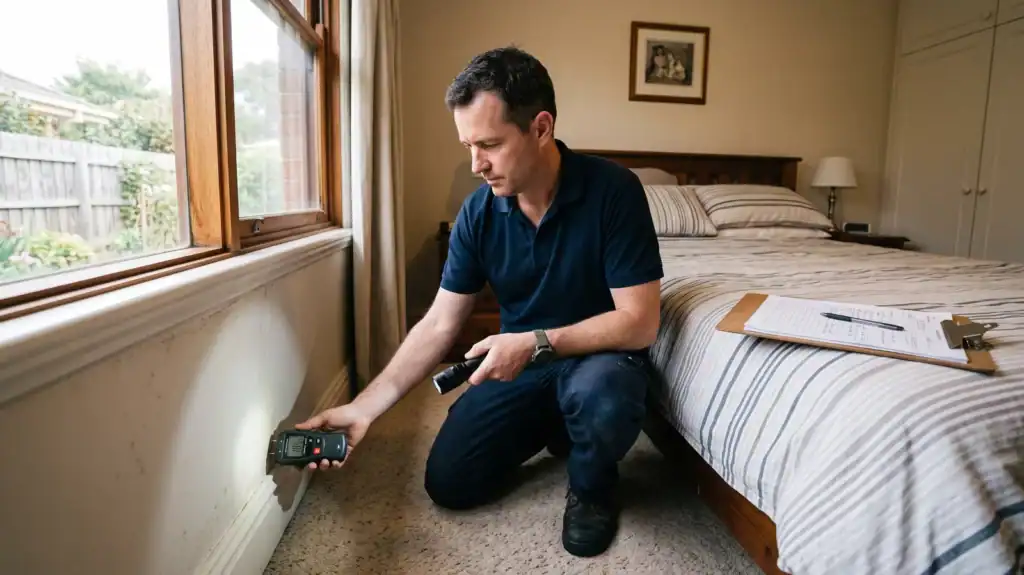
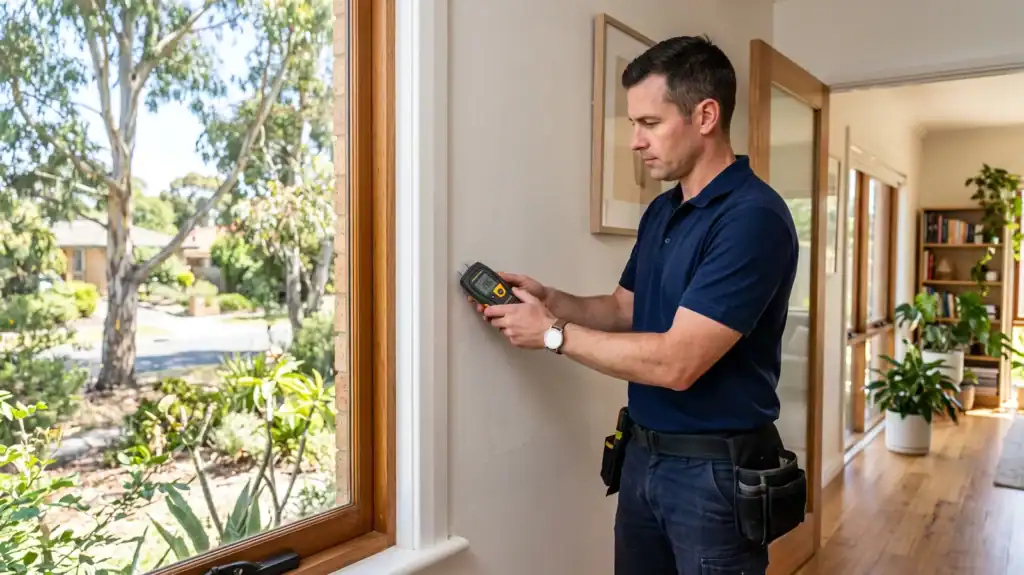
- Inspection: Comprehensive assessment using thermal imaging and moisture detection to identify all affected areas
- Testing: Laboratory analysis identifies specific species and determines treatment protocols
- Containment: Affected areas are isolated to prevent spore spread during treatment
- Treatment: Severely affected materials are safely removed while salvageable surfaces receive deep antimicrobial treatment
- Moisture management: Source identification and recommendations to prevent recurrence
- Verification: Post-treatment air quality testing ensures successful remediation
This approach is backed by an unconditional 12-month mould-free guarantee. If mould returns to treated areas within 12 months, Mould and Hygiene Solutions retreats the affected areas at no additional charge.
Important: According to Better Health Channel Victoria, attempting to remove mould from areas larger than one square metre yourself is not recommended. Professional assessment provides the only reliable solution for established mould problems.
Frequently Asked Questions
Does white vinegar kill black mould?
White vinegar can remove surface black mould on non-porous surfaces like tiles, but it does not kill the root system of Stachybotrys (black mould) embedded in porous materials. Black mould typically requires professional treatment because it penetrates deep into building materials and releases mycotoxins.
Can I mix vinegar and baking soda to kill mould?
Mixing vinegar and baking soda creates a fizzing reaction, but the two ingredients neutralise each other, making the solution less effective than either product alone. If you attempt a DIY clean of minor surface mould, use undiluted white vinegar on its own.
How long should I leave vinegar on mould?
Leave undiluted white vinegar on the mould for at least 60 minutes before scrubbing. This gives the acetic acid time to break down surface mould, but without treating the root system and moisture source, regrowth is likely within weeks.
Is vinegar safer than bleach for killing mould?
Vinegar is less toxic than bleach and does not produce harmful fumes when used on its own, but neither product provides a lasting solution. Bleach cannot penetrate porous materials any more effectively than vinegar, and both are temporary measures that fail to address the moisture source driving growth.
Does vinegar kill mould on walls?
Vinegar can clean visible mould from painted wall surfaces temporarily. However, mould growing on walls has typically penetrated into the plasterboard or timber framing behind the paint, and professional treatment with antimicrobial solutions that penetrate the substrate is the only way to eliminate wall mould completely.
Will mould come back after cleaning with vinegar?
In most cases, yes. Vinegar does not address the moisture source that caused the mould and cannot kill root systems in porous materials, so regrowth typically appears within two to six weeks.
If your mould cleaning keeps failing, the underlying problem requires professional diagnosis and treatment.
Does vinegar kill mould on bathroom grout?
Vinegar can lighten surface mould on grout, but grout is a porous material with a rough texture that traps mould roots deep within. Spraying vinegar on grout removes the visible discolouration temporarily, though the embedded root system remains and regrows within weeks. Professional treatment with antimicrobial solutions that penetrate the grout substrate is the only way to eliminate bathroom mould at the root level.
Is vinegar or hydrogen peroxide better for killing mould?
Both are marginally effective on surface mould, but neither treats the root system or moisture source. Hydrogen peroxide (3% concentration) has a slight edge on porous surfaces because it fizzes and lifts debris, though the active effect is still superficial. Vinegar’s acidity and hydrogen peroxide’s oxidising action both fail to penetrate building materials where mould roots are established. Swapping one DIY product for another delays the professional treatment that actually solves the problem.
What is the strongest natural mould killer?
No retail natural product (vinegar, tea tree oil, clove oil, or eucalyptus oil) eliminates mould permanently. Each has some antimicrobial properties on contact, but none penetrates porous building materials to reach the root system, and none addresses the moisture driving the growth. The real gap is not which product you use. Surface cleaning of any kind cannot resolve an established mould problem.
Book a Professional Mould Inspection
If you are dealing with recurring mould despite DIY treatment with vinegar, bleach, or commercial sprays, it is time for a professional solution. Mould and Hygiene Solutions services homes and businesses throughout Newcastle, the Central Coast, Lake Macquarie, Hunter Valley, Maitland, and Port Stephens with proven mould treatment backed by a 12-month guarantee.
Every job begins with a free inspection where experienced technicians assess your property, identify moisture sources, and provide clear recommendations.
Stop the cycle of temporary DIY treatments that only mask the problem. Contact Mould and Hygiene Solutions today to book your mould inspection and get the long-term solution your property needs.