Commercial mould removal starts with an inspection and ends with treated surfaces that stay clean for 12 months.
Mould in a warehouse or office is not the same problem as mould in your bathroom. Commercial spaces have larger surface areas, hidden HVAC systems spreading spores between rooms, and legal obligations that residential properties do not.
This article walks through how professional commercial mould removal works from start to finish. You will learn what the process involves, why off-the-shelf products fall short, and what your obligations are under NSW workplace health and safety law.
Need a professional assessment? Mould and Hygiene Solutions offers free commercial mould inspections across Newcastle, the Central Coast, Lake Macquarie, Hunter Valley and Port Stephens.
Why Commercial Mould Is Different to Residential Mould
Commercial mould problems tend to be larger in scale, harder to locate, and more complex to treat than anything you would find in a house. A ceiling tile with mould in an office might look minor, but the colony behind that ceiling could be metres wide.
Commercial HVAC systems are the biggest factor. Ducted air conditioning moves spores from one contaminated area across an entire building within hours. If your air conditioning is blowing mould spores, every room on the same duct run is at risk.
A single mouldy return air vent can seed every room on the floor. In a residential home, mould tends to stay localised because most houses do not have ducted systems recirculating air at the same volume.
- Scale: A warehouse with mould covers hundreds of square metres, not a single wall
- Access: Mould hides in ceiling cavities, duct interiors, behind wall panelling, and under raised floors
- Liability: Business owners have a legal duty to provide a safe workplace under WHS legislation
- Disruption: Treatment must be scheduled around business operations, staff access, and stock protection
The spray-and-wipe approach that some people try at home is completely impractical at commercial scale. Even if you could scrub every visible surface, you would miss the mould growing inside ductwork, behind panels, and underneath flooring.
Signs Your Commercial Property Has a Mould Problem
Visible mould is the obvious sign, but by the time you can see it on a wall or ceiling, the colony is already well established. The earlier warning signs are subtler and easier to dismiss.
- A persistent musty or damp smell, especially when the building opens in the morning
- Staff reporting headaches, sinus congestion, or irritated eyes that improve on weekends
- Staining or discolouration on ceiling tiles, carpet edges, or around air conditioning vents
- Condensation building up on windows or cold surfaces during winter
- Previous water damage (roof leak, burst pipe, flooding) that was dried but never professionally treated
Staff health complaints are a red flag. If multiple employees report similar symptoms that ease away from the building, that pattern points to an indoor air quality problem. A professional mould test identifies the source before symptoms escalate.
One common mistake is assuming that mould is only a problem in old or poorly maintained buildings. Modern commercial fit-outs with sealed windows, recirculated air, and poor ventilation can trap moisture just as effectively as an ageing warehouse.
The Commercial Mould Removal Process Step by Step
Professional commercial mould removal follows a structured process aligned with the IICRC S520 standard for professional mould remediation. Skipping any step means the mould returns, which is why retail products and in-house maintenance cleaning never solve the problem permanently.
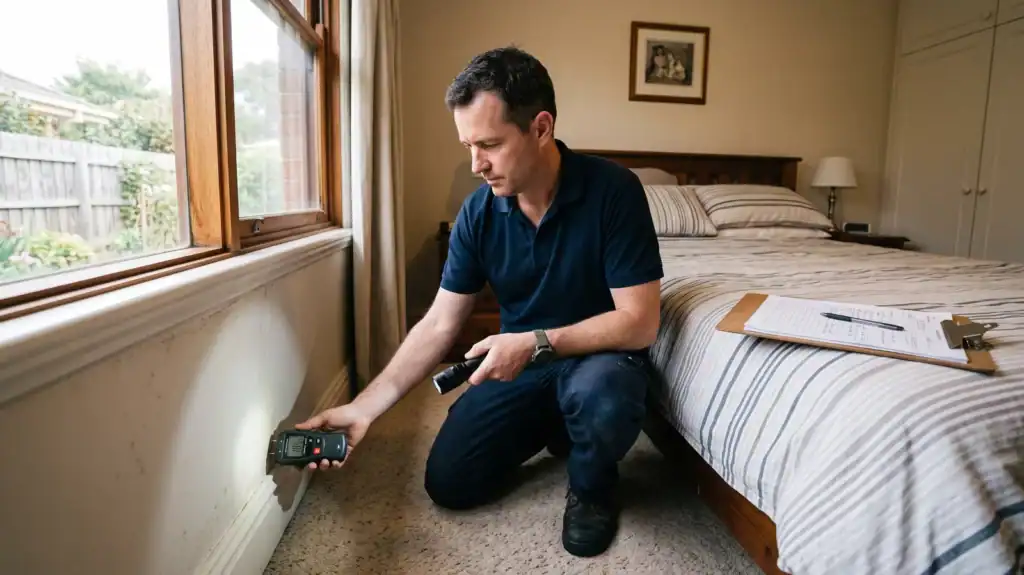
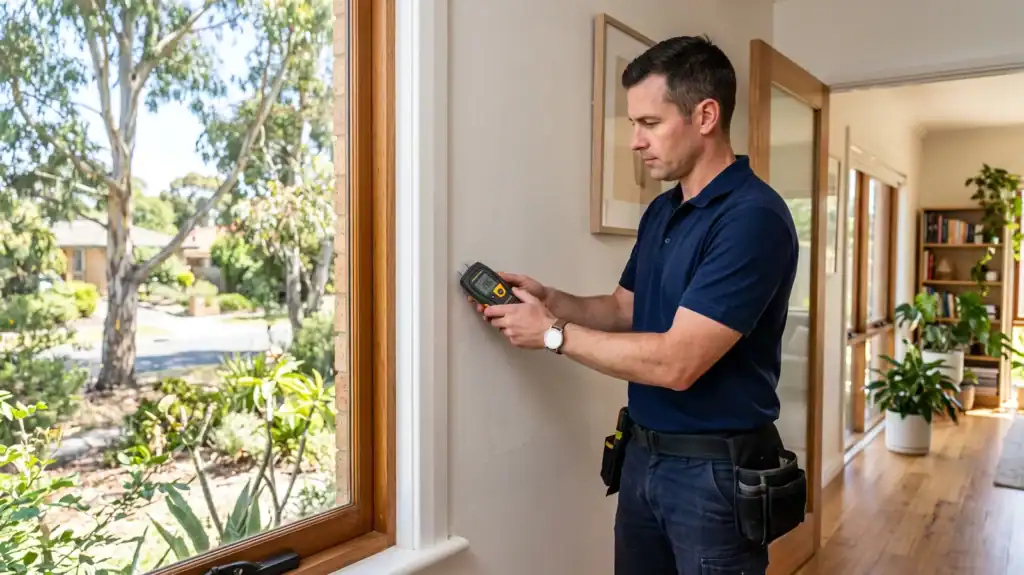
Step 1: Inspection and assessment
A qualified technician inspects the property, identifies all affected areas, including black mould on ceilings and behind wall linings, and traces the moisture source feeding the colony. This includes areas you cannot see: ceiling cavities, inside HVAC ducting, and under flooring.
Step 2: Containment
Affected areas are sealed off with plastic sheeting to prevent spore spread during treatment. In commercial properties, this step is critical because open-plan offices and connected HVAC systems can distribute disturbed spores throughout the entire building within minutes.
Step 3: Treatment
Industrial-grade treatment penetrates the substrate where mould roots (hyphae) are embedded. Off-the-shelf products sit on the surface and do not reach the root structure underneath, which is why surface-level mould cleaning keeps failing.
The treatment used by Mould and Hygiene Solutions is an Australian-made, non-hazardous, non-corrosive and environmentally friendly antimicrobial solution that kills mould at the root and prevents regrowth.
Step 4: Moisture source correction
Treating mould without fixing the moisture source is pointless. Understanding how mould grows makes it clear that without ongoing moisture, mould cannot survive. The technician identifies whether the issue is a building envelope failure, HVAC condensation, plumbing leak, or inadequate ventilation.
Step 5: Clearance and verification
After treatment, the area is retested to confirm mould levels are within acceptable limits. Clearance testing typically involves air sampling and surface swab analysis to verify spore counts have returned to normal background levels. For commercial properties, this step provides the documentation you need for WHS compliance records.
- Full site inspection and moisture source identification
- Containment of affected areas to prevent spore spread
- Industrial antimicrobial treatment targeting root structure
- Moisture source correction to prevent recurrence
- Post-treatment clearance testing and documentation
Why DIY Mould Treatment Fails in Commercial Properties
Some business owners attempt to handle mould internally using retail cleaning products and maintenance staff. This approach fails for the same reason it fails in homes, except the consequences are larger and the legal exposure is real.
Bleach, vinegar and other household mould remedies, and retail mould sprays treat the surface only. They remove the visible discolouration, which makes it look like the problem is solved.
The mould root system (hyphae) embedded in the material beneath is unaffected. Without reaching the root structure, regrowth is common within weeks as the underlying colony remains alive.
| Factor | DIY / Retail Products | Professional Commercial Treatment |
|---|---|---|
| Penetration depth | Surface only | Substrate and root system |
| Spore containment | None | Sealed containment with negative pressure |
| Moisture source | Not addressed | Identified and corrected |
| HVAC treatment | Not possible | Ductwork inspected and treated |
| Guarantee | None | 12-month mould-free guarantee |
| WHS compliance | Not documented | Full documentation provided |
In a commercial property, disturbing mould without proper containment can make people sick and sends millions of spores into the HVAC system. A maintenance worker scrubbing a mouldy ceiling tile can contaminate every room connected to that duct run.
Professional mould remediation eliminates the colony at the root, treats surrounding surfaces to prevent regrowth, and provides a 12-month guarantee that the mould will not return.
Your Legal Obligations Under WHS Law
If you operate a business in NSW, you have a legal duty to manage mould as a workplace hazard. SafeWork NSW lists mould as a biological hazard under the Work Health and Safety Act.
The obligations sit with the Person Conducting a Business or Undertaking (PCBU). That means you, the business owner or property manager.
- Investigate when a worker reports health effects that may be related to mould
- Take action to control the hazard as far as reasonably practicable
- Advise the worker of the actions being taken to address the problem
- Engage a specialist if internal resources cannot identify or resolve the issue
Ignoring mould complaints or treating them as cosmetic issues puts you on the wrong side of WHS legislation. If a worker develops a respiratory condition linked to mould exposure in your building, the liability falls on the PCBU.
Documented professional mould treatment protects your business. A formal mould inspection report creates a compliance record showing you identified and addressed the hazard. This documentation matters if a claim is ever made.
Which Commercial Properties Are Most at Risk
Some commercial properties are more prone to mould than others. The common factor is moisture combined with organic building materials and poor airflow.
- Warehouses and storage facilities: Poor ventilation, concrete slab condensation, minimal heating
- Offices with sealed windows: Recirculated air, no natural ventilation, HVAC condensation drip trays
- Food preparation areas: Steam, wash-down processes, cold room condensation
- Childcare centres and schools: High occupant density, humid activity areas, bathroom proximity
- Medical and aged care facilities: Strict air quality requirements, vulnerable occupants
- Retail with cool rooms: Temperature differentials create condensation on walls and ceilings
Properties across Newcastle, the Central Coast and the Hunter Valley face additional pressure during humid coastal summers. Buildings within a few kilometres of the coast deal with salt-laden moisture that accelerates mould growth on timber and plasterboard surfaces. If you are in the Newcastle area, commercial mould removal in Newcastle is one of our most common services.
What Certifications to Look for in a Commercial Mould Removal Company
Not all mould removal companies follow the same standards. For commercial work, the certifications your provider holds determine whether the remediation process meets industry-accepted protocols.
- IICRC S520 compliance: The IICRC S520 is the international standard for professional mould remediation. It sets minimum requirements for assessment, containment, removal, and post-remediation verification.
- IAQA membership: The International Association of Indoor Air Quality practitioners sets continuing education requirements for indoor air quality professionals.
- Appropriate insurance: Commercial mould remediation should be backed by public liability and professional indemnity insurance. Ask for proof before signing a contract.
- Safe Work Method Statement: The company should provide a documented SWMS specific to your site before starting work.
Ask for the treatment protocol in writing. A reputable commercial mould removal company will provide a written scope of work, treatment methodology, and expected clearance criteria before starting. If a provider cannot explain what they will use and why, that is a red flag.
How Long Does Commercial Mould Removal Take
Timeline depends on the size of the affected area, the type of building, and whether the moisture source needs structural work to fix.
- Small office (under 100 m²): One to two days for treatment, plus drying time
- Medium commercial space (100 to 500 m²): Two to five days depending on containment requirements
- Large warehouse or multi-level building: One to three weeks, often staged to allow partial business operations
Staff can usually remain in unaffected areas of the building while treatment is underway. Containment barriers and negative air pressure units isolate the work zone, so there is no need to evacuate the entire premises in most cases.
Stock and equipment in the treatment area should be relocated or covered with protective sheeting beforehand. Your mould removal provider should include a site management plan as part of the quote so you can schedule around operations.
What Happens After Commercial Mould Treatment
Once the mould is treated and the moisture source is fixed, the property should stay mould-free if the underlying conditions are managed. Mould and Hygiene Solutions backs this with a 12-month mould-free guarantee.
If mould returns in the treated area within 12 months, the treatment is redone at no additional cost. That guarantee exists because the treatment works at the root level, not just the surface.
- Keep relative humidity below 60% (a basic hygrometer costs under $20 and a dehumidifier can help prevent mould in enclosed spaces)
- Maintain HVAC filters on schedule and check drain pans for standing water
- Fix any new leaks or water ingress within 48 hours
- Run annual mould prevention treatment on high-risk surfaces
Surface-only products cannot offer this kind of guarantee because regrowth is expected. The 12-month guarantee is the clearest proof that professional treatment works differently.
Does Insurance Cover Commercial Mould Removal
Whether your building insurance covers mould removal depends on the cause. Most commercial property policies cover mould remediation when it results from a sudden event like a burst pipe, roof damage from a storm, or flooding. Gradual moisture build-up from poor ventilation or deferred maintenance is typically excluded.
- Covered (typically): Mould resulting from a covered peril such as storm damage, burst pipes, or fire suppression system leaks
- Not covered (typically): Mould from long-term condensation, poor ventilation, lack of maintenance, or pre-existing conditions
If you are a commercial tenant, check your lease agreement. In NSW, the landlord is generally responsible for maintaining the building structure, which includes addressing moisture ingress that leads to mould. Understanding who is responsible for mould in a rental property applies to commercial leases as well as residential ones.
A professional inspection report documenting the cause and extent of mould contamination strengthens any insurance claim. Get the inspection done before starting remediation so the evidence is on record.
Frequently Asked Questions
How much does commercial mould removal cost in Australia?
Commercial mould removal costs vary widely depending on the size of the affected area, the type of building, and whether structural repairs are needed. Small office treatments can start from a few hundred dollars, while large-scale warehouse or multi-level remediation can run into the thousands. The only reliable way to get an accurate figure is a professional assessment of your mould removal costs based on your specific situation. Mould and Hygiene Solutions offers free inspections to provide a clear quote before any work begins.
Is it safe for staff to work during mould removal?
In most cases, yes. Professional mould remediation uses containment barriers and negative air pressure to isolate the treatment zone from the rest of the building. Staff can continue working in unaffected areas. The remediation team will advise if a full evacuation is necessary, which is rare and usually only applies when contamination is extensive or the HVAC system is severely compromised.
What causes mould to keep coming back in commercial buildings?
The most common reason is an unresolved moisture source. If the underlying issue, whether it is a leaking roof, HVAC condensation, poor ventilation, or rising damp, is not fixed during remediation, mould will keep coming back. Surface cleaning without addressing the root cause only delays the problem.
What certifications should a commercial mould removal company have?
Look for compliance with the IICRC S520 standard for mould remediation, appropriate public liability and professional indemnity insurance, and a documented Safe Work Method Statement for your site. Membership in industry bodies such as the IAQA is a further indicator of professional standards.
Does building insurance cover commercial mould removal?
It depends on the cause. Mould resulting from a sudden insured event such as a burst pipe or storm damage is usually covered. Mould from gradual moisture build-up, poor maintenance, or pre-existing conditions is typically excluded. Check your policy and get a professional inspection report to support any claim.
How long does commercial mould remediation take?
Timeframes range from one to two days for a small office to several weeks for a large multi-level building. The main variables are the size of the contaminated area, containment requirements, and whether the moisture source needs structural repair. Treatment is usually staged to minimise disruption to business operations.
Book a Free Commercial Mould Inspection
If you have noticed mould, persistent dampness, or staff health complaints in your commercial property, the most effective first step is a professional inspection. Guessing where the mould is and spraying retail products at it wastes time and money.
Mould and Hygiene Solutions offers free inspections for commercial properties across Newcastle, the Central Coast, Lake Macquarie, the Hunter Valley and Port Stephens.
The inspection identifies every affected area, traces the moisture source, and provides a clear treatment plan with a 12-month guarantee. Contact Mould and Hygiene Solutions today to book yours.