Finding mould on your bathroom ceiling or bedroom wall triggers an immediate question: what actually kills it, and how do you stop it returning?
Most homeowners across Newcastle and the Central Coast reach for a spray bottle and start scrubbing. The problem is that by the time mould is visible, the colony has already established itself in the material beneath the surface.
Surface cleaning removes what you can see. It does not address what is underneath, and it does not prevent regrowth.
Common Products That Kill Mould (and Their Limits)
Several household products can kill mould on contact. Each one has limitations that explain why mould typically returns within weeks of DIY treatment.
White Vinegar
Undiluted white vinegar is one of the more effective household options. It creates a low-pH environment that most mould species cannot survive in. Apply it directly to the affected area, leave it for at least an hour, then wipe clean.
The limitation is that vinegar evaporates quickly and does not penetrate deep into porous materials like plasterboard or timber. For a detailed breakdown, read about how vinegar performs against different types of mould.
Baking Soda
Mix one teaspoon of baking soda into 500 ml of water in a spray bottle. Spray the mouldy surface, scrub with a brush, then rinse. Baking soda is mildly abrasive and deodorises at the same time, making it useful for surface mould with a musty smell.
It works on non-porous surfaces like tiles and glass. On porous materials, it sits on the surface without reaching the root system beneath.
Hydrogen Peroxide
A 3% hydrogen peroxide solution sprayed directly onto mould will kill surface colonies on both porous and non-porous materials. Leave it for 10 to 15 minutes before wiping. Unlike bleach, hydrogen peroxide does penetrate porous surfaces to some degree.
The drawback is that it loses potency rapidly once applied and offers no residual protection. Our guide covers whether hydrogen peroxide kills mould permanently.
Tea Tree Oil and Clove Oil
Both oils have natural antifungal properties. Mix one teaspoon of tea tree oil with one cup of water and spray onto the affected area. Do not rinse.
Clove oil is particularly popular in Australian households and works in a similar way.
These oils are effective on surface mould and leave a residual scent, but they will not eliminate colonies embedded in wall cavities or beneath paint layers. Read more about how tea tree oil works against mould and the research behind clove oil as a mould treatment.
Borax
Dissolve one cup of borax in four litres of hot water and apply with a brush. Borax raises pH to a level that inhibits mould and leaves a residue that discourages regrowth on non-porous surfaces.
Borax is useful for bathroom tiles, shower screens and concrete. It does not penetrate plasterboard, timber framing or other porous building materials where mould roots typically establish.
Bleach
Bleach is the product most homeowners reach for first. It destroys surface mould by oxidising organic matter and removes the black or green discolouration you can see.
What bleach cannot do is penetrate porous materials. The water content in bleach actually adds moisture to the substrate, which can accelerate regrowth from surviving root systems. This is why mould often returns darker and faster after bleach treatment.
| Product | Surface Effect | Penetrates Porous Materials | Typical Regrowth |
|---|---|---|---|
| White vinegar | Kills surface mould | Minimal | 3-6 weeks |
| Baking soda | Removes and deodorises | No | 2-4 weeks |
| Hydrogen peroxide (3%) | Kills surface colonies | Partial | 4-8 weeks |
| Tea tree / clove oil | Antifungal surface treatment | Minimal | 4-6 weeks |
| Borax | Kills and deters regrowth | No | 4-8 weeks |
| Bleach | Removes discolouration | No (adds moisture) | 2-4 weeks |
| Professional antimicrobial | Eliminates colony at root | Yes (industrial fogging) | 12+ months (guaranteed) |
Porous vs Non-Porous Surfaces
The single biggest factor in whether a DIY product works long term is whether the surface is porous or non-porous.
- Non-porous surfaces (glass, tiles, metal, sealed countertops): mould sits on top. Vinegar, hydrogen peroxide or baking soda can remove it effectively.
- Porous surfaces (plasterboard, timber, grout, ceiling paint, carpet): mould sends root structures called hyphae deep into the material. No household spray reaches these roots.
This is why cleaning mould off walls with surface sprays almost always leads to regrowth. The visible mould disappears, but the colony beneath the surface survives.
If mould has grown on plasterboard, timber or grout, no household product will eliminate the root system. Professional treatment with industrial fogging equipment is the only method that penetrates porous substrates.
Safety Precautions for DIY Mould Cleaning
Disturbing mould colonies releases millions of airborne spores. Before attempting any DIY cleaning, the Victorian Department of Health recommends these precautions:
- Wear a P2-rated face mask (not a standard dust mask)
- Use rubber gloves and eye protection
- Open windows and doors for ventilation before you start
- Never mix bleach with vinegar or ammonia, as this produces toxic fumes
- Seal off the area from the rest of the property to prevent spore spread
- Bag and dispose of contaminated materials immediately
Professional removal is recommended when mould covers an area larger than one square metre or when occupants are experiencing respiratory symptoms.
Why DIY Mould Removal Fails
Understanding why mould returns after DIY treatment requires understanding how mould grows as a living organism. Mould does not simply sit on a surface like dirt or dust.
It colonises the material itself, sending root structures deep into porous substrates like plasterboard, timber, grout and ceiling paint.
Every DIY method shares three critical failures:
- They treat the surface without penetrating the substrate
- They fail to identify and address the moisture source driving growth
- They often spread spores during the cleaning process, seeding new colonies elsewhere
Regrowth typically occurs within two to six weeks because the colony beneath the surface was never eliminated.
How Professional Mould Treatment Works Differently
Professional mould remediation does not rely on surface cleaning. It uses industrial-grade treatment systems designed to penetrate substrate materials and eliminate mould colonies at the root level.
Mould and Hygiene Solutions uses an Australian-made, non-hazardous, non-corrosive and environmentally friendly antimicrobial solution delivered through specialised fogging equipment.
The Professional Treatment Process
- Containment barriers prevent spore contamination during treatment
- Industrial fogging equipment delivers antimicrobial solution deep into porous materials
- HEPA filtration captures airborne spores throughout the process
- Moisture source identification and remediation prevents future growth
- Post-treatment verification ensures complete eradication
This approach eliminates mould at the cellular level, not just the visible surface. The antimicrobial solution remains active in treated materials, providing ongoing protection.
Mould and Hygiene Solutions backs every treatment with a 12-month mould-free guarantee, which no DIY product can offer.
What Keeps Mould Gone Permanently
Permanent mould elimination requires two things: complete eradication of the existing colony and removal of the conditions that allowed it to grow.
Mould requires organic material to feed on, moisture above 60% relative humidity, and temperatures between 15°C and 30°C. The NSW Health guidelines on mould recommend maintaining indoor humidity below 50% to 60% and ensuring adequate ventilation in all rooms.
Professional mould inspections identify the moisture source driving growth. Common sources include roof leaks, plumbing failures, condensation issues and inadequate ventilation.
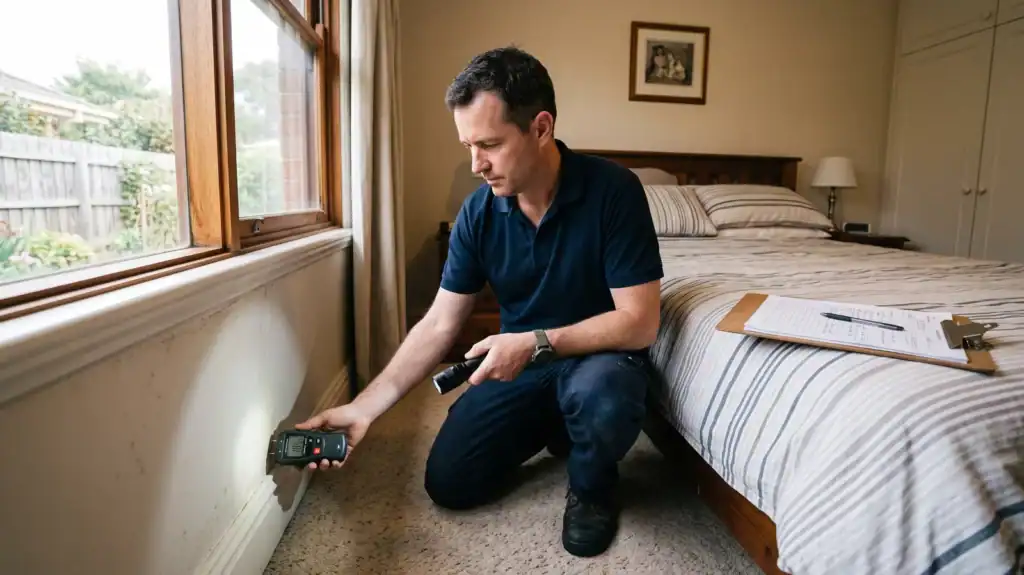
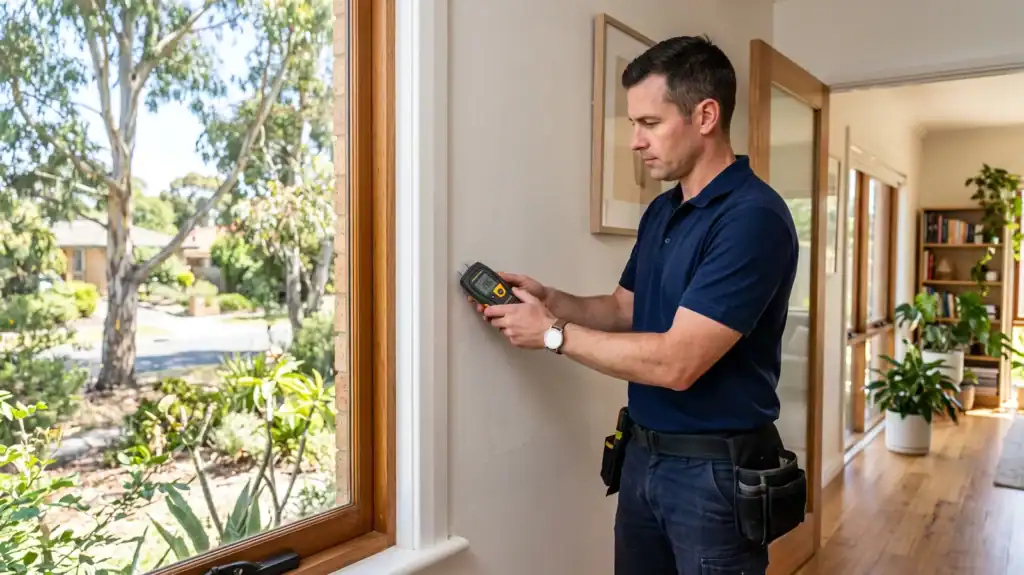
A comprehensive inspection uses thermal imaging cameras, moisture metres and humidity monitoring to locate hidden water intrusion that is not visible to the naked eye.
Long-Term Prevention Strategies
- Repair identified moisture sources before or during mould treatment
- Improve ventilation in high-humidity areas like bathrooms and laundries
- Keep indoor humidity below 60% using a dehumidifier where necessary
- Address drainage issues around building foundations
- Schedule regular inspections in properties with previous mould history
Professional mould prevention services combine treatment with moisture control to create an environment where mould cannot re-establish.
When to Call a Professional
Certain mould situations should never be treated as DIY projects. Professional intervention is essential when:
- Mould covers an area larger than one square metre
- Mould returns repeatedly after cleaning
- Mould appears after water damage or flooding
- You can smell mould but cannot see it (hidden colonies in wall cavities)
- Anyone in the household has warning signs of mould-related health issues
Hidden mould behind walls, under flooring or in ceiling cavities requires professional mould testing and removal. DIY cleaning cannot access these areas safely or effectively.
| Situation | DIY Appropriate | Professional Required |
|---|---|---|
| Surface mould under 0.1m² on tiles | Temporary only | For permanent elimination |
| Mould larger than 1m² | No | Yes |
| Mould after flooding | No | Yes |
| Recurring mould growth | No | Yes |
| Mould with unknown source | No | Yes |
| Mould in HVAC systems | No | Yes |
Properties throughout Lake Macquarie, the Hunter Valley and Port Stephens face unique mould challenges due to coastal humidity and seasonal weather patterns.
Professional assessment determines the extent of colonisation, identifies all affected materials and creates a treatment plan that addresses both visible and hidden mould.
Frequently Asked Questions
Does vinegar kill mould permanently?
White vinegar kills most surface mould species but does not penetrate porous materials where mould roots grow. Mould typically returns within three to six weeks after vinegar treatment because the colony beneath the surface survives.
Does bleach kill mould or just remove the colour?
Bleach removes the visible discolouration but does not kill mould roots in porous materials. The water content in bleach can actually add moisture to the substrate, creating conditions for faster regrowth.
What kills mould spores in the air?
HEPA air filtration captures airborne mould spores down to 0.3 microns. Professional mould remediation uses HEPA filtration during treatment to prevent spore spread. Adequate ventilation also reduces airborne spore concentrations.
What kills black mould specifically?
Black mould (Stachybotrys chartarum) is more resistant to household products than common species like Aspergillus or Cladosporium. Professional antimicrobial treatment is recommended for black mould because it thrives in water-damaged porous materials that surface sprays cannot reach.
How do you stop mould coming back after cleaning it?
Removing mould without fixing the moisture source guarantees it will return. Identify and repair leaks, improve ventilation, and keep indoor humidity below 60%. Professional treatment that penetrates the substrate and addresses moisture sources is the only method backed by a regrowth guarantee.
Is it safe to clean mould yourself?
Small patches of surface mould on non-porous surfaces can be cleaned with proper PPE, including a P2-rated mask and gloves. Mould covering more than one square metre, growing on porous surfaces, or located in enclosed spaces should be handled by a professional to avoid spore exposure.
Get Permanent Mould Removal with a 12-Month Guarantee
If you have found mould in your home or business, the most effective first step is a professional inspection. Surface cleaning will remove what you can see today, but it will not prevent what returns next month.
Mould and Hygiene Solutions offers free inspections across Newcastle, the Central Coast, Lake Macquarie, the Hunter Valley and Port Stephens.
Every treatment is backed by a 12-month mould-free guarantee because professional remediation eliminates mould at the source, not just the surface.
Contact Mould and Hygiene Solutions today to book your free inspection and get permanent mould removal you can trust.