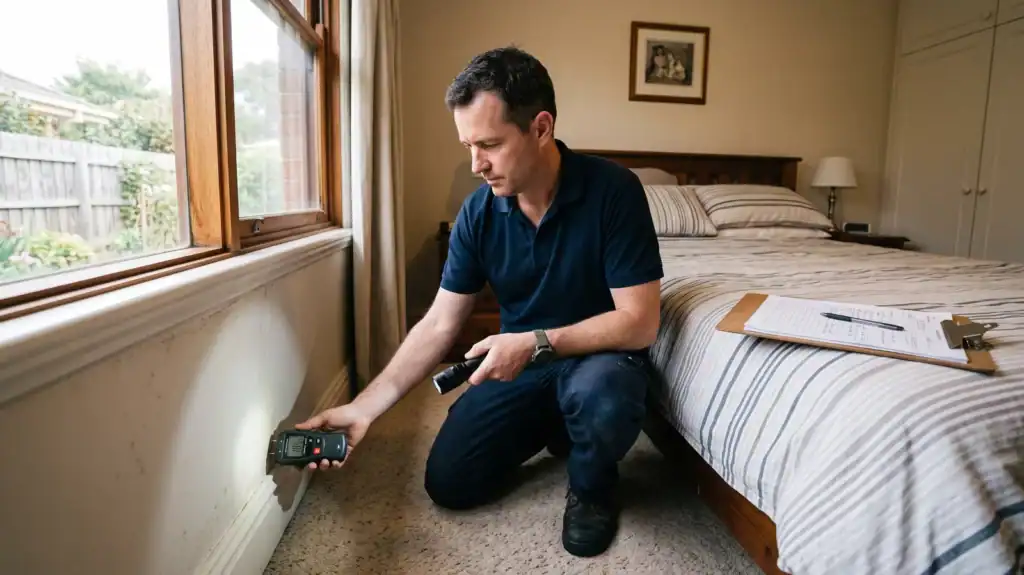
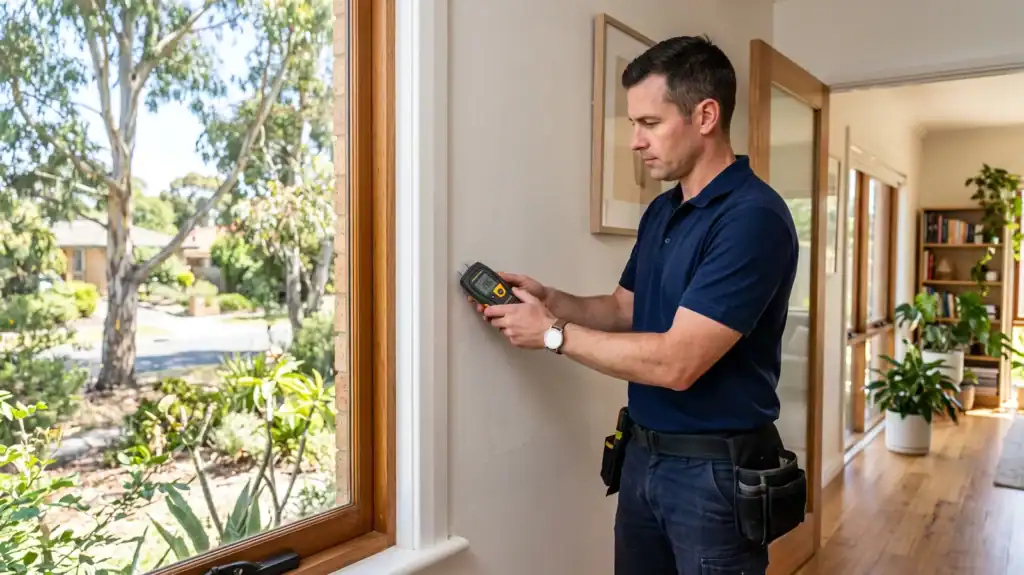
Aspergillus mould produces airborne spores that can cause serious respiratory problems, particularly for older adults and anyone with a weakened immune system.
Most Australian homes contain aspergillus spores whether you can see them or not. The fungus thrives in damp, poorly ventilated areas and colonises building materials from the inside out.
Many homeowners across Newcastle and the Central Coast spot a patch of mould and reach for the bleach. That reaction is understandable, but the visible growth is only a fraction of what aspergillus mould is doing inside your walls.
Concerned about mould in your home? Mould and Hygiene Solutions offers professional mould inspections, mould removal and mould testing across Newcastle, the Central Coast, Lake Macquarie, Hunter Valley and Port Stephens.
This article covers what aspergillus mould actually is, where it hides in Australian homes, the health risks it poses, and why wiping it off the wall does nothing to stop it returning.
What Makes Aspergillus Different From Other Moulds
Aspergillus is a genus of over 180 fungal species, and several are among the most common moulds found inside Australian homes. Unlike Stachybotrys (the black mould that dominates media coverage), aspergillus is harder to identify because it appears in a range of colours including white, yellow, green and black.
The three species most likely to show up indoors are Aspergillus niger (black, typically behind damp walls), Aspergillus fumigatus (grey-green, the most medically dangerous), and Aspergillus flavus (yellow-green, produces cancer-linked mycotoxins called aflatoxins).
What separates aspergillus from other indoor moulds is its tolerance for lower moisture. Many moulds need relative humidity above 70% to grow, but some aspergillus species colonise surfaces at humidity levels as low as 62%.
That means aspergillus can establish itself in areas other moulds cannot reach. Properties across the Hunter Valley and Central Coast are particularly affected due to the combination of coastal humidity and older building stock with limited ventilation.
| Species | Typical Colour | Common Location | Primary Risk |
|---|---|---|---|
| A. niger | Black | Behind damp walls, bathrooms | Lung infections, ear infections |
| A. fumigatus | Grey-green | Compost, HVAC ducts, ceiling cavities | Invasive aspergillosis (life-threatening) |
| A. flavus | Yellow-green | Stored grain, damp pantries | Aflatoxin production (carcinogenic) |
| A. versicolor | Green to tan | Water-damaged plasterboard | Mycotoxin exposure, allergies |
The fact that aspergillus comes in so many forms makes DIY identification unreliable. Without professional mould testing, you cannot tell whether the mould on your wall is a harmless surface species or a toxin-producing strain that requires containment during removal.
Where Aspergillus Mould Hides in Australian Homes
Aspergillus mould rarely stays on visible surfaces. It colonises the substrate behind walls, underneath flooring, and inside ductwork where moisture accumulates and airflow is poor.
A 2022 study published in the International Journal of Environmental Research and Public Health found that dampness and poor ventilation were the primary drivers of indoor mould growth across all Australian climate zones.
The most common hiding spots in homes across Newcastle, Lake Macquarie and the Hunter Valley include areas where moisture sits without anyone noticing.
- Behind plasterboard in bathrooms and laundries where steam penetrates through paint and grout
- Inside HVAC ducts and split-system air conditioners where condensation collects on coils and filters, and mould in your air conditioner spreads spores through every room each time the system runs
- Underneath carpet and underlay where slab moisture wicks upward through concrete
- Around window frames where condensation runs down glass and pools in the sill
- Inside ceiling cavities where roof leaks drip onto insulation batts
- In garages and sheds on stored cardboard, timber, and fabric
The problem with aspergillus colonising hidden areas is that surface cleaning has zero effect on the growth behind the wall or inside the duct. A 10-centimetre patch of mould on the outside of a wall can mean a colony covering half a square metre behind the plasterboard, which is why mould in walls keeps coming back after surface treatment.
Aspergillus Mould and Your Health
Healthy adults inhale small amounts of aspergillus spores every day without noticing. The immune system clears them before they cause harm.
The problem starts when spore counts inside a home rise above normal background levels, which happens when an active colony is growing indoors. At elevated concentrations, aspergillus spores trigger a range of respiratory conditions that the CDC groups under the term aspergillosis.
The conditions linked to aspergillus exposure range from mild allergic reactions to life-threatening infections.
- Allergic bronchopulmonary aspergillosis (ABPA) causes chronic lung inflammation, coughing and wheezing in people with asthma or cystic fibrosis
- Aspergilloma is a ball of fungal growth that forms in existing lung cavities, often from previous tuberculosis or emphysema
- Invasive aspergillosis spreads through the bloodstream to organs and is life-threatening for immunocompromised people
- Allergic sinusitis produces ongoing sinus congestion, headaches and facial pressure from repeated spore inhalation
- Asthma aggravation occurs because aspergillus spores are a documented trigger for bronchospasm and breathing difficulty
Children, older adults, and people with existing lung conditions are most vulnerable to mould-related health effects. If anyone in your household has ongoing respiratory symptoms and you have visible or suspected mould, a professional inspection should be your first step.
Disturbing an aspergillus colony without proper containment sends a burst of spores into the air. DIY scrubbing actually increases exposure in the short term, which is the opposite of what you want if someone in the household already has breathing difficulties.
Symptoms That May Point to Aspergillus Exposure
Aspergillus-related illness does not always look like a mould problem. Many of the early warning signs of mould toxicity overlap with hay fever, a lingering cold, or seasonal allergies, which is why people often live with elevated spore counts for months before connecting the dots.
Common symptoms linked to aspergillus exposure include:
- Persistent cough that does not clear up with standard cold and flu treatment
- Wheezing or shortness of breath, particularly at night or first thing in the morning
- Sinus congestion and facial pressure that returns within days of clearing up
- Itchy, watery eyes and sneezing that worsens indoors but eases when you leave the house
- Fatigue and headaches that have no other obvious cause
For people with compromised immune systems, the signs can escalate. Fever, chest pain, and coughing up blood all indicate a more serious infection that requires immediate medical attention.
| Who Is Affected | Risk Level | Common Response |
|---|---|---|
| Healthy adults | Low | Mild allergic symptoms or none |
| Asthma or COPD sufferers | Moderate to high | ABPA, worsening respiratory symptoms |
| Transplant recipients, chemotherapy patients | High | Invasive aspergillosis (life-threatening) |
| Young children and infants | Moderate | Respiratory infections, allergic sensitisation |
| Older adults (65+) | Moderate to high | Chronic pulmonary aspergillosis |
If these symptoms ease when you spend time away from home but return when you are back, the indoor environment is the likely trigger. That pattern alone is enough reason to book a professional mould inspection.
Why Scrubbing Aspergillus Off the Wall Does Nothing
Retail mould cleaning products and household bleach treat the surface layer of mould growth only. Aspergillus embeds its root structure (called hyphae) into the substrate beneath, whether that is plasterboard, timber, grout or carpet backing.
Removing the visible growth while leaving the root system intact means regrowth is virtually guaranteed within two to six weeks. The root system also means you cannot judge the extent of contamination from what is visible on the surface.
Here is what actually happens when you scrub aspergillus mould with a retail product.
- Bleach evaporates before reaching mould roots embedded in porous materials like plasterboard and timber
- Scrubbing without containment releases millions of spores into the air, spreading contamination to other rooms
- Retail products do not identify or address the moisture source that caused the growth in the first place
- Without professional testing, you cannot confirm which species you are dealing with or whether mycotoxins are present
- Disturbed spores settle on new surfaces and start fresh colonies elsewhere in the property
The question homeowners should ask is not which product works best, but whether DIY mould removal actually works at all when the colony has penetrated the substrate.
| Factor | DIY Surface Cleaning | Professional Treatment |
|---|---|---|
| What it treats | Surface discolouration only | Root structure and surface growth |
| Spore containment | None. Spores spread freely | Negative air pressure with HEPA filtration |
| Moisture source | Not addressed | Identified and resolved |
| Regrowth timeline | 2 to 6 weeks | Prevented with 12-month guarantee |
| Health risk during cleaning | High. Direct spore exposure | Minimal. Full containment protocols |
The comparison is straightforward. Surface cleaning buys you a few weeks of a clean-looking wall before the colony re-establishes itself from the roots you left behind.
How Professional Mould Testing Confirms Aspergillus
You cannot identify aspergillus by sight alone. A green patch on the wall could be Aspergillus flavus, Cladosporium, or Penicillium, and each requires a different response.
Professional mould testing removes the guesswork and tells you exactly what you are dealing with. The two most common testing methods used in Australian homes are:
- Air quality sampling (spore trap analysis) captures airborne spores on a calibrated cassette, which a laboratory then identifies under a microscope. This measures the concentration of aspergillus spores in the air you are breathing.
- Surface swab or tape lift testing collects a physical sample from the visible mould growth. The lab identifies the species and can confirm whether mycotoxin-producing strains like A. flavus or A. fumigatus are present.
Hardware store mould test kits use settle plates that collect whatever lands on them over 24 to 48 hours. They cannot distinguish between normal background spore levels and a dangerous concentration, cannot identify species, and give you no actionable information either way.
Professional testing pairs results with a full property inspection to map contamination and identify the moisture source. Without that context, a lab result is just a species name on a page.
How Professional Aspergillus Treatment Works
Professional mould remediation treats the full depth of an aspergillus colony, including what you cannot see. Mould and Hygiene Solutions uses an Australian-made, non-hazardous, non-corrosive and environmentally friendly antimicrobial solution that penetrates the substrate to destroy the root structure embedded within it.
Every job is backed by a 12-month mould-free guarantee, which is only possible because the treatment actually eliminates the colony rather than masking it.
- Full property inspection to map the extent of contamination, including hidden areas behind walls and inside ductwork
- Air quality testing to measure spore counts and identify which species are present
- Containment setup with negative air pressure and HEPA filtration to prevent spore spread during treatment
- Antimicrobial treatment applied to affected areas, penetrating the substrate to destroy hyphae at the root level
- Moisture source identification with specific recommendations to prevent the conditions that caused growth
- Post-treatment verification to confirm spore counts have returned to safe background levels
The difference between wiping mould off a wall and treating it professionally is the difference between trimming a weed and pulling it out by the roots. One gives you a temporary cosmetic fix while the other eliminates the problem.
Reducing the Risk of Aspergillus in Your Home
Prevention comes down to controlling moisture and airflow. Aspergillus needs organic material and dampness to grow, and you cannot remove the organic material (it is your walls, floors and ceilings), so moisture control is the only lever you have.
- Keep indoor humidity below 60% and check it with a cheap hygrometer from the hardware store
- Run exhaust fans during and for 15 minutes after every shower or bath
- Fix leaking taps, pipes and roof flashing as soon as you notice them
- Open windows or use mechanical ventilation in rooms with poor airflow
- Avoid drying clothes indoors without a dehumidifier running
- Clean split-system air conditioner filters every three months
Getting ventilation right does more to prevent mould than any cleaning product on the market. These steps reduce the risk of mould establishing itself, but they will not fix an existing colony that has already penetrated the substrate.
If you have found aspergillus mould in your home or suspect hidden growth behind walls, the most effective first step is a professional inspection. Mould and Hygiene Solutions provides inspections across Newcastle, the Central Coast, Lake Macquarie, Hunter Valley and Port Stephens. Contact us to book yours.
Frequently Asked Questions About Aspergillus Mould
Is aspergillus mould common in Australian homes?
Aspergillus spores are present in virtually every home, entering through open windows, on clothing, and through ventilation systems. The spores only become a problem when they land on a damp surface with organic material and begin to colonise.
What does aspergillus mould look like?
Aspergillus appears in a range of colours depending on the species. A. niger is black, A. fumigatus is grey-green, A. flavus is yellow-green, and A. versicolor ranges from green to tan. This colour variation makes visual identification unreliable without laboratory testing.
Can aspergillus mould make you sick?
At normal background levels, aspergillus spores do not make healthy adults sick. When an active colony is growing indoors and spore counts are elevated, exposure can trigger allergic reactions, chronic sinus infections, and in immunocompromised people, life-threatening lung infections.
How do you get rid of aspergillus mould?
Surface cleaning with bleach or retail mould products removes the visible growth but leaves the root structure intact. Professional remediation uses antimicrobial solutions that penetrate the substrate, combined with containment protocols and moisture source identification to prevent regrowth.
Is aspergillus the same as black mould?
No. The mould commonly called “black mould” is Stachybotrys chartarum, a different genus entirely. Aspergillus niger also appears black, which causes confusion, but the two have different growth patterns, health risks and removal requirements.
Can aspergillus grow inside air conditioners?
Yes. Split-system and ducted air conditioners create condensation on coils and filters, giving aspergillus the moisture it needs, and once established the system blows spores into every room each time it runs.
What temperature kills aspergillus?
Most aspergillus species are killed at sustained temperatures above 70 degrees Celsius. Domestic heating cannot reach or maintain that level inside wall cavities, ductwork, or building materials, so heat treatment is not a practical option for homes.
Can aspergillus come back after professional removal?
If the moisture source that caused the original growth is not addressed, recontamination is possible over time. Professional treatment includes moisture source identification and specific recommendations to prevent recurrence, which is why Mould and Hygiene Solutions backs every job with a 12-month mould-free guarantee.
When should I call a professional instead of cleaning mould myself?
If the affected area is larger than one square metre, the mould has penetrated porous materials like plasterboard or carpet, anyone in the household has respiratory symptoms, or you are unsure which species is present, professional assessment is the right call. DIY cleaning is only appropriate for small patches of surface mould on non-porous materials like tiles or glass.