Mould in your air conditioner sends spores into every room each time the unit runs.
Most people notice a musty smell when they switch on the air con and assume the unit just needs a filter clean. The reality is that mould colonies growing inside the unit have already spread through the coil, drain pan and ductwork before you smell anything, and cleaning the filter alone will not stop it.
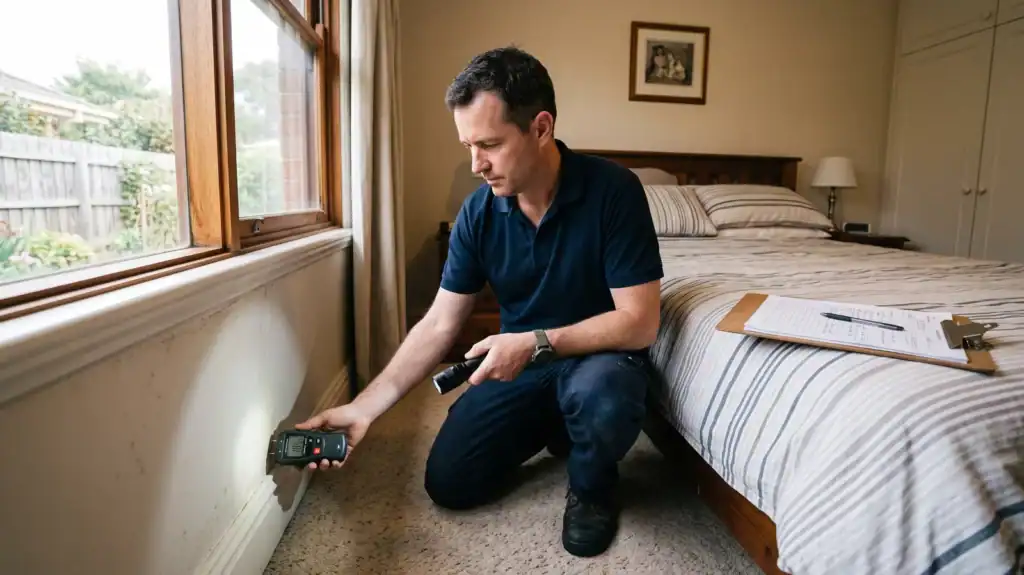
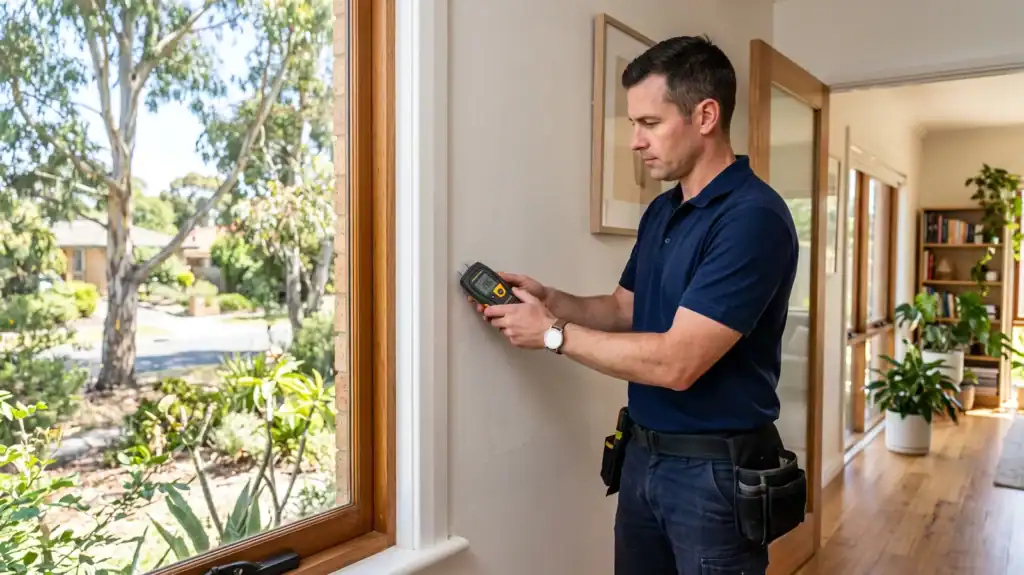
If you have spotted dark spots around your air con vents or noticed a musty smell, a professional mould inspection identifies the full extent of contamination, including areas hidden behind panels and inside ductwork. Mould and Hygiene Solutions offers free inspections across Newcastle, the Central Coast and Hunter Valley.
How Mould Gets Inside Your Air Conditioner
Air conditioners create the three conditions mould needs to grow: moisture, warmth and a food source. Condensation forms on the evaporator coil every time the unit runs, and dust particles settling on wet surfaces give mould spores exactly the organic matter they feed on.
The drain pan that catches this condensation is the most common starting point. If the drain line is partially blocked, even by a thin film of biofilm, water sits long enough for spores to germinate within a day or two. Once established, the unit starts pushing mould spores into every room it services.
| Component | Why mould grows there | How quickly |
|---|---|---|
| Evaporator coil | Constant condensation mixed with dust | 1 to 2 days |
| Drain pan | Standing water collects organic debris | 1 to 2 days |
| Ductwork | Warm air carries moisture and dust buildup | 1 to 2 weeks |
| Filter housing | Trapped dust absorbs ambient moisture | 1 to 2 weeks |
| Blower fan | Organic buildup coats blade surfaces | 2 to 4 weeks |
Newcastle and Central Coast homes are particularly vulnerable. Coastal humidity regularly sits above the 60% threshold that allows mould to flourish, and older split systems without adequate drainage create the perfect environment for rapid mould colonisation.
Signs Your Air Conditioner Has a Mould Problem
The first sign is usually a damp, musty smell when the system starts. By the time you notice it, the colony is already established inside the unit and potentially through the ductwork.
Watch for these warning signs:
- A musty or earthy smell that appears within minutes of turning on the unit
- Visible dark spots around the vents, louvres or inside the filter housing
- Increased sneezing, coughing or itchy eyes when the system runs
- A thin film of black or green residue on the air filter
- Unexplained condensation or water marks around the indoor unit
According to NSW Health, mould exposure can cause nasal congestion, eye irritation, skin rashes and wheezing. People with asthma or weakened immune systems are at higher risk of serious respiratory episodes.
If anyone in your household has asthma, allergies or a compromised immune system, mould spores circulated by air conditioning can trigger reactions ranging from persistent congestion to serious respiratory episodes. A professional mould test confirms exactly what species are present and how concentrated the spore levels are.
Why Cleaning Your Air Conditioner Yourself Does Not Fix the Problem
Retail air conditioner cleaning sprays and foam products treat the surfaces you can reach. The evaporator coil fins, the inside of the drain pan and the ductwork behind the indoor unit are not accessible without disassembling the system.
Even when you remove the filters and spray into the unit, the product only contacts a fraction of the contaminated surface area. Mould hyphae (root structures) embedded in dust buildup and biofilm on internal components survive surface-level treatment and regrow within weeks. Proper ventilation is more effective than cleaning alone for slowing regrowth, but it still cannot reach an established colony inside the unit.
This is why DIY mould removal fails on air conditioners:
- Retail sprays reach only a small fraction of the internal surface area
- Mould hyphae grow beneath biofilm that surface sprays cannot penetrate
- Wiping visible mould without containment releases spores into the room
- The moisture source (condensation) is never addressed by cleaning products
- Without a residual antimicrobial barrier, recolonisation begins immediately
There is no consumer product available in Australia that treats the root structure of mould inside an air conditioning system. This is why mould cleaning keeps failing for so many homeowners. Surface cleaning removes what you can see and leaves everything you cannot.
What Happens When You Keep Running a Mouldy Air Conditioner
Every time the unit cycles, the blower fan pushes air across contaminated coils and through mouldy ductwork. Those spores are distributed to every room connected to the system, including bedrooms where people spend eight hours breathing.
The Better Health Channel (Victoria) lists respiratory irritation, allergic reactions and worsened asthma among the health effects of mould exposure. An air conditioner actively distributing spores amplifies this across every room in the home.
The health effects escalate with ongoing exposure:
- Short-term: sneezing, coughing, nasal congestion, throat irritation, itchy or watery eyes
- Medium-term: persistent headaches, fatigue, skin rashes, worsening asthma symptoms
- Long-term: chronic respiratory conditions, sensitisation to mould allergens, recurring sinus infections
Beyond health, a contaminated air conditioner costs more to run. Mould buildup on the evaporator coil reduces heat exchange efficiency, so the compressor works harder and your power bill goes up.
Blocked drain lines can cause water damage to walls and ceilings. Left untreated, mould migrates from the unit into wall cavities and ceiling spaces through the ductwork.
Homeowners across Lake Macquarie and the Hunter Valley regularly discover mould behind walls that originated from an untreated split system. A mouldy air conditioner is not a comfort issue. It is an active contamination source that gets worse each day it runs.
How Professional Mould Treatment Stops the Cycle
Professional treatment works differently because it addresses the three things DIY cannot: full internal access, root-level treatment and a lasting antimicrobial barrier that prevents mould from returning in moisture-prone areas.
Mould and Hygiene Solutions starts every job with a full inspection of the air conditioning system and surrounding areas. This identifies the extent of contamination, including secondary colonies in ductwork and wall cavities that are invisible from outside the unit.
The treatment uses an Australian-made, non-hazardous, non-corrosive and environmentally friendly antimicrobial solution that penetrates biofilm and kills mould at the root structure. This is not a surface spray. It reaches the hyphae embedded in the substrate and eliminates the colony entirely.
Here is what professional treatment includes:
- Full disassembly and inspection of the indoor unit
- Treatment of evaporator coil, drain pan, blower fan and accessible ductwork
- Application of the antimicrobial solution to all contaminated surfaces
- Moisture source identification and recommendations to prevent recurrence
- A 12-month mould-free guarantee on all treated areas
The 12-month guarantee matters because it proves the treatment works at the root level. If surface cleaning were enough, no company could stand behind that commitment.
Keeping Your Air Conditioner Mould-Free After Treatment
Professional treatment eliminates the existing colony, but preventing recolonisation requires ongoing attention to the conditions that caused the problem in the first place.
These steps reduce the chance of mould returning:
- Run fan-only mode for 15 to 20 minutes after cooling. This evaporates residual moisture on the evaporator coil before the unit sits idle, so mould does not have the damp surface it needs to start growing.
- Replace or clean filters every four to six weeks during heavy use periods
- Keep indoor humidity below 60% using exhaust fans and ventilation
- Schedule a professional mould prevention inspection every 12 months
- Address any water leaks or condensation issues around the indoor unit immediately
Even with good maintenance habits, air conditioners in coastal areas like Newcastle, the Central Coast, Lake Macquarie, Hunter Valley and Port Stephens face higher humidity year-round. Annual professional inspections catch early colonisation before it spreads through the system again.
If you rent and your air conditioner has mould, your landlord may be responsible for addressing it. Understanding your tenant rights around mould in NSW can help you take the right steps.
Frequently Asked Questions
Can mould in your air conditioner make you sick?
Yes. According to NSW Health, mould exposure causes nasal congestion, eye irritation, skin rashes and wheezing. People with asthma or compromised immune systems face higher risk, and an air conditioner with mould pushes spores into every room, increasing exposure well beyond a patch of mould on a wall.
Can you still use your AC if it has mould?
Running a mouldy air conditioner actively distributes spores through your home. Every cooling cycle pushes contaminated air into bedrooms, living areas and kitchens. The safest option is to stop using the unit until a professional has inspected and treated it, though opening windows can help dilute the spore concentration in the meantime.
Is the black stuff in my AC vents mould?
Dark spots on vents, louvres or the filter housing are almost always mould or a mix of mould and dust. Black mould has a distinctive dark, sometimes slightly fuzzy appearance. If you can see it on the vents, it is very likely growing deeper inside the unit where you cannot reach it.
Does bleach kill mould in air conditioners?
Bleach removes visible surface mould but does not reach the root structure (hyphae) embedded beneath biofilm on coils, drain pans and blower fans. It also cannot penetrate the ductwork behind the indoor unit. Bleach is a temporary surface treatment that gives the appearance of a fix while the colony continues growing underneath.
If your air conditioner smells musty or you have noticed dark spots around the vents, the fastest path to clean indoor air is a professional assessment. Mould and Hygiene Solutions offers free inspections across Newcastle, the Central Coast, Lake Macquarie, Hunter Valley and Port Stephens. Book your free mould inspection today.