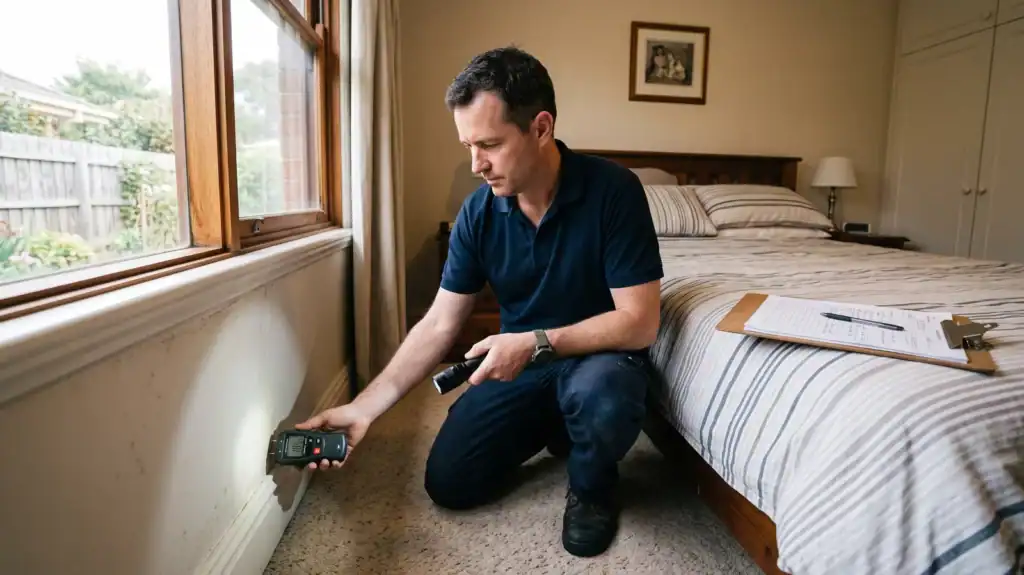
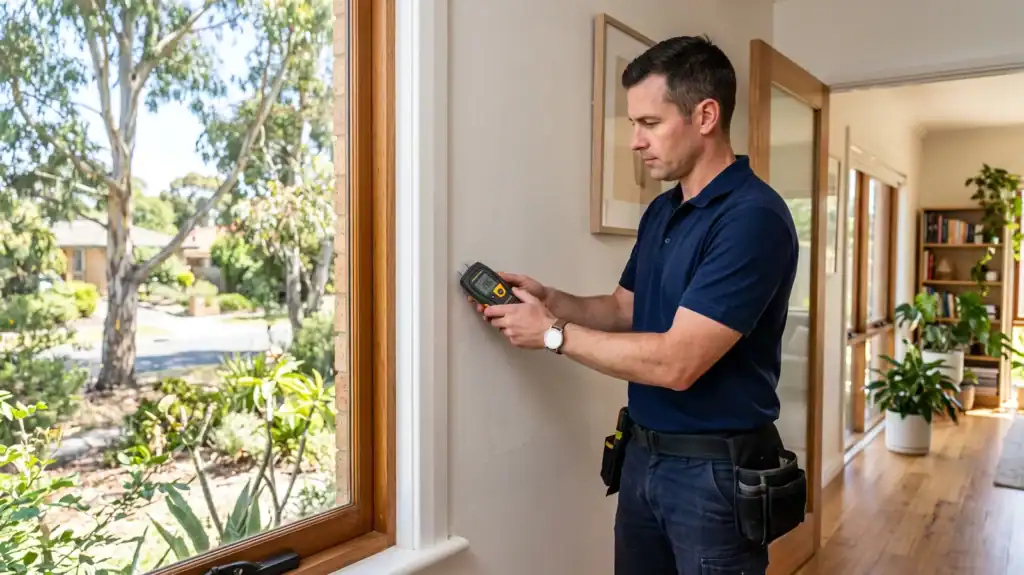
You cannot permanently remove mould from your shower with surface cleaning alone.
Shower mould is one of the most common household problems across Newcastle, the Central Coast and the Hunter Valley. Scrubbing the black patches off your tiles or silicone might make things look clean for a few weeks, but the mould colony underneath the surface remains intact.
This article breaks down why shower mould keeps returning after DIY treatments like vinegar, what causes it, and why professional mould removal is the only approach that delivers lasting results.
Spotted mould in your shower? Book a free mould inspection with Mould and Hygiene Solutions. We service Newcastle, the Central Coast, Lake Macquarie, Hunter Valley and Port Stephens.
Why Mould in Your Shower Keeps Coming Back
Mould spores are microscopic and exist in every home. They only need three things to colonise a surface: moisture, warmth and an organic food source.
Your shower provides all three. Warm water vapour saturates the air, condensation coats every surface, and soap residue, body oils and dead skin cells supply a constant food source for mould colonies.
What most people do not realise is that visible mould on tile grout or silicone is only the surface layer. The root structure, called hyphae, burrows into the material underneath and embeds itself in porous substrates like grout, plaster and sealant.
When you scrub the surface clean, those roots stay behind. Within two to six weeks, the mould grows back through the surface, often worse than before.
- Humidity above 60% after every shower
- Poor ventilation trapping warm moist air
- Soap scum and body oils feeding the colony
- Porous grout and silicone giving roots somewhere to embed
- Darkness behind tiles and inside wall cavities
Healthdirect Australia warns that prolonged mould exposure can trigger respiratory symptoms, allergic reactions and worsen existing asthma. Your shower is the highest-risk room in the house for mould growth.
Where Mould Hides in Your Shower
Visible mould on the surface is rarely the full picture. In most showers, the colony extends into areas you cannot see or reach with a sponge.
- Grout lines: grout is porous and absorbs moisture with every shower. Mould hyphae embed deep into the material, making surface scrubbing ineffective.
- Silicone sealant: the sealant around your shower base, glass panels and tap fittings traps moisture underneath. Once mould penetrates silicone, removing mould from silicone sealant with cleaning products alone is not possible. The silicone must be stripped out and replaced.
- Ceiling corners: warm moist air rises and condenses at the ceiling junction, creating a persistent damp zone that feeds mould colonies above the shower.
- Behind tiles: cracked or deteriorating grout allows moisture to seep behind tiles, where mould can grow unseen for months inside the wall cavity.
- Shower drains: hair, soap residue and standing moisture around the drain create ideal conditions for mould growth below the drain cover.
If you can see mould in any of these areas, there is almost certainly more growing behind the surface. A professional mould inspection maps the full extent of the colony, including hidden growth behind tiles and inside wall cavities.
Common DIY Shower Mould Methods and Why They Fail
Every hardware store sells products that claim to kill mould. Most homeowners try at least two or three before calling a professional.
The problem is not effort or technique. Retail products are designed for surface treatment only.
| Method | What It Does | What It Misses |
|---|---|---|
| Bleach spray | Strips surface colour from mould, making it invisible | Does not penetrate grout or silicone. Hyphae survive underneath |
| White vinegar | Kills some surface mould on contact | Cannot reach root structure in porous materials |
| Baking soda paste | Provides mild abrasion for scrubbing | Mechanical removal only. No antimicrobial action below the surface |
| Tea tree oil spray | Some antifungal properties on direct contact | Evaporates before reaching embedded mould colonies |
| Commercial mould sprays | Bleach-based formula in a spray can | Same limitation as bleach. Surface only |
Every method in that table treats the visible symptoms. None reach the mould colony established inside the substrate beneath your tiles or silicone.
Bleach is the most commonly recommended option. It removes the dark discolouration within minutes.
But bleach does not penetrate porous bathroom surfaces like grout and plaster, and the sodium hypochlorite breaks down quickly. It leaves no residual protection against mould regrowth.
What Happens When You Disturb Shower Mould Without Containment
Scrubbing mould with a brush releases thousands of spores into the air. In a small bathroom with the door closed, those spores have nowhere to go except onto other surfaces, into the ventilation system, or into your lungs.
Without professional containment, a DIY cleaning session can spread mould to areas that were previously unaffected. The NSW Department of Health recommends that mould covering an area larger than one square metre should be handled by a professional.
Professional mould remediation includes containment procedures that prevent spore dispersal during treatment. DIY scrubbing skips this entirely.
- Airborne spore release during scrubbing
- Cross-contamination to other rooms via ventilation
- Respiratory irritation, especially for people with asthma or allergies
- Mould spreading behind wall cavities where it cannot be seen
- Chemical exposure from mixing cleaning products in an enclosed space
Never combine bleach with vinegar or ammonia-based cleaners. Mixing these products produces toxic chlorine or chloramine gas, which is especially dangerous in an unventilated bathroom.
Why Surface Cleaning Never Solves Shower Mould
Every DIY approach fails for the same three reasons. First, retail products only treat the visible surface. The mould root network embedded in grout, silicone and plaster remains alive and intact.
Second, no DIY method addresses the moisture source. After you clean the mould away, the same conditions that caused it are still there.
Third, DIY treatment gives no residual protection. Once the cleaning product dries or evaporates, the treated surface is immediately available for recolonisation by airborne spores.
This is why homeowners across Newcastle and the Central Coast find themselves cleaning the same mould from the same spot every month. Surface cleaning cannot fix a problem that lives below the surface.
- Surface-only treatment leaves root structure alive
- Moisture source remains unaddressed
- No residual antimicrobial protection after cleaning
Mould prevention requires treating the root cause, not repeating the same surface clean on a monthly cycle.
How Professional Mould Treatment Works Differently
Professional mould treatment targets the root structure, not the surface. Mould and Hygiene Solutions uses an Australian-made, non-hazardous, non-corrosive and environmentally friendly antimicrobial solution that penetrates porous materials and kills mould at the hyphae level.
The process starts with a free mould inspection to assess how far the colony has spread. Visible shower mould is often only part of a larger colony growing behind tiles, inside wall cavities or along bathroom ceiling joists.
After the full extent is mapped, the treatment is applied to every affected surface and substrate. The antimicrobial solution kills existing mould and creates a protective barrier that prevents recolonisation for months.
This is why Mould and Hygiene Solutions offers an unconditional 12-month mould-free guarantee on every treatment. If the mould returns within 12 months, they come back and retreat at no charge.
- Full property inspection including hidden areas behind walls and in cavities
- Identification of the moisture source driving growth
- Industrial-grade antimicrobial treatment that penetrates below the surface
- Silicone sealant removal and replacement where mould has penetrated the material
- Residual protection barrier preventing recolonisation
- Unconditional 12-month mould-free guarantee
Keeping Your Shower Mould-Free After Treatment
Once your shower has been professionally treated, the antimicrobial barrier does the heavy lifting. Good daily habits extend the protection further.
The single most important factor is humidity. If your bathroom stays above 60% relative humidity after showering, mould will return regardless of how well you clean. Knowing what humidity level actually prevents mould gives you a measurable target, and a wall-mounted hygrometer lets you track it.
- Run your exhaust fan during every shower and for 30 minutes after
- Squeegee walls and glass after each use to remove standing water
- Leave the shower door or curtain open after bathing to allow airflow
- Fix any leaking taps or showerheads immediately
- Clean shower surfaces weekly with a mild bathroom cleaner, not bleach
- Check silicone sealant and grout every few months for early signs of cracking or discolouration
These steps reduce moisture and remove the organic material mould feeds on. Combined with professional treatment, they keep your shower clean long-term instead of repeating the same DIY cycle every few weeks.
If you notice early warning signs of mould returning, mould testing can determine whether it is surface contamination or a new colony forming from an unresolved moisture issue.
If your bathroom has no exhaust fan for mould prevention or the existing fan vents into the roof cavity rather than outside, you are creating ideal conditions for mould growth. Having a qualified electrician install or redirect a fan is one of the most effective moisture control upgrades you can make.
Shower mould is not a cleaning problem. It is a biology problem. The colony lives inside the material, not on top of it. No amount of scrubbing, bleaching or spraying will change that.
Frequently Asked Questions
Is it safe to shower when there is mould?
Small amounts of surface mould on shower tiles are unlikely to cause immediate harm for most people. However, mould releases spores into the warm, humid air during showering. People with asthma, allergies or compromised immune systems are at higher risk of respiratory irritation.
Why does my shower mould keep coming back after cleaning?
Surface cleaning removes visible mould but leaves the root network (hyphae) alive inside grout, silicone and plaster. These roots regrow through the surface within weeks. The moisture source that caused the original colony also remains unchanged.
Does bleach actually kill shower mould?
Bleach strips the dark colour from mould and kills some surface growth on contact, but bleach does not kill mould below the surface. The root structure in porous materials like grout and silicone survives every application.
How do I know if my shower mould is dangerous?
You cannot identify mould species by colour alone. Black mould in showers is most commonly Cladosporium or Aspergillus, not the Stachybotrys chartarum that headlines warn about. Understanding whether black mould is dangerous depends on the species and your existing health conditions.
When should I call a professional for shower mould?
Call a professional if mould covers more than one square metre, keeps returning after cleaning, appears behind tiles or inside wall cavities, or if anyone in the household is experiencing respiratory symptoms. A free inspection determines how far the colony has spread.
Can mould grow behind shower tiles?
Yes. Moisture seeps through cracked or deteriorating grout and feeds mould colonies inside the wall cavity. This hidden growth can spread for months before any visible signs appear on the surface.
Professional inspection is the only way to detect mould behind tiles without removing them.
If you have been cleaning the same mould from your shower for months, a free professional inspection is the most effective next step. Mould and Hygiene Solutions offers free inspections across Newcastle, the Central Coast, Lake Macquarie, Hunter Valley and Port Stephens.