Hydrogen peroxide removes mould from the surface but does not kill the roots growing underneath.
If you have found mould on your bathroom tiles or kitchen ceiling, reaching for hydrogen peroxide feels like a sensible first step. Many homeowners across Newcastle and the Central Coast try it. The problem is that what you see on the surface is only a fraction of the colony.
A quick Google search returns dozens of articles recommending hydrogen peroxide as a mould killer. Most of them skip the part where it only works on certain surfaces and under very specific conditions.
This article explains how hydrogen peroxide interacts with mould, where it works, where it fails, and why professional treatment is the only option that lasts.
Already dealing with recurring mould? Learn about our mould removal service or book a mould inspection to find out what is growing in your walls.
What Hydrogen Peroxide Does to Mould
Hydrogen peroxide (H₂O₂) is an oxidiser. When it contacts mould on a surface, it releases oxygen rapidly and breaks down the visible mould cells through oxidation.
On non-porous surfaces like glass, ceramic tiles and stainless steel, this reaction can remove visible mould within minutes. The staining disappears and the surface looks clean.
But the reaction stops at the surface. Hydrogen peroxide does not penetrate into the substrate where mould roots, called hyphae, grow and spread.
Think of it like mowing a lawn. You cut the grass you can see, but the root system underneath is completely unaffected and keeps growing.
Most household hydrogen peroxide is sold at 3% concentration. Even industrial-strength solutions at 10% cannot penetrate materials like plasterboard, timber or carpet where mould colonies establish themselves.
| Surface Type | Examples | H₂O₂ Result | Why |
|---|---|---|---|
| Non-porous | Glass, tiles, metal | Removes visible mould | Oxidation reaches all surface growth |
| Semi-porous | Grout, sealed timber | Partial removal only | Cannot reach mould in micro-pores |
| Porous | Drywall, carpet, insulation | Surface wipe only | Roots embedded deep in material |
The NSW Health mould factsheet notes that the underlying moisture problem should be addressed, because removing visible mould is only temporary if the source remains.
Five Surfaces Where Hydrogen Peroxide Fails
Mould grows differently depending on the material. On porous surfaces, hyphae extend millimetres or even centimetres into the structure.
Hydrogen peroxide cannot reach that depth. These are the surfaces where it consistently fails to eliminate mould.
- Plasterboard and drywall. Mould roots penetrate through the paper facing into the gypsum core. Spraying the surface leaves the internal colony completely untouched.
- Carpet and underlay. Mould grows through carpet fibres into the backing and underlay beneath. Surface cleaning removes staining but not the source of regrowth.
- Timber framing. Unpainted or unsealed timber absorbs moisture deep into the grain. Hydrogen peroxide sits on the surface and evaporates before reaching the colony.
- Insulation batts. Once mould colonises insulation, the material is compromised throughout. No topical product can reach growth spread through the batt.
- Fabric and soft furnishings. Curtains, mattresses and upholstered furniture absorb mould spores deep into the fibres where surface sprays cannot follow.
Mycotoxins remain after cleaning. Some mould species produce mycotoxins, harmful byproducts that linger on surfaces and in the air even after visible mould is removed. Hydrogen peroxide does not neutralise them.
Why DIY Mould Removal Keeps Failing
Every retail mould product, whether hydrogen peroxide, bleach, vinegar or tea tree oil, shares the same fundamental problem. They treat what you can see, not what is causing the growth.
Mould is not a surface stain. The visible patches on your wall or ceiling are the fruiting bodies of a colony whose root network is embedded in the building material underneath.
The four reasons DIY products fail
- Surface cleaning removes visible mould but leaves hyphae intact in the substrate, allowing regrowth within two to six weeks
- Disturbing mould without proper containment releases spores into the air, spreading the colony to other rooms in the property
- No retail product identifies or addresses the moisture source driving the growth in the first place
- Repeated cleaning cycles damage building materials without ever eliminating the underlying colony
Homeowners across the Hunter Valley and Lake Macquarie often go through multiple rounds of DIY cleaning before recognising the pattern. The mould returns to the same spot every time because the hyphae are regrowing from the material beneath.
The regrowth cycle is predictable. Surface cleaning removes the visible mould, the wall or ceiling looks clean for two to six weeks, and then the same dark patches reappear in the same location.
Each cycle also makes the problem worse. Scrubbing and spraying without containment releases millions of spores into the air, which settle on other surfaces and start new colonies in other rooms.
A mould colony that returns after cleaning is not a cleaning failure. It is a root structure that was never treated. Learn more about mould remediation that targets the source.
What Professional Mould Treatment Does Differently
Professional mould removal is not a stronger version of what you buy at the hardware store. It is a fundamentally different approach that targets the root structure beneath the surface, not the visible mould alone.
Where hydrogen peroxide treats what you can see, professional remediation starts with what you cannot see. That means finding mould behind walls, inside ceiling cavities and within building materials before any treatment begins.
Mould and Hygiene Solutions uses an Australian-made, non-hazardous, non-corrosive and environmentally friendly antimicrobial solution that penetrates into the substrate where mould roots grow. This is not a surface spray.
What the treatment process involves
- Full property inspection to identify all affected areas, including hidden mould behind walls and in ceiling cavities
- Containment of the affected zone to prevent spore dispersal during treatment
- Application of the antimicrobial solution that penetrates building materials and eliminates mould at the root level
- Identification of the moisture source causing the growth, with advice on how to address it
- A written inspection report documenting findings, treatment carried out and prevention recommendations
After treatment, Mould and Hygiene Solutions provides an unconditional 12-month mould-free guarantee. If treated mould returns within 12 months, retreatment is provided at no additional cost.
That guarantee exists because the treatment targets the root structure. When the hyphae are eliminated and the moisture source addressed, the colony cannot regrow.
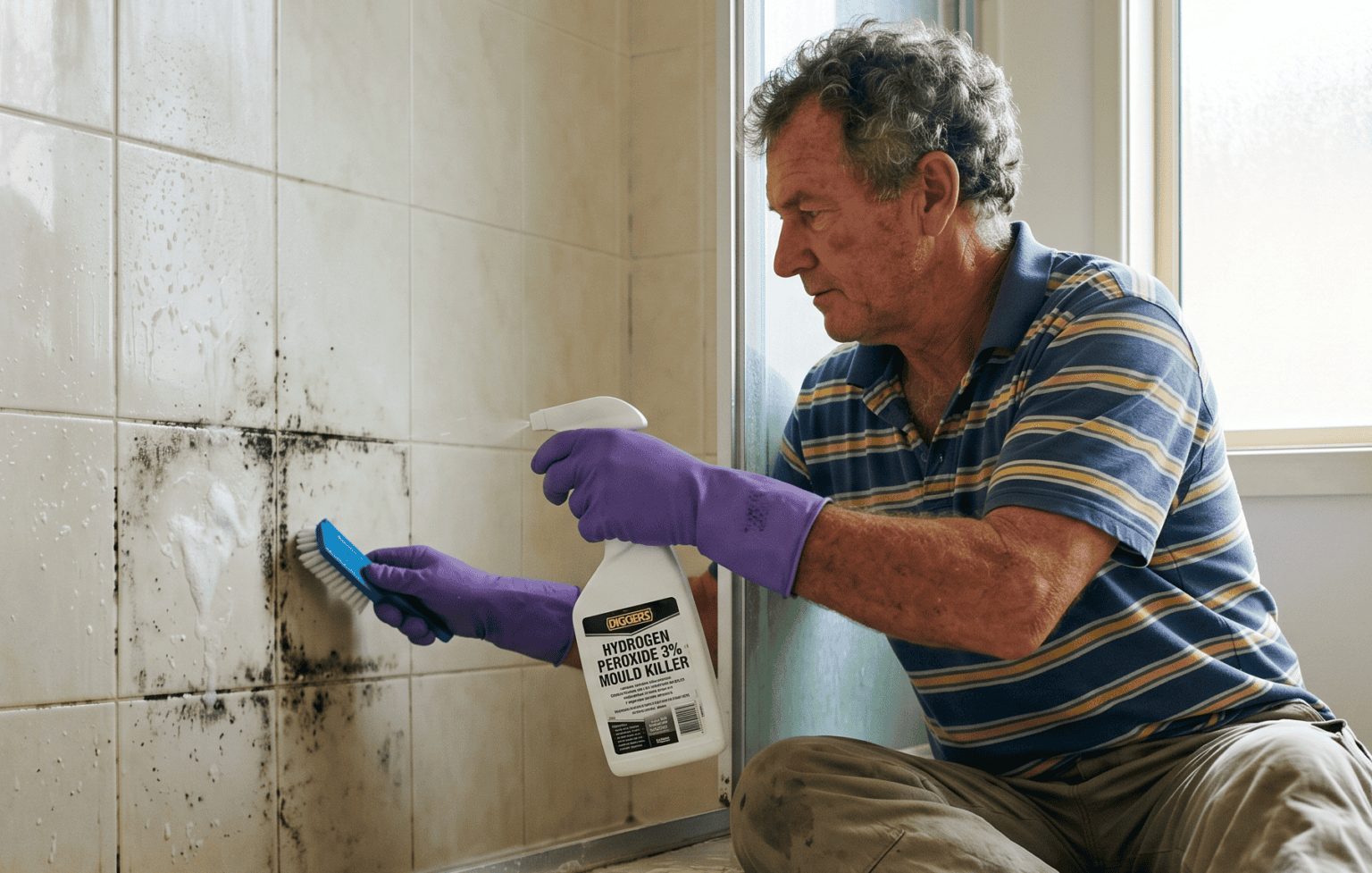
Compare that to the hydrogen peroxide approach: spray the surface, wait for the fizzing to stop, wipe it off and hope it does not come back. There is no containment, no root treatment and no moisture investigation.
CSIRO research confirms that effective mould management requires addressing the underlying moisture problem, because removing what is visible on the surface is only temporary.
When You Need More Than Hydrogen Peroxide
A small patch of mould on bathroom tiles can sometimes be managed with surface cleaning as a short-term measure. But several situations demand professional treatment from the start.
Signs you need professional mould removal
- Mould covers more than one square metre of wall, ceiling or floor
- Mould has returned after previous cleaning attempts, even once
- You can smell a musty odour but cannot locate the visible source
- Mould is growing on porous surfaces like drywall, carpet, timber or insulation
- The property has had water damage, flooding or persistent condensation issues
- Mould is appearing in multiple rooms or spreading from one area to another
If any of those apply, surface cleaning with hydrogen peroxide will not resolve the problem. The colony has established itself in the building materials and needs treatment that reaches below the surface.
Even a single recurrence after DIY cleaning is a strong signal. It means the root network survived the first treatment and will continue regrowing until it is properly eliminated.
Coastal and humid regions are higher risk. Properties across Newcastle, the Central Coast, Lake Macquarie and Port Stephens are prone to mould because of the combination of coastal humidity and older building stock with limited ventilation. If your home was built before modern ventilation standards, mould colonies can establish faster than in newer builds.
Book a Professional Mould Inspection
If you have been cleaning mould with hydrogen peroxide and it keeps returning, the root structure is still alive in the material underneath. No retail product, regardless of concentration or brand, can fix that.
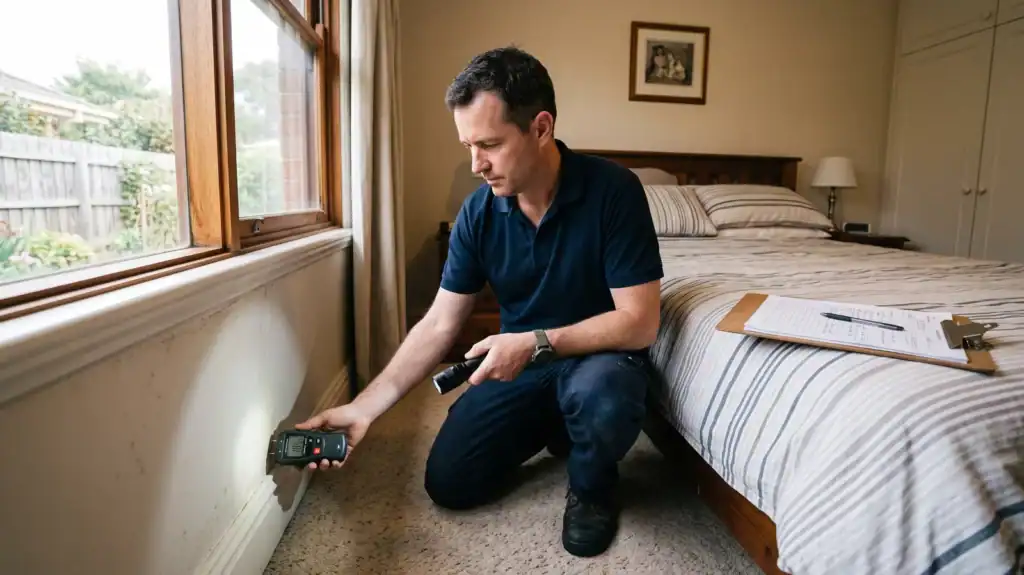
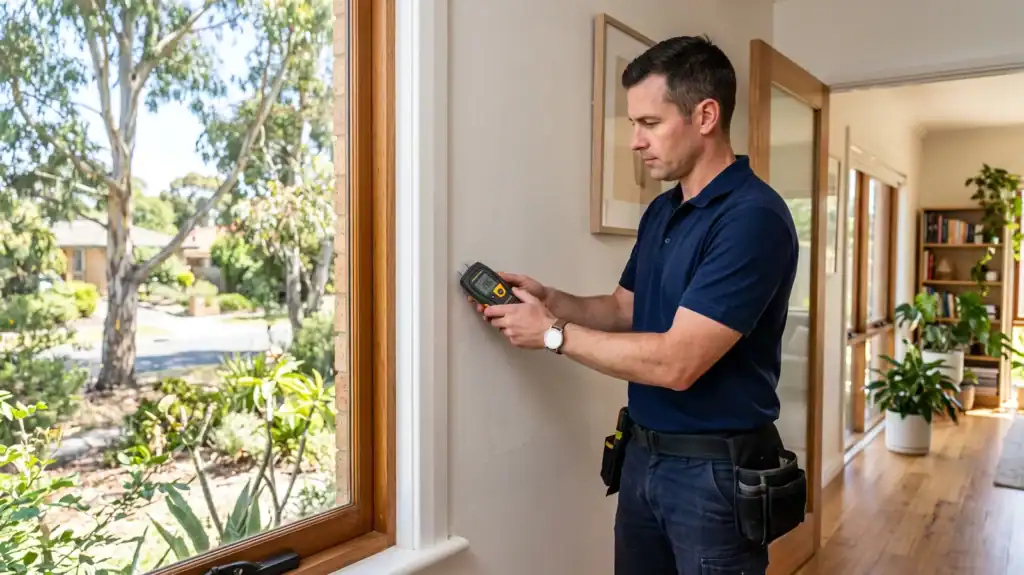
The first step is understanding what you are dealing with. A professional inspection reveals the full extent of the colony, including areas hidden behind walls or in ceiling spaces that you would never find on your own.
Mould and Hygiene Solutions offers professional mould inspections across Newcastle, the Central Coast, Lake Macquarie, Hunter Valley and Port Stephens. The inspection identifies all affected areas, checks for hidden mould, and provides a written report with treatment recommendations.
Every treatment from Mould and Hygiene Solutions comes with an unconditional 12-month mould-free guarantee. Contact us today to book your mould inspection.