Glen 20 kills surface mould on hard surfaces, but it does not eliminate the mould colony growing underneath.
Many homeowners across Newcastle and the Central Coast reach for a can of Glen 20 when they spot mould on a bathroom wall or kitchen bench. The can is already under the sink and the label says it kills mould.
So does Glen 20 kill mould for good? No, because visible mould is only the surface layer of a colony whose root structure grows into the material beneath.
This article breaks down exactly what Glen 20 does and does not do to mould. We will also explain why professional treatment is the only way to stop mould coming back.
Dealing with mould right now? DIY sprays only treat the surface. Mould & Hygiene Solutions uses Australian-made antimicrobial treatments that kill mould at the root, backed by an unconditional 12-month mould-free guarantee. Book a free mould inspection to find out what you’re actually dealing with.
What Is Glen 20?
Glen 20 is an aerosol disinfectant spray made by Reckitt (the company behind Dettol). Its active ingredient is ethanol at 60% concentration.
The spray kills 99.9% of bacteria and viruses on both hard and soft surfaces. Glen 20 also claims to kill the source of mould allergens and control mould growth on hard surfaces.
- Disinfects hard surfaces like benchtops, tiles, and toilets
- Kills bacteria and viruses on soft furnishings
- Eliminates odours
- Controls surface mould and mildew on non-porous materials
That last point is the one that matters here. Glen 20 controls mould on surfaces, but it was never designed to remove mould from within a material.
Honestly, Glen 20 is a disinfectant, and it is excellent at what it was built for. Mould removal is a different job entirely.
Does Glen 20 Kill Mould on Hard Surfaces?
Yes. Glen 20 kills Aspergillus niger (a common mould species) on hard, non-porous surfaces when used correctly.
The method: spray the pre-cleaned surface until wet, leave it for 10 minutes, and let it air dry. The key phrases on the label are “pre-cleaned” and “hard surfaces.”
That means Glen 20 works after you have already physically removed the visible mould. It disinfects what is left behind on the surface.
| Surface type | Does Glen 20 kill mould? | Why |
|---|---|---|
| Glass, tiles, stainless steel | Yes (surface only) | Non-porous, mould sits on top |
| Painted plasterboard | No | Mould roots penetrate the paint and gyprock |
| Timber, MDF | No | Porous, hyphae grow deep into the grain |
| Grout and silicone | No | Porous, mould embeds within the material |
| Fabric and carpet | No | Fibres absorb mould; spray cannot reach roots |
If the mould is on a porous surface, Glen 20 cannot reach the roots. The colony survives underneath and regrows within weeks.
Why Glen 20 Does Not Kill Mould at the Root
When you see mould on a wall or ceiling, you are looking at the fruiting body of a colony. That colony has already established itself inside the material beneath.
The visible patch is roughly 10% of the problem. The other 90% is root structure (hyphae) embedded in the substrate where no aerosol spray can reach.
- Surface-only treatment: ethanol evaporates before it can penetrate porous substrates where mould roots grow
- No residual protection: once the spray dries, there is nothing preventing immediate recolonisation
- Spore dispersal: spraying an aerosol directly at a mould colony can disturb spores and spread them to other areas of the property
- Moisture source untreated: Glen 20 does nothing to address the humidity, condensation, or leak that caused the mould in the first place
Scrubbing the surface and spraying Glen 20 will make the wall look clean for a few weeks. Regrowth typically appears within two to six weeks because the roots remain alive.
We see this pattern constantly in homes across the Newcastle and Hunter Valley region. Homeowners go through multiple cans of Glen 20 before realising the mould keeps returning because the root cause was never treated.
The cycle: spray, scrub, look clean for a fortnight, see mould return, repeat. Every cycle gives the colony more time to spread deeper into the material and across the property.
Why Surface Cleaning Fails Every Time
This is not specific to Glen 20. Every retail product on the shelf at Woolworths and Coles has the same fundamental limitation.
Retail mould sprays treat symptoms. They remove the discolouration you can see, but none of them address the three factors that keep mould alive.
- The root colony in the substrate survives every surface clean. Mould hyphae grow into plasterboard, timber, and grout where sprays cannot reach.
- The moisture source that feeds the colony is never identified. Whether it is condensation, a slow leak, or poor ventilation, the mould will return until the water source is fixed.
- Spore contamination spreads during DIY cleaning. Without proper containment and PPE, disturbing a mould colony releases spores into the air and onto other surfaces.
According to the Australian Government’s Healthdirect guidelines, mould should be professionally removed if it covers an area larger than one square metre or if the person has health conditions affected by mould.
Glen 20, bleach, vinegar, and every other retail product share this limitation. They were designed for cleaning, not for mould remediation.
Glen 20 vs Professional Mould Treatment
The difference between Glen 20 and professional mould removal is the difference between cleaning a surface and treating the problem underneath it.
| Glen 20 | Professional treatment | |
|---|---|---|
| Kills surface mould | Yes (hard surfaces) | Yes (all surfaces) |
| Penetrates substrate | No | Yes |
| Kills mould roots (hyphae) | No | Yes |
| Prevents regrowth | No | Yes (antimicrobial barrier) |
| Identifies moisture source | No | Yes (inspection included) |
| Guarantee | None | 12-month mould-free guarantee |
Mould and Hygiene Solutions uses an Australian-made, non-hazardous, non-corrosive and environmentally friendly antimicrobial solution that penetrates the substrate to kill mould at the root.
The treatment also leaves a protective barrier that prevents recolonisation. That is something no can of Glen 20 can do.
- Industrial-grade antimicrobial treatment that reaches mould roots in the substrate
- Containment procedures that prevent spore dispersal during treatment
- Moisture source identification so the cause is addressed, not the symptom alone
- An unconditional 12-month mould-free guarantee on every treatment
When Glen 20 Is Worth Using
Glen 20 has a place in your cleaning routine. It is a good disinfectant, and for minor surface mould on non-porous hard surfaces it can kill what is on the surface.
None of these uses replace professional mould removal. They are temporary measures at best.
Temporary surface measures
- Small patches of surface mould on tiles, glass, or stainless steel (temporary, mould may return)
- Disinfecting a hard surface after professional mould treatment has been completed
- Freshening soft furnishings with a musty smell (this does not treat mould in the fabric)
When to call a professional instead
- Mould on walls, ceilings, or plasterboard
- Mould embedded in grout, silicone, or timber
- Recurring mould that keeps returning after cleaning
- Any mould patch larger than your hand
- Black mould of any size
- Mould in a rental property (landlords have legal obligations around mould remediation)
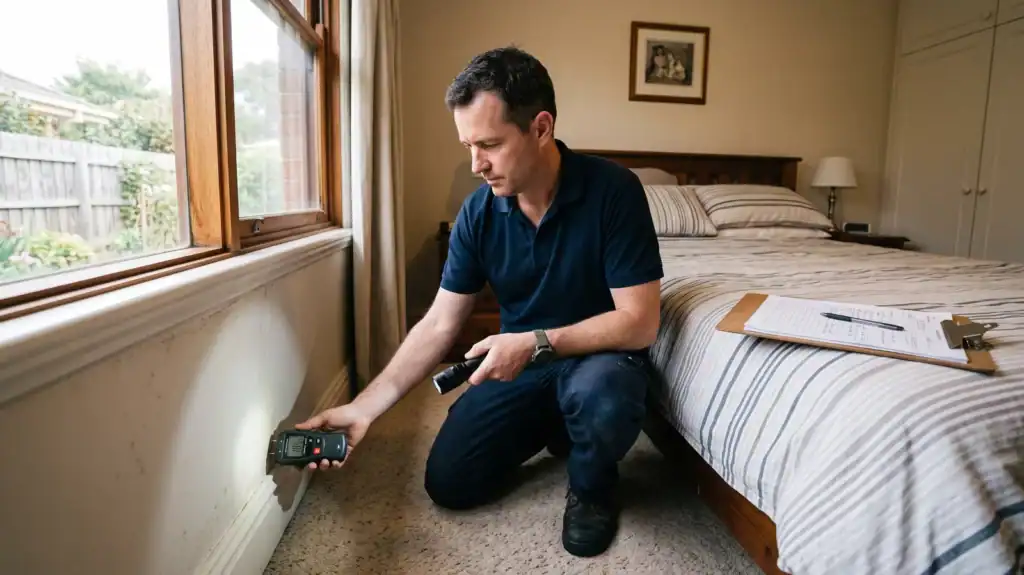
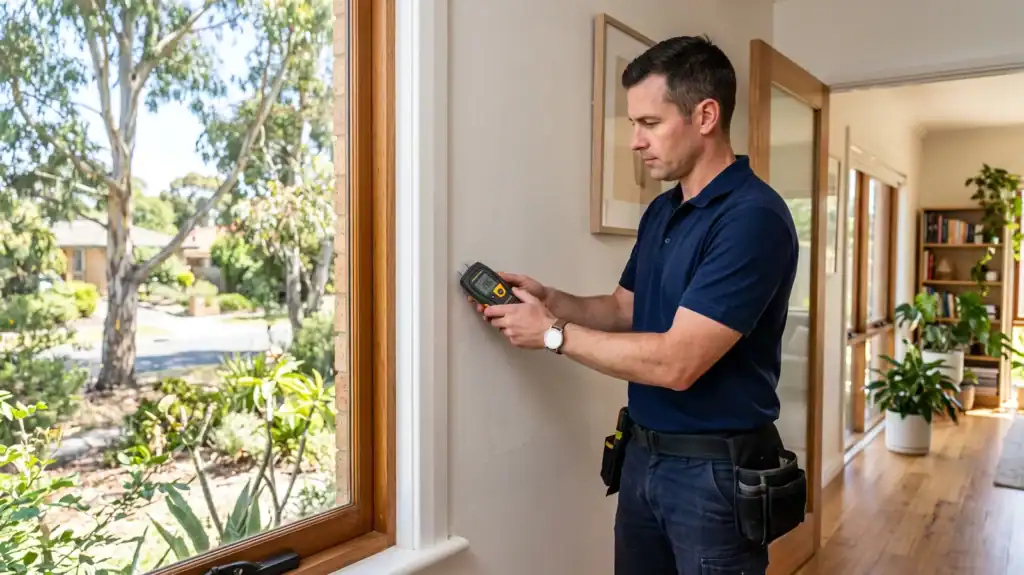
If the mould has penetrated a porous surface or keeps returning, it needs professional assessment. A free mould inspection will identify the type, extent, and moisture source driving it.
Book a Free Mould Inspection
If you have found mould in your home or business, the most effective first step is a professional inspection. Trying Glen 20 or any retail spray first only delays the solution and gives the colony more time to spread.
Mould and Hygiene Solutions offers free mould inspections across Newcastle, the Central Coast, Lake Macquarie, Hunter Valley and Port Stephens.
Every treatment comes with a 12-month mould-free guarantee. If the mould returns within 12 months, the treatment is repeated at no cost.
Ready to fix your mould problem for good? Book a free mould inspection today, with no obligation, no call-out fee, and a 12-month guarantee.