White mould is a living fungus that feeds on organic materials and spreads through airborne spores.
Many homeowners across Newcastle and the Central Coast find white fuzzy or powdery patches on walls, timber, or stored belongings and assume it’s harmless. The problem is that by the time white mould is visible on a surface, the colony has already established itself in the material underneath.
This article covers what white mould actually is, how to tell it apart from efflorescence, where it grows in Australian homes, and why surface cleaning does not stop it from coming back. We’ll also explain what professional treatment does differently.
Spotted white patches in your home? Book a free mould inspection with Mould and Hygiene Solutions to find out exactly what you’re dealing with.
What Is White Mould?
White mould is not a single species. It’s a group of fungi that appear white or pale during certain stages of growth, including Aspergillus, Penicillium, and Cladosporium. These species thrive in damp, poorly ventilated spaces and feed on organic materials like timber, plasterboard, carpet, and cardboard.
Unlike black mould, which is easy to spot, white mould is often missed because it blends in with walls and ceilings. Homeowners in Lake Macquarie and the Hunter Valley regularly discover it behind furniture or inside wardrobes that have been pushed against external walls.
White mould typically appears in one of these forms:
- Fuzzy or cotton-like patches on timber, leather, or fabric
- Powdery white coating on walls, particularly behind furniture or in corners
- Thin white film on stored items in garages, sheds, or under-house spaces
- Thread-like strands spreading across surfaces in subfloor areas
If the white substance is growing on anything other than bare masonry, it is almost certainly mould, not mineral deposits.
White Mould vs Efflorescence
The most common misidentification is confusing white mould with efflorescence, which is a harmless mineral salt deposit left behind when moisture moves through concrete or brick. Getting this wrong matters, because one is a living organism that spreads and the other is just a cosmetic issue.
| White Mould | Efflorescence | |
|---|---|---|
| What it is | Living fungus | Mineral salt deposit |
| Texture | Fuzzy, slimy, or cotton-like | Powdery, crystalline, chalky |
| Smell | Musty or damp odour | No smell |
| Found on | Any organic material (timber, plasterboard, fabric) | Masonry, brick, concrete only |
| Water test | Does not dissolve | Dissolves when sprayed with water |
| Health risk | Yes, can trigger respiratory symptoms | No |
| Needs treatment | Yes, professional removal | No, cosmetic only |
The water test is the simplest way to check. Spray a small amount of water on the white patches. If it dissolves, it’s efflorescence. If it stays put, you have mould.
Not sure what you’re looking at? A professional mould test identifies the exact species, spore count, and whether it poses a health risk.
Where White Mould Grows in Australian Homes
White mould follows moisture. Anywhere condensation builds up or water intrudes, the conditions are right for growth. Coastal and humid regions like Newcastle, the Central Coast, and Port Stephens are particularly prone because ambient humidity stays high for months at a time.
The most common locations in NSW homes:
- Subfloor spaces with poor ventilation, especially in older weatherboard homes
- Wardrobes and cupboards against exterior walls where condensation collects
- Bathrooms without exhaust fans or with fans that vent into the roof cavity
- Roof cavities where leaks go unnoticed for months
- Under-house storage areas in homes with enclosed foundations
- Laundry rooms where dryers vent indoors instead of outside
Properties throughout the Hunter Valley with sandstone or brick foundations often trap moisture in the subfloor. That moisture wicks into timber framing, creating ideal conditions for white mould colonies.
Why DIY White Mould Removal Fails
The internet is full of advice on removing white mould with bleach, vinegar, or baking soda. Every one of these methods treats the surface only. The mould root structure (called hyphae) is embedded in the material beneath the visible growth, and retail products do not reach it.
Spraying bleach on white mould will remove the surface discolouration within minutes. The hyphae embedded in the plasterboard or timber are unaffected. Regrowth typically occurs within two to six weeks.
Here is what happens with each common DIY method:
- Bleach: kills surface mould on non-porous materials but cannot penetrate porous surfaces. Releases chlorine gas in enclosed spaces.
- White vinegar: mildly effective on some surface mould species but does not address root structures in timber or plasterboard.
- Baking soda paste: abrasive action removes visible mould but leaves the root intact. No residual protection against regrowth.
- Tea tree oil spray: some antifungal properties but nowhere near industrial strength. Does not penetrate substrates.
- Retail “mould killer” sprays: bleach-based formulas with the same limitation. Surface treatment only.
The other problem with DIY removal is disturbance. Scrubbing or wiping mould without containment sends millions of spores into the air, spreading the colony to other rooms. NSW Health recommends professional removal for areas larger than one square metre.
What Professional White Mould Treatment Involves
Professional treatment works because it reaches the root structure that DIY products miss. Mould and Hygiene Solutions uses an Australian-made, non-hazardous, non-corrosive and environmentally friendly antimicrobial solution that penetrates into the substrate where hyphae grow.
A full professional treatment follows this process:
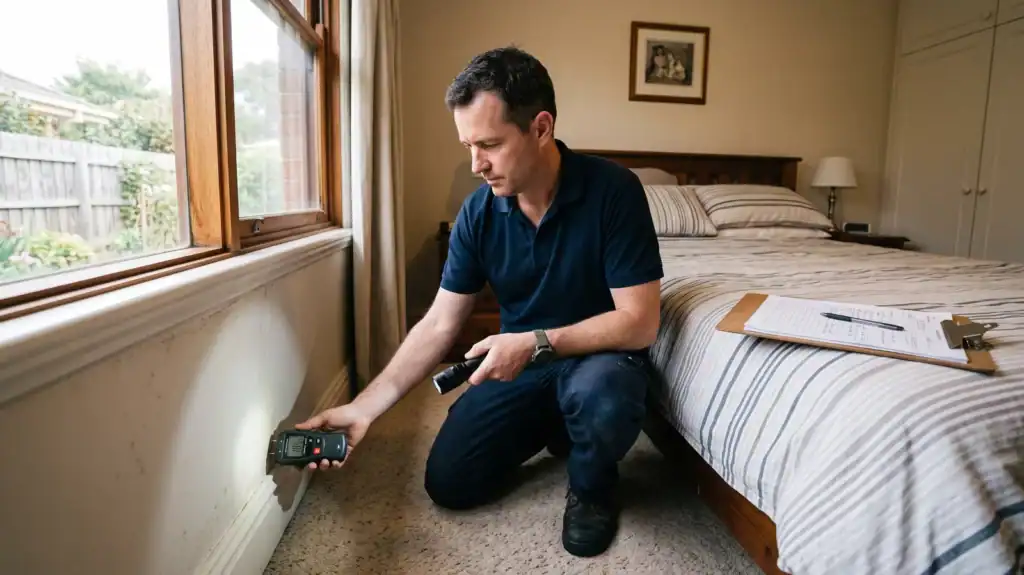
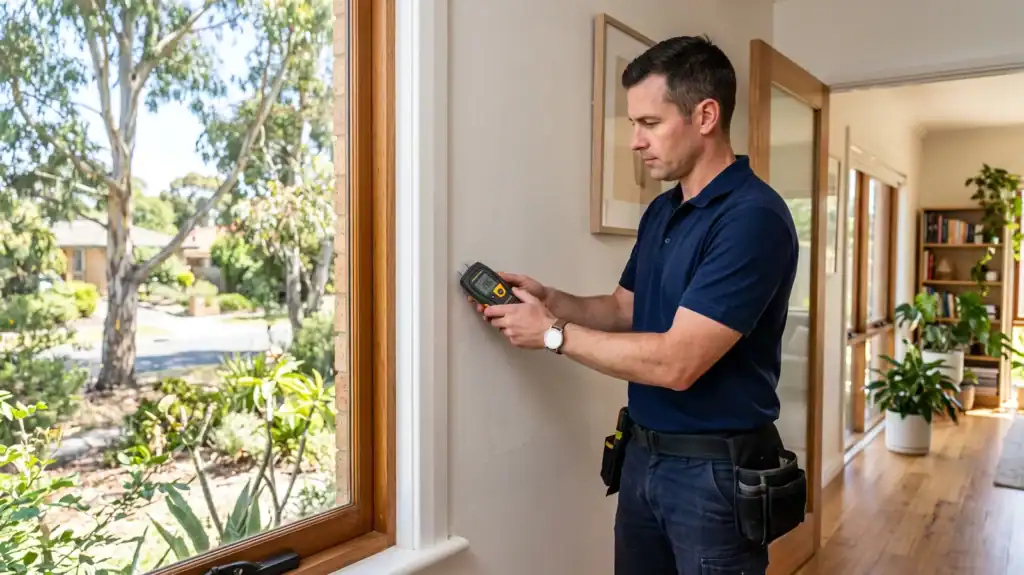
- Inspection and moisture mapping to identify all affected areas and the moisture source driving growth
- Containment to prevent spore spread during treatment
- Application of industrial-grade antimicrobial solution that kills mould at the root level, not just the surface
- Treatment of the moisture source so conditions for regrowth are eliminated
- Post-treatment verification to confirm spore levels have dropped to safe levels
This is backed by a 12-month mould-free guarantee. If mould returns in any treated area within 12 months, Mould and Hygiene Solutions retreats it at no cost. No DIY product offers that kind of assurance because no retail product can deliver that result.
The 12-month guarantee is unconditional. It applies to all treated areas across Newcastle, the Central Coast, Lake Macquarie, Hunter Valley, and Port Stephens.
Health Risks of White Mould Exposure
White mould produces spores and, depending on the species, may release mycotoxins into the air. The World Health Organisation notes that prolonged mycotoxin exposure is associated with a range of health effects.
Symptoms commonly associated with mould exposure include:
- Persistent coughing or wheezing
- Nasal congestion and sinus irritation
- Itchy or watering eyes
- Headaches and fatigue
- Skin irritation in sensitive individuals
- Worsening of existing asthma symptoms
Children, elderly people, and anyone with respiratory conditions are more affected by airborne spores. If someone in your household has unexplained respiratory symptoms and you’ve found white patches in the home, professional mould removal should be the first step.
How to Prevent White Mould From Returning
Mould prevention comes down to controlling moisture. Remove the water source and mould cannot survive. Leave it in place and no amount of cleaning will stop regrowth.
After professional treatment, these steps help keep white mould from returning:
- Run exhaust fans during and for 20 minutes after every shower or bath
- Vent clothes dryers directly to the outside, never into the roof cavity or laundry
- Keep furniture at least 50mm away from exterior walls to allow air circulation
- Fix any leaking pipes, gutters, or roof tiles promptly
- Use a dehumidifier in enclosed spaces that consistently measure above 60% relative humidity
- Open windows on dry days to allow cross-ventilation through the property
These measures reduce moisture but they do not treat existing mould. If white mould is already growing in your home, the colony needs to be professionally treated before prevention measures will have any effect.
Get a Free White Mould Inspection
White mould is not a cosmetic problem you can wipe away. It’s a living organism with roots in your walls, timber, or carpet. Surface cleaning buys you a few weeks at best.
If you’ve found white mould in your home or business, the most effective first step is a professional inspection. Mould and Hygiene Solutions offers free inspections across Newcastle, the Central Coast, Lake Macquarie, Hunter Valley, and Port Stephens. Contact us today to book yours.