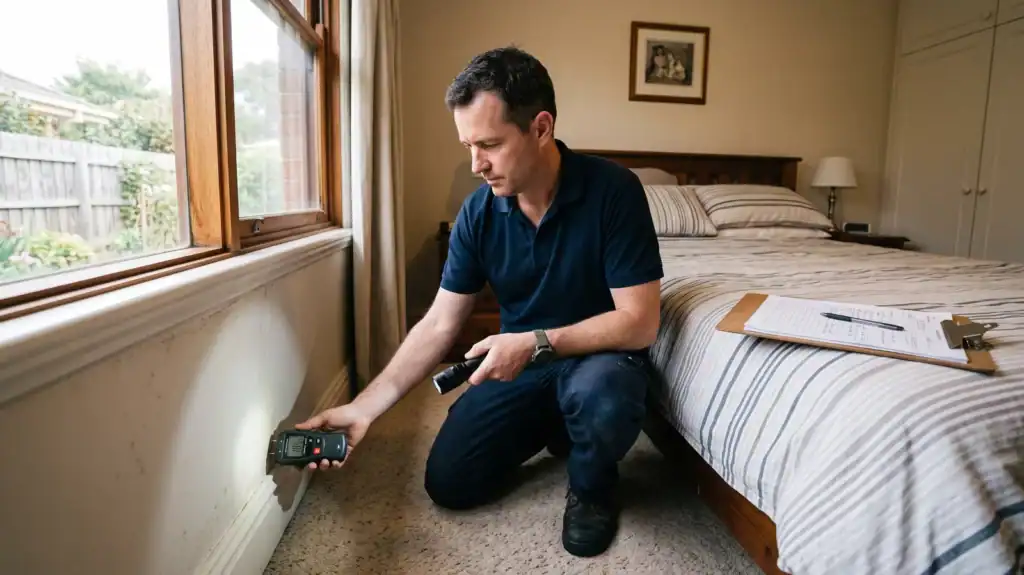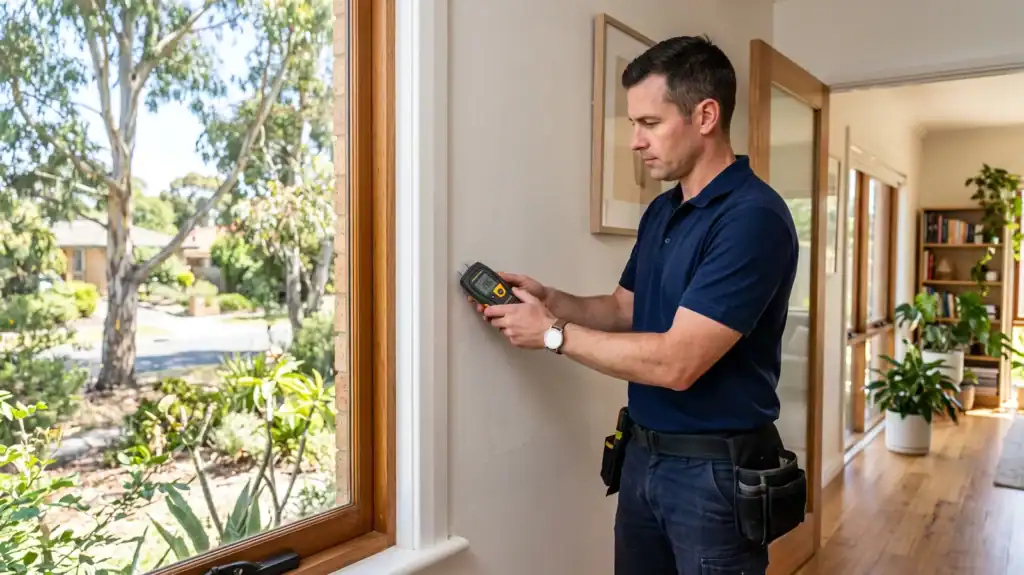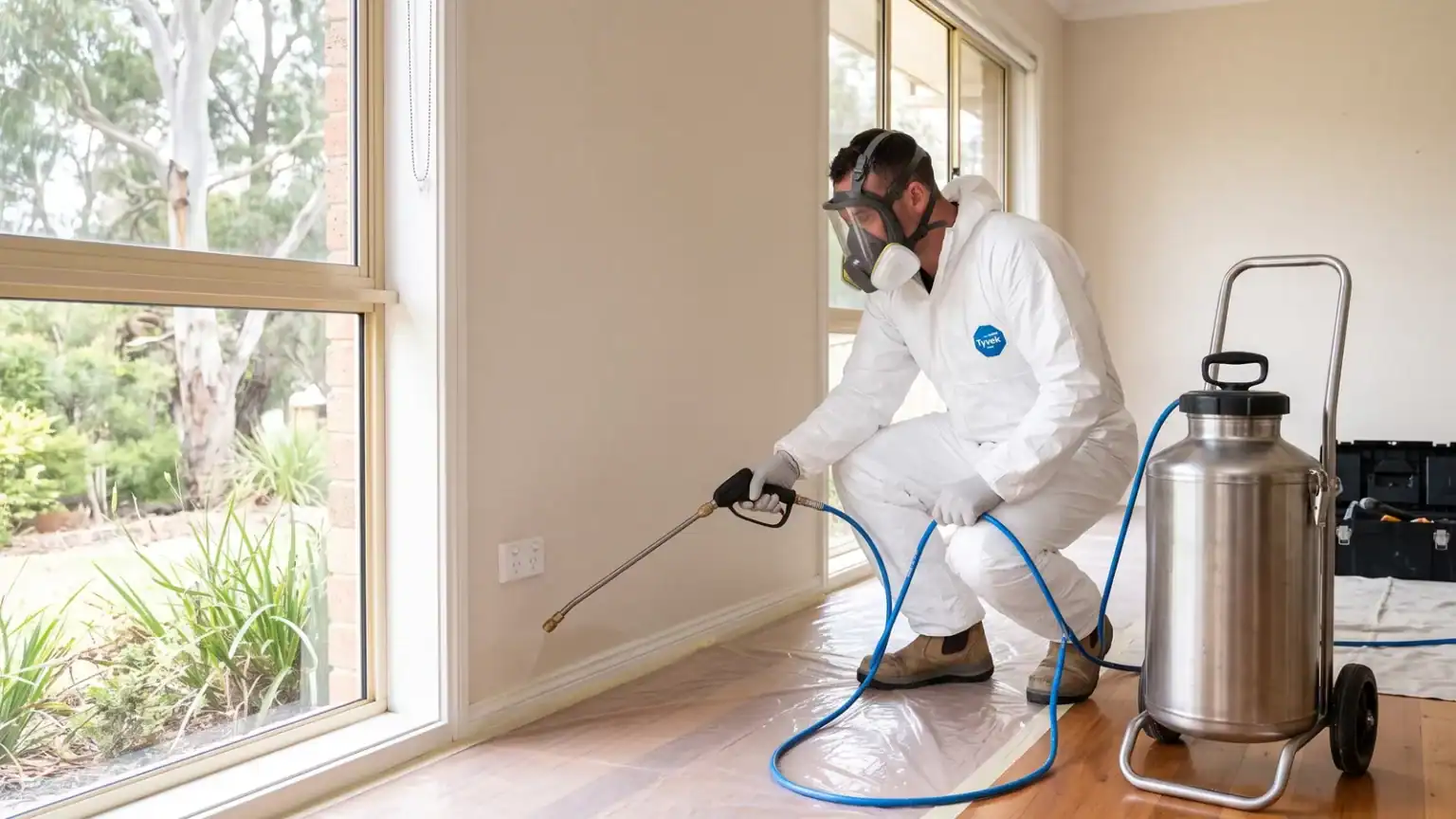
Professional mould removal assesses the growth, affected materials and moisture source before treatment.
If you have tried cleaning mould yourself, it is frustrating to see it return across the same wall or ceiling. In Newcastle and the Central Coast, a recurring patch deserves investigation: visible growth can extend into porous material, while dampness keeps feeding the problem.
The sections below explain what professional mould removal actually involves, step by step. It also covers the limits of retail products and what to expect from a professional inspection.
Need help now? Mould and Hygiene Solutions assesses properties across Newcastle, the Central Coast, Lake Macquarie and the Hunter Valley before recommending treatment.
What Professional Mould Removal Looks Like Step by Step
Professional mould removal follows a structured process that addresses affected materials and the conditions allowing growth. Each stage targets a different part of the problem.
- Inspection and moisture assessment. A technician checks affected areas, takes moisture readings and investigates likely moisture sources, including leaks and condensation.
- Containment. The work area is managed to limit the spread of contaminated dust and spores during treatment. The containment needed depends on the extent of contamination and the work planned.
- Cleaning and treatment. Mould and Hygiene Solutions uses an Australian-made, non-hazardous, non-corrosive and environmentally friendly antimicrobial solution as part of its treatment process. The assessment also determines which materials can be cleaned and which need removal.
- Moisture source resolution. The underlying cause is identified and recommendations are provided to prevent regrowth. Plumbing or building repairs may need to be completed by the appropriate tradesperson.
- Completion checks. The treated areas and moisture conditions are reviewed against the agreed scope. Any specialist sampling or independent clearance assessment should be specified beforehand, rather than assumed to be included.
The treatment is backed by a 12-month mould-free guarantee: if mould returns to surfaces the team treated within that period, they return to address it at no cost. Ask which surfaces are included in your treatment plan.
Why Surface Cleaning Fails to Address Recurring Mould
Bleach can lighten visible staining without resolving the moisture problem behind recurring growth. A cleaner-looking surface does not establish that contaminated porous material has been restored.
NSW Health explains that mould is likely to return unless its cause is treated. A bottle of retail cleaner cannot repair a roof leak, correct subfloor damp or assess growth behind a wall lining.
- Surface sprays do not establish how far contamination extends through plasterboard, timber or carpet backing.
- Scrubbing or disturbing affected materials can spread contaminated particles beyond the visible patch.
- Repeated wiping leaves leaks, condensation and inadequate ventilation unresolved.
- Painting over mould conceals the problem instead of removing affected material and drying it properly.
Professional mould removal for affected building materials combines assessment, cleaning or removal, treatment and advice on moisture control. Where contamination extends beyond the surface, the plan needs to address that material rather than simply repeat the same cleaning cycle.
Retail Products vs Professional Mould Treatment
| Factor | Retail products | Professional treatment |
|---|---|---|
| Extent of growth | Treats the area you can reach | Assesses affected materials and possible hidden contamination |
| Spore containment | No containment plan supplied with a spray | Controls matched to the work and contamination |
| Moisture source | Cannot resolve leaks or building defects | Investigated, with recommendations for corrective work |
| Porous materials | Surface cleaning cannot confirm full removal | Decision to clean, treat or remove affected material |
| Guarantee | No property treatment guarantee | Mould and Hygiene Solutions’ 12-month mould-free guarantee |
| Work controls | Depends on the user’s equipment and technique | Planned protective equipment and management of the work area |
Retail products cannot assess building damage or demonstrate that a damp wall cavity has dried. Professional treatment starts with those questions, then selects a method suited to the surface and the contamination.
Professional mould remediation for deeper contamination addresses the wider restoration work where surface cleaning is insufficient. Antimicrobial treatment does not make badly damaged plasterboard or contaminated insulation sound again.
Can mouldy plasterboard, timber and carpet always be saved?
No: the material’s condition and the depth of contamination determine whether cleaning is practical. The US EPA’s guidance on contaminated porous materials explains that mould can occupy spaces within absorbent materials, making complete removal difficult or impossible.
- Hard, intact surfaces are assessed for cleaning and drying.
- Porous materials need closer evaluation, including inaccessible backing and adjacent layers.
- Materials that cannot be adequately cleaned and dried may need replacement.
- Any removal work needs controls to limit contamination spreading into other rooms.
Promising to save every mouldy item with a chemical treatment is misleading. The inspection should explain what can reasonably be restored before work begins.
When You Should Call a Professional Instead of DIY
A recurring mould problem needs more than another attempt with a retail spray. Arrange an assessment when its extent or moisture source is unclear.
- Mould keeps returning in the same spot after cleaning.
- Growth extends across walls or ceilings, or affects several rooms.
- There is a persistent musty smell without an obvious visible source.
- Mould is growing on plasterboard, timber, carpet or other porous materials.
- Discolouration is spreading behind paint or wallpaper.
- The property has had significant water damage or contaminated-water flooding.
Do not pull apart a mouldy wall to investigate it yourself. A professional can assess access and containment before disturbing suspected hidden growth.
If someone has symptoms they associate with mould, seek medical advice rather than using symptoms to diagnose the building problem. An inspection assesses the property; it does not diagnose or treat a health condition.
What Happens During a Professional Mould Inspection
A professional mould inspection is not a quick glance at the stain. The technician needs to understand where moisture is accumulating and how the affected spaces are used.
- The technician checks accessible rooms and moisture-prone areas, with access to roof cavities or subfloors assessed for safety.
- Moisture readings help locate damp materials and investigate possible leaks or condensation.
- Suspected hidden contamination is considered alongside visible growth and the property’s water-damage history.
- A written report explains findings, recommended treatment and the proposed scope of work.
Understanding what a mould inspector checks helps you prepare useful information before the visit. Photos of earlier growth, repair records and notes about when dampness appears can reveal more than a freshly wiped wall.
Is air testing part of every inspection?
Not necessarily: visible mould does not always require sampling to decide that action is needed. NSW Health’s mould factsheet says routine home testing is generally unnecessary where mould is visible.
Where sampling answers a specific question about hidden contamination or the agreed completion criteria, professional mould testing for suspected hidden contamination can be discussed separately. Ask why testing is recommended and how its findings will guide treatment alongside the inspection.
How to Prepare for Professional Mould Removal
Ask for preparation and re-entry instructions before the appointment. Treatment time, drying needs and access restrictions depend on the assessed scope; confirm the timetable and when you can return.
- Tell the team about leaks, past flooding and previous attempts to clean or repaint affected areas.
- Confirm which rooms need access and whether furniture or belongings should be moved.
- Ask how occupants and pets will be kept away from the work area.
- Agree who will arrange any plumbing, roofing or ventilation work.
- Request instructions for returning to treated rooms and using the space afterwards.
Avoid moving mouldy belongings through clean rooms or dry-scrubbing surfaces before the visit. Let the team advise on handling affected items so your preparation does not spread contamination.
What should you check when the job is finished?
Review the work against the written scope, including any outstanding repairs or drying requirements. A wall looking brighter is not a substitute for understanding what was treated and what still needs attention.
- Confirm which surfaces were treated or removed.
- Check that moisture recommendations and any follow-up work are clear.
- Keep the report and guarantee information for future reference.
- Ask who to contact if growth returns on a treated surface.
Mould prevention advice for your property’s moisture conditions supports the treatment plan. Ventilation improvements and timely repairs address drivers of recurrence that retail sprays leave untouched.
Professional Mould Removal FAQs
How do professionals remove mould from a house?
Professionals assess moisture and affected materials, plan work controls, then clean, treat or remove contamination as appropriate. The plan should also explain repairs and prevention measures, because surface cleaning alone cannot correct the conditions driving recurring growth.
What is the difference between mould removal and remediation?
Removal describes dealing with mould contamination, while remediation usually describes the wider work to restore affected areas and address contributing conditions. Ask what the quoted scope includes rather than relying on the service name alone.
How long does professional mould removal take?
The timetable depends on the area affected, access, material damage and any drying or removal work required. The inspection should establish the proposed timetable and re-entry instructions, including any drying or restoration work.
Do I need to leave during mould treatment?
Ask the team for instructions specific to your treatment plan, including arrangements for pets and access to other rooms. Occupants should stay outside the controlled work area until the team advises that it can be used again.
Can mould return after professional treatment?
Unresolved dampness or new water damage can create conditions for further growth. Mould and Hygiene Solutions backs its treatment with a 12-month mould-free guarantee covering treated surfaces; retain the report so you know where the treatment was applied.
What determines the scope of a mould removal quote?
The extent of growth, materials affected, access, work controls and required restoration all matter. A professional inspection provides the basis for a property-specific quote, rather than guessing from a photograph or the size of the visible stain.
Before booking treatment, ask for the scope, preparation instructions and guarantee details in writing. Check that you understand which work is included and who will arrange outstanding repairs.
Book a Professional Mould Inspection Today
If you have found recurring mould in your home or business, the first step is to establish its extent and cause. Mould and Hygiene Solutions’ professional treatment team works across Newcastle, the Central Coast, Lake Macquarie, Hunter Valley and Port Stephens.
- Arrange an inspection before choosing treatment.
- Use the findings to plan moisture repairs and remediation.
- Keep the written scope and 12-month mould-free guarantee details.
For local help, the team’s professional mould removal service in Newcastle starts with assessing the property’s particular problem. Contact the team to confirm appointments elsewhere in the service area.
Book your professional mould inspection to find out what needs treatment and what needs repair. Inspections are a paid service; contact the team to arrange a suitable appointment.